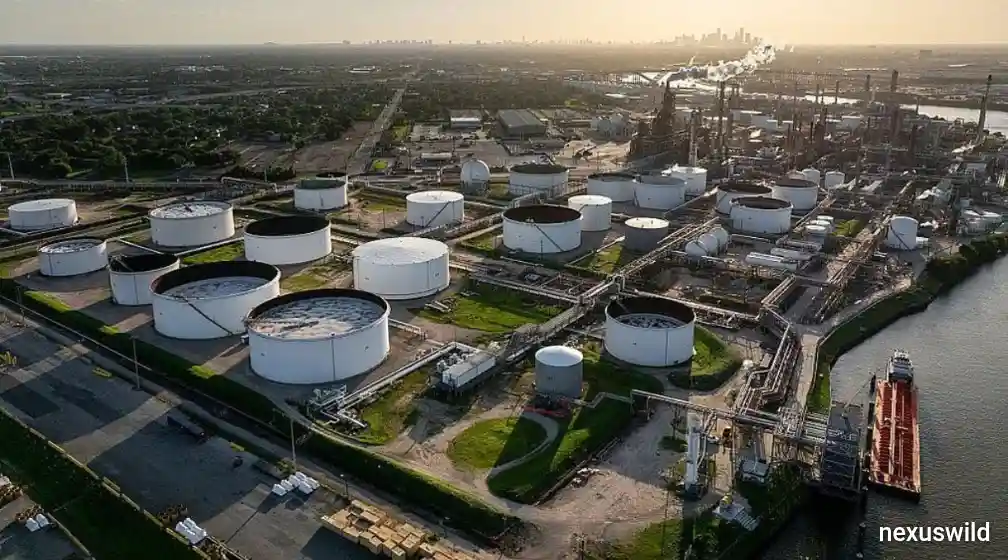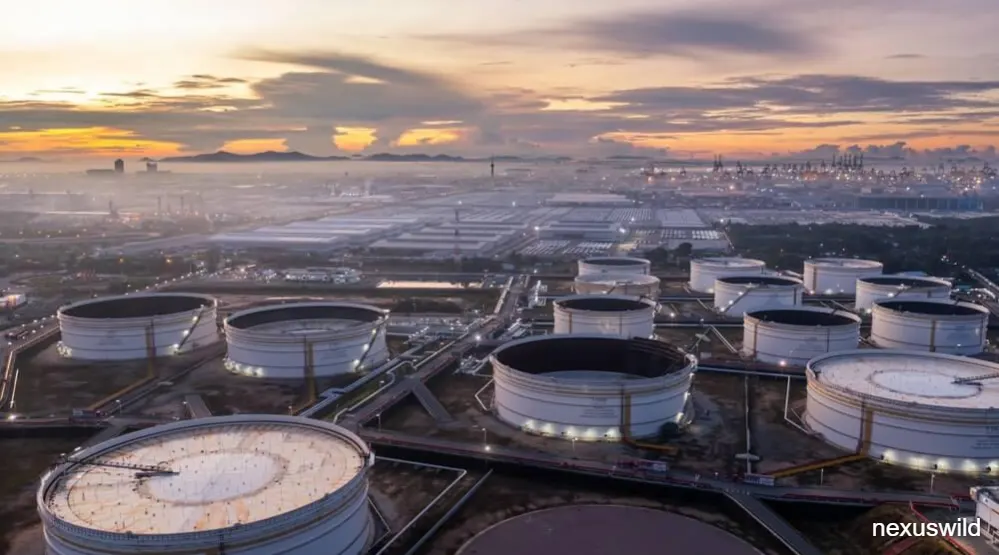

Saudi Aramco is looking for international partners to grow its oil storage network. Saudi Aramco is also exploring ways to ship crude because geopolitical tensions show weaknesses in global energy supply chains.
On October 22 2026 Aramco President and CEO Amin Nasser announced that Saudi Arabia was talking with governments about gaining access to strategic petroleum storage facilities. This plan is meant to strengthen Saudi Aramco’s ability to keep oil deliveries running when regional conflicts, shipping problems or infrastructure damage threaten export operations.
Saudi Aramco is also looking at ways to diversify export logistics beyond maritime corridors such as the Strait of Hormuz Bab el-Mandeb and the Suez Canal. These waterways are links in international energy trade. Disruptions can change shipping schedules raise insurance costs and alter the movement of oil to major consuming markets.
The initiative shows a rethink of energy security after severe disruptions to Saudi oil production and transportation during the regional conflict. Than depending only on domestic infrastructure and established shipping routes Saudi Aramco wants to strengthen its options by building overseas inventory working with international partners and adding export capacity.
However the discussions should not be mistaken for agreements. Saudi Aramco has not publicly confirmed which partner governments, storage volumes, investment commitments or completion dates are involved.
Why Saudi Aramco Is Expanding Its Overseas Storage Strategy
Strategic oil storage lets producers keep closer to customers and keep deliveries going when normal transport routes become unreliable.
For an exporter like Saudi Arabia overseas storage can do many things. It can cut the time needed to deliver oil to refiners give flexibility when shipping routes break down and help Saudi Aramco react to sudden changes in customer demand.
Saudi Aramco already keeps oil inventories in several international sites, such as South Korea, Japan, the Netherlands and Egypt’s Sidi Kerir export hub. Saudi Aramco’s new plan wants to build on those arrangements in Asia, which is a big market for Saudi crude.
Bloomberg reported that Amin Nasser said Saudi Aramco wants to double its overseas storage capacity. Saudi Aramco has not revealed its capacity or a timetable for the expansion.
Saudi Aramco is also looking for access to government‑owned storage instead of only using commercial facilities. Such arrangements would need cooperation with authorities. They could involve questions about who owns the inventory, who can withdraw it who controls operations and the rules that let stored oil be released.
The difference matters because commercial storage and national strategic reserves do things. Commercial facilities help trading and supply operations. Government‑controlled reserves are kept to protect energy security during emergencies.
Any partnership between Saudi Aramco and a foreign government must set out how Saudi crude can be stored, accessed and delivered without clashing with the host country’s emergency‑reserve policies.
Geopolitical Disruptions Have Exposed Supply Chain Vulnerabilities
The renewed focus on storage comes after disruptions to Saudi energy infrastructure and transportation networks during the regional conflict.
Saudi oil production dropped below seven million barrels per day for most of the six months of the conflict compared with more than 10 million barrels per day before the war according to reports from the International Energy Agency. Saudi Aramco’s output later rose to about eight million barrels per day in September 2026.
These numbers show how big the disruption was.. Production levels alone do not decide how much crude can reach international customers. Export capacity, pipeline availability, terminal operations, tanker access and shipping conditions also affect deliveries.
Saudi Aramco is improving its ability to inspect damaged infrastructure and restore operations. Amin Nasser said Saudi Aramco uses inspection drones to assess damage and has built systems to handle incidents at once. 90% Of repair materials come from domestic production or local warehouses according to Reuters.
These measures can cut the time needed to repair facilities. However they cannot remove every risk. A working oil field or export terminal may still face transport limits if a shipping corridor becomes unsafe or a pipeline is at capacity.
That is why overseas storage is strategically valuable. Oil that is already near a customer can be delivered without waiting for a new cargo to travel from the Persian Gulf. The benefit depends on how much inventory's available, terminal access, tanker capacity and the contractual rules, for each shipment.
The strategy therefore mixes protecting infrastructure at home with flexibility abroad.
Alternative Export Routes Could Reduce Dependence on Key Chokepoints
Saudi Aramco’s oil exports rely on a mix of pipelines, terminals and maritime routes. The Strait of Hormuz is especially important because it connects the Persian Gulf to shipping lanes.
A disruption in the strait can cause problems for producers and other energy exporters in the Gulf. When oil production stays available limited tanker movement can delay shipments and tighten supplies in global markets.
The Bab el‑Mandeb Strait is another passage linking the Red Sea with the Gulf of Aden and the wider Indian Ocean. Ships that travel through the Red Sea toward the Suez Canal use this corridor to reach Mediterranean markets and avoid the journey around Africa.
The Suez Canal meanwhile is a link between the Mediterranean and the Red Sea. Disruptions along this route can lengthen voyages raise transportation costs and complicate deliveries to other markets.
Aramco is studying export options to lower its exposure to these risks. Nasser has not publicly identified every route under consideration so the initiative should be seen as an evaluation rather than a confirmed network of new pipelines or terminals.
The role of Saudi Arabias East-West Pipeline
Saudi Arabia already has an alternative to shipping all crude through the Strait of Hormuz: its East-West Pipeline system, which moves oil from the eastern part of the kingdom toward the Red Sea coast.
The pipeline gives a route to export terminals on the Red Sea with infrastructure that can help move toward international customers without needing every barrel to go through Hormuz.
However an alternative pipeline does not eliminate every transportation risk. Crude moving west can still depend on Red Sea shipping conditions. For some destinations the Bab el‑Mandeb Strait and the Suez Canal.
Bloomberg reported that Aramco has started engineering studies to raise east-to-west crude transportation capacity from about seven million barrels per day to 10 million barrels per day. The reported figure shows a capacity expansion under study, not a finished upgrade.
Increasing pipeline capacity could give Saudi Arabia flexibility to redirect crude between export regions when conditions change. The commercial benefit would depend on the cost of expansion how many export terminals are available and how much the alternative routes can handle.
Why a single alternative route is not enough
Energy security depends on having workable options instead of just replacing one chokepoint with another.
A route that avoids Hormuz but relies heavily on the Red Sea can still face security risks further along the journey. Likewise an increase in pipeline capacity has limited value if downstream terminals or tanker movements cannot take the oil.
Aramcos approach therefore involves linked measures: overseas storage, better existing pipelines, investigation of extra export routes and faster recovery from infrastructure damage.
Together these measures could improve the companys ability to respond to changing conditions. Their effectiveness will depend on whether the options stay available during the crisis and whether they give enough capacity to keep customer deliveries.
Global Oil Demand Could Rise as Inventories Are Replenished
Aramcos storage strategy also reflects expectations about oil demand after the conflict and the possible recovery of inventories.
Nasser said demand could rise by three million barrels per day once conditions return to normal. Reporting described this rise as including about two million barrels per day in extra consumption and another one million barrels per day to refill inventories.
These figures are an outlook, not a guaranteed rise in demand. Actual consumption will depend on growth, industrial activity, transport demand, prices and how quickly disrupted supply chains recover.
Inventory rebuilding can still create demand even when basic consumption grows more slowly. Governments, refiners and commercial buyers may try to restore reserves used during a crisis while companies may also rethink how oil they need to keep near key markets.
This process can put pressure on supplies and transportation capacity. It can also raise the value of storage facilities that let producers keep a reliable presence in major importing regions.
For Aramco overseas inventories could help bridge disruptions between production and delivery. The company would still need to weigh those benefits against storage costs the commercial value of holding inventory and the possible need to redirect crude to customers.
What the Initiative Could Mean for Oil-Importing Countries
For importing countries access, to oil stored overseas could improve supply flexibility depending on the terms of any future agreements.
Refineries usually need grades that fit their processing equipment and product requirements. A storage arrangement is most useful when the stored oil can be delivered quickly fits customer needs and can be taken out when disruptions happen.
If Aramco expands inventory network some customers will receive shorter delivery times and more options when transport breaks down. Storage near refining centres may also help Aramco react to demand changes without having to arrange every shipment directly from Saudi Arabia.
However overseas storage should not be seen automatically as a national reserve for the host country. Ownership of the oil the right to access the oil and the conditions that govern release of the oil would depend on the agreement.
For governments these arrangements could give chances to strengthen energy cooperation with Saudi Arabia. Governments could also face questions about emergency access, domestic supply priorities and the balance between commercial agreements and national energy security.
The precise benefits will become clearer when the participating governments and contractual arrangements are disclosed.
Implications for Global Oil Markets and Prices
The announcement came amid sensitivity to geopolitical risks that affect energy infrastructure and shipping routes.
When traders think supplies may be interrupted oil prices can rise as markets take into account the possibility of availability, higher freight costs or delivery delays. Such moves may happen before a physical shortage shows up because prices reflect expectations well as current supply and demand.
Overseas storage and extra export routes could help cut some of these risks over time. Flexible logistics may allow Aramco to keep deliveries during localised disruptions while extra pipeline capacity could give Aramco more control over where crude reaches the coast.
However this initiative is unlikely to remove the influence of events on oil prices. Storage cannot fully make up for a loss of production, wide restrictions on tanker movements or a simultaneous disruption across several routes.
The market impact will also depend on the size and speed of implementation. Discussions with governments are at a stage of the process. New storage arrangements may need negotiations, legal approvals, infrastructure assessments and agreements on inventory management.
Likewise pipeline expansion and developing export routes can involve big engineering work, capital spending and construction timelines.
For investors and energy traders the announcement is therefore a sign of Aramcos priorities rather than proof that a certain amount of new export capacity is already available.
The Financial and Operational Challenges of Expanding Storage
Expanding storage can improve supply resilience but it also creates costs and operational needs.
Storage facilities need tanks, terminals, pipelines or other infrastructure, plus systems for keeping crude quality and monitoring inventory. Depending on the arrangement Aramco may need to pay for storage access, terminal services, insurance and transportation.
Holding oil abroad can also tie up working capital. Crude stored abroad may not be sold away and the economics of holding inventory can change as prices, interest rates and market conditions shift.
Government-owned strategic facilities bring considerations. Aramco and its partners must decide if the oil stays available for commercial deliveries if emergency restrictions can affect access and how competing national priorities would be handled during a severe shortage.
Aramco must also think about how overseas storage fits with its existing infrastructure. Extra inventories have limited value if the connecting ports, pipelines or shipping services cannot move oil when it is needed.
For these reasons the success of the strategy will rely on more than the headline goal of expanding capacity. The location of the storage the reliability of transportation links and the contractual right to access the crude will be equally important.
How the Strategy Fits Aramcos Broader Resilience Plans
The overseas storage initiative is part of an effort to improve Aramcos ability to keep operations running during periods of disruption.
Aramcos response includes efforts to speed up damage assessments keep access to repair materials and strengthen its ability to handle incidents. Studying export routes adds a logistical angle to these operational measures.
This approach recognises that energy security involves stages of the supply chain. Oil must be produced, moved through pipelines processed at export terminals loaded onto vessels and delivered to customers. A failure at any stage can affect the final supply.
Diversification can cut dependence, on facilities or routes but it is not cost‑free. Building infrastructure and keeping extra inventories need investment that may not bring immediate returns during normal market conditions.
The economic justification comes from the value of avoiding disruptions. Reliable deliveries can protect customer relationships cut emergency logistics costs and support Aramcos reputation in markets.
The scale of those benefits is difficult to measure in advance because major disruptions are unpredictable. Nevertheless the recent conflict has demonstrated why producers and importing countries increasingly consider resilience alongside production efficiency.
What to Watch Next
Several developments will determine whether Aramcos initiative becomes an expansion of its international supply network.
First the identity of partner governments. Announcements naming participating countries would clarify which markets are expected to receive storage access and what diplomatic or commercial arrangements are taking shape.
the overseas storage target. Aramco has indicated that it wants to double its capacity particularly in Asia. A disclosed baseline, implementation timetable and breakdown of commercial versus storage would help assess the scale of the plan.
Third the East-West Pipeline studies. Progress toward increasing capacity from seven million to 10 million barrels per day would provide an indication of how much additional crude could potentially be redirected toward the Red Sea.
Fourth new export-route proposals. Engineering studies, feasibility assessments or formal project announcements would help distinguish alternatives from options that remain under evaluation.
Finally the commercial terms. Agreements covering inventory ownership, withdrawal rights, emergency access and storage fees will determine how useful the arrangements are during a supply crisis.
Until more details emerge it is too early to estimate the initiatives cost the volume of oil that Aramco could protect from disruption or its effect on Saudi export revenues.
##
Saudi Aramcos pursuit of strategic oil storage and alternative export routes highlights the growing importance of supply chain resilience in the global energy industry.
The initiative follows a period in which conflict‑related disruptions affected production and exposed the risks associated with concentrated infrastructure and vulnerable shipping corridors. By seeking access to foreign government storage expanding inventories and studying additional export options Aramco aims to improve its ability to serve international customers when normal supply routes are under pressure.
The plan could provide flexibility for Saudi crude exports and strengthen cooperation with major oil‑importing countries. Its impact however will depend on the agreements reached the capacity ultimately. The reliability of the routes connecting storage facilities with customers.
For now the strategy remains a work in progress than a completed network of new facilities. Its significance lies in the direction it signals: energy security increasingly depends not on producing enough oil but also on having the infrastructure, inventory and transportation options needed to deliver it during a crisis.
Income from equities trading rose 47% while fixed‑income trading revenue fell 19% to £1 billion. The decline reflected activity in rates and credit products during a volatile quarter.
Venkatakrishnan said the performance of fixed‑income trading required attention pointing to the trading environment and weaker results in those areas.
These figures provide context for the banks wider strategy. Higher overall profits do not mean that every business division is performing well or that the bank has no incentive to reduce costs.
Financial institutions regularly assess their operating expenses, income sources and returns on capital. A business can report rising profits while still seeking to improve performance in divisions or prepare for future competitive pressures.
Barclays also reported £201 million in structural cost actions during the third quarter. These actions form part of its continuing programme to lower expenses, including staff‑related costs.
The bank has outlined savings ambitions for 2027 reinforcing the view that cost discipline and operational simplification remain central to its strategy.
For employees the results illustrate the relationship between corporate financial performance and workforce security. A profitable quarter does not necessarily prevent job reductions when management believes that technology or organisational changes can support an operating model.
Source: Reuters via Investing.com
Why Banking Is Particularly Exposed to Automation
Banks manage amounts of structured information operate complex software systems and process transactions that must meet strict deadlines and regulatory requirements. These characteristics create opportunities, for tools to improve efficiency.
AI and automation can support a range of banking activities although their suitability differs by task and institution.
1. Software development
AI coding assistants can help developers generate code suggestions explain software produce documentation and identify potential errors. These tools may reduce the time required for programming tasks.
However financial software must meet standards for security, reliability, testing and regulatory compliance. Human developers and reviewers are still important for checking code, managing system architecture and making sure that changes do not create risks.
2. Administrative processes
Banks deal with amounts of internal paperwork, reporting and routine communications. Automation can help sort documents pull out information and make repetitive workflows smoother.
When these processes are standardised technology can cut down on work.. Exceptions, missing records and complex cases still need employees to look into them and make decisions.
3. Customer service
Digital assistants and automated systems can answer questions guide customers through routine requests and help employees get information faster.
Financial services also involve decisions, complaints and situations where customers need personal help. Banks must therefore think about accuracy, privacy, fairness and the availability of support when using AI.
4. Risk and compliance support
AI tools can help employees review documents, spot patterns and prioritise information for deeper investigation.
These tools can boost efficiency. Financial institutions cannot simply trust that an automated result is correct. Risk assessments, anti-money-laundering controls and other regulated activities need oversight, documentation and accountability.
The main issue is not whether AI can do banking tasks. It is how institutions redesign their workflows around these tools while keeping safety, service quality and regulatory compliance.
Support and Technology Employees Face Growing Uncertainty
The reported focus of job cuts in support functions and developer roles has importance for white‑collar jobs.
Technology workers have often been seen as winners of change because companies need software engineers, data specialists and cybersecurity professionals to build and maintain modern systems. AI is changing that relationship by helping with some tasks that were done manually before.
This does not mean that demand for technology expertise will vanish. Banks still need employees who understand systems, information security, data governance, architecture and regulatory obligations.
Instead the mix of skills may shift. Employees may increasingly be expected to supervise work assess outputs, spot errors manage data quality and integrate automated tools into existing systems.
The transition can still be hard for workers whose current dutiesre heavily focused on tasks that employers can automate or combine.
For employees possible consequences include uncertainty about future employment pressure to learn new skills and competition for roles in other parts of the organisation or across the financial services sector.
Employers face a challenge. Cutting staff can lower short‑term costs. Poorly managed restructuring may also lead to loss of institutional knowledge add pressure on remaining employees and create problems when specialised expertise is needed.
Whether a technology‑driven restructuring creates benefits therefore depends partly on how carefully a company manages the human side of the transition.
Union Criticism Raises Questions About Retraining
The announcement has drawn criticism from Unite the UK trade union that represents workers across industries, including financial services.
Unite General Secretary Sharon Graham criticised the job cuts. Argued that employers should focus on upgrading employees skills as technology changes the workplace rather than using AI as a reason to discard experienced staff.
The unions response reflects a concern about how the gains from automation are shared. If technology lets employees finish tasks faster companies have choices about how to use the capacity.
They may cut staff expand services improve quality, redeploy employees or mix approaches. The outcome depends on management priorities, business conditions and the availability of alternative work.
Retraining can help employees move into responsibilities but it is not a universal solution. The effectiveness of retraining depends on the skills taught the time available the availability of vacancies and whether the employer commits to keeping or redeploying trained workers.
There are also limits, to what can be inferred from a companys announcement. Barclays has described the job cuts as part of a restructuring that involves technology investment and organisational simplification. It would therefore be wrong to say that every planned reduction is because of AI.
At the time the banks comments make clear that technology‑driven productivity is shaping its workforce decisions.
The broader debate is how employers can modernise operations while giving workers chances to adapt to changing requirements.
Barclays Reflects a Wider Shift Across the Financial Sector
Barclays is not the bank that is rethinking its staff as AI and digital tools become more powerful.
Other banks have also. Are thinking about staff cuts linked to automation cost cuts and reshaping of the organisation. Standard Chartered for example has laid out plans to cut back‑office jobs over the next few years as it uses more technology.
Reuters has also reported that companies in industries from tech to finance are cutting jobs and reshaping their teams as they move money into AI and efficiency projects.
These changes show that the job impact of AI is not for tech firms. Banks, stores and other big employers are looking at how automation changes how they work.
Still each case is different. Some companies cut staff because demand is weak or costs are rising while others reorganise after buying tools that change how work is done. Many factors usually play a role.
For banks the need to modernise is more complicated because tech must help with productivity, security, resilience protecting customers and obeying rules.
A bank cannot judge automation by the hours it saves. It must also look at how reliable the system's how accurate the decisions are, how well data is protected and what happens if things break.
Therefore the money gains from AI will depend on how it is put into practice not just on buying the tech.
What the Restructuring Means for Bankings Future
Barclays announcement shows points that will shape the next part of the bank industrys move to digital.
First using AI is now linked to how banks plan their staff. Banks are looking at how software, automated work and new organisational shapes can change how people they need.
Second buying tech does not mean every employee will gain the benefit. Some jobs may get better while others may be merged or cut. New jobs may appear,. Workers will not simply shift into them.
Third the long‑term money outcome is still key. Cutting costs can boost profit. The gains must be balanced against the money spent on tech, rollout, training, cyber safety and risk.
Finally openness will matter. Workers, investors and customers want to know how automation changes service quality, responsibility and the banks ability to manage risk.
For workers learning digital skills and seeing how AI fits into their job can help them adapt. For employers saying what is happening and giving training or new job chances can ease the change.
The bigger question is whether productivity gains will come with money put into people and new jobs or if companies will rely mainly on cutting staff.
There is no result for every company. The effect will differ based on what work's done how well it is carried out and what leaders choose.
##
Barclays plan to cut about 5,000 jobs by the end of 2026 is another step in how banking, automation and jobs are linked.
With 1,000 jobs already gone and more cuts expected before the year ends the change will hit a large part of Barclays worldwide staff.
The news came when Barclays announced a 12% rise in third‑quarter pre‑tax profit to £2.3 billion but weaker fixed‑income trading made the result lower than analysts had hoped.
Barclays says the staff cuts are part of a plan to simplify its structure, lower fixed costs and use years of tech investment. AI is a part of that plan but it is not the only reason for the cuts.
For the financial services world this shows both the promise and the problems of productivity. Automation can improve some steps. Cut repetitive work but it also creates worries about job security, retraining, monitoring and how gains are shared.
The long‑term importance of Barclays change will depend on whether tech investments bring lasting gains while Barclays keeps services reliable and keeps the skills to run a complex bank.
As banks keep modernising the main issue is not how much work tech can do but how employers handle the shift, for the people whose jobs are changing. If Aramco expands its overseas inventory network, some customers could benefit from shorter delivery lead times and additional options during transportation disruptions. Storage close to major refining centres may also help the company respond to changes in demand without arranging every delivery directly from Saudi Arabia.
However, overseas storage should not automatically be interpreted as a new national reserve for the host country. The ownership of the oil, the right to access it and the conditions governing its release would depend on the agreement.
For governments, the arrangements could offer opportunities to strengthen energy cooperation with Saudi Arabia. They could also create complex questions about emergency access, domestic supply priorities and the balance between commercial agreements and national energy security.
The precise benefits will become clearer only when the participating governments and contractual arrangements are disclosed.
Implications for Global Oil Markets and Prices
The announcement comes amid heightened sensitivity to geopolitical risks affecting energy infrastructure and shipping routes.
When traders believe supplies may be interrupted, oil prices can rise as markets account for the possibility of lower availability, higher freight costs or delays in deliveries. Such movements may occur before a physical shortage becomes visible because prices reflect expectations as well as current supply and demand.
Overseas storage and additional export routes could help reduce some of these risks over time. More flexible logistics may allow Aramco to maintain deliveries during localised disruptions, while additional pipeline capacity could provide greater control over where crude reaches the coast.
However, the initiative is unlikely to remove the influence of geopolitical events on oil prices. Storage cannot fully compensate for a prolonged loss of production, widespread restrictions on tanker movements or a simultaneous disruption across several routes.
The market impact will also depend on the scale and speed of implementation. Discussions with governments are an early stage of the process. New storage arrangements may require commercial negotiations, legal approvals, infrastructure assessments and agreements on inventory management.
Likewise, pipeline expansion and the development of additional export routes can involve substantial engineering work, capital expenditure and construction timelines.
For investors and energy traders, the announcement is therefore an indication of Aramco's strategic priorities rather than evidence that a particular amount of new export capacity is already available.
The Financial and Operational Challenges of Expanding Storage
Expanding overseas storage can improve supply resilience, but it also creates costs and operational requirements.
Storage facilities require suitable tanks, terminals, pipelines or other infrastructure, along with systems for maintaining crude quality and monitoring inventory. Depending on the arrangement, the company may need to pay for storage access, terminal services, insurance and transportation.
Holding more oil abroad can also tie up working capital. Crude positioned in storage may not be immediately sold, and the economics of holding inventory can change as prices, interest rates and market conditions shift.
Government-owned strategic facilities introduce additional considerations. Aramco and its partners would need to determine whether the oil remains available for ordinary commercial deliveries, whether emergency restrictions could affect access and how competing national priorities would be handled during a severe shortage.
The company must also consider how overseas storage fits with its existing infrastructure. Additional inventories have limited value if the connecting ports, pipelines or shipping services cannot move oil when it is needed.
For these reasons, the success of the strategy will depend on more than the headline target of expanding capacity. The location of the storage, the reliability of transportation links and the contractual right to access the crude will be equally important.
How the Strategy Fits Aramco's Broader Resilience Plans
The overseas storage initiative is part of a wider effort to improve Aramco's ability to maintain operations during periods of disruption.
The company's response includes efforts to accelerate damage assessments, maintain access to repair materials and strengthen its capacity to handle multiple incidents. The study of additional export routes adds a logistical dimension to these operational measures.
This approach recognises that energy security involves several stages of the supply chain. Oil must be produced, transported through pipelines, processed at export terminals, loaded onto vessels and delivered to customers. A failure at any critical stage can affect the final supply.
Diversification can reduce dependence on individual facilities or routes, but it is not cost-free. Building parallel infrastructure and maintaining additional inventories require investment that may not produce immediate returns during normal market conditions.
The economic justification comes from the value of avoiding severe disruptions. Reliable deliveries can protect customer relationships, reduce emergency logistics costs and support the producer's reputation in international markets.
The scale of those benefits is difficult to measure in advance because major disruptions are unpredictable. Nevertheless, the recent conflict has demonstrated why producers and importing countries increasingly consider resilience alongside production efficiency.
What to Watch Next
Several developments will determine whether Aramco's initiative becomes a significant expansion of its international supply network.
First, the identity of partner governments. Announcements naming participating countries would clarify which markets are expected to receive additional storage access and what diplomatic or commercial arrangements are taking shape.
Second, the overseas storage target. Aramco has indicated that it wants to double its overseas capacity, particularly in Asia. A disclosed baseline, implementation timetable and breakdown of commercial versus strategic storage would help assess the scale of the plan.
Third, the East-West Pipeline studies. Progress toward increasing capacity from seven million to 10 million barrels per day would provide a clearer indication of how much additional crude could potentially be redirected toward the Red Sea.
Fourth, new export-route proposals. Engineering studies, feasibility assessments or formal project announcements would help distinguish practical alternatives from options that remain under evaluation.
Finally, the commercial terms. Agreements covering inventory ownership, withdrawal rights, emergency access and storage fees will determine how useful the arrangements are during a supply crisis.
Until more details emerge, it is too early to estimate the initiative's final cost, the volume of oil it could protect from disruption or its effect on Saudi export revenues.
Conclusion
Saudi Aramco's pursuit of overseas strategic oil storage and alternative export routes highlights the growing importance of supply chain resilience in the global energy industry.
The initiative follows a period in which conflict-related disruptions affected Saudi production and exposed the risks associated with concentrated infrastructure and vulnerable shipping corridors. By seeking access to foreign government storage, expanding overseas inventories and studying additional export options, Aramco aims to improve its ability to serve international customers when normal supply routes are under pressure.
The plan could provide greater flexibility for Saudi crude exports and strengthen cooperation with major oil-importing countries. Its impact, however, will depend on the agreements reached, the capacity ultimately developed and the reliability of the routes connecting storage facilities with customers.
For now, the strategy remains a work in progress rather than a completed network of new facilities. Its significance lies in the direction it signals: energy security increasingly depends not only on producing enough oil, but also on having the infrastructure, inventory and transportation options needed to deliver it during a crisis.
Nexuswild welcomes factual corrections. Email contact@nexuswild.com with evidence and the article URL.