
SpaceX shares climbed 7.6% on Monday to close at $171.09, extending a sharp October rebound as investors reacted to a bullish Wall Street call, continued enthusiasm around the company’s artificial-intelligence business and Elon Musk’s plan to rename SpaceXAI as SpaceXSI.
The stock, traded under the ticker SPCX, is now about 27% above the company’s $135 initial public offering price from June. SpaceX completed its IPO on June 15 after selling more than 638 million Class A shares, including the underwriters’ option, according to filings with the U.S. Securities and Exchange Commission.
Musk separately said on October 4 that SpaceX’s AI operation would be renamed SpaceXSI, with “SI” referring to Super Intelligence. The planned rebrand follows a September 29 White House executive order directing U.S. executive agencies to use “Super Intelligence” and “SI” in place of “Artificial Intelligence” and “AI” in specified government communications.
The federal order applies to government agencies. It does not require SpaceX or any other private company to change its name.
SpaceX Closes at $171.09 After a 7.6% Gain
SpaceX shares finished Monday at $171.09, up 7.6% for the session. That followed a 7.35% gain in the previous trading session, producing a roughly 15.5% two-session increase based on closing prices.
The rally brought the stock to its highest closing level since June.
The move occurred alongside broader strength in technology shares, but analysts also pointed to company-specific factors, including positive research from Morgan Stanley, upcoming Starship milestones and investor interest in SpaceX’s AI and computing businesses.
It would therefore be inaccurate to attribute the entire 7.6% increase to the SpaceXSI name change.
Morgan Stanley Reiterates $300 Price Target
One of the most significant market catalysts came from Morgan Stanley analyst Adam Jonas.
Jonas reiterated an Overweight rating and $300 price target on SpaceX, arguing that its valuation looked more attractive when expected growth was included in the calculation.
According to the analyst’s calculations, SpaceX traded at around 30 times estimated 2028 enterprise value to EBIT, compared with roughly 16 times for a group of large AI-related companies.
On a growth-adjusted basis, Jonas estimated SpaceX at about 0.3 times 2028 EV/EBIT/growth, below the approximately 0.5-times median for his comparison group.
Those figures are Morgan Stanley estimates, not company guidance or guaranteed future valuation.
The $300 target also represents the analyst’s assessment of fair value rather than a prediction that the stock will necessarily reach that level.
Musk Says SpaceXAI Will Become SpaceXSI
The branding announcement came over the weekend.
When asked on X whether SpaceXAI would become SpaceXSI, Musk replied that the company would make the change. Reuters reported the announcement on October 4.
Musk also publicly described SpaceX as a “super intelligence company,” reinforcing the shift in terminology.
At the time of the announcement, however, no detailed implementation timetable had been disclosed.
That means SpaceXSI is best described as the announced new name for the AI unit, rather than evidence of a new legal entity, a completed restructuring or a change in the technology itself.
‘Super Intelligence’ Comes From a White House Terminology Change
President Donald Trump signed Executive Order 14434 on September 29, titled “Inaugurating the Era of Super Intelligence.”
The order directs federal executive departments and agencies to use “Super Intelligence” and “SI” instead of “Artificial Intelligence” and “AI” in official correspondence, public communications, websites, reports and other non-statutory documents where legally permitted.
The order currently defines Super Intelligence using the existing federal statutory definition of artificial intelligence while directing the White House science adviser to propose a more specific federal definition within 60 days.
That distinction is important.
The executive order is primarily a federal terminology policy. It does not establish that technologies labeled “SI” possess capabilities beyond conventional AI, and it does not compel private companies to adopt the term.
SpaceX’s decision to use SpaceXSI is voluntary.
SpaceX’s AI Business Is Already Material to Its Financial Results
The name change comes after AI became a much larger part of SpaceX’s business following its combination with xAI.
SEC documents show SpaceX entered into a merger agreement with X.AI Holdings on January 31, 2026.
By the second quarter, SpaceX was reporting AI as a separate operating segment.
For the three months ended June 30, SpaceX reported:
- $2.56 billion in AI revenue
- $1.15 billion in adjusted AI EBITDA
- $15.83 billion in AI capital expenditure
- 1.4 gigawatts of nameplate compute capacity
The company also said it had signed $14.1 billion of contracted cloud-service agreements related to its AI infrastructure.
Those figures provide a more substantive measure of SpaceX’s AI business than the SpaceXSI branding itself.
Companywide Revenue Reached $7.8 Billion in Q2
SpaceX reported total second-quarter revenue of $7.8 billion, up 92% from $4.1 billion a year earlier.
The company posted a net loss of $541 million, compared with a loss of roughly $1 billion in the year-earlier quarter, while adjusted EBITDA rose to $3.5 billion.
AI was one of the major contributors to revenue growth.
The AI segment generated $2.56 billion in quarterly revenue, up from $818 million in the first quarter, according to the company’s SEC-filed earnings release.
SpaceX said the increase was driven primarily by AI infrastructure agreements as well as Grok and X subscription revenue.
These are reported company results. Future revenue growth remains uncertain.
AI Investment Remains Extremely Capital Intensive
The scale of SpaceX’s AI expansion also carries substantial financial requirements.
The company spent $15.8 billion on AI capital expenditures during the second quarter alone, bringing first-half AI capital expenditure to about $23.6 billion.
That spending reflects the cost of building computing infrastructure, including the continued expansion of Colossus II and related capacity.
AI remains a fast-growing part of the company, but its economics differ significantly from established launch or satellite-connectivity operations.
Large capital requirements mean investors will continue to focus not only on revenue growth but also on utilization, operating margins and the long-term return on infrastructure spending.
SpaceX’s IPO Was Priced at $135
SpaceX became publicly traded in June 2026.
Its SEC prospectus shows the company offered 555,555,555 primary Class A shares at $135 each, with an additional 83,333,333 shares available through the underwriters’ option.
The company completed the offering on June 15 after the underwriters exercised that option in full.
SpaceX said proceeds would support growth initiatives including AI compute infrastructure, launch systems and expansion of its satellite constellations.
At Monday’s $171.09 closing price, the stock stood roughly 26.7% above its $135 IPO level.
That calculation reflects market-price performance only and does not imply future returns.
Starship Remains Another Major Investor Focus
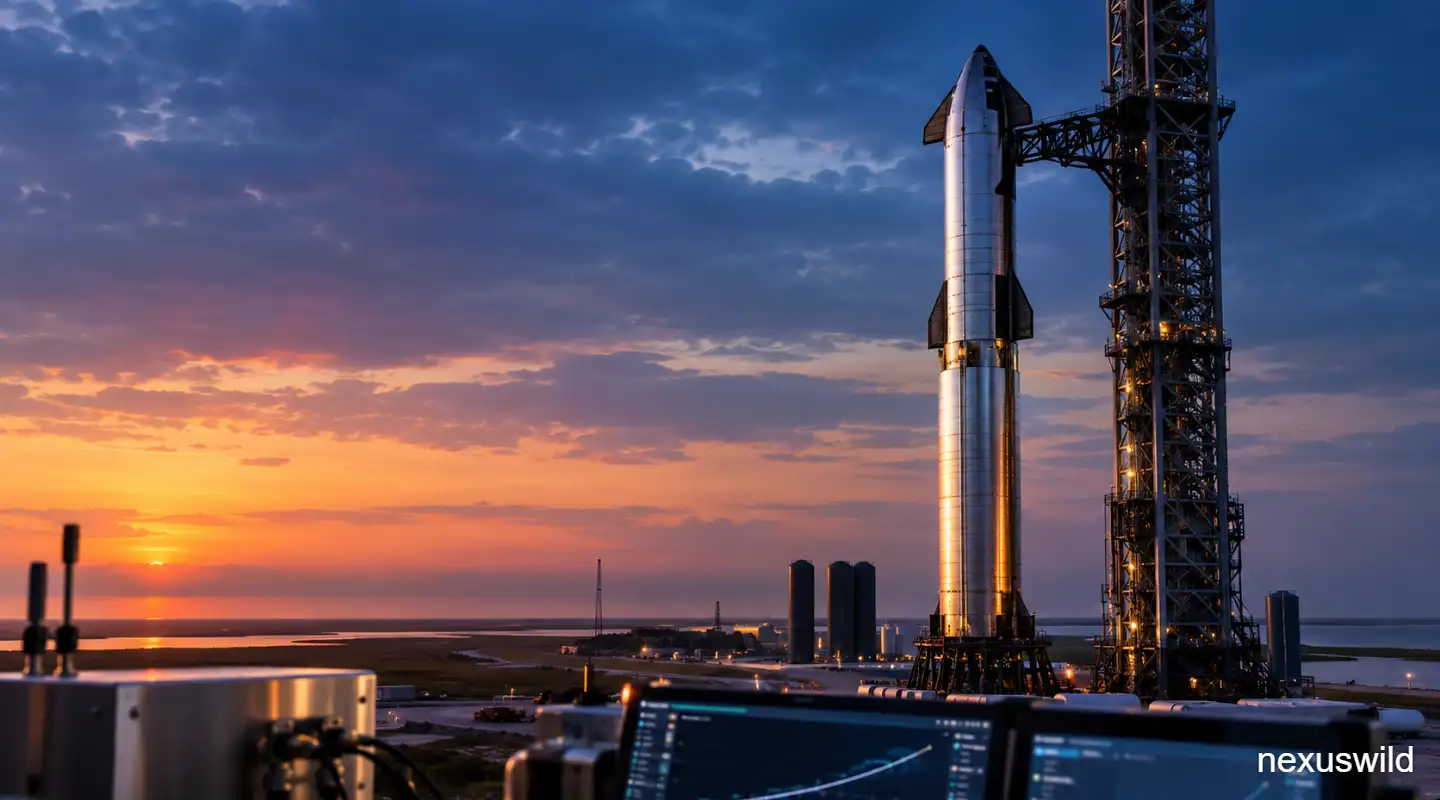
The stock rally is also occurring ahead of additional Starship testing.
Morgan Stanley highlighted the upcoming Starship Flight 15 as one of several milestones that could influence investor expectations.
SpaceX’s launch and satellite businesses remain major parts of its valuation.
The company’s growing AI segment has broadened its business model, but it has not replaced Starlink, government contracts or launch services as core operating activities.
That is why describing SpaceX simply as an AI or “super intelligence” company would be incomplete.
The Rebrand Does Not Change SpaceX’s Technology Overnight
The shift from SpaceXAI to SpaceXSI is primarily a branding and terminology decision.
Musk has not announced a corresponding new AI architecture, corporate structure or product strategy tied specifically to the name change.
There is also no evidence that changing “AI” to “SI” alters the capabilities of Grok, SpaceX’s computing infrastructure or its cloud-service agreements.
The financial significance therefore comes from the underlying AI operation, not the label applied to it.
Why Investors Are Paying Attention to AI
Wall Street increasingly values SpaceX as more than a rocket and satellite operator.
Morgan Stanley’s valuation work explicitly assigns value to the company’s AI operations in addition to its launch and Starlink businesses.
That reflects several confirmed developments:
SpaceX has integrated xAI, built large-scale computing capacity, signed multibillion-dollar cloud contracts and generated more than $2.5 billion in quarterly AI revenue.
Those developments support the argument that AI has become financially relevant to SpaceX.
Whether that business ultimately justifies current or higher market valuations remains an investor judgment rather than an established fact.
Conclusion
SpaceX shares climbed 7.6% to $171.09 on Monday, extending a strong two-session rally and leaving the stock roughly 27% above its June IPO price.
The gain coincided with Elon Musk’s announcement that SpaceXAI will be renamed SpaceXSI, adopting the “Super Intelligence” terminology promoted by the Trump administration.
That branding shift is voluntary and does not result from a requirement imposed on private companies by the September 29 executive order.
The larger financial story is SpaceX’s rapidly expanding AI operation. The company generated about $2.56 billion in AI revenue in Q2, invested $15.8 billion in AI capital expenditure and reported $14.1 billion of contracted cloud-service sales.
Monday’s rally also followed Morgan Stanley’s decision to maintain an Overweight rating and a $300 price target, giving investors multiple reasons to reassess the stock.
The confirmed development is that SpaceX is becoming a much larger participant in AI infrastructure and services. Calling it a “Super Intelligence company” reflects Musk’s new branding language, not an independent technical determination that SpaceX has achieved a new category of intelligence.
Nexuswild welcomes factual corrections. Email contact@nexuswild.com with evidence and the article URL.