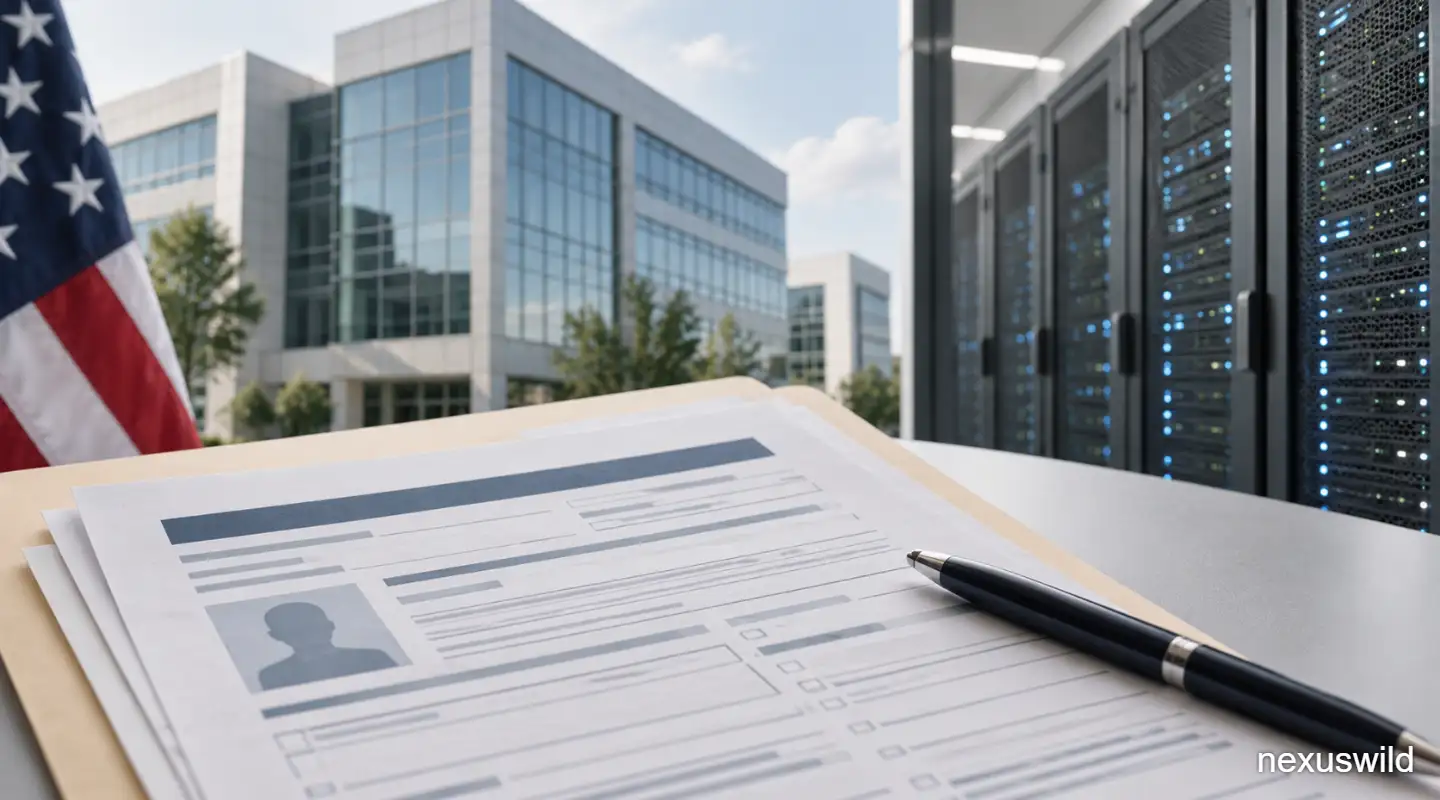

The United States has suspended processing under a key employment-based green-card programme for Microsoft, Adobe and six other major technology and IT services companies, escalating the Trump administration's efforts to tighten oversight of skilled-worker immigration.
The announcement was made on October 8, 2026, by Vice President JD Vance and Labour Secretary Keith Sonderling. The action targets the Permanent Labor Certification programme, commonly known as PERM, which is an important step in many employer-sponsored applications for US permanent residency.
The companies named in reports include Microsoft, Adobe, Cognizant, Infosys, Tata Consultancy Services (TCS), Wipro, HCLTech and Capgemini. The US Department of Labor said it would stop accepting new PERM applications from the affected employers and halt processing of pending applications while concerns about alleged fraud and programme compliance are examined.
The decision could complicate long-term immigration plans for skilled foreign professionals whose green-card applications depend on employer sponsorship. However, it does not amount to a blanket suspension of all US green cards or an automatic cancellation of existing H-1B visas.
Which Technology Companies Are Affected?
The suspension covers eight major companies operating across software, cloud technology, consulting and IT services.
Microsoft and Adobe are prominent US technology companies, while Cognizant, Infosys, TCS, Wipro and HCLTech have substantial international IT services operations. Capgemini is a major France-based technology consulting and services company.
The companies have been named in connection with the government's review of employment-based immigration procedures. The action is directed at the specified employers rather than the entire technology industry.
Other technology companies not included in the reported suspension are not automatically subject to the same restriction. The scope and duration of the measures will depend on the government's review and any subsequent decisions.
Why Has the US Government Suspended PERM Processing?
US officials have alleged that some employers misused employment-based immigration programmes and relied on foreign workers while reducing or replacing American jobs.
Vance singled out Microsoft during the October 8 announcement, citing company layoffs alongside its use of H-1B visas and green cards. The administration argued that immigration programmes should not be used in ways that disadvantage US workers.
Microsoft disputed the broader characterisation of its hiring practices. The company said its workforce strategy includes hiring American employees and attracting international talent, and it defended its approach to H-1B employment and compensation.
The allegations are not equivalent to a final legal finding of wrongdoing. The suspension and associated scrutiny form part of the government's stated effort to investigate compliance with immigration and labour rules.
The review could have consequences for employers that depend on international recruitment, particularly if the restrictions remain in place for an extended period.
What Is the PERM Programme?
The Permanent Labor Certification programme is administered by the US Department of Labor. It is generally used by employers seeking to sponsor foreign workers for certain employment-based green cards.
In the standard PERM process, an employer must generally demonstrate that there are not sufficient qualified, willing, available US workers for the relevant position and that employing the foreign worker will not adversely affect the wages and working conditions of similarly employed US workers.
After labour certification, the employer typically proceeds to the relevant immigrant petition stage, followed by the applicable green-card process.
PERM is therefore an important part of the employment-based immigration pathway, but it is not itself a green card or a visa. Not every permanent-residency category requires PERM certification.
What Does the Suspension Mean for H-1B Workers?
The immediate implications depend on an employee's immigration status and the stage of their permanent-residency application.
Workers who have not started the PERM process: Their employer may be unable to initiate the usual labour-certification route while the suspension applies.
Workers with pending PERM applications: Applications covered by the order may face delays because the Department of Labor has said pending processing will be halted for affected employers.
Current H-1B visa holders: The reported action does not automatically cancel H-1B status. H-1B is a temporary work visa category, while PERM is one potential route towards employment-based permanent residency. Workers must still comply with the requirements and time limits applicable to their individual immigration status.
Workers already further along in the green-card process: The consequences may depend on whether their labour certification has been approved, whether an immigrant petition has been filed or approved, and the exact scope of the government's action. The treatment of individual cases should not be assumed without official clarification.
For affected professionals, the central concern is uncertainty over the timing of permanent residency and the ability of employers to begin or continue the standard sponsorship process.
Potential Impact on Indian IT Professionals
The suspension is particularly relevant to Indian technology professionals because several of the affected companies are major Indian IT services employers with operations in the United States.
For employees seeking permanent residency through their employers, an interruption in PERM processing could delay an important stage of their immigration plans. The practical consequences will vary according to each person's circumstances and the duration of the restrictions.
The action could also influence recruitment and workforce planning. Companies that rely on international mobility may need to review staffing timelines, project assignments and immigration support for employees in the United States.
However, the measure does not establish a general ban on Indian professionals working in America. Its direct scope is tied to the named employers and the specified labour-certification programme.
What Happens Next?
The duration of the suspension and the conditions for resuming processing are key questions for affected employers and employees.
The US Department of Labor's investigation will help determine how the government proceeds with the affected applications. Employers and immigration specialists will also be watching for clarification about previously approved certifications, pending cases and the process for lifting the restrictions.
Any future changes could have implications for skilled-worker recruitment, corporate compliance and the movement of international technology talent.
Outlook: Immigration Uncertainty for the Technology Sector
The suspension marks a significant development in the US debate over employer-sponsored immigration and the use of foreign skilled labour.
For the affected companies, the immediate challenge is navigating the interruption while addressing the government's concerns. For foreign professionals, the main issue is the potential delay to a long-term residency pathway, even where their existing work authorisation remains valid.
The wider impact will depend on the findings of the review, the length of the suspension and any subsequent government guidance. Until those details are clarified, it is important to distinguish the targeted PERM restrictions from broader claims that the United States has stopped issuing green cards or cancelled H-1B visas across the board.
Nexuswild welcomes factual corrections. Email contact@nexuswild.com with evidence and the article URL.