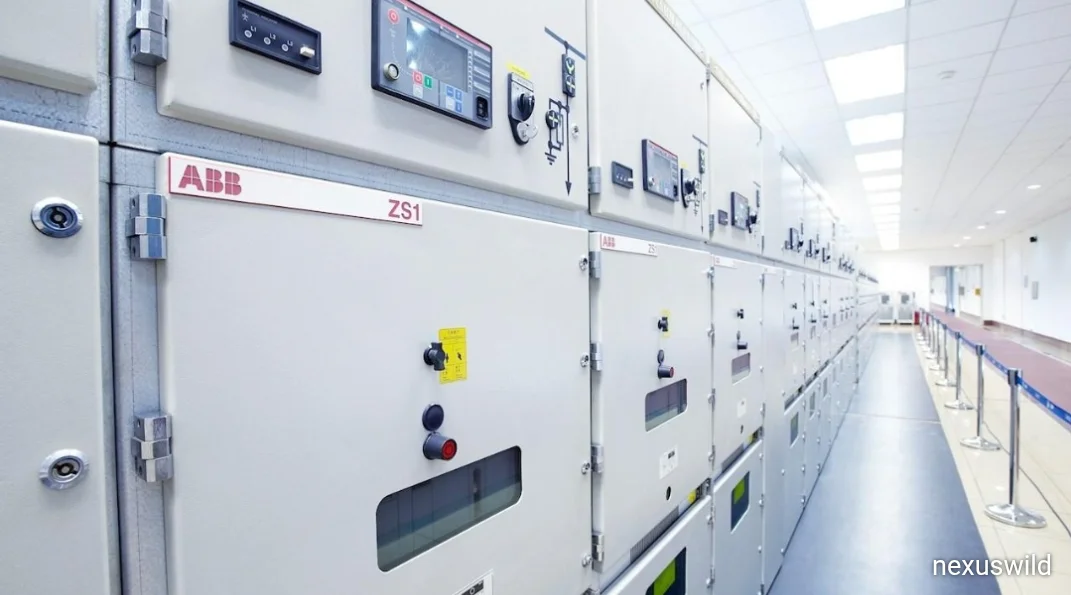

ABB Orders Hit Record $12 Billion as AI Data Centre Demand Doubles
Swiss engineering group ABB reported record third-quarter orders on October 20. The global push for intelligence infrastructure is driving strong demand for electrical gear used in data centres. ABB said orders tied to data centres more than doubled year on year. This helped push orders to $12.055 billion. The company also raised its full-year sales forecast.
Orders climbed 40% compared to the time last year. Revenue rose 14% to $9.701 billion for the three months ending September 30 2026. These results show how the AI investment wave is boosting business for companies that supply power distribution, protection and cooling systems needed for computing facilities.
ABB also announced a $495 million investment to buy a 51% controlling stake in a low-voltage power distribution venture with Japan’s Mitsubishi Electric. The goal is to strengthen ABB’s position in Japan and grow its footprint across Asia-Pacific.
Record orders reflect infrastructure spending
ABB’s order growth outpaced its revenue growth. That’s important to note. Orders show new business won during a period. Revenue reflects what’s been delivered or accounted for.
The $12.055 billion in orders is up from $8.606 billion a year. Revenue reached $9.701 billion up from $8.491 billion in the quarter of 2025.
These numbers suggest customers are placing orders for equipment to expand electrical capacity and support new infrastructure projects. Data centres need power distribution, electrical protection and support systems to keep computing gear running safely and steadily.
As AI workloads grow operators are building facilities to handle demanding computing needs. This opens doors for suppliers beyond chipmakers and server makers. Companies that provide systems connecting buildings to power grids and distributing electricity inside them are also benefiting.
ABB said data-centre-related orders more than doubled year on year. Not all of ABB’s growth came from AI facilities. That segment is now a major source of demand.
Profitability improves alongside sales
ABB also reported operating performance. Operational earnings before interest, taxes and amortisation—called EBITA—rose 24% to $2.026 billion. The operational EBITA margin improved to 20.8% up from 19.2% a year
Income from operations hit $1.846 billion up 15%.. Net profit attributable to ABB dropped 2% to $1.181 billion from $1.208 billion in the same quarter last year.
This mixed picture matters to investors. Higher orders, revenue and operating profits show business activity.. Net profit didn’t keep up with operating earnings. ABB’s quarterly revenue also came in below the $9.74 billion that analysts expected.
So the results show demand and better operations but not every financial number improved.
ABB raises its full-year outlook
Because of the order growth ABB raised its full-year comparable revenue growth outlook to the low-teens percentage range. Before the company had expected growth between double digits and low teens.
ABB also expects its operational EBITA margin to improve by least 270 basis points for 2026.
This updated outlook shows confidence in demand. Abb’s ability to turn opportunities into sales.. Orders don’t turn into revenue right away. Delivery schedules, customer project timelines, supply availability and installation needs all affect when orders are fulfilled.
Investors will watch reports to see if the strong order pipeline turns into steady revenue and earnings growth.
Mitsubishi Electric deal expands ABB’s presence
ABB’s separate deal with Mitsubishi Electric aims to boost its low-voltage power distribution business.
Under the agreement ABB will invest about 79 billion yen—around $495 million—to buy a 51% stake in a new joint venture based on Mitsubishi Electric’s low-voltage power distribution business. ABB will also take ownership of related sales operations outside Japan for Mitsubishi Electric’s low-voltage products.
The deal is expected to close in the half of 2027 pending regulatory approvals and other usual conditions. ABB may buy ownership of the business in the medium term.
Low-voltage power distribution products are used in buildings, industrial sites and data centres to distribute electricity and protect systems. The deal gives ABB a foothold in Japan, a major industrial and electrification market. It also opens a path for growth across Asia-Pacific.
The deal fits with the demand trends seen in ABB’s results.. It doesn’t mean all the joint venture’s products will go to AI data centres.
What the results mean for the AI supply chain
ABB’s performance shows how the AI investment cycle reaches beyond the semiconductor industry. Building computing facilities needs more than just processors and servers. It also needs distribution gear, protection systems, power management and reliable infrastructure.
Suppliers, in these areas may benefit as tech companies, cloud providers and others expand capacity.. The chance depends on continued investment, project execution and customers’ ability to get enough electricity and supporting infrastructure.
ABB’s record orders and improved outlook show current demand.. They don’t guarantee the pace will keep up forever.
The next things to watch are whether order growth stays strong how fast new orders turn into revenue. Whether profit margins stay solid as projects move forward. For now ABB’s results show clearly how AI infrastructure spending is helping an industrial supply chain—not just the companies making the chips.
Nexuswild welcomes factual corrections. Email contact@nexuswild.com with evidence and the article URL.