
Redefine Launches R106 Million Solar Wheeling Project to Supply Three Cape Town Properties
Redefine Properties has started a R106 million rooftop project in Cape Town. This project will send electricity from an industrial property to three retail and office assets through the city’s municipal electricity network.
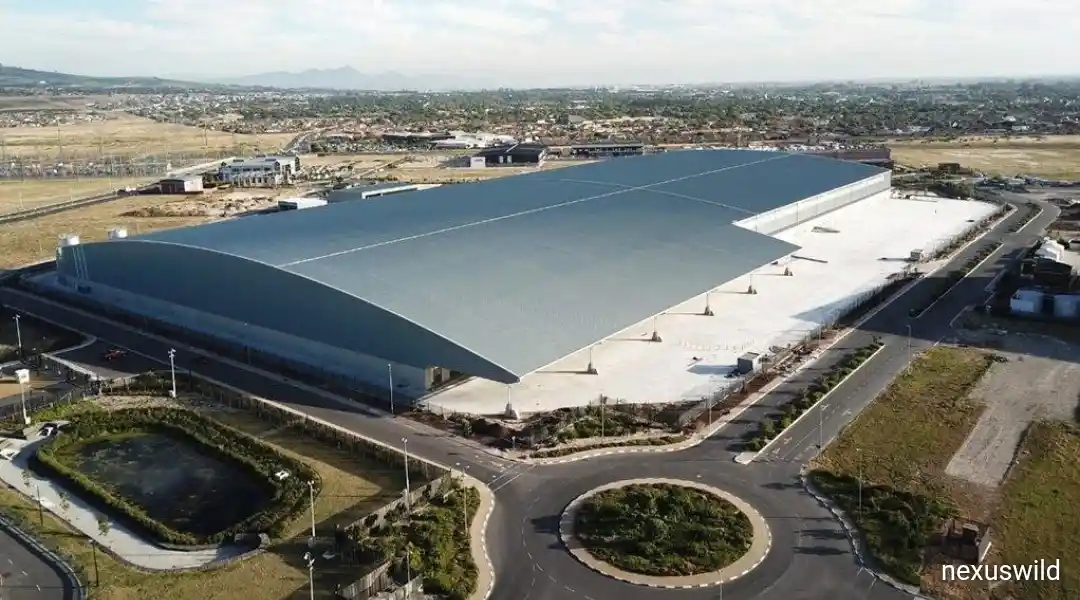
The 7.014-megawatt-peak (MWp) installation sits on the roof of the Massmart Distribution Centre in Brackengate. It is expected to generate about 9,889 megawatt-hours of electricity each year and avoid around 9,645 tonnes of carbon emissions each year.
The wheeling project links solar power at one site to the electricity needs at Kenilworth Centre, Blue Route Mall and The Towers office precinct all owned by Redefine. It uses the City of Cape Town’s electricity‑wheeling framework, which lets electricity made at one spot be sent to spots through the existing grid.
The launch shows how commercial property owners can use electricity networks to stretch renewable‑energy supply beyond the buildings where power is made.
How the solar wheeling system works
The facility has 11,691 solar panels spread across about 57,000 metres of roof space. Electricity made at Brackengate is fed into the network and then allocated to the three receiving properties through the wheeling arrangement.
Than each shopping centre or office building having to generate all its own renewable electricity the solar wheeling arrangement lets Redefine use a site with large roof space for generation and direct the resulting electricity to other properties that have different energy‑demand patterns.
This is especially useful for real estate portfolios. Large distribution centres can have rooftop areas for solar panels while retail centres and office buildings have different patterns of electricity use. Connecting those assets through a wheeling arrangement can make better use of the available generation capacity.
The installation needed electrical infrastructure, including a dedicated mini‑substation building, an inverter station and a transformer yard. The system connects to the network at the Rubicon Substation.
The project is backed by a 20‑year commitment giving a long‑term framework for the renewable‑electricity arrangement.
Why Cape Towns wheeling framework matters
Electricity wheeling is becoming an option for South African businesses that want to diversify their electricity supply. Traditionally most customers have used electricity supplied directly by their utility or municipal arrangements. Wheeling creates another route by letting electricity generated privately travel through an existing distribution network.
Cape Town has been building its wheeling arrangements to let more businesses join in renewable‑energy supply. The city’s pooled wheeling programme is designed to connect generators and electricity consumers through the municipal grid with the municipality handling the allocation and balancing.
For property owners the solar wheeling framework can help use renewable‑energy opportunities that would otherwise be limited by the distance between where power is made and where it is needed.
Redefine Brackengate installation is described by the company and industry reporting as the first purpose‑built rooftop solar wheeling project of its kind within the city’s municipal grid. Its scale and design show how private investment can work together with infrastructure.
However wider rollout of wheeling depends on technical capacity, regulatory arrangements, network charges and cooperation between municipalities and electricity participants. The model cannot be used at every site without looking at requirements.
Environmental and business implications
Redefine expects the facility to avoid about 9,645 tonnes of carbon emissions each year. The projected reduction is linked to the electricity generated and the conventional electricity supply it is expected to replace. Actual emissions benefits depend on how the system performs and the method used to calculate the comparison.
The project is also part of Redefine’s effort to improve energy efficiency and reduce the environmental footprint of its property portfolio.
Electricity is an operating cost for shopping centres, office buildings and industrial properties. Greater access to electricity may help property owners manage exposure to conventional electricity prices and support sustainability reporting. The financial benefits however depend on how much electricity's generated, maintenance costs, grid charges and the terms of the electricity arrangement.
Tenants may see benefits if improved energy economics lead to lower operating costs but the announcement does not promise a specific reduction in tenant electricity bills.
The project should not be seen as a guaranteed solution to power interruptions. Solar generation and wheeling can diversify supply but electricity delivered through the network is still subject, to network conditions. Backup capability during an outage usually requires storage or other backup systems.
What it means for property investment
Redefine’s installation shows that existing property assets can do than one job. The distribution centre offers space for generation and other properties use the electricity that is shared through the wheeling framework.
This approach could become very useful as property companies try to control utility costs enhance resilience and reach emissions targets without depending solely on rooftop systems on every building.
The project also shows how local government can help renewable‑energy investment. Municipal networks stay key to delivering electricity even when the power comes from funded solar installations.
The next things to watch are the facility’s annual generation how much the three receiving properties use the allocated electricity and whether similar projects can grow under Cape Town’s changing wheeling arrangements.
Redefine’s R106 million investment matters not for the solar capacity that was installed but also, for the model it shows: making renewable electricity where space exists and giving it to other commercial properties through the current grid.
Nexuswild welcomes factual corrections. Email contact@nexuswild.com with evidence and the article URL.