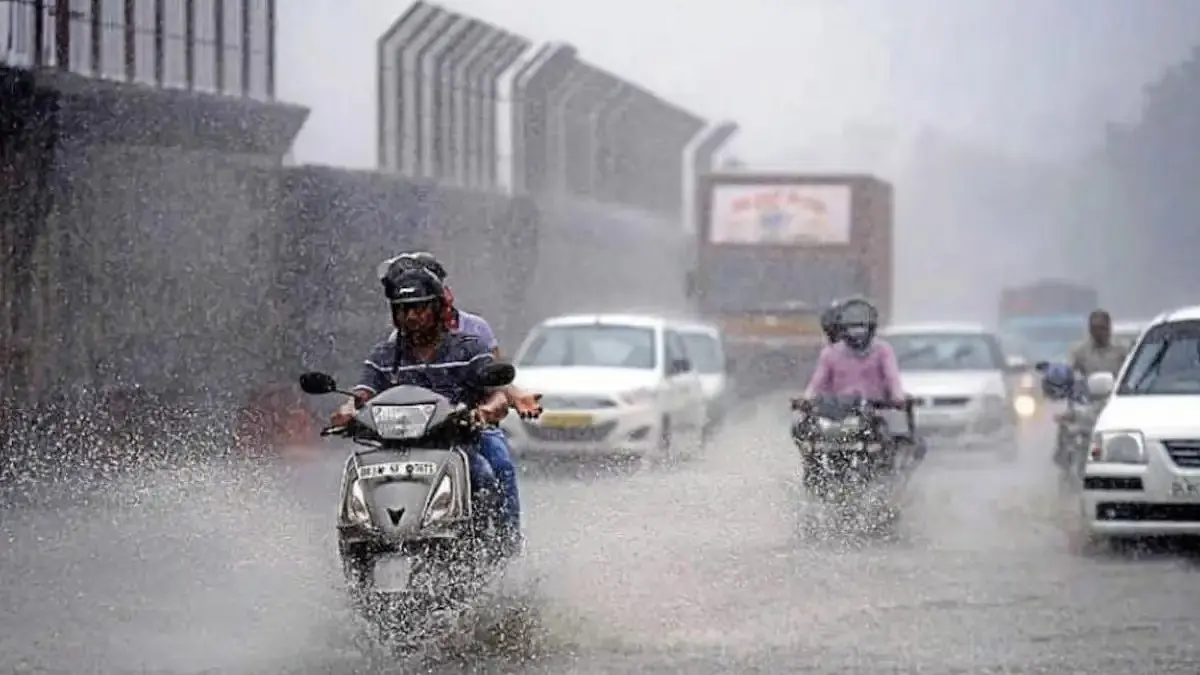

Ahmedabad has completed 100 percent of its average seasonal rainfall for the 2026 monsoon, after fresh showers accompanied by thunder and lightning struck the city on Saturday evening, September 19, 2026. According to rainfall figures reported for the city, Ahmedabad has now recorded approximately 34.85 inches of rain against its average seasonal benchmark of about 35 inches, while Ahmedabad district as a whole has gone further, reaching 108 percent of its seasonal average. The milestone comes after a monsoon season that, as recently as mid-September, was still running below its long-period average according to official India Meteorological Department data for the city.
Rainfall Update: Where the Numbers Stand
As of the latest available figures reported for September 19 and 20, 2026, Ahmedabad city has reached 100 percent of its average seasonal rainfall, recording close to 34.85 inches for the season so far against an average benchmark of roughly 35 inches. Ahmedabad district, which includes the city along with its surrounding talukas, has recorded 108 percent of its own seasonal average, based on a district average figure of about 28.67 inches.
These city and district-level rainfall percentages are consistent with the kind of taluka-by-taluka seasonal tracking regularly published using data from Gujarat's State Emergency Operations Centre in Gandhinagar, which compiles daily and seasonal rainfall figures across the state's 251 talukas and is the source typically cited by regional media for this type of seasonal percentage comparison. This is a distinct measurement system from the India Meteorological Department's own single-station data for its Ahmedabad meteorological centre, which is tracked separately in millimeters and compared against a different long-period average baseline for that specific station.
According to the IMD's Ahmedabad meteorological centre's own bulletin, the city's cumulative seasonal rainfall, measured from June 1, 2026, stood at 610.3 mm as of the evening of September 13, 2026, a total the IMD noted was 93.1 mm below normal for that point in the season. That IMD bulletin also recorded 14.6 mm of rain in the 24 hours ending the morning of September 13, followed by a further 55.6 mm between the morning and evening of the same day, as an active weather system brought isolated extremely heavy rainfall to the wider Gujarat region.
How the Recent Showers Closed the Seasonal Gap
The rainfall reported since mid-September appears to have played a significant role in closing the deficit the IMD's Ahmedabad centre had recorded earlier in the month. Separately, IMD's Ahmedabad centre recorded 47.6 mm of rainfall in the 24 hours ending on the morning of September 18, 2026, according to a report citing the centre's own data, with the weather department also issuing a thunderstorm warning for Gujarat for that same day.
The rain continued into the weekend. On Saturday evening, September 19, 2026, Ahmedabad received rainfall accompanied by thunder and lightning across several parts of the city, with Bakrol recording the highest rainfall total in the city that evening at 1.25 inches. It was this Saturday evening rainfall that reportedly pushed the city's cumulative seasonal total over its 100 percent benchmark for the year.
Taken together, the sequence shows a city that was still measurably behind its normal seasonal pace as of September 13, per the IMD's own station data, before a run of rainfall events over the following six days, September 13 through September 19, brought the season's cumulative total up to and beyond its full seasonal benchmark.
Talukas Across Ahmedabad District Also Cross Their Seasonal Mark
The 100 percent milestone was not confined to Ahmedabad city alone. Several talukas within Ahmedabad district have also completed their full seasonal rainfall quota, including Viramgam, Mandal, Dholka, Dhandhuka, Detroj and Daskroi, according to the rainfall data reported for the district.
Individual taluka totals varied considerably. Dholka has received around 38.10 inches of rain this season, the highest among the reported figures, while Daskroi recorded about 33.20 inches. Mandal recorded around 23 inches, Sanand received approximately 21.60 inches, and Dholera, though not listed among the talukas confirmed to have crossed 100 percent, recorded about 16.88 inches for the season. The spread between these figures illustrates the localized variation in rainfall distribution typical of Gujarat's monsoon season, where individual talukas within the same district can see meaningfully different totals depending on the specific paths taken by rain-bearing weather systems over the course of the season.
Weather Forecast: What Comes Next
Looking ahead, the India Meteorological Department has forecast light rain for Ahmedabad over the next three days, according to the same rainfall reporting covering the city's seasonal milestone. With the city having already secured its full seasonal rainfall total, this additional forecast rainfall is expected to keep weather conditions cloudy and periodically wet in parts of the city and surrounding areas, rather than mark the start of a fresh significant rainfall event.
This forecast aligns with the IMD's broader regional outlook for Gujarat issued around the same period, which had previously flagged light to moderate rain or thundershowers as likely at most places across a broad swath of Gujarat districts, including Ahmedabad, Kheda, Anand, Vadodara, Bharuch, Surat and several others, alongside similar conditions expected in Saurashtra and Kutch. Consistent with typical monsoon patterns for the region, rainfall intensity and probability in Ahmedabad tend to decline through September as the season moves toward its typical withdrawal period, which the IMD has in past years placed around the final week of the month for Gujarat.
Local Impact and Civic Response
Based on currently available reporting, no major waterlogging, flooding or significant traffic disruption has been specifically documented in connection with the September 18 to 19 rainfall that pushed Ahmedabad over its seasonal benchmark. Notably, despite the IMD's thunderstorm warning issued for Gujarat on September 18, Gujarat's state government did not announce a school holiday for Ahmedabad in connection with that day's rainfall, according to reporting on the advisory at the time.
This stands in contrast to some of the more intense rainfall episodes Ahmedabad experienced earlier in the 2026 monsoon season, when heavier downpours were associated with waterlogging in various city localities and disruptions to normal civic life, as has been documented in official state rainfall updates during peak monsoon weeks in July and August. The character of the rainfall that brought Ahmedabad over its seasonal mark in mid-to-late September, by contrast, appears from available reporting to have been comparatively moderate, consisting of scattered thunder, lightning and showers rather than the kind of sustained, high-intensity downpours that have previously triggered civic emergency responses in the city.
Implications for Water Resources and Local Conditions
Crossing the 100 percent seasonal rainfall threshold is generally regarded as a positive indicator for a region's water resource position heading into the drier months of the year, since higher seasonal rainfall typically supports better recharge of groundwater and higher storage levels in reservoirs that serve both urban water supply and agricultural irrigation needs across the district. However, specific, verified figures on current reservoir storage levels or groundwater conditions directly tied to this particular rainfall milestone were not available in the sources reviewed for this report, and this article does not attribute any specific reservoir or water-supply outcome to the recent showers beyond the confirmed rainfall totals themselves.
For agriculture in the talukas surrounding Ahmedabad, many of which are known for crops sensitive to late-season moisture availability, a seasonal total at or above 100 percent of the average generally supports more favorable conditions heading into the post-monsoon period, though actual agricultural outcomes depend on numerous additional factors, including the timing and distribution of rainfall through the season, rather than the cumulative seasonal total alone.
Distinguishing Confirmed Data From General Context
To summarize the reliability of the figures presented in this report: the specific claim that Ahmedabad city and district crossed 100 percent and 108 percent of their respective seasonal rainfall averages, along with the associated inch-based figures for the city, district and individual talukas, are drawn from rainfall reporting covering the city's milestone as of September 19 and 20, 2026. The IMD Ahmedabad meteorological centre's own station-specific figures, including the 610.3 mm cumulative total and 93.1 mm departure from normal recorded as of September 13, 2026, and the 47.6 mm single-day total recorded for the 24 hours ending September 18, 2026, are drawn separately from the IMD centre's own bulletins and reporting citing that data directly.
Because these two data sources, Gujarat's broader state-level seasonal rainfall tracking and the IMD's individual Ahmedabad meteorological station data, use different baseline averages and, in some cases, different units of measurement, readers should understand the 100 percent and 108 percent figures as reflecting the seasonal rainfall tracking methodology commonly used in Gujarat's state-level reporting, rather than as a direct percentage derived from the IMD station's own long-period average for Ahmedabad.
Conclusion
Ahmedabad has reached and surpassed its full seasonal rainfall benchmark for the 2026 monsoon, aided by a run of rainfall events between September 13 and September 19 that closed a deficit still evident in the India Meteorological Department's own station data as recently as September 13. With the city recording around 34.85 inches against a seasonal average of about 35 inches, and Ahmedabad district reaching 108 percent of its own average, the milestone reflects a broadly favorable rainfall season for the region so far this year. With light rain forecast to continue over the coming days, weather conditions in Ahmedabad are expected to remain cloudy and periodically wet, even as the city has already secured its full seasonal rainfall total for the year.
Further reading and useful links
Reader questions
Frequently asked questions
Has Ahmedabad received its full seasonal rainfall for 2026?
Yes, Ahmedabad city has reached 100% of its average seasonal rainfall, recording about 34.85 inches, while the broader Ahmedabad district has crossed 108%.
What caused the city to cross the 100% mark?
A sequence of rainfall events between mid-September and a Saturday evening storm on September 19, which brought thunder and lightning to the city, closed the remaining seasonal gap.
Which other talukas in Ahmedabad district received 100% rainfall?
Talukas including Viramgam, Mandal, Dholka, Dhandhuka, Detroj, and Daskroi have also completed their full seasonal rainfall quota.
What is the weather forecast for Ahmedabad over the next few days?
The India Meteorological Department has forecast light rain over the next three days, which is expected to maintain cloudy and periodically wet conditions across the city.
Nexuswild welcomes factual corrections. Email [email protected] with evidence and the article URL.