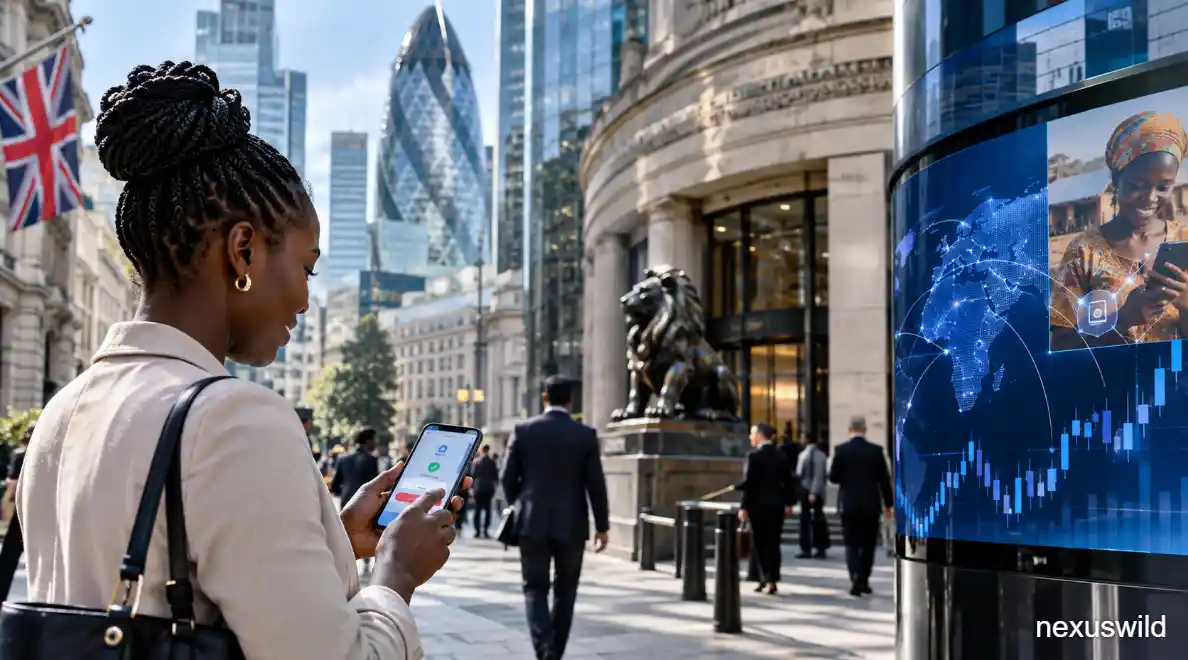

Airtel Money Begins London Trading at $7 Billion Valuation
Airtel Money has entered London's public equity market with an implied valuation of approximately $7 billion (£5.3 billion), raising about $703 million through a share sale that gives international investors a direct stake in one of Africa's major mobile financial services businesses.
Conditional trading began on the London Stock Exchange on October 9, 2026, under the ticker AMC. The offer price was set at £1.96 per share, and the transaction involved the sale of 270 million existing shares by shareholders. The listing was heavily oversubscribed, indicating demand several times greater than the shares available. <Cite refs={["turn520627search2","turn520627search1","turn520627search8"]}/>
Despite that demand, the first trading session delivered a more cautious market signal. Shares initially reached £2.00 before slipping to approximately £1.93, below the offer price. The movement highlights the difference between strong demand during an IPO and the price investors are willing to pay once shares begin trading.
The listing is an important milestone for Airtel Money and for London's efforts to attract major new companies. It also gives public-market investors a more direct way to assess the growth and financial performance of mobile money services across African markets.
A major listing for African fintech
Airtel Money is the mobile financial services arm of Airtel Africa, which is part of India's Bharti Enterprises group. The business provides digital payment and financial services to consumers, merchants and institutions in markets where conventional banking services may be difficult to access or use.
According to the London Stock Exchange, Airtel Money serves approximately 53 million monthly active users across 13 African countries, supported by a network of more than 2.3 million local agents. Its services include domestic and international transfers, payments, virtual debit cards, credit, savings, investments and insurance. It also offers payment collection and disbursement services to businesses. <Cite refs={["turn520627search2","turn520627search3"]}/>
The agent network remains an important part of the model. Physical agents can help customers deposit or withdraw money and use digital financial services even where access to bank branches or conventional payment infrastructure is limited.
This combination of digital platforms and local networks has helped mobile money become an important part of financial access across several African economies. However, usage, transaction volumes, profitability and competitive conditions differ by market, so the company's overall customer base alone does not establish the financial performance of every operation.
How the $703 million offering was structured
The IPO was structured as a secondary share sale, meaning existing shareholders sold shares rather than Airtel Money issuing new shares as the principal source of proceeds.
The initial offer covered 270 million existing shares at £1.96 each, equivalent to approximately $703 million at the reported conversion rate. The offer also included provision for an over-allotment option involving up to an additional 27 million shares. Airtel Africa was not expected to sell shares in the main offer, other than potentially through that option, and said it intended to remain a long-term strategic shareholder. <Cite refs={["turn520627search0","turn520627search6"]}/>
This structure is important for understanding the use of the proceeds. Because the main offering involved existing shares, the funds primarily went to selling shareholders rather than directly into Airtel Money's corporate treasury. The listing can still provide benefits through a public valuation, increased visibility and a market-based mechanism for trading ownership.
Airtel Money's admission to the London market is expected to proceed in stages. Conditional trading began on October 9, while unconditional dealings were scheduled to commence on October 14, subject to the completion of the required listing process. <Cite refs={["turn520627search0","turn520627search2"]}/>
Why the listing matters for London's market
London has been seeking to attract new listings after a prolonged period of weak IPO activity and companies choosing other markets for public offerings. Airtel Money's transaction gives the exchange a sizeable fintech listing linked to the growth of digital payments in emerging markets.
The offering's valuation also establishes a public-market reference point for investors assessing mobile financial services businesses. That could help analysts compare Airtel Money with other payment platforms, digital banks and financial technology companies, although differences in regulation, customer economics and operating markets must be considered.
The muted share-price performance shows that the headline valuation is not the same as a guaranteed market value. Even a heavily oversubscribed offering can experience selling pressure once trading begins, as investors reassess pricing, market conditions and future earnings prospects.
Growth opportunities and risks
Airtel Money operates in a sector supported by growing demand for convenient payments, digital transfers and financial services delivered through mobile phones. Merchants and businesses can also use digital payment platforms to collect funds and make disbursements.
Potential growth depends on more than adding customers. The company must encourage regular usage, maintain reliable services, manage fraud and cybersecurity risks, comply with local financial regulations and build sustainable revenue from its products. Competition from banks, mobile operators, fintech platforms and other payment providers can also influence pricing and margins.
For investors, the share-price decline below the offer price is an early reminder that growth prospects and IPO demand do not remove valuation risk. The longer-term performance of the stock will depend on the business's financial results, market expansion, transaction activity and its ability to turn customer reach into durable earnings.
What happens next?
The next milestone is the start of unconditional trading, scheduled for October 14, 2026. Investors will then be able to assess the stock's performance beyond its initial conditional-trading period.
Future disclosures on revenue, profitability, active-user trends, transaction volumes and expansion across its 13 markets will help determine whether Airtel Money can justify its initial valuation.
The listing provides a significant new public-market platform for an African mobile money business. Its lasting importance, however, will depend on whether Airtel Money can translate its large user base and regional reach into sustainable growth while navigating competition, regulation and the financial risks of serving diverse markets.
Nexuswild welcomes factual corrections. Email contact@nexuswild.com with evidence and the article URL.