
Article Summary
Chinese electric-vehicle manufacturer BYD is exploring opportunities to produce lithium batteries and energy-storage systems in Argentina, potentially expanding its South American operations beyond vehicle sales. The discussions follow a meeting between BYD executive Stella Li and Argentine Foreign Minister Pablo Quirno in Singapore. The proposal could create opportunities for local manufacturing and supply-chain development, but its scale and commercial feasibility remain unknown.
Article Body
Chinese electric-vehicle manufacturer BYD is considering investment in Argentina’s lithium value chain, including the potential production of lithium batteries and energy-storage systems, according to information released by Argentine Foreign Minister Pablo Quirno following a meeting with BYD Executive Vice President Stella Li in Singapore on October 8, 2026.
The discussions could mark a new stage in BYD’s expansion in South America, where the company has been growing its presence in electric and plug-in hybrid vehicles. However, the proposal remains at an exploratory stage. Argentine officials have not disclosed a planned investment amount, a factory location, production capacity or a timetable for construction. BYD has not publicly announced a finalized manufacturing project in Argentina. <Cite refs={["turn139535search1","turn139535search2"]} />
From lithium resources to battery manufacturing
Argentina is an important participant in the global lithium industry. Together with Chile and Bolivia, it forms part of South America’s Lithium Triangle, a region containing substantial lithium resources. Lithium is a key raw material for rechargeable batteries used in electric vehicles and stationary energy-storage systems.
The potential significance of BYD’s proposal lies in moving beyond raw-material extraction toward manufacturing products with greater industrial value. Rather than concentrating solely on mining and exporting lithium-bearing materials, Argentina could seek to attract investment in battery production and related technologies.
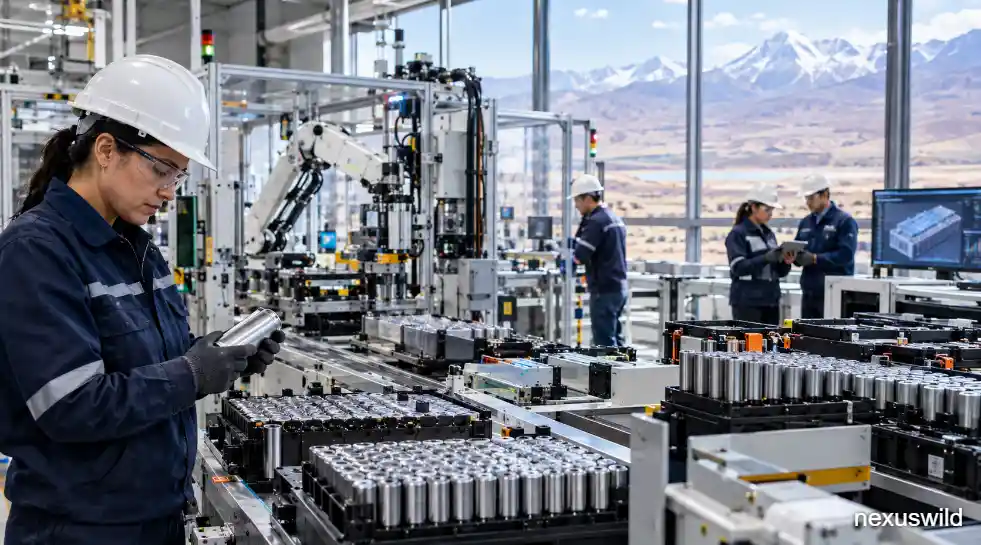
Battery manufacturing involves considerably more than access to lithium. Projects require reliable supplies of processed materials, industrial infrastructure, electricity, skilled workers, specialised equipment and established customers. A commercially viable factory would also need to compete with existing battery producers on production costs, quality and scale.
BYD’s interest therefore does not automatically mean that Argentina’s lithium resources would be used directly in a future factory. The sourcing arrangements, processing requirements and intended supply chain have not been disclosed.
Why BYD is exploring Argentina
BYD manufactures electric vehicles, plug-in hybrids and batteries, and develops energy-storage technologies. Expanding into battery production in Argentina could potentially support its regional business while creating opportunities to serve local customers and export markets.
Quirno said Argentina was positioning itself as a platform for projects serving both domestic demand and international markets. The government has been promoting investment in mining and related industrial activities, seeking to attract capital into sectors connected to the country’s natural resources. <Cite refs={["turn139535search2","turn139535search3"]} />
For BYD, a local manufacturing operation could offer advantages if the economics support production closer to customers. Potential benefits could include shorter supply chains for selected products, access to regional industrial partners and greater flexibility in supplying battery-storage projects.
Those advantages remain possibilities rather than confirmed outcomes. The company has not specified whether any prospective facility would produce batteries for its own vehicles, stationary energy-storage products, other manufacturers or a combination of customers.
Regional expansion and industrial competition
BYD has been expanding its commercial presence in Latin America. In Argentina, the company announced in August 2026 that it had reached 10,000 vehicle sales in the market, less than a year after its local launch. The milestone provides context for its regional growth, although vehicle sales alone do not establish that a battery factory would be commercially justified. <Cite refs={["turn139535search15"]} />
Brazil is another important part of BYD’s South American strategy, with the company operating a vehicle manufacturing facility there. A potential Argentine battery project could complement regional operations, but the company has not announced how a project in Argentina would fit into its existing production network.
Competition would also be a consideration. Battery manufacturers must contend with rapidly changing technology, pressure to lower costs and fluctuations in demand for electric vehicles and storage systems. A decision to establish local production would depend on projected sales, access to financing, operating costs and the availability of reliable raw materials.
For Argentina, attracting a project could create opportunities for industrial employment, technical training and local supplier development. However, those benefits would depend on the eventual investment’s scale, the extent of domestic sourcing and the number of manufacturing activities actually performed within the country.
Energy storage adds another opportunity
The discussions reportedly cover energy-storage systems as well as vehicle batteries. These systems store electricity for later use and can support renewable-energy integration, electricity-grid management and commercial or industrial power needs.
As countries expand solar and wind generation, storage technologies can help manage the differences between when electricity is produced and when it is needed. Battery-storage installations may also support power reliability for businesses and infrastructure, depending on their design and operating conditions.
A BYD-related investment could potentially connect Argentina’s resource base with this wider market. Nevertheless, there is no confirmed project design or evidence that a particular storage product would be manufactured locally.
What happens next
The immediate question is whether exploratory discussions develop into a formal investment proposal. Key indicators will include an announcement from BYD, a specified location, a proposed capital commitment, production targets and details about permits, financing and supply agreements.
Until those details emerge, the potential factory should not be presented as approved, under construction or guaranteed to create a particular number of jobs. The meeting establishes that investment opportunities are being evaluated, not that a final decision has been made.
For Argentina, the opportunity is to attract industrial investment that builds on its lithium resources. For BYD, the decision will depend on whether local production offers a sustainable commercial advantage within its wider Latin American strategy. The next formal announcement will determine whether the discussions progress toward a manufacturing project.
Nexuswild welcomes factual corrections. Email contact@nexuswild.com with evidence and the article URL.