
TOKYO — Asian stock markets closed mixed on Tuesday as several benchmarks recovered from early technology-led losses, while concerns about expensive artificial intelligence investments continued to influence trading.
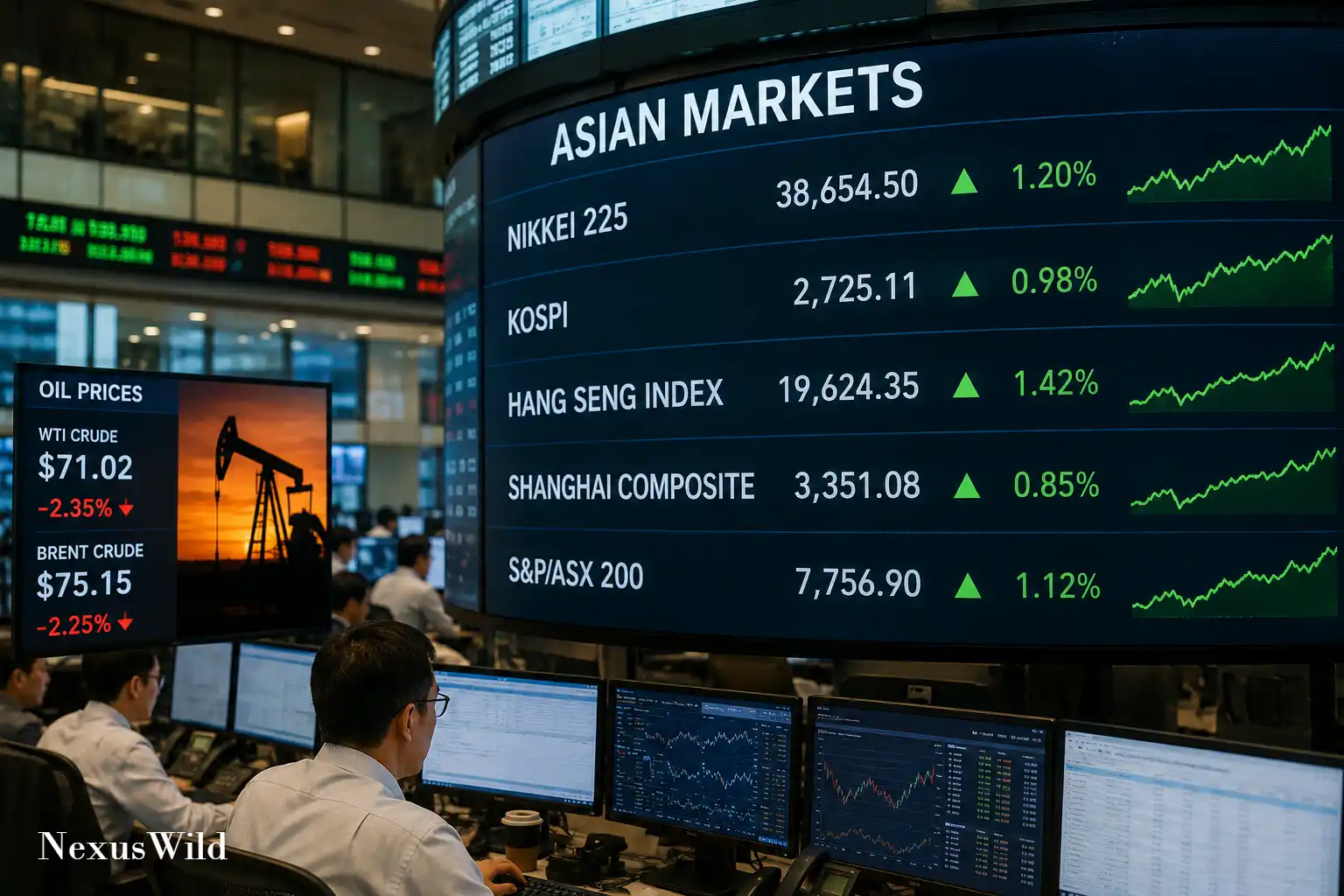
Japan’s Nikkei 225 reversed an intraday decline to finish 0.50% higher at 65,856.43, according to Nikkei Indexes. Semiconductor-related shares recovered during the session, while SoftBank Group gained 2.3%.
South Korea’s KOSPI also staged a sharp turnaround. The index opened 2.4% lower and fell more than 4% before closing 0.68% higher at 6,742.74. Institutional and individual buying offset net foreign sales of 3.82 trillion won, according to The Korea Times.
Corporate Movers: Samsung and Alibaba
Samsung Electronics fell as much as 4.67% before ending unchanged at 257,000 won. Its shares had dropped more than 8% during Monday’s session after investors were disappointed by the scale and structure of its shareholder-return programme. Samsung estimated returns of between 90 trillion and 110 trillion won for 2026, but uncertainty over future share repurchases and cancellations remained a concern.
Hong Kong’s Hang Seng Index slipped 0.02% to 25,511.10, while the Hang Seng Tech Index declined 0.12% to 4,588.54, official HKEX market data showed.
Alibaba gained 1.51% to HK$114.20 after falling sharply on Monday. The company is placing 710 million new shares at HK$112.70 each to raise HK$80 billion, or about $10.2 billion, for chips, AI infrastructure and model development. The discounted sale raised concerns about shareholder dilution and the cost of expanding AI capacity.
Alibaba Chairman Joe Tsai purchased another 720,000 Hong Kong-listed shares on Tuesday for approximately HK$82 million, a stock-exchange filing showed. Tsai and Chief Executive Eddie Wu bought more than HK$200 million of Alibaba shares over two days, according to Reuters.
Mainland China and Wall Street Impact
Mainland Chinese markets were also divided. The Shanghai Composite rose 0.19% to 3,889.44, while the Shenzhen Component fell 0.35% to 13,745.87.
Sentiment initially followed Wall Street, where the Nasdaq Composite lost 0.76% on Monday and the Philadelphia semiconductor index fell 2.70%. Nvidia declined 2.91% as investors reduced risk before its earnings announcement.
Investors are now watching Nvidia’s results for evidence that AI-related demand can support elevated technology valuations. Alibaba’s placement is expected to close on August 26, subject to customary conditions.
Further reading and useful links
Reader questions
Frequently asked questions
How did the major Asian markets perform on August 25, 2026?
Asian markets closed mixed. Japan's Nikkei 225 reversed early losses to finish 0.50% higher, and South Korea's KOSPI closed 0.68% higher after a sharp early drop. However, Hong Kong's Hang Seng and China's Shenzhen Component ended slightly lower.
Why did Alibaba's stock price fluctuate?
Alibaba shares fell sharply on Monday following the announcement of a discounted sale of 710 million new shares to raise $10.2 billion for AI expansion, raising dilution fears. The stock rebounded 1.51% on Tuesday after Chairman Joe Tsai and CEO Eddie Wu purchased over HK$200 million in shares.
What are investors watching for regarding technology and AI stocks?
Investors are closely monitoring Nvidia’s upcoming earnings results for concrete evidence that the demand for AI-related infrastructure can justify the currently elevated valuations of major technology stocks.
Nexuswild welcomes factual corrections. Email contact@nexuswild.com with evidence and the article URL.