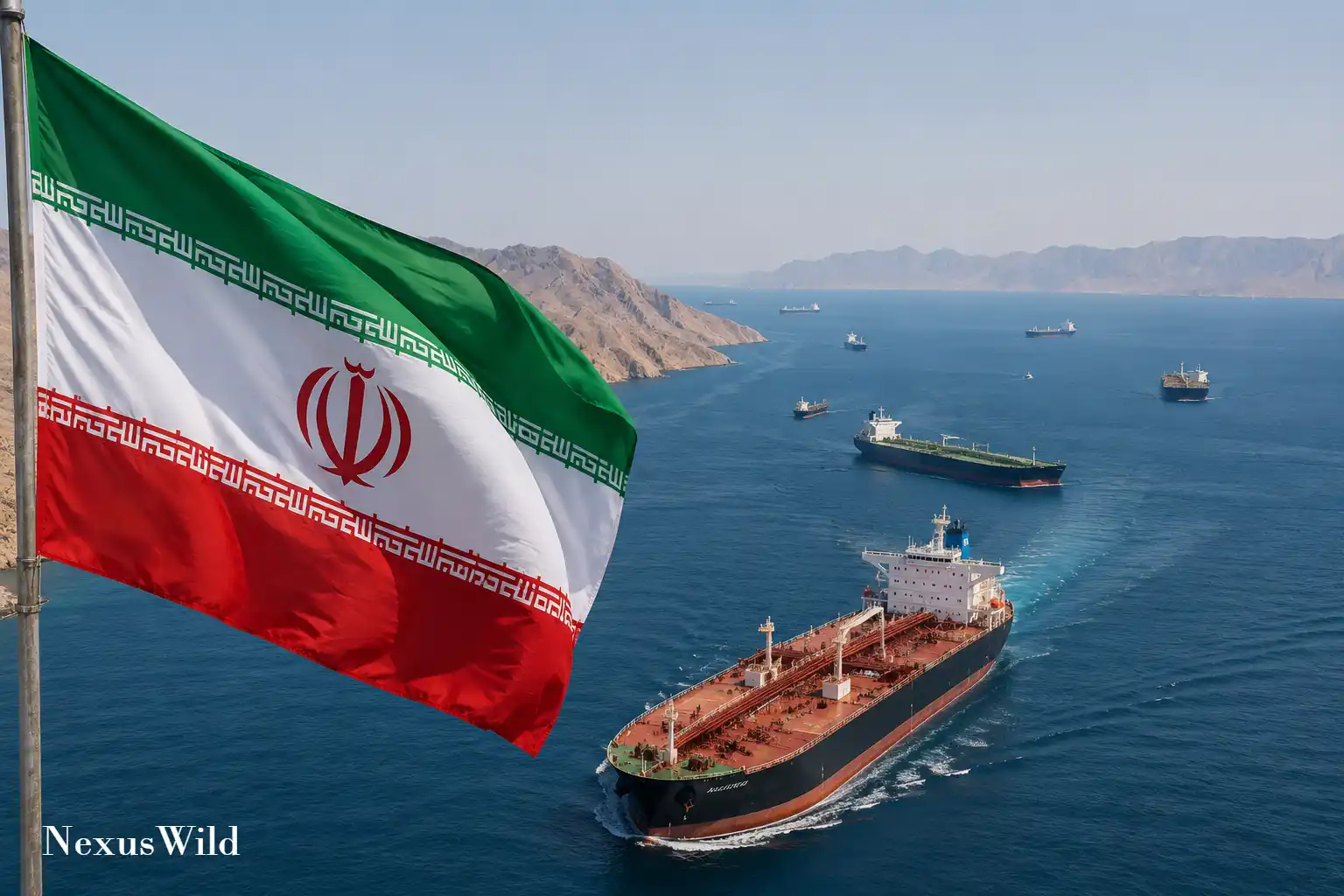

TEHRAN — Iran says military vessels would be excluded from the Strait of Hormuz under a proposed traffic-management agreement with Oman, but the restriction has not entered into force and negotiations remain unfinished.
Iranian Deputy Foreign Minister Kazem Gharibabadi told state television that no military vessel would be permitted to cross the strait if the preliminary understanding became binding. His statement did not identify exemptions or limit the proposed restriction to vessels from particular countries, indicating that Iran wants it to cover military ships generally.
Proposed Navigational Corridors
The military provision is separate from the temporary commercial route being discussed. Gharibabadi said inbound commercial vessels would travel through Iranian waters, while outbound traffic would use a route passing through Iranian and Omani waters. A permanent arrangement would then be negotiated within 30 to 60 days, according to the Associated Press.
An official Iran-Oman statement described the plan as a proposed phased framework. It included a joint temporary navigational corridor, information sharing, traffic management and a project to clear mines from the waterway. No operational start for the corridor or verified beginning of joint mine-clearing work has been announced.
Omani Position and Unresolved Details
Omani Foreign Minister Badr Albusaidi said he hoped a temporary corridor and arrangements for safe navigation would be announced soon. Oman has also called for consultation with other Gulf states, adherence to international law and respect for coastal states’ sovereign rights.
Iran’s Revolutionary Guards have claimed that preliminary understandings cover how Iran and Oman would share the waterway and related revenue. However, the joint statement did not confirm a revenue formula, transit charges or percentages. A senior Iranian source told Reuters that the details were still being negotiated.
U.S. Opposition and Market Impact
Washington has opposed Iranian control of traffic and proposed commissions on vessels. The White House said on August 27 that no direct negotiations with Tehran were underway and that all options remained available. No separate official U.S. response specifically accepting or rejecting the military-vessel clause had been confirmed.
Visible commercial traffic increased modestly on August 26. Kpler recorded 10 commodity-vessel transits, up from eight a day earlier but below the 10-day average of about 15, Reuters reported. Some ships travelling without active transponders may not appear in the count.
The strait carried about one-fifth of global daily oil and LNG supplies before the conflict. At 1332 GMT on August 27, Brent crude was up 1.32% at $89 a barrel, while WTI rose 0.63% to $82.75 as stalled diplomacy kept supply concerns elevated.
A final text, accepted transit rules, completed security arrangements, progress on mine clearance and resolution of the Iran-U.S. standoff are still required before the proposed system can become operational.
Further reading and useful links
Reader questions
Frequently asked questions
What is Iran proposing for military vessels in the Strait of Hormuz?
Iran is proposing a ban on all military vessels from crossing the Strait of Hormuz as part of a traffic-management agreement currently being negotiated with Oman.
How would commercial shipping work under the proposed agreement?
Under the preliminary understanding, inbound commercial vessels would travel exclusively through Iranian waters, while outbound traffic would use a route passing through both Iranian and Omani waters.
Has the United States agreed to this new framework?
No. The White House stated on August 27 that no direct negotiations with Tehran were underway. Washington opposes Iranian control of the traffic and proposed transit commissions.
Nexuswild welcomes factual corrections. Email contact@nexuswild.com with evidence and the article URL.