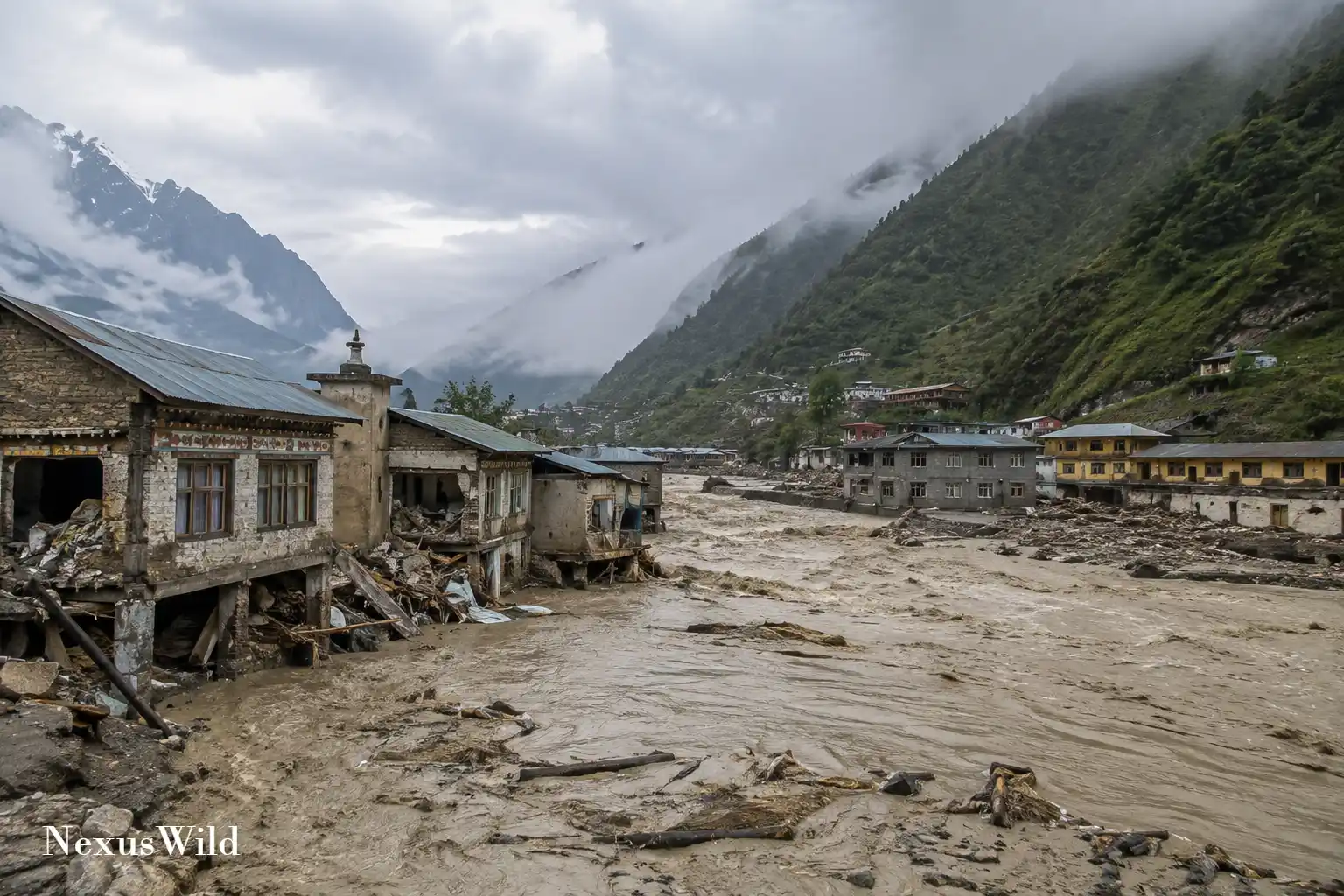

KATHMANDU — Search teams in Nepal and China's Tibet region are racing to reach communities cut off by flash flooding that has killed more than 360 people and left nearly 1,500 unaccounted for, authorities said Thursday.
In Nepal, police put the confirmed death toll at 359, with the country's National Disaster Risk Reduction and Management Authority reporting 910 people still missing. In China's Tibet, officials said three people had died, two had been rescued, and 558 remained missing, including 260 foreign nationals, after a mudslide struck a border crossing in Gyirong county. Authorities cautioned that some individuals may be counted on both sides of the border, and warned the death toll is likely to rise further.
Missing Tourists and Infrastructure Damage
Nepal's Tourism Board said more than 500 foreign nationals from roughly 30 countries were among the missing, the majority Indian nationals, many on pilgrimage to Mount Kailash in Tibet. At least 65 Americans were also reported missing. Nepal's Rasuwa district, particularly the towns of Timure and Syafrubesi, bore the brunt of the disaster, while Gyirong took the worst damage on the Chinese side.
Bridges, roads, hydropower stations and border customs facilities were swept away or badly damaged, cutting off access to affected valleys. The Nepal Army, Armed Police Force and Nepal Police, backed by helicopters and medical teams, have been flying rescue and evacuation missions, recovering more than 100 people in one morning of operations and airlifting stranded foreign nationals to Kathmandu. Chinese emergency crews have reached the core disaster zone in Gyirong but are still clearing mud and debris blocking roads.
International Aid and Geological Causes
India has sent humanitarian aid and kept air force and disaster response teams on standby, the European Union has activated satellite mapping support, the United States has pledged emergency funding, and the United Nations, including the World Health Organization, has deployed supplies and personnel. South Korea is sending a rapid response team over missing citizens working on a hydropower project.
The U.S. Geological Survey initially recorded the event as a 4.4-magnitude earthquake but later said no earthquake had occurred, attributing the flood instead to a glacial collapse that sent a mass of ice and waterlogged sediment crashing into the valley below. Nepali and Chinese scientists are still investigating the precise sequence of events. Chinese authorities are also monitoring a still-dammed lake upstream in Gyirong that could pose a further flood risk, and have warned of a possible secondary disaster as more rain is forecast for the region.
Further reading and useful links
Reader questions
Frequently asked questions
How many people are missing in the Nepal-Tibet border floods?
Nearly 1,500 people remain unaccounted for across both sides of the border, including hundreds of foreign tourists and pilgrims.
What caused the catastrophic flooding in Nepal and Tibet?
The U.S. Geological Survey attributed the flash flood to a massive glacial collapse that sent a torrent of ice, water, and sediment crashing into the valleys, although scientists are still investigating the precise sequence of events.
Which areas were most affected by the disaster?
Nepal's Rasuwa district, particularly the towns of Timure and Syafrubesi, and China's Gyirong county in Tibet suffered the most severe damage, with critical infrastructure including bridges and roads swept away.
Nexuswild welcomes factual corrections. Email contact@nexuswild.com with evidence and the article URL.