
The global construction equipment industry is witnessing another important corporate transaction as manufacturers reassess their portfolios, strengthen their core businesses and pursue opportunities in specialised infrastructure markets. In a significant development, US-based Astec Industries has entered into a definitive agreement to sell its road construction equipment business to Komatsu America Corp. for an enterprise value of $75 million.
Announced on November 12, 2026, the agreement includes Astec's Roadtec and Carlson brands, which specialise in equipment used for road construction, asphalt paving and infrastructure maintenance. The transaction represents a strategic move for both companies. While Astec aims to improve profitability and concentrate resources on higher-margin business segments, Komatsu is seeking to expand its construction equipment portfolio and strengthen its competitive position in the road-building industry.
The business being sold generates approximately $145 million in annualised revenue. Despite its substantial sales base, Astec expects the divestment to eliminate associated operating losses, improve its adjusted EBITDA margin and provide additional financial flexibility.
The proposed acquisition also reflects broader changes in the global construction equipment market, where established manufacturers are increasingly looking for opportunities to expand through targeted acquisitions, specialised technologies and stronger distribution networks.
Details of the $75 Million Transaction
Under the definitive agreement, Astec Industries will sell all issued and outstanding shares of two wholly owned subsidiaries, Roadtec Inc. and Carlson Paving Products Inc., to Komatsu America Corp., a subsidiary of Japan-based Komatsu Ltd.
The transaction has an enterprise value of $75 million and will be paid in cash on a cash-free, debt-free basis. The final purchase price remains subject to customary adjustments, including working capital adjustments and reductions for specified debt-like items and transaction expenses.
The Roadtec business is headquartered in Chattanooga, Tennessee, and operates within Astec's Infrastructure Solutions segment.
The transaction is expected to close in the first quarter of 2027, subject to customary closing conditions. These include completion of a pre-closing restructuring, certain employee retention agreements and third-party consents.
The agreement also provides for transition-related arrangements to facilitate the transfer of operations and support continuity following completion.
For Astec, the sale is more than a straightforward asset disposal. It forms part of a wider corporate strategy aimed at improving operating efficiency, focusing on more profitable products and directing investment towards businesses with stronger long-term growth potential.
What Komatsu Gains Through the Acquisition
The acquisition provides Komatsu with access to two established road construction equipment brands: Roadtec and Carlson.
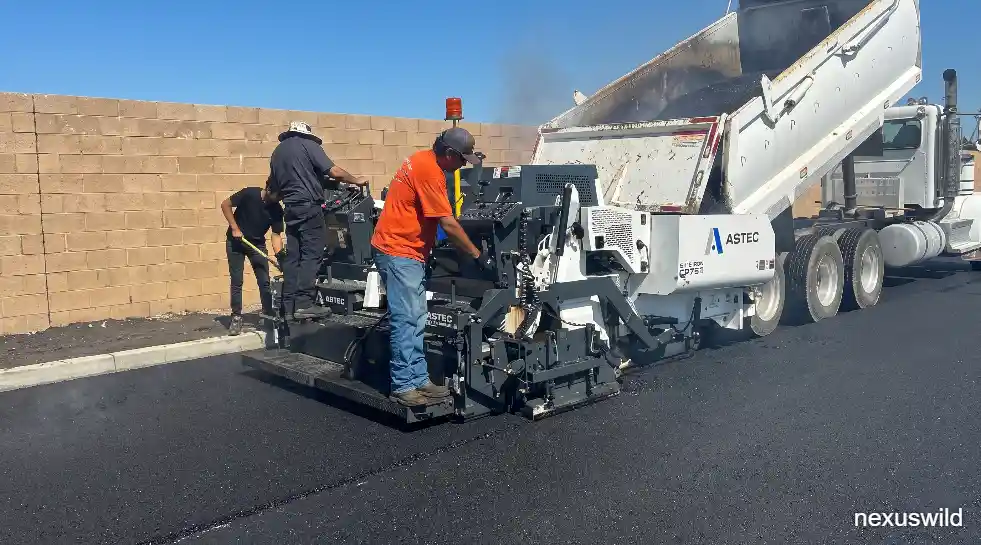
Roadtec manufactures equipment used in highway construction, commercial paving and road resurfacing. Its product portfolio includes asphalt pavers, paver screeds, material transfer vehicles, cold planers and related aftermarket parts and rebuilding services.
The business also provides specialised equipment such as Shuttle Buggy material transfer vehicles, which help move and transfer asphalt materials during paving operations.
Carlson contributes additional road construction equipment capabilities and established product expertise.
By bringing these brands into its business, Komatsu expects to expand the range of construction equipment available to customers. The combination could create opportunities to integrate Roadtec and Carlson's specialised technologies with Komatsu's manufacturing capabilities, engineering resources and international distribution network.
The acquisition is particularly relevant to the North American market, where road construction and infrastructure maintenance require a broad range of specialised equipment.
Komatsu has identified North America as one of its important markets and views the transaction as an opportunity to strengthen its construction equipment business in the region.
The company also sees potential to apply its manufacturing and engineering expertise to improve product quality, equipment performance and customer support.
Over time, the acquired brands could benefit from greater access to Komatsu's global network, potentially creating opportunities beyond their established North American customer base.
Why Astec Is Divesting Its Road Construction Business
For Astec Industries, the transaction represents a deliberate effort to reshape its business portfolio.
Although the Roadtec business generates approximately $145 million in annualised revenue, Astec has identified the operation as a source of operating losses.
The company believes that removing these operations will help improve its overall earnings profile and support progress towards its 2030 strategic objectives.
Astec expects the divestiture to be accretive to annualised earnings per share. It also estimates that the transaction could improve its adjusted EBITDA margin by approximately 200 basis points.
A 200-basis-point improvement represents a two-percentage-point increase in the adjusted EBITDA margin, assuming the company's projected benefits are achieved.
The estimated improvement highlights the financial importance of removing loss-generating operations rather than focusing exclusively on total revenue growth.
Astec also expects to receive approximately $65 million in total cash proceeds and tax benefits from the transaction. These proceeds are expected to strengthen the company's balance sheet and provide additional flexibility for future investments.
The company plans to prioritise its core asphalt, aggregates and concrete platforms while pursuing opportunities in recycling, digital solutions and mining.
This approach reflects a broader corporate trend in which industrial manufacturers are reviewing their portfolios to identify operations that contribute most effectively to profitability and long-term competitiveness.
Financial Implications for Astec Industries
The financial impact of the transaction could be important for Astec as it seeks to improve operational performance.
The company has stated that the divestiture is expected to eliminate the operating losses associated with the Roadtec business.
The anticipated improvement in adjusted EBITDA margin could support stronger earnings quality and provide additional financial flexibility.
The distinction between enterprise value and expected cash proceeds is also important. The $75 million enterprise value represents the announced transaction valuation, while the approximately $65 million figure reflects Astec's estimate of total cash proceeds and tax benefits.
These figures should not be interpreted as interchangeable measures of the transaction's value.
Astec expects to use the financial benefits to support investment in its remaining businesses rather than relying exclusively on external acquisitions or additional borrowing to pursue growth.
Its focus on higher-margin operations is particularly relevant as industrial manufacturers face pressure from production costs, customer demand fluctuations, labour expenses and changing infrastructure investment cycles.
The success of the transaction will therefore depend not only on completing the sale but also on how effectively Astec reinvests the resulting financial resources.
Recent Financial Performance Adds Context to the Decision
Astec's latest financial results provide additional context for understanding its portfolio restructuring strategy.
For the third quarter ended September 30, 2026, the company reported net sales of $352.4 million, representing a 0.7% increase compared with the corresponding period in 2025.
However, its financial performance remained under pressure. Astec reported a net loss attributable to controlling interests of $12.2 million, while adjusted EBITDA stood at $18.9 million.
Its Infrastructure Solutions segment recorded net sales of $189 million during the quarter, down 2.2% year over year. Segment operating adjusted EBITDA declined to $15.3 million from $23.9 million in the previous year's corresponding quarter.
For the first nine months of 2026, Infrastructure Solutions generated revenue of $654.3 million, compared with $633.8 million during the same period in 2025. However, segment operating adjusted EBITDA declined from $99 million to $83 million.
These figures illustrate why profitability and operational efficiency are important considerations for the company.
The Roadtec divestment is one component of a broader restructuring effort aimed at improving margins and concentrating resources on businesses with stronger financial prospects.
Astec's remaining operations continue to serve the asphalt, aggregates and concrete industries, providing a substantial platform for future investment.
Global Construction Equipment Market and Competitive Positioning
The transaction comes at a time when construction equipment manufacturers are seeking to strengthen their positions in increasingly specialised markets.
Infrastructure projects require a wide variety of machinery, including excavators, loaders, asphalt plants, road pavers, milling machines and material-handling equipment.
Customers are also becoming more focused on equipment productivity, operating costs, fuel efficiency, maintenance requirements and machine reliability.
These changing requirements are creating opportunities for manufacturers that can provide integrated equipment portfolios and comprehensive aftermarket support.
Komatsu's acquisition of Roadtec and Carlson complements its established construction and mining equipment operations.
By adding specialised paving and maintenance equipment, the company can expand its customer offering and compete across a broader range of road construction activities.
The transaction also highlights the importance of aftermarket services. Equipment manufacturers increasingly depend on spare parts, maintenance, repairs and rebuilding services to establish long-term relationships with customers.
Access to established product brands and their installed customer base could strengthen Komatsu's position in these areas.
For other manufacturers, the acquisition could increase competitive pressure to invest in specialised equipment, expand product offerings and improve customer service capabilities.
Opportunities and Challenges Following the Deal
Although the acquisition presents opportunities for both companies, its long-term success will depend on several operational factors.
For Komatsu, integrating Roadtec and Carlson into its existing business will require attention to manufacturing processes, employee retention, supply chains and distribution arrangements.
Maintaining established customer relationships will also be essential. Customers purchasing specialised road construction equipment depend on reliable servicing, spare parts availability and technical support.
Any disruption during the transition could affect customer confidence and operating performance.
The acquired businesses must also adapt to Komatsu's wider manufacturing and business systems without losing the specialised expertise that made their brands valuable.
For Astec, the main challenge will be translating the expected financial benefits into sustainable earnings growth.
The company must allocate the proceeds effectively and ensure that investment in its remaining business segments produces attractive returns.
The broader construction equipment industry also faces uncertainty related to infrastructure spending, interest rates, raw material costs and construction project activity.
These factors can influence equipment orders and customer purchasing decisions.
Consequently, both companies will need to manage market conditions carefully as they move towards completing and integrating the transaction.
Future Outlook
The proposed sale positions both companies to pursue different but complementary strategic objectives.
Komatsu expects to use the acquired brands to strengthen its road construction equipment portfolio, particularly in North America. Its manufacturing capabilities and global network could help Roadtec and Carlson access additional commercial opportunities.
Astec, meanwhile, intends to concentrate on its core asphalt, aggregates and concrete platforms while expanding investment in recycling, digital technologies and mining-related opportunities.
The transaction is expected to close in the first quarter of 2027, subject to the completion of required conditions.
Following closing, investors and industry participants will be watching how effectively Komatsu integrates the acquired businesses and whether Astec achieves the anticipated improvements in profitability.
The financial and operational benefits will ultimately depend on successful execution rather than the announced transaction value alone.
Conclusion
Astec Industries' agreement to sell its Roadtec and Carlson road construction equipment businesses to Komatsu America for an enterprise value of $75 million represents a significant portfolio restructuring move in the global construction equipment industry.
For Komatsu, the acquisition provides access to established paving and road maintenance brands, specialised technologies and an additional customer base. For Astec, the divestment creates an opportunity to eliminate operating losses, improve adjusted EBITDA margins and redirect investment towards its core businesses.
The transaction also demonstrates how industrial manufacturers are increasingly using targeted acquisitions and divestments to improve competitiveness and financial performance.
As infrastructure investment and road maintenance requirements continue to shape demand for specialised machinery, the integration of Roadtec and Carlson into Komatsu could strengthen the buyer's position in the road construction market.
The next important test will be whether both companies can convert their respective strategic objectives into measurable operational and financial improvements after the transaction closes.
Nexuswild welcomes factual corrections. Email contact@nexuswild.com with evidence and the article URL.