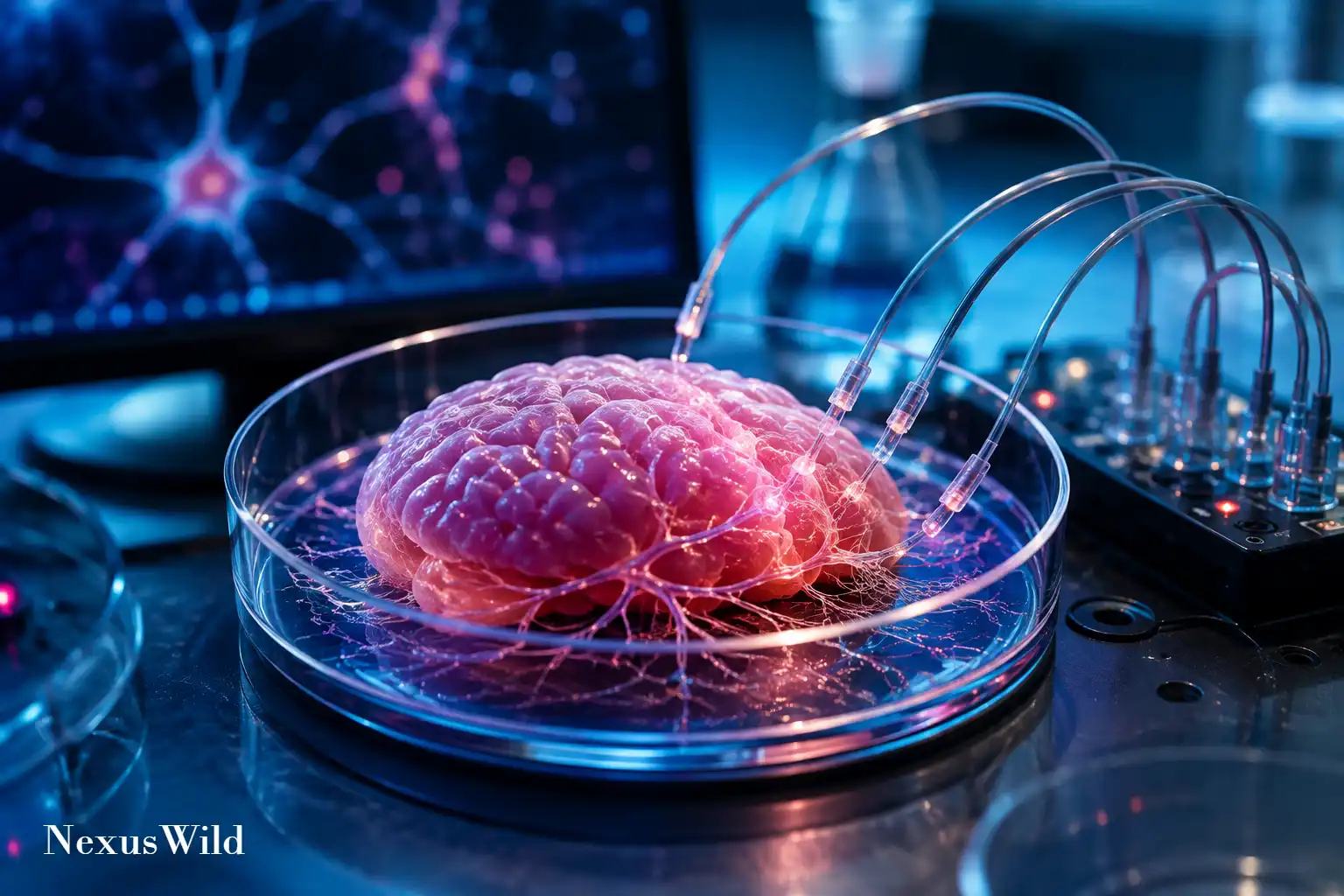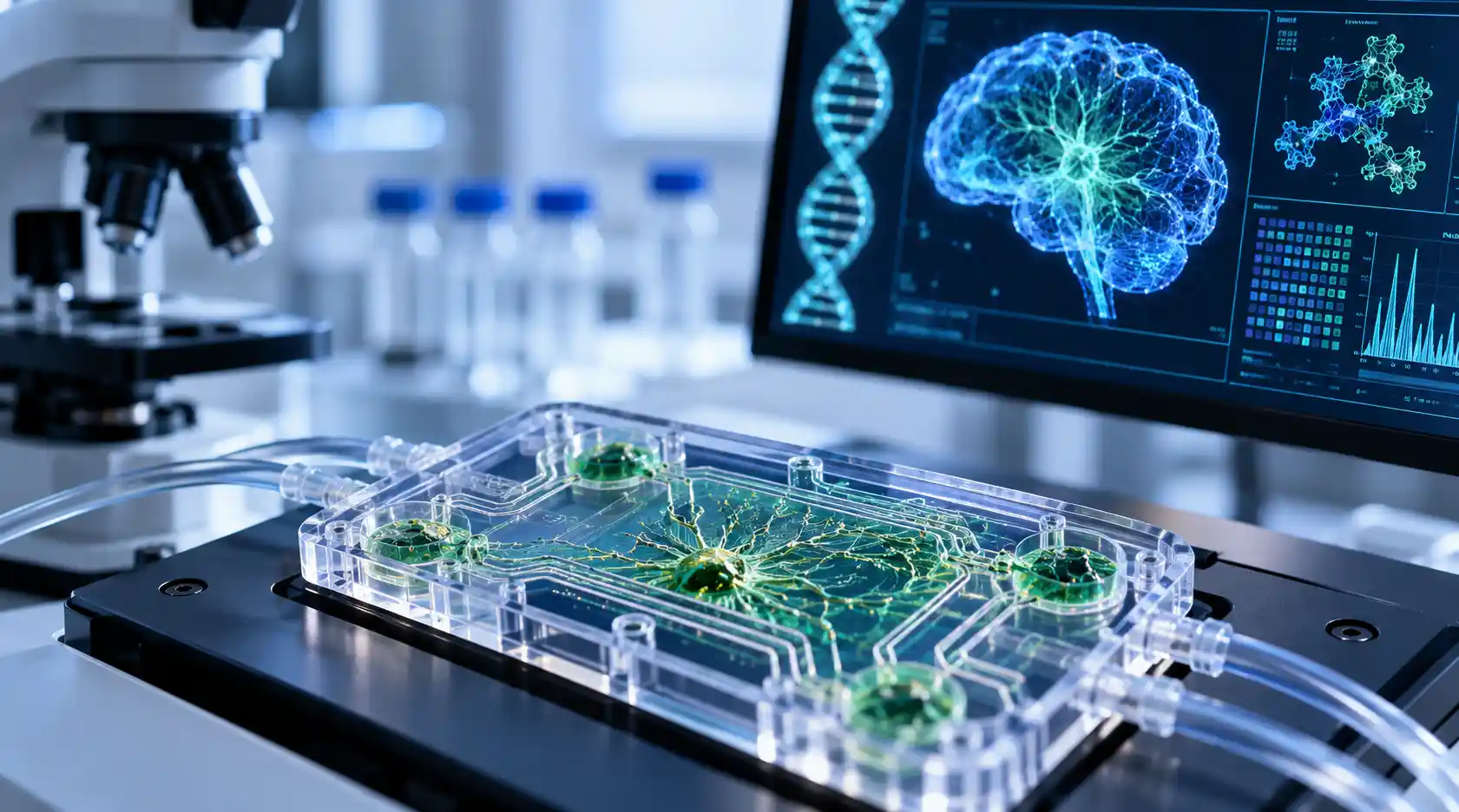

In August 2026, a groundbreaking prototype quietly powered up in Singapore. It was not another rack of traditional silicon servers, but rather a 20-unit biological data centre. Built through a partnership between Cortical Labs, DayOne, and the NUS Yong Loo Lin School of Medicine, the system integrates living human brain cells with electronic hardware.
This pilot project represents a crucial threshold for the global technology industry. For decades, biological computing was confined to science fiction and highly experimental university labs. Today, a nascent but rapidly expanding biocomputing market is emerging. As conventional silicon computing struggles to keep up with the exorbitant energy demands of artificial intelligence and massive data generation, technology companies and venture capitalists are increasingly looking to the most efficient computer ever created: biology.
What Is Biocomputing?
At its core, biocomputing technology (or biological computing) involves using biological systems to store, retrieve, or process data. Rather than relying on transistors that manipulate electrical currents into binary ones and zeroes, biocomputers leverage the complex physical and chemical properties of DNA, proteins, and living cells.
This takes several distinct forms. In some systems, synthetic DNA is used purely as a high-density storage medium. In others, clusters of lab-grown neurons - known as neural organoids - are cultured on microelectrode arrays. By delivering electrical stimulation to these living networks and measuring their responses, researchers can train the tissue to perform specific computational tasks, creating what is known as a biohybrid system.
Why Biological Computing Is Gaining Attention
The push toward alternative computing technologies is driven by the physical limitations of modern silicon. Moore’s Law - the historical trend of transistors shrinking and computing power doubling every two years - is slowing down as manufacturers hit thermodynamic and atomic limits.
More pressingly, the generative AI boom has created a global energy crisis for data centres. Training advanced artificial intelligence requires immense, power-hungry clusters of graphics processing units (GPUs). In stark contrast, the human brain performs highly complex, parallel problem-solving while consuming roughly 20 watts of power - equivalent to a dim lightbulb. If engineers can harness even a fraction of this biological efficiency, it could radically reduce the carbon footprint and cooling costs of next-generation computing infrastructure.
Major Biocomputing Technologies
The biocomputing industry is currently categorized into a few highly specialized sectors:
- DNA and Molecular Computing: Because DNA naturally stores the genetic blueprints for life using four chemical bases (A, C, T, G), scientists can encode digital data into synthetic DNA sequences. Recent breakthroughs have moved beyond simple storage; in 2024, researchers from North Carolina State University and Johns Hopkins University unveiled a system capable of storing, retrieving, and actually computing data simultaneously using DNA.
- Organoid-Based Computing: Dubbed "Organoid Intelligence" (OI), this involves growing three-dimensional clusters of brain cells from stem cells. Companies like Cortical Labs previously demonstrated this concept with "DishBrain," a cellular culture that successfully learned to play the video game Pong.
- Biohybrid Computing: This acts as the bridge. Biohybrid platforms use conventional electronic interfaces to send inputs into biological wetware (the cells) and translate the biological outputs back into digital data that standard computers can understand.
Applications in AI, Healthcare and Data Storage
The commercial roadmap for biocomputing applications is segmented by timeline. In the near term, DNA computing is heavily targeted at archival cold storage. A single gram of DNA can theoretically hold hundreds of petabytes of data for thousands of years without degrading or requiring constant electricity.
Further down the line, biological AI holds massive potential. If neural organoids can be scaled, they could theoretically run complex pattern-recognition tasks at a fraction of the energy cost of conventional neural networks. Furthermore, the healthcare and pharmaceutical industries are exploring biocomputing to simulate how the human brain responds to new neurological drugs, potentially bypassing early-stage animal testing.
Market Growth and Investment
While still in its infancy, verified market data reflects strong venture capital and institutional interest. Broad industry forecasts aggregating late-2025 and 2026 investment trends project that the wider biocomputing and organoid intelligence sector could expand from roughly $9.4 billion in 2024 to over $100 billion by 2037, reflecting an anticipated compound annual growth rate (CAGR) of nearly 20%.
Breaking this down into specific technologies reveals immediate commercial traction. According to a comprehensive August 2026 market report by Straits Research, the global DNA data storage market size alone was valued at $124.5 million in 2025. It is projected to reach $200.1 million in 2026 and surge to nearly $8.8 billion by 2034, registering an explosive CAGR of over 60%.
While these industry forecasts highlight high investor confidence, experts caution that such projections rely heavily on these experimental systems successfully transitioning into commercially viable enterprise solutions.
Recent Research and Industry Developments
The leap from the petri dish to the data centre has accelerated over the past two years. Beyond the 20-unit prototype launched in Singapore, startups are actively lowering the barrier to entry for biological computing research.
Companies like FinalSpark now offer remote cloud access to living neural organoids. By exposing these maintained biological networks via a standard web interface, they allow global software developers to run experiments on biological tissue without needing a multi-million-dollar wet lab. Additionally, advances in long-term cellular maintenance - including a recent Nature study demonstrating the ability to maintain human cortical organoids for over five years - are solving early concerns about the lifespan of biological hardware.
Challenges and Commercialisation Barriers
Despite the optimism, the path to mainstream biological computing is riddled with complex engineering hurdles. Unlike perfectly uniform silicon chips, biology is inherently noisy and variable. An algorithm run on one neural organoid might yield a slightly different output on another due to cellular differences.
Currently, maintaining these systems requires specialized infrastructure, including precise temperature controls, continuous nutrient supply, and infection prevention. The digital-to-biological interface remains a major bottleneck; reading and writing data to living cells is still far slower than querying a solid-state drive.
Furthermore, startups are actively working alongside bioethicists to address the moral implications of organoid intelligence. While scientists emphasize that these small clusters of cells do not possess consciousness, strict ethical frameworks and sourcing regulations are paramount as the technology scales.
Expert and Researcher Views
Researchers emphasize that biocomputers will not replace conventional laptops or smartphones. Instead, they will act as specialized co-processors housed in highly controlled environments.
"The goal is not to build a biological calculator," notes the broader scientific consensus among organoid intelligence pioneers. Silicon will always be faster and more accurate for rigid, sequential mathematics. Instead, experts suggest that biological systems are best suited for tasks where biology already excels: continuous learning, adapting to unfamiliar patterns, and operating with extreme energy efficiency.
What the Future Could Look Like
The biocomputing future relies on integration rather than replacement. In the next decade, we are likely to see hybrid data centres where traditional silicon servers handle standard cloud processing, while requests requiring massive archival retrieval are routed to automated DNA storage racks, and specific low-power AI training models are offloaded to biological neural clusters.
Conclusion
The biocomputing market has officially crossed the threshold from theoretical science to active, funded engineering. With global tech firms and specialized startups building the first biological data centre prototypes in 2026, the technology is moving closer to commercial utility. While significant challenges in reproducibility, hardware interfacing, and scalability remain, the promise of incredibly dense data storage and energy-efficient biological AI makes biocomputing one of the most vital frontiers in modern science. As the limits of silicon draw nearer, the computing architectures of tomorrow may ultimately be grown, rather than manufactured.
Further reading and useful links
Reader questions
Frequently asked questions
What is biocomputing?
Biocomputing is the use of biological systems - such as DNA, proteins, and living neural organoids - to store, retrieve, or process data, leveraging biology's extreme energy efficiency.
How fast is the biocomputing and DNA storage market growing?
Broader biocomputing projections estimate sector growth to over $100 billion by 2037, while the DNA data storage market alone is projected to reach $8.8 billion by 2034.
What are the primary advantages of biological computing over silicon?
Biological systems offer extreme energy efficiency (the human brain runs on roughly 20 watts) and ultra-high-density data storage capacity using synthetic DNA.
What are the main challenges facing the biocomputing industry?
Key hurdles include cellular variability and noise, specialized environmental maintenance requirements (temperature and nutrients), slow digital-to-biological interfaces, and bioethical considerations.
Nexuswild welcomes factual corrections. Email [email protected] with evidence and the article URL.