
Artificial intelligence policy has spent much of the past two years moving in two directions at once. Governments have issued strategies, companies have published safety frameworks and international organisations have created new bodies, yet the practical ability to test systems, respond to incidents and share evidence remains highly uneven. The Special Summit on AI Safety in Bridgetown on 23 November 2026 is designed around that gap.
Co-hosted by Barbados and the United Nations, the one-day meeting brings senior representatives from governments, technology companies, academia, civil society and international organisations to the Caribbean. It follows the first Global Dialogue on AI Governance and is being held back-to-back with the second in-person meeting of the Independent International Scientific Panel on AI. Organisers describe it as a forum for practical cooperation rather than a negotiated treaty.
This article is a preview based on official announcements available before the summit. No outcomes are reported. It explains why Bridgetown was chosen, what is on the agenda, how the meeting fits into existing UN processes and what observers will be watching. Claims about risks, capacity and governance are attributed to the UN, the World Bank and other named sources.
Why Bridgetown is on the AI map
The summit will take place on Monday 23 November from 9:00 to 17:00 Atlantic Standard Time in Bridgetown. The official site says it is co-hosted by the Government of Barbados and the United Nations, with Prime Minister Mia Amor Mottley and UN Secretary-General António Guterres expected to attend. That pairing gives the meeting a distinct character: it is a small-state host working with the UN rather than one of the traditional technology-policy capitals.
Location is not incidental. Caribbean states have long argued that global technology decisions affect small and middle-income countries even when they have little influence over the design of the systems involved. AI infrastructure, data governance and model deployment raise questions for tourism, public services, education, language and employment. Holding the conversation in Barbados puts those concerns in the room rather than treating them as implementation issues to be discussed later.
The timing is also deliberate. The summit comes after a year in which AI governance moved from abstract debate to specific institutional arrangements. The UN General Assembly established the Independent International Scientific Panel on AI, the first Global Dialogue on AI Governance was convened, and the Global Digital Compact supplied a broader framework for digital cooperation. Bridgetown is intended to connect those processes to the practical work of safety testing and preparedness.
Who is expected in the room
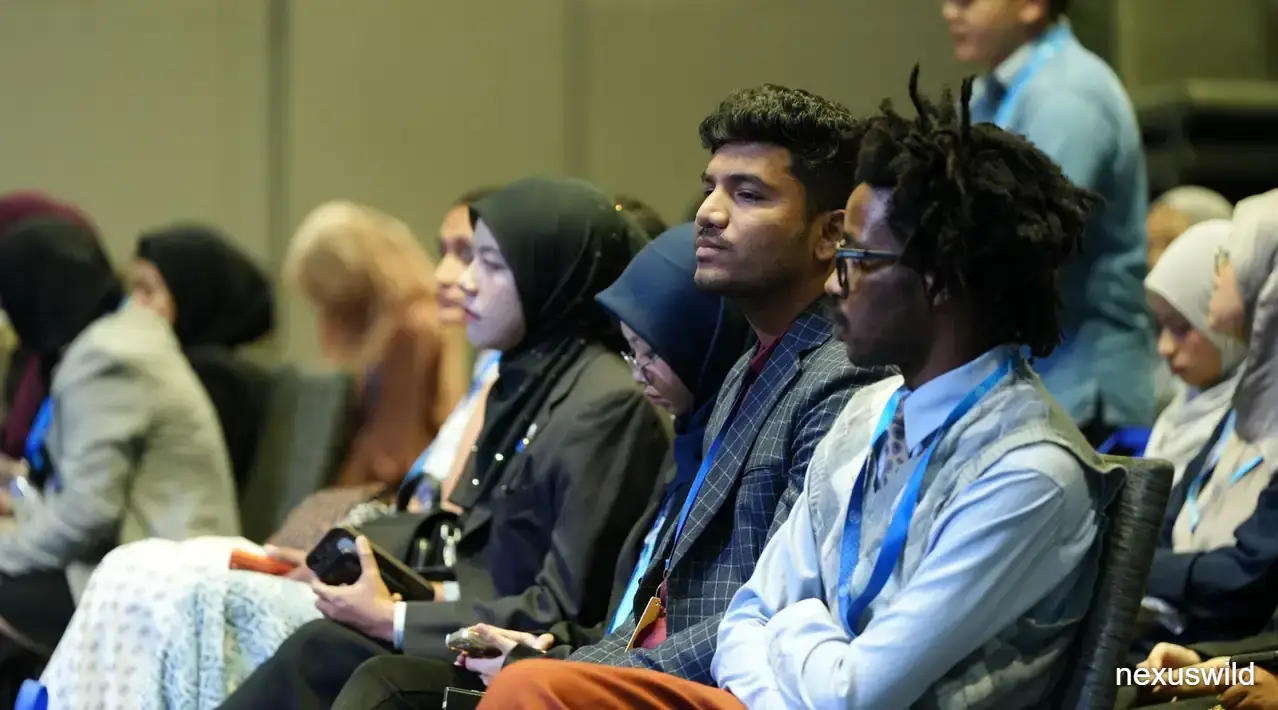
The UN announcement says senior representatives from governments, technology companies, the scientific community, civil society, international organisations and UN entities will take part. Around 150 participants are expected, according to UN News. That is a working summit rather than a mass conference, and the mix is designed to bring people who usually operate in separate policy communities into the same discussion.
Governments bring regulatory authority, procurement power and responsibility for public safeguards. Technology companies control model development, testing data and deployment channels. Scientists can explain what current evaluation methods can and cannot show. Civil society groups raise questions about rights, bias, labour and access. International organisations bring comparative data and experience with standards that cross borders.
Bridgetown's stakeholder list also reflects lessons from previous technology forums. Civil society organisations have often been the first to document harms that formal evaluations miss, from biased content moderation to the exclusion of people with disabilities. Scientific researchers can challenge vendor claims and identify where evidence is weak. International organisations can bring examples from health, aviation or nuclear safety, where shared incident reporting and independent investigation became part of routine practice. None of these roles replaces government decision-making, but together they can reduce the risk that safety becomes a public-relations exercise. The test is whether these contributors are given time to speak and access to the evidence they need before the meeting concludes.
The presence of companies is important but also a potential source of tension. Safety claims can be shaped by commercial incentives, and governments may not have the technical staff needed to assess them independently. The scientific panel's proximity to the summit is therefore significant: it gives governments access to expertise that is not located inside the companies being discussed. Whether that translates into stronger public capacity will be one of the meeting's practical tests.
What is on the agenda
The official summit site lists risk management, inclusion, access, capacity, diffusion and cultural and linguistic representation as core agenda areas. Those topics span two related questions. The first is how to identify and manage risks from AI systems before and after deployment. The second is how to ensure that the benefits of AI are not concentrated in a small number of economies and languages.
Risk management includes evaluation methods, incident reporting, transparency about capabilities and the ability to monitor systems once they are in use. It also includes the less visible infrastructure of safety: testbeds, shared taxonomies of harm, secure reporting channels and trained regulators. Without those foundations, a safety commitment can be difficult to compare across companies or countries.
Inclusion and representation address a different imbalance. Many AI systems are trained and evaluated in predominantly English-language settings, which can flatten local languages, cultural references and social contexts. For small island states and other countries with limited digital infrastructure, this is not a theoretical concern. It affects whether tools work in local languages and whether public services can rely on them without importing assumptions from elsewhere.
A framework, not a treaty
UN News reported that the summit will open discussion of a multilateral AI risk management framework that is explicitly not a treaty or regulation. Officials have also said the meeting will not impose a single governance model or replace national decision-making. That framing is important because it lowers the chance of an immediate diplomatic confrontation over sovereignty, but it also limits what can be agreed.
A non-binding framework can still be useful. It can help governments align definitions, share incident information, develop compatible evaluation practices and agree on what counts as evidence of risk. It can also provide a common reference point for regulators who are writing national rules at different speeds. Interoperability is often less dramatic than a treaty but can matter more in practice, especially when AI systems and supply chains cross borders.
At the same time, the absence of a negotiated outcome means the summit should not be judged by whether it produces a signature document. Organisers expect calls to action and pledges rather than a formal agreement. The useful question is whether those pledges include concrete steps, timelines and institutions. Without those, a framework risks becoming another statement of principles in a field that already has many.
The capacity divide
One of the strongest data points cited ahead of the summit comes from the World Development Report 2026. According to UN News, the report found that high-income countries have 500 incident response teams compared with six in low-income countries. The comparison is stark and illustrates why AI safety cannot be treated as a universal policy problem with a universal solution.
An incident response team is the kind of institution that can investigate a failure, coordinate with providers, assess harm and recommend action. If most countries lack that capability, global safety arrangements will depend on a small group of better-resourced states. That creates blind spots. An incident may be detected late, reported inconsistently or never connected to a broader pattern.
The capacity divide also affects participation. A country may send diplomats to Bridgetown but lack the technical experts needed to interrogate model evaluations or design domestic rules. This is where capacity-building becomes part of safety policy, not a separate development initiative. Training regulators, supporting national computer emergency response teams and creating shared testing facilities could do more for global safety than another broad declaration.
Capacity gaps are not only about national teams. They also shape who can attend and who can follow the discussion afterwards. Technical briefings, background papers and webcasts are useful only when participants have the language skills, connectivity and staff time to engage with them. For small administrations, sending a delegation to Bridgetown may be feasible while maintaining a domestic follow-up team is not. That is why shared regional facilities and training networks could matter more than the summit's final wording. A framework is only as strong as the number of countries able to use it when an incident occurs, and that depends on institutions that exist long after the meeting.
The scientific panel connection
The summit is being held back-to-back with the second in-person meeting of the Independent International Scientific Panel on AI. According to the UN's FAQ, the panel is the first global scientific body dedicated to artificial intelligence, with 40 members. It was established by UN General Assembly resolution A/RES/79/325, adopted on 26 August 2025.
The FAQ is careful about the panel's role. It is not a regulatory body and will not set rules, enforce standards or prescribe policy. Its preliminary report was released on 1 July 2026 and informed the first Global Dialogue on AI Governance. That limited mandate is useful to understand: the panel is meant to supply evidence and analysis, not to issue binding decisions.
Bringing scientists and policymakers together in Bridgetown could help translate technical uncertainty into language that governments can use. But there is a risk of overexpectation. Scientific advice cannot resolve value choices about privacy, employment, safety thresholds or access. It can clarify what is known, what is uncertain and what trade-offs are involved. The summit will be judged partly on whether it makes that distinction clear rather than presenting technical assessment as a substitute for political judgement.
The wider UN governance context
Bridgetown does not exist in isolation. The Global Digital Compact, adopted as an annex to the Pact for the Future in September 2024, sets an objective of enhancing international governance of artificial intelligence for the benefit of humanity. It also commits signatories to an inclusive, open, sustainable, fair, safe and secure digital future, with an emphasis on closing digital divides and accelerating progress on the Sustainable Development Goals.
The Compact mentions human oversight, interoperability and respect for human rights across the technology life cycle. Those principles provide the backdrop for the summit's agenda. They also explain why the meeting includes access and representation alongside safety. A system that is safe for a narrow group but unusable by most countries would not meet the broader digital agenda the UN has set.
This context matters because AI governance is spread across many institutions. Trade rules, data protection, competition policy, standards bodies, security frameworks and development banks all touch the issue. The Bridgetown summit cannot reconcile all of them. Its more realistic role is to identify where cooperation is missing and which institutions could fill specific gaps.
The development lens
The World Development Report 2026, titled "The Promise of Artificial Intelligence", argues that development progress has dipped to its weakest pace in 75 years. It also says developing countries do not need to build trillion-dollar frontier models to benefit from AI. Instead, it sets out an "adopt, adapt and advance" framework for countries seeking to use AI for development.
That approach is relevant to Bridgetown because it separates access from frontier research. A country can gain from AI in agriculture, health, education or public administration without training the largest models. But it still needs basic conditions: reliable connectivity, digital skills, data governance, procurement capacity and enough technical expertise to evaluate whether a tool works locally.
The report also highlights concentration of advanced models, chips and data centres in a small number of companies and economies. Safety discussions that ignore that concentration can miss the point. If only a few actors control the most capable systems, other countries may be dependent on their testing claims and deployment decisions. The summit's focus on diffusion and capacity is an attempt to bring that asymmetry into the conversation.
Inclusion and linguistic representation
Cultural and linguistic representation may sound like a soft issue beside model safety, but it has practical consequences. Many languages have limited digital corpora, and evaluation datasets often reflect a narrow set of societies. A model that performs well in English may fail in a Caribbean context, misread local names or reproduce stereotypes about communities it was never designed to serve.
For small states, the cost of being outside the training and evaluation process can be high. Public agencies may adopt tools that generate inaccurate translations or omit local context. Education systems may use platforms that reinforce dominant languages. Businesses may face barriers when automated customer-service systems cannot handle local forms of expression.
Including these concerns in the main safety agenda rather than a side session is a notable choice. It suggests that the summit organisers see representation as part of risk management. A system that is unreliable for a language group is not merely less useful; it can produce harm through misdiagnosis, misinformation or exclusion from services. The challenge will be to turn that recognition into evaluation requirements and procurement standards that buyers can actually use.
What observers should expect
Because the summit takes place on 23 November, after this article's publication date, its outcomes cannot be reported in advance. The official broadcast record is expected to include opening sessions and leaders' conversations on UN Web TV, while UNifeed has catalogued summit-related press material. These resources will allow observers to check what was actually said rather than relying only on second-hand summaries.
The most useful thing to watch is specificity. Announcements that name institutions, timelines or shared testing arrangements will matter more than general commitments to cooperation. Observers should also look for whether low-income and small states are described as partners in safety work or only as recipients of capacity-building. The difference is significant for a meeting hosted in Barbados.
Another signal will be how companies respond to questions about evaluation and incident reporting. If discussions remain at the level of voluntary principles, the summit may add little to existing initiatives. If they move toward comparable testing practices and shared evidence, the non-binding framework could still have practical value.
Another practical signal will be the treatment of uncertainty. AI safety is not a mature field with settled metrics, and reputable scientists are likely to emphasise what current evaluations cannot establish. If summit language acknowledges those limits, it will be more credible than confident claims that risks can be fully measured. Observers should also look for clear distinctions between existing capabilities, foreseeable risks and speculative scenarios. Conflating them can produce either unnecessary alarm or false reassurance. A useful outcome would identify near-term steps — better incident reporting, shared evaluation methods and support for countries with limited technical staff — without pretending that they solve every long-term question.
The tests ahead
The Bridgetown summit faces a narrow but important task. It will not write global AI rules, and it is not designed to produce a treaty. Its value lies in whether it can connect risk management to capacity, inclusion and scientific evidence at a moment when those issues are usually handled separately.
The UN has framed the meeting as part of a wider effort to make AI safety a shared public concern. That is a reasonable ambition, but the numbers are sobering. If high-income countries have 500 incident response teams and low-income countries have six, the world is not starting from a common baseline. If advanced models and infrastructure remain concentrated, many countries will be using systems they cannot independently assess.
The summit's success therefore depends on follow-through. A statement after 23 November that simply calls for cooperation will be easy to issue and hard to measure. A set of concrete steps to build evaluation capacity, share incident information and include local languages and contexts would be more meaningful. Bridgetown has put those issues on the agenda. Whether the meeting turns them into durable work will be the real test.
Nexuswild welcomes factual corrections. Email contact@nexuswild.com with evidence and the article URL.