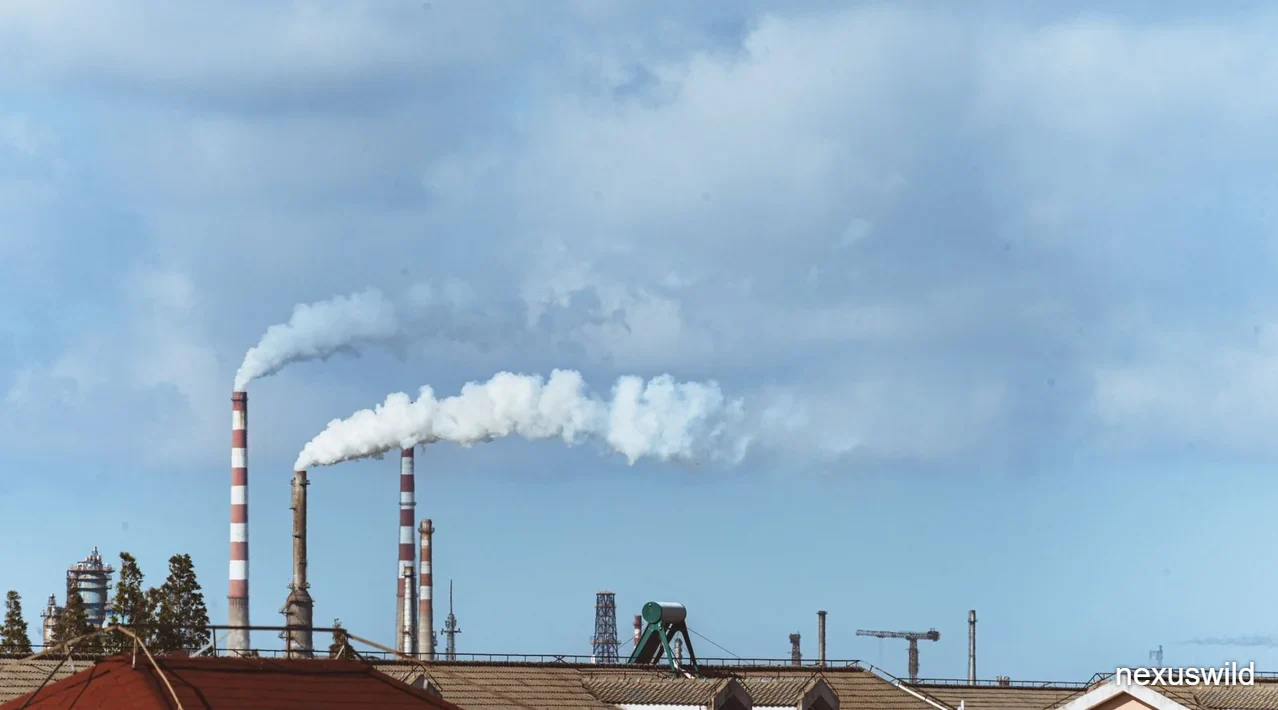

Global carbon dioxide emissions from fossil fuels are projected to decline slightly in 2026, the first such drop in years, according to the latest Global Carbon Budget. The annual assessment estimates that fossil fuel emissions will fall by 0.4 percent to 38.2 billion metric tons of carbon dioxide. The change is small, and researchers are careful about what it means. Part of the decline is linked to expanding solar and wind generation and the spread of electric vehicles, but part also reflects a temporary energy shock connected to the conflict involving Iran. At the same time, emissions from land-use change are expected to rise, pushing total global carbon dioxide emissions to a new high. The report, led by the University of Exeter and compiled by more than 140 scientists, was released as a preprint on November 10, 2026. It presents a picture of a world in which the clean-energy transition is beginning to bend the emissions curve without yet reversing it. This article examines the numbers, the reasons behind them and the limits of what a single year can show.
A Slight Decline in Fossil Emissions
The headline figure is a 0.4 percent reduction in fossil fuel carbon dioxide emissions. In absolute terms, that works out to 38.2 billion metric tons, or 38.2 gigatonnes, in 2026. It is a decline measured in fractions of a percent, but in the context of a global energy system that has grown for decades, even a small decrease attracts attention.
The researchers behind the assessment describe the change as encouraging but fragile. A fall driven partly by geopolitical disruption is not the same as a fall driven by durable structural change. Oil emissions are expected to drop by 1.9 percent, largely because of a temporary shock to energy markets and supply linked to the Iran conflict. That factor alone accounts for a meaningful share of the projected reduction.
Clean energy is the other half of the explanation. Worldwide energy consumption continues to grow, but solar power, wind power and electric vehicles are now meeting roughly two-thirds of the additional demand. In other words, most of the new energy required by the global economy is being supplied without a corresponding increase in fossil fuel burning. That statistic would have seemed unlikely a decade ago.
The projection is preliminary. The Global Carbon Budget is updated each year as better data become available, and the 2026 figures will be revised. The 21st edition of the report is scheduled for peer-reviewed publication following the preprint release. Even with that caveat, the direction of travel is clear enough for researchers to draw conclusions about the state of the transition.
The 2026 Global Carbon Budget
The Global Carbon Budget is an annual collaboration that brings together emissions estimates from many research groups and data providers. More than 140 scientists contributed to the 2026 edition, which is published in the journal Earth System Science Data under the DOI assigned to the 2026 report. The work involves universities and research institutes across the world, including the University of Exeter, the University of East Anglia, the CICERO Center for International Climate Research, Ludwig-Maximilian-University Munich and the Alfred-Wegener-Institut, along with more than 90 additional institutions.
The assessment covers fossil fuel emissions, cement production, land-use change, natural carbon sinks and atmospheric concentrations. Its purpose is to provide a transparent, comparable accounting of the global carbon cycle each year. Because the methodology is consistent over time, the report is widely used by governments, researchers and organizations tracking progress toward climate goals.
The lead author, a professor who directs the Global Carbon Budget Office at the University of Exeter, emphasized that a single year of falling emissions does not constitute a peak. The long-term answer, in that view, is the rapid and sustained deployment of clean energy technologies. Renewables and electric vehicles are increasingly offsetting growth in energy demand, but faster progress is needed before global emissions can enter a lasting decline.
The 2026 report also includes a separate analysis, in press at another peer-reviewed journal, examining how clean technologies are changing the relationship between economic growth and emissions. That analysis projects that solar, wind, batteries and electric vehicles will offset between 64 and 79 percent of the emissions that would otherwise result from growing energy demand through the end of 2028.
Clean Power Meets Most New Demand
The growth of renewable electricity is the most consequential trend in the report. In 2010, solar and wind power are estimated to have avoided 0.28 billion metric tons of carbon dioxide emissions. By 2025, that figure had risen to 4.1 billion metric tons, and it is projected to reach 4.6 billion metric tons in 2026. The increase illustrates how quickly clean electricity generation has expanded and how much pollution would be produced without it.
Electric vehicles are contributing as well, although their effect is still limited by the time required to replace the existing fleet. In 2025, roughly 10 percent of the global car fleet was electrified, a figure that falls to 6 percent when hybrids are excluded. As conventional vehicles are retired and replaced, electric transportation is expected to play a larger role in reducing fossil fuel consumption.
A researcher at the University of East Anglia noted that solar, wind and electric vehicles are expanding rapidly, led by China, and that countries on every continent are reducing emissions while growing their economies. The implication is that the connection between economic expansion and rising emissions is weakening in many places. A further acceleration, the researcher suggested, could turn the tide on global emissions within a few years.
That optimism is tempered by the scale of the remaining challenge. Clean technologies are meeting about two-thirds of new demand, which means roughly a third is still being met by fossil sources. As total energy use rises, even that share translates into substantial additional emissions unless the pace of deployment increases further.
Oil Falls, Coal Edges Higher
The projected changes differ sharply by fuel. Oil emissions are expected to fall by 1.9 percent in 2026, the largest reduction among the major fossil fuels. Natural gas emissions are projected to decline by 0.3 percent. Coal, by contrast, is expected to increase by 0.6 percent. International transportation also contributes to the overall decline, with emissions from aviation and shipping each forecast to fall by 1 percent. Reduced air activity in the Middle East is partly responsible for the drop in aviation emissions.
The divergence is important because it reveals the composition of the decline. Oil is sensitive to geopolitical shocks and price changes, and a conflict-driven supply disruption can lower consumption quickly. Coal is more embedded in electricity generation and industrial processes in several large economies, and it does not respond as readily to short-term shocks.
In China, which accounts for about 32 percent of global fossil fuel emissions, total emissions are expected to fall by 0.9 percent in 2026 after two years of relatively slow growth. A substantial decline in oil use is helping drive that decrease, although coal emissions are projected to rise slightly by 0.3 percent. China continues to expand renewable electricity generation at a rapid pace and accounts for roughly half of the emissions avoided globally through renewables and electric vehicles.
The United States is projected to reduce emissions by 1.3 percent, primarily because of lower coal use. Coal emissions had increased in 2025 as high natural gas prices and cold weather encouraged greater reliance on coal. The European Union is forecast to cut emissions by 1.5 percent, while Japan is expected to record a 1 percent reduction.
The Land-Use Complication
Fossil fuels are only part of the carbon equation. When emissions from land-use change, including deforestation, are added, the global total moves in the opposite direction. Total carbon dioxide emissions are expected to reach 43.3 billion metric tons in 2026, up from 42.8 billion metric tons in 2025. That increase is driven by a projected rise in land-use emissions to 5.1 billion metric tons.
The rise is linked to increased peat fires, almost all of which are ignited by human activity, and to degradation of forests in Southeast Asia. Drier conditions associated with a developing El Niño have made those problems worse. The result is a year in which progress in the energy system is partly cancelled by losses in the landscape.
Permanent deforestation remains a major source of carbon dioxide. Between 2016 and 2025, it released approximately 3.8 billion metric tons of carbon dioxide each year. Reforestation and the establishment of new forests remove substantial amounts of carbon, but those activities offset only about half of the emissions from permanent clearing. China, the 27 countries of the European Union and the United States account for the largest removals through reforestation and afforestation, absorbing roughly 0.8 billion metric tons annually. Brazil, Russia and Indonesia also absorb carbon through forest growth, but deforestation emissions in those countries outweigh the gains.
New technologies that remove carbon dioxide directly from the atmosphere remain marginal. At their current scale, excluding conventional approaches such as reforestation, they compensate for less than 30 minutes of annual fossil fuel carbon dioxide emissions.
Total CO2 Still Sets a Record
The contrast between falling fossil emissions and rising total emissions is the central tension in the 2026 assessment. It is possible for the energy system to improve while the overall climate picture worsens, because land-use change is a separate source with its own drivers.
The atmospheric concentration of carbon dioxide is projected to reach 427.7 parts per million in 2026, approximately 54 percent higher than before the Industrial Revolution. That figure is a stock rather than a flow. It reflects the accumulation of emissions over many decades, and it continues to rise whenever annual emissions exceed what natural sinks can absorb.
A researcher at the CICERO Center for International Climate Research stressed that a drop in emissions in one year is not a peak unless it is driven by structural change. Accelerated deployment of solar, wind, batteries and electric vehicles is pushing emissions down in dozens of countries and slowing growth in many more, but those changes are not yet sufficient to lock in a global peak.
The same analysis found that 59 countries had lower emissions in 2025 than in 2019, before the COVID-19 pandemic, even while their economies grew. Every major world region experienced slower emissions growth over that period, including China, India and other emerging economies where total emissions continued to rise. That broadening pattern is one of the more hopeful signals in the report.
A Carbon Budget Running Out
The concept of a carbon budget is central to climate policy. It refers to the amount of carbon dioxide that can still be emitted before global warming reaches a specified threshold, most commonly 1.5 degrees Celsius above pre-industrial levels. The 2026 assessment estimates that just 150 billion metric tons remain. At today's emission rates, that is enough for less than four years.
The figure is stark, and researchers present it as a measure of urgency rather than a precise deadline. Carbon budgets depend on assumptions about climate sensitivity and the contribution of other greenhouse gases. They are revised as observations improve. But the order of magnitude is clear: the world is close to exhausting the remaining allowance for limiting warming to 1.5 degrees.
The budget also illustrates why a 0.4 percent decline in fossil emissions is not enough. A reduction of that size barely changes the rate at which the budget is being spent. To preserve a realistic chance of staying within the threshold, emissions would need to fall much faster and continue falling for years.
Researchers involved in the report argue that emissions reductions alone will not be sufficient. Carbon dioxide removal must become a much larger part of climate strategies. Afforestation and reforestation already remove substantial amounts, but those gains are more than offset by deforestation emissions, and novel removal approaches remain extremely limited.
Sinks Under New Pressure
Natural carbon sinks absorb a significant share of the carbon dioxide emitted each year. The land sink, which includes forests and soils, weakened substantially during the 2023-24 El Niño pattern but has since recovered to earlier levels. The ocean sink also plays a critical role, absorbing carbon through physical and biological processes.
The 2026 report notes that a powerful El Niño developing during the year is expected to influence carbon absorption in the coming year. El Niño conditions tend to produce hotter, drier conditions in parts of the tropics, stressing vegetation and increasing the risk of fires. That, in turn, can reduce the land sink and increase emissions from land-use change.
The interaction between climate variability and the carbon cycle is one of the more difficult aspects of the assessment. A strong sink in one year can mask underlying emissions trends, while a weak sink can make a stable emissions year look worse in atmospheric terms. Researchers track sinks separately precisely so that they can distinguish changes in human emissions from changes in natural absorption.
The long-term trend in combined emissions has slowed considerably. Over the past decade, emissions from fossil fuels and land-use change increased by an average of 0.3 percent annually, compared with 1.7 percent annually during the preceding decade. That slowdown is real, but it is not the same as a decline.
Divergent Paths by Country
The 2026 numbers vary widely across major economies. China's projected 0.9 percent reduction reflects both cleaner energy and a drop in oil use. The United States is down 1.3 percent, mainly because of lower coal burning. India is moving in the other direction, with fossil fuel emissions expected to grow by 4.4 percent in 2026, above its average annual growth rate of 3.5 percent over the past decade. The European Union is down 1.5 percent and Japan is down 1 percent. Countries outside these major economies are forecast to reduce emissions by 0.7 percent, much of that from lower oil consumption linked to higher prices and restricted supplies.
India's trajectory is a reminder that global totals conceal very different national stories. Rapid economic growth and expanding energy access can push emissions upward even as clean technologies scale. The same report notes that emissions growth has slowed in every major region, including India, which suggests the underlying relationship between growth and emissions is changing.
The country-level data also show the importance of China in global accounting. A single percentage point change in Chinese emissions has a larger effect on the global total than a much larger percentage change in a smaller economy. Roughly half of the emissions avoided globally through renewable energy and electric vehicles is attributed to China, which also has the largest carbon uptake from reforestation and afforestation.
The assessment does not rank countries by climate performance. It reports emissions and removals using consistent methods so that trends can be compared over time.
Is the Peak in Sight?
The question on many minds after a projected decline is whether global emissions have finally peaked. The researchers answer carefully. A peak requires a sustained decline driven by structural changes in energy and industry, not a one-year dip caused by conflict or price shocks. The expansion of solar, wind, batteries and electric vehicles is creating the conditions for a peak, but the changes are not yet sufficient to lock one in.
Several indicators point in an encouraging direction. Clean technologies are meeting a growing share of new energy demand. Dozens of countries have reduced emissions while growing their economies. The avoided emissions from solar and wind have grown more than sixteenfold since 2010. The long-term rate of emissions growth has slowed markedly compared with the previous decade.
Other indicators point the other way. Coal emissions are still rising. Land-use emissions are increasing in 2026. The remaining carbon budget is small. Carbon removal technologies are negligible at scale. Atmospheric carbon dioxide continues to climb.
The most defensible reading is that the world is near a turning point but has not crossed it. A sustained peak could be a few years away if clean technology deployment continues to accelerate. It could also be delayed if geopolitical shocks reverse, if land-use emissions keep rising or if energy demand outpaces the rollout of low-carbon sources.
Beyond a Single Year of Data
The Global Carbon Budget is designed to be read as a series, not as a standalone snapshot. Its value lies in the consistency of its methods from year to year, which allows researchers to distinguish short-term noise from lasting change. The 2026 edition adds another data point to a record that now spans more than two decades of systematic global accounting.
For policymakers, the report offers both a warning and a measure of progress. The warning is that total emissions are still setting records and the 1.5-degree carbon budget is nearly exhausted. The progress is that clean energy is now doing much of the work of meeting new demand, and a growing number of countries are decoupling emissions from economic growth.
The coming years will test whether the 0.4 percent decline is the beginning of a trend or a temporary artefact of unusual circumstances. Much will depend on whether solar, wind, batteries and electric vehicles continue to scale quickly enough, and whether countries address the land-use emissions that offset so much of the progress elsewhere.
The researchers are clear that the outcome is not predetermined. Further acceleration could bring a sustained peak and decline within a few years. Without it, a single year of falling fossil emissions will remain a footnote in a continuing rise.
Nexuswild welcomes factual corrections. Email contact@nexuswild.com with evidence and the article URL.