
Early childhood education has rarely looked less like a side issue than it does in the 2026 Global Report on Early Childhood Care and Education. The report, produced jointly by UNESCO, UNICEF and the OECD and launched at UNESCO headquarters in Paris on 20 November for World Children's Day, frames pre-primary provision as both a child-rights obligation and an economic investment. Its central message is blunt: enrolment has expanded over two decades, but progress has stalled, financing is badly short of what is needed, and the children least likely to benefit are those who need public support most.
The report estimates an additional annual financing gap of more than US$35 billion across 76 low- and lower-middle-income countries. It says those countries would need about US$69 billion a year between 2027 and 2030 to deliver one year of pre-primary education at minimum quality, with projected domestic public financing covering only about half. It also puts the cost of inaction at roughly 3% of global GDP and up to 7% in low-income countries. Those figures are projections from the report, not audited national accounts, but they indicate the scale of the policy choice.
This article explains what the report says, where the gaps are most visible, why the workforce shortage matters, and how financing and delivery could change. It treats the numbers as estimates from UNESCO, UNICEF and the OECD and avoids assuming that any single policy blueprint will work in every country.
A report timed to World Children's Day
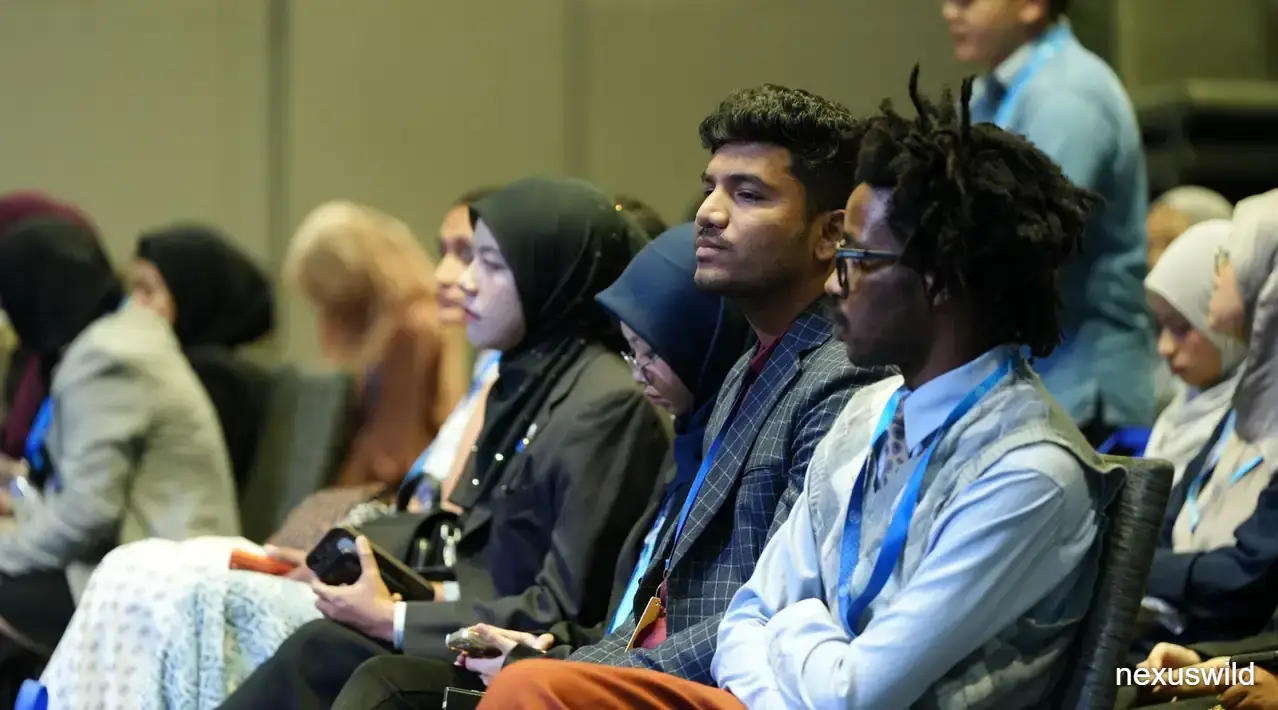
The launch on 20 November was deliberately symbolic. UNESCO held the event at its Paris headquarters on World Children's Day, a date used each year to put children's rights and wellbeing at the centre of public debate. The report is the second in a biennial series that tracks early childhood care and education, and it was developed jointly by UNESCO, UNICEF and the OECD. That combination gives it a wider scope than a conventional education snapshot: it brings together rights, child development, school systems and economic analysis.
UNESCO's launch materials describe the report as focusing on financing for equity, inclusion and quality. That framing matters because it shifts the question from whether pre-primary education exists in name to whether it reaches the children most likely to be excluded, and whether the places on offer are good enough to change outcomes. A seat in an under-resourced classroom is not the same as a quality early learning environment.
Why the financing gap matters
The headline figure is an additional annual gap of over US$35 billion for 76 low- and lower-middle-income countries. According to the report, providing one year of pre-primary education at a minimum acceptable quality in those countries would cost about US$69 billion a year in 2027–2030. Projected domestic public financing is expected to cover roughly US$34 billion, leaving the rest unfilled.
That gap is not an accounting curiosity. It determines whether governments can pay teachers, maintain safe facilities, provide materials, support children with disabilities and reach remote communities. It also determines whether expansion happens quickly enough to meet national and global commitments. When financing falls short, systems tend to expand unevenly: urban areas and better-off households capture most of the new places, while rural and marginalised children remain outside.
The report also notes that low- and middle-income countries allocate only about 3–4% of their education budgets to pre-primary education on average. That is a small share for a stage that serves young children before compulsory schooling and can shape their readiness for primary school. Increasing the share does not automatically guarantee quality, but without a larger and more predictable funding base, most systems will struggle to improve access and standards at the same time.
Enrolment gains have stalled
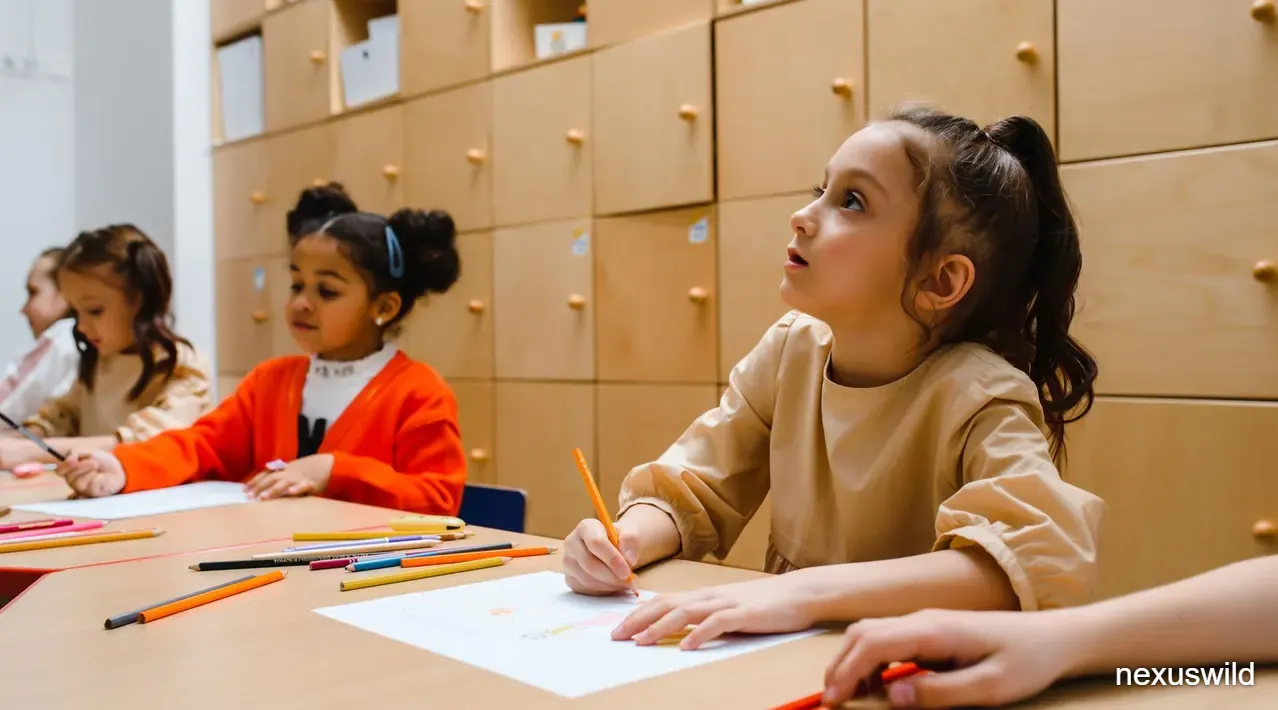
Global enrolment in early childhood education rose from 64% in 2003 to 75% in 2024, according to figures reported from the launch. At first glance, that is a substantial improvement over two decades. The problem, the report says, is that the momentum has faded. Progress has stalled over roughly the last decade, leaving millions of children without access to organised early learning.
The transition into primary school exposes the gap particularly clearly. Only 59% of children entering primary school had received at least one year of pre-primary education, a figure that has barely changed since 2015. In other words, the expansion recorded since the early 2000s has not translated into a near-universal final year of pre-primary provision. For children who need that year most, the gap can affect their first steps in reading, numeracy and classroom routines.
The regional picture is uneven. Education Post, reporting on the report, said participation in organised learning one year before primary school exceeded 90% in Europe and Northern America and in Latin America and the Caribbean. In Northern Africa and Western Asia and in sub-Saharan Africa, it remained around 50%. Those averages conceal national differences, but they show how far the system is from a global floor of access.
Equity is the test, not just access
The report's emphasis on equity reflects a simple problem: aggregate enrolment can improve while disadvantage persists. A national average of 75% tells policymakers how many children are enrolled overall, but not whether rural children, children with disabilities, refugees, linguistic minorities or children from the poorest households are being reached. The 2026 report argues that financing should be judged by whether it narrows those differences.
This is why the report looks beyond school gates. Development in the earliest years is shaped by nutrition, health care, sanitation, stimulation and parental support. A pre-primary programme that reaches a child for a few hours a day cannot compensate for every disadvantage, but it can identify delays, support caregivers and provide a stable learning environment. Where those services are concentrated in wealthier areas, they can widen rather than narrow inequality.
The human development figures quoted in the launch reporting underline the point. Only 64% of children aged 24–59 months were reported to be developing as expected, with the share falling to 53% in sub-Saharan Africa. These are not school attainment data; they are earlier indicators of whether young children are reaching expected milestones. They help explain why the report treats early childhood policy as a cross-sector issue rather than a narrow education budget line.
The economic case for early investment
The report makes a strong economic argument alongside its rights-based case. It estimates that every US$1 invested in closing childcare policy gaps could generate US$3.76 in additional global GDP by 2035. It also estimates the cost of inaction at about 3% of global GDP, rising to as much as 7% in low-income countries. These are model-based estimates and depend on assumptions about labour participation, care arrangements and productivity, but they are large enough to change how the issue is framed.
The logic is straightforward. Reliable early childhood services allow parents, especially mothers, to work or study with fewer interruptions. Better early development can improve later learning and, over time, workforce skills. Lower child mortality and better health can reduce pressure on public services. The returns do not appear in a single budget year, which is one reason early childhood spending is often cut when governments face short-term fiscal pressure.
That time horizon creates a political problem. Primary and secondary schools have visible buildings, large enrolments and organised parent groups. Early childhood services are often fragmented across ministries, small providers and household arrangements. Their benefits are long term and diffuse. The report's economic case is an attempt to make those benefits legible to finance ministries, donors and legislators who might otherwise treat pre-primary education as a social expense rather than a productive investment.
The workforce constraint
Financing is only half the problem. The report says about six million additional pre-primary educators will be needed globally by 2030. In low-income countries, only 57% of pre-primary teachers meet minimum training requirements. Those figures point to a bottleneck that money alone cannot solve quickly: systems need people with the right skills, and they need them in the right places.
Recruiting millions of educators will require credible career paths, fair pay and training that can be completed while teachers are working. It will also require recognition of the different people who work with young children, including classroom teachers, assistants, caregivers and community workers. If expansion is driven by hiring large numbers of undertrained staff, access may rise while quality falls. That would undermine the purpose of the investment.
Training requirements must also be appropriate to local conditions. A minimum standard can protect children, but rigid rules that ignore existing community providers can exclude the very people already serving rural or marginalised families. The challenge for policymakers is to set clear standards, create practical routes to meet them and support supervisors who can maintain quality in classrooms that may be newly built or recently formalised.
The report's use of "minimum quality" is important. It does not imply elaborate facilities or expensive inputs everywhere. It implies that a pre-primary place should offer a safe environment, trained and supported educators, age-appropriate learning, adequate nutrition where needed, and ways to identify children who require additional help. It also implies that services should be reachable and affordable for the families who need them most.
Quality is especially difficult to measure in early childhood because children develop at different rates and outcomes depend on factors outside the classroom. Standardised tests can capture some learning, but they can also encourage narrow teaching practices. The report therefore points toward broader systems: qualified educators, stable funding, data on participation, attention to inclusion and coordination with health and social protection services.
For governments, this means that expansion plans should be costed alongside quality plans. Building classrooms without recruiting teachers, or enrolling children without ensuring they can attend regularly, will produce weak results. The report's financing estimates assume a level of service that is more demanding than simply increasing headline enrolment. That is why the additional cost is measured in tens of billions of dollars rather than treated as a marginal budget adjustment.
Coordination across ministries
One of the recurring themes in the report is that early childhood care and education does not fit neatly inside one ministry. Education departments may manage pre-primary provision, but health ministries handle nutrition and immunisation, social protection agencies support poor families, labour ministries affect parental leave and work arrangements, and local governments often deliver services. When these systems do not coordinate, families face gaps and duplication.
The recommended response is not another layer of bureaucracy for its own sake. It is a practical alignment of policies around the child and the caregiver. For example, a pre-primary programme can refer children for hearing or vision checks, link families to nutrition support and coordinate with parental leave policies. A health visit can identify children who need early learning support. These connections are often inexpensive compared with building new institutions, but they require shared data rules and clear responsibility.
Coordination also matters for financing. If each ministry funds a separate fragment, no single budget holder has an incentive to fill the largest gaps. Multi-year financing that spans agencies and local providers can make planning more stable. The report's language on equity, inclusion and quality suggests that governments should be judged on the combined effect of these policies, not on isolated programme outputs.
How financing could be structured
The report does not present a single financing mechanism as a universal answer. Different countries will rely on different mixes of domestic revenue, intergovernmental transfers, donor support and household contributions. What matters is that funding is predictable, sufficient and directed toward underserved children. Short-term project funding can help launch services, but it is poorly suited to paying teachers and maintaining classrooms over several years.
Domestic public finance is central. The report's estimate that projected public financing covers about half of the requirement in the 76 countries implies that even substantial domestic effort will not close the gap alone. But external support cannot substitute permanently for national commitment. Aid that finances salaries without a credible plan for domestic takeover can create abrupt cuts when funding ends. The more durable approach is to help governments expand their own financing capacity while using grants or concessional funds for initial investment and high-need areas.
Financing formulas also need to account for equity. A flat per-child allocation may look fair but cost more to deliver in remote areas and may do little for children with disabilities. Weighted allocations, targeted transfers to poor districts and support for language-minority communities can direct resources where the marginal benefit is highest. The report's focus on equity suggests that such design choices are not technical details; they determine whether the financing gap is closed in a meaningful way.
The under-threes remain a blind spot
Although the report is titled around early childhood care and education, much of the public debate focuses on the year before primary school. That is understandable, because pre-primary enrolment is easier to count and directly linked to school readiness. But the earliest years, including birth to age three, shape development before children enter any formal programme.
Investing in children under three can take several forms: parental support, home visiting, nutrition, health checks, safe childcare and early stimulation. These services are often delivered outside education systems, which makes them harder to track in education financing data. They are also easier for governments to overlook when budgets are tight. Yet the report's development figures and economic case both point to the importance of acting before children reach pre-primary age.
The challenge is to connect services without over-formalising family life. Home-based care remains the norm for many children, and public policy should support caregivers rather than assume that institutional provision is always preferable. That can mean paid leave, credible quality standards for childcare, access to health services and practical guidance for parents. A system that focuses only on the final year before primary school may arrive too late for children who have already fallen behind.
What governments and donors should watch
The report gives policymakers several concrete indicators to monitor. The first is whether pre-primary enrolment is actually rising, especially among poor and rural children. The second is whether children are completing a full year before primary school, not merely enrolling for a short period. The third is whether teachers are trained, paid and retained. The fourth is whether public financing is increasing in real terms and reaching the districts with the largest gaps.
Donors should look for plans that connect these indicators rather than funding isolated inputs. A new classroom matters, but a classroom without a teacher, materials or a referral link to health services will not deliver the outcomes the report describes. Similarly, a teacher-training programme matters but will have limited effects if trained educators leave because pay and working conditions are poor.
Transparency will also be important. The report's estimates are global and regional; national governments will need to translate them into local costs and delivery plans. Publishing those plans, including assumptions about staffing, facilities and household costs, would make it easier to track whether the promised expansion is real. It would also help keep the focus on children who remain outside the system rather than those who are already relatively well served.
What changes after this report
The 2026 report does not create new legal obligations, but it changes the terms of the debate. It puts a price on inaction, quantifies the financing shortfall and shows how little progress has been made in the year before primary school. That combination makes it harder for governments to treat early childhood provision as a low-priority service.
Its joint authorship also matters. UNESCO brings an education and rights mandate, UNICEF brings child development and field experience, and the OECD brings comparative financing and economic analysis. A message shared by all three is likely to travel further than a report from any one institution. It gives advocates a common set of numbers and gives finance ministries a clearer account of what is at stake.
The real test, however, will be in budgets and classrooms. An additional US$35 billion a year is not a small sum, and the six-million-teacher challenge will take years to meet. But the report's central claim is that the cost of doing nothing is larger. If even part of that economic case is borne out, the question for policymakers is not whether countries can afford to expand early childhood care and education. It is whether they can afford the alternatives.
Nexuswild welcomes factual corrections. Email contact@nexuswild.com with evidence and the article URL.