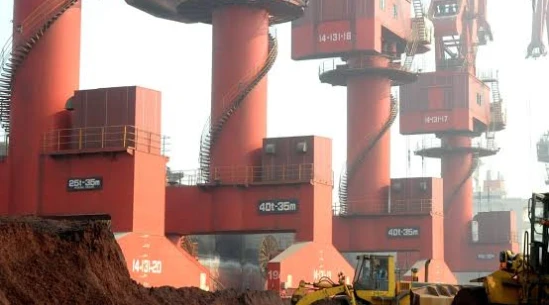

China on Monday 9 November announced a two-month extension of the export-control waivers that were due to expire this week, Reuters reported. The Ministry of Commerce said in a short statement that the pause on its widest rare earth controls would now run until 10 January, and gave no other details. The move keeps in place a fragile truce that also matters to Europe.
What was announced
China first imposed rare earth export controls in April 2025 and widened them in October of that year, adding controls on some industrial diamonds and lithium battery technology, according to Reuters. The expanded measures were paused for a year after a November 2025 summit between Presidents Xi Jinping and Donald Trump.
Monday's extension is part of a broader suspension of trade countermeasures and tariffs as China negotiates with Washington, Reuters said. Trump is expected to meet Xi at the APEC summit in Shenzhen later this month. A trade-news site reported that the April 2025 licensing requirements for seven medium and heavy rare earths remain in force.
The reports reviewed do not say explicitly whether the extension covers the EU. In 2025, EU trade chief Maroš Šefčovič said China had confirmed that the earlier suspension applied to the bloc. China's commerce ministry spokesperson He Yadong told CNBC that Beijing was willing to keep approving rare earth licences for the EU whether or not the US truce is extended, according to a trade analyst's summary.
What the EU and China agreed in October
On 9 October, after two days of talks in Beijing, Šefčovič announced understandings with Chinese Vice-Premier He Lifeng. They covered a potential halving of Chinese hybrid car exports to the EU from projected levels, lower tariffs on EU goods worth nearly €4 billion, including car parts, olive oil and footwear, and continued fast-track licensing of rare earths and permanent magnets, according to EU-focused news sites.
The outcome did not remove EU duties on Chinese battery electric vehicles, which reach up to 35.3% on top of a 10% base tariff, a news summary said. Both sides agreed to keep negotiating market access, export controls and World Trade Organization reform. Šefčovič called it a "crucial first step" toward rebalancing, TechTimes reported.
Why tensions persist
The imbalance is the core dispute. The EU's goods trade deficit with China reached about €360 billion last year, roughly €1 billion a day, and all 27 member states record a deficit, Gulf News reported. Brussels argues that Chinese state subsidies have expanded capacity beyond domestic demand. European companies report barriers in China, including limited access to public contracts and food exports.
Dependence on Chinese minerals adds to the pressure. MERICS research, cited by a secondary news site, says China controls about 60% of global rare earth production and 90% of processing, and that the EU imports all of its heavy and 85% of its light rare earths from China. Technology.org reported that China added seven EU entities to its export control list in April and 14 more in July.
Europe is also changing its stance. Gulf News said Germany now backs tougher trade tools alongside France, and that a proposed instrument would let the Commission respond to trade pressure within days. It also reported that Germany blocked the sale of a Hamburg port logistics company to Cosco, and that China's commerce ministry warned in late September that it would respond firmly to new EU restrictions on Chinese firms. The same article noted Europe faces higher US tariffs on one side and rising Chinese imports on the other.
What the evidence suggests
This section is analysis, not a reported finding. The record shows cooperation continuing at a managed, transactional level: licences, tariff adjustments and consultation mechanisms. At the same time, both sides are building defensive tools. Neither the October understandings nor the extension removes the underlying controls or duties. Even after an extension, analysts note that China keeps a licence-by-licence control over the supply.
What is not established
The October understandings were described in official and press summaries, and the legal texts and implementation details were not reviewed. The "up to half" figure for hybrids is the trade commissioner's estimate against projected imports, not a measured outcome. Some figures come from secondary or opinion pieces. Whether the 9 November extension applies to the EU is not stated in the reports reviewed.
What to watch next
The expiry on 10 January is the next deadline. The Trump–Xi meeting at APEC on 18 and 19 November will shape the wider truce. Within the EU-China relationship, watch whether hybrid exports fall as discussed, whether China cuts the tariffs it agreed to review, and whether rare earth licences for European firms are approved on time. Also watch whether the Commission uses its new trade tools, which could draw Beijing's countermeasures.
Nexuswild welcomes factual corrections. Email contact@nexuswild.com with evidence and the article URL.