
For most of the AI boom, the story has been about processors. Who has the fastest GPU, who can get enough of them, who can afford them. In 2026 the bottleneck moved. The part that is running short, and driving up the bill, is memory.
That is the backdrop for the most consequential chip listing in China this year. On Monday, July 27, ChangXin Memory Technologies, known as CXMT, debuted on the mainland market, and its shares jumped more than 500 percent. The company was suddenly worth over $500 billion and had overtaken ICBC as the most valuable listed company on the mainland, according to reporting by the Australian Broadcasting Corporation. Whether that valuation holds is a separate argument. What matters here is what the company is trying to do with the money.
Why memory sets the price of AI
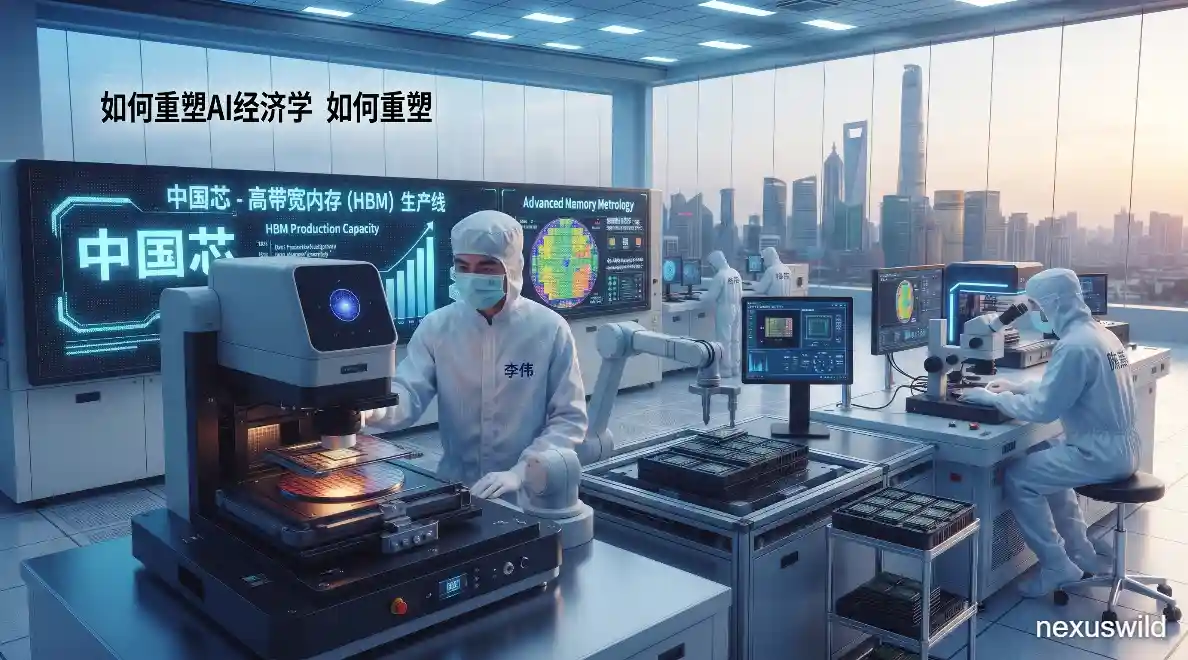
AI models need DRAM to hold information while they compute. The most advanced accelerators also depend on high-bandwidth memory, or HBM, a stacked and more complex version. As the biggest suppliers shifted capacity toward HBM for data centers, conventional memory got tighter too. The shortage has been nicknamed "RAMageddon," and consumer devices have felt it.
China is feeling a harsher version. Chinese AI chipmakers are raising prices on current and upcoming processors because HBM is scarce, according to a September report. U.S. export controls limit China's access to the best HBM, and Reuters has reported that some buyers have turned to grey-market supply at several times the price paid outside China. When your memory costs that much, the economics of training and serving a model shift, and so does who can afford to do it.
Where CXMT actually stands
The company is not close to the leaders yet. It is the world's fourth-largest DRAM maker with about 8 percent of the market, according to Counterpoint Research. Samsung holds 36 percent, SK Hynix 29 percent and Micron 24 percent. In 2024 CXMT met only about 20 percent of Chinese demand, and Counterpoint's research director says its goal is to supply more than two-thirds of the local market.
HBM is the weak spot. CXMT lags there, and Counterpoint expects it to start catching up in late 2026, with HBM supply inside China starting in 2027. That is a forecast, not a delivered product.
Will this make AI cheaper?
Probably not quickly, and the experts quoted are careful about it. TrendForce analyst Ellie Wang said new memory capacity typically takes at least a year to translate into meaningful supply, so relief is unlikely to be immediate. Over the longer term, she said, a more diverse supplier base could help the supply-demand balance and limit excessive price increases, but it may not bring prices down outright.
There is another catch. Sue Keay of the University of New South Wales AI Institute noted that CXMT's output is largely pre-committed, mostly to Chinese customers, so it is unlikely to flood the world with cheap chips. And analysts expect memory shortages to run through at least 2027 because the AI buildout keeps absorbing supply.
The geopolitical wrinkle
Dell, HP and Apple have reportedly tested CXMT's chips, and the Financial Times has reported Apple is lobbying Washington for clearance to buy them. But the Pentagon has listed CXMT among companies with alleged ties to the Chinese military, which Keay said makes any deal a real risk. In practice, the first beneficiaries look like Chinese device and cloud makers, not Western ones.
What this means
If CXMT delivers, the likely effect is not a price collapse. It is a market where Chinese buyers lean less on scarce, expensive imports, and where the world's memory supply has a fourth serious player. That could soften the squeeze on everyday DRAM first, and on AI-grade HBM much later.
The thing to watch is HBM. Until China can make it in volume and at decent yields, the economics of AI in China will stay tied to a component it cannot freely buy and cannot yet fully make.
Nexuswild welcomes factual corrections. Email contact@nexuswild.com with evidence and the article URL.