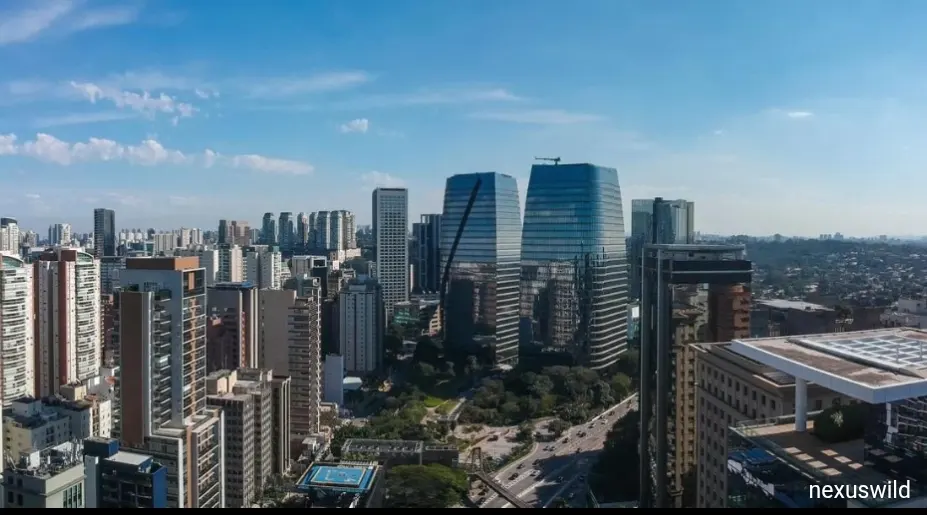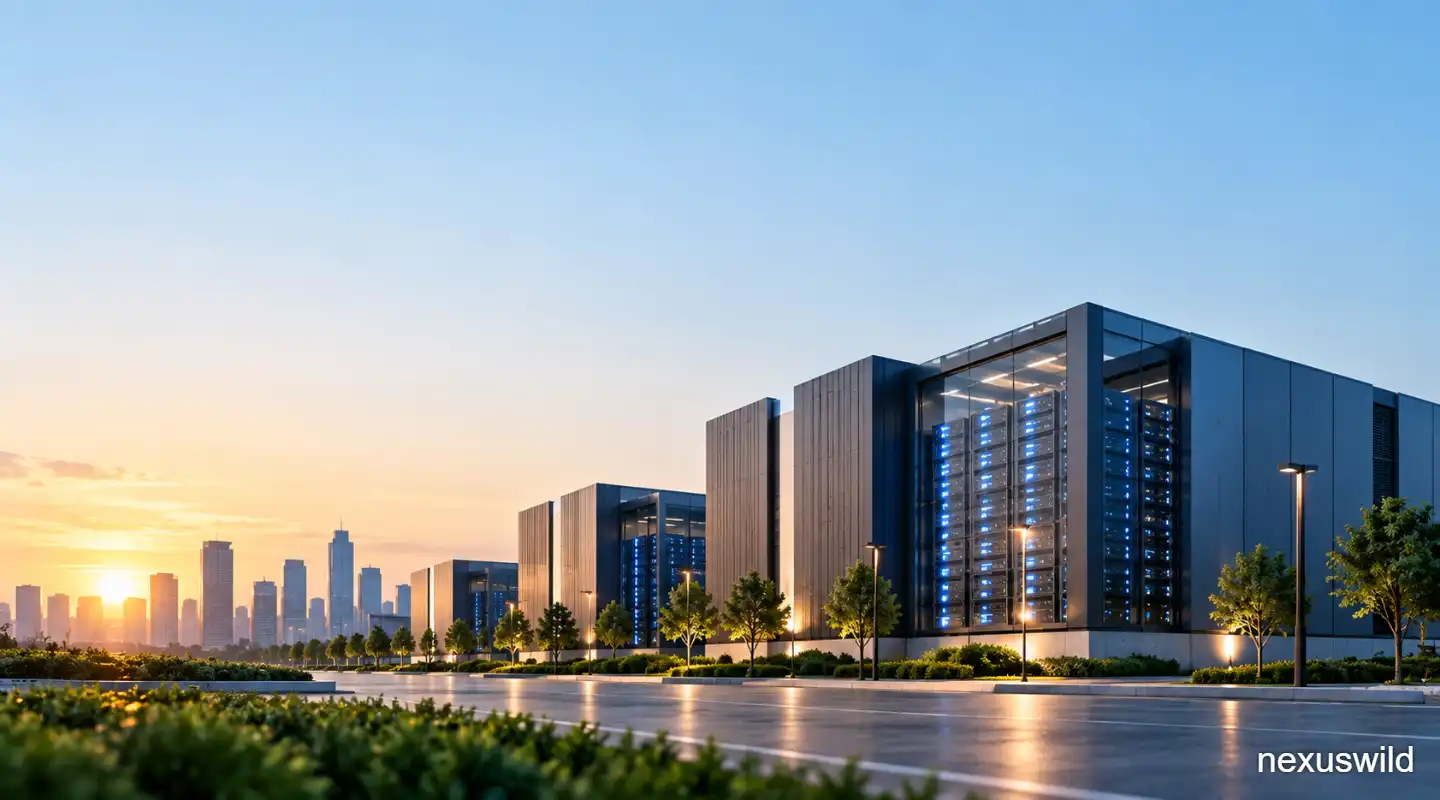

Data centers are becoming one of the most closely watched parts of commercial real estate as artificial intelligence, cloud computing and digital services drive demand for increasingly large computing facilities.
The shift is changing what makes a piece of land valuable.
For an office building, location may revolve around access to workers and transport. For a data center, the decisive questions increasingly include whether hundreds of megawatts of electricity can be secured, whether fibre networks are nearby, whether cooling is practical and whether local authorities will permit construction.
That combination is pulling data centers deeper into both the real-estate and infrastructure-investment markets.
AI Is Accelerating Demand for Physical Infrastructure
Digital services have required data centers for decades, but AI is increasing both the amount and density of computing infrastructure being deployed.
Across 16 major global data-center markets, operational supply reached about 16 GW in the first quarter of 2026, up 25% from a year earlier. Yet average vacancy fell from 8.3% to 6.7%, indicating that demand was absorbing capacity even as developers added new facilities.
North America is particularly tight.
Primary-market data-center capacity reached 10,903 MW in the first half of 2026, up 33.7% year on year, while vacancy fell to a record 1.4%. About 80% of capacity under construction was already committed to tenants.
Those are current market figures. Longer-term forecasts are less certain.
One 2026 industry outlook estimates global data-center capacity could increase from roughly 103 GW in 2025 to around 200 GW by 2030, requiring enormous investment in buildings, electrical systems and computing equipment.
Data Centers Are Real Estate, But Power Comes First
Data-center development begins with land, but suitable land alone is not enough.
Developers need access to high-voltage electricity, multiple fibre routes, reliable water or alternative cooling systems, and enough space for substations, backup systems and future expansion.
Power availability has become one of the most important site-selection criteria.
Northern Virginia remains North America's largest data-center market, with about 4,496 MW of inventory in the first half of 2026, but its vacancy rate had fallen to just 0.2%. Land constraints, permitting and electricity infrastructure are slowing additional supply.
That is encouraging developers to look beyond established hubs.
Markets including Atlanta, Tennessee and West Texas are attracting projects partly because they offer larger development sites and the possibility of securing additional generation or power connections.
The Investment Requirement Goes Far Beyond Buildings
Data centers increasingly sit between commercial real estate and utility infrastructure.
One current industry estimate projects that nearly 100 GW of new global capacity could require around $1.2 trillion of new real-estate asset value by 2030, plus another $1 trillion to $2 trillion for servers, GPUs, networking equipment and other tenant infrastructure. These are projections, not committed investment.
The capital intensity is changing how projects are financed.
Large campuses may involve property developers, infrastructure funds, utilities, private credit providers and technology companies rather than a conventional landlord-and-tenant relationship.
For investors, that can create long-duration infrastructure assets backed by large corporate customers. It also creates considerable development risk if electricity, financing or tenants fail to arrive as expected.
Europe and Asia Show Different Constraints
Europe's major data-center markets face similar pressures.
Frankfurt has experienced some of Europe's highest colocation pricing, while London, Frankfurt and Amsterdam continue to face electricity-grid and development constraints. Developers are increasingly considering secondary cities where land and power are easier to secure.
In Asia-Pacific, Singapore remains one of the most expensive major markets, with reported rental ranges of $330 to $475 per kW per month in early 2026. Its limited land and power availability have helped push development toward nearby locations including Johor in Malaysia and Batam in Indonesia.
The pattern is similar across regions: connectivity still matters, but access to scalable electricity is increasingly determining where the next generation of facilities can be built.
Power, Water and Permitting Can Delay Projects
The strongest demand does not guarantee that every proposed data center will be completed.
Electricity grids can take years to expand. Transformers and turbines have long procurement schedules. Local governments are scrutinising water use, electricity costs, tax incentives and the impact of large facilities on surrounding communities.
Construction costs are also rising. One global industry estimate puts core data-center construction costs at an average $11.3 million per MW in 2026, around 6% above the previous year. AI-specific computing equipment can add substantially more.
In the United States, federal regulators are already examining how the cost of serving rapidly growing data-center loads should be allocated between large users and existing electricity customers.
These constraints are increasingly part of real-estate due diligence.
Conclusion
Data centers are becoming a significant real-estate investment story because the digital economy requires increasingly physical infrastructure.
AI, cloud computing and online services need buildings, land, electricity, cooling equipment and network connections. In many leading markets, available capacity is already tight despite rapid construction.
But demand alone does not make every project attractive or viable.
Power availability, grid connection delays, permitting, construction costs, water requirements and changing technology all affect whether a proposed facility can be delivered economically.
Data centers therefore sit in an unusual position: they are real estate assets, technology infrastructure and major energy consumers at the same time.
That combination is why their value is increasingly determined not simply by where the land is located, but by how much reliable computing capacity that land can ultimately support.
Nexuswild welcomes factual corrections. Email contact@nexuswild.com with evidence and the article URL.