
Delhi's long-awaited Master Plan for Delhi 2047 (MPD-2047) was formally unveiled on Thursday, August 20, by Union Housing and Urban Affairs Minister Manohar Lal Khattar, in the presence of Lieutenant Governor Taranjit Singh Sandhu and Chief Minister Rekha Gupta. The notified plan comes into force from the date of its publication in the official gazette and sets out Delhi's development framework through 2047, when the city's population is projected to reach nearly 3.2 crore. Among its many provisions is a proposal to develop selected 24-hour city zones, a detail that has drawn attention as a marker of how Delhi wants to reshape its relationship with the night.
What MPD-2047 Actually Proposes
The plan states that the concept of a 24-hour city will be promoted by identifying specific "nodes, precincts or circuits" rather than applying round-the-clock activity across the entire capital. In effect, this means certain designated commercial, entertainment or mixed-use areas, likely places with strong footfall, transit access and existing night-time activity, could be earmarked to operate continuously, while the rest of the city would not automatically follow the same rules. The plan also proposes, for the first time in a Delhi master plan, round-the-clock commercial city zones supported by 24-hour transport services, alongside new road and development norms designed for lower-density areas.
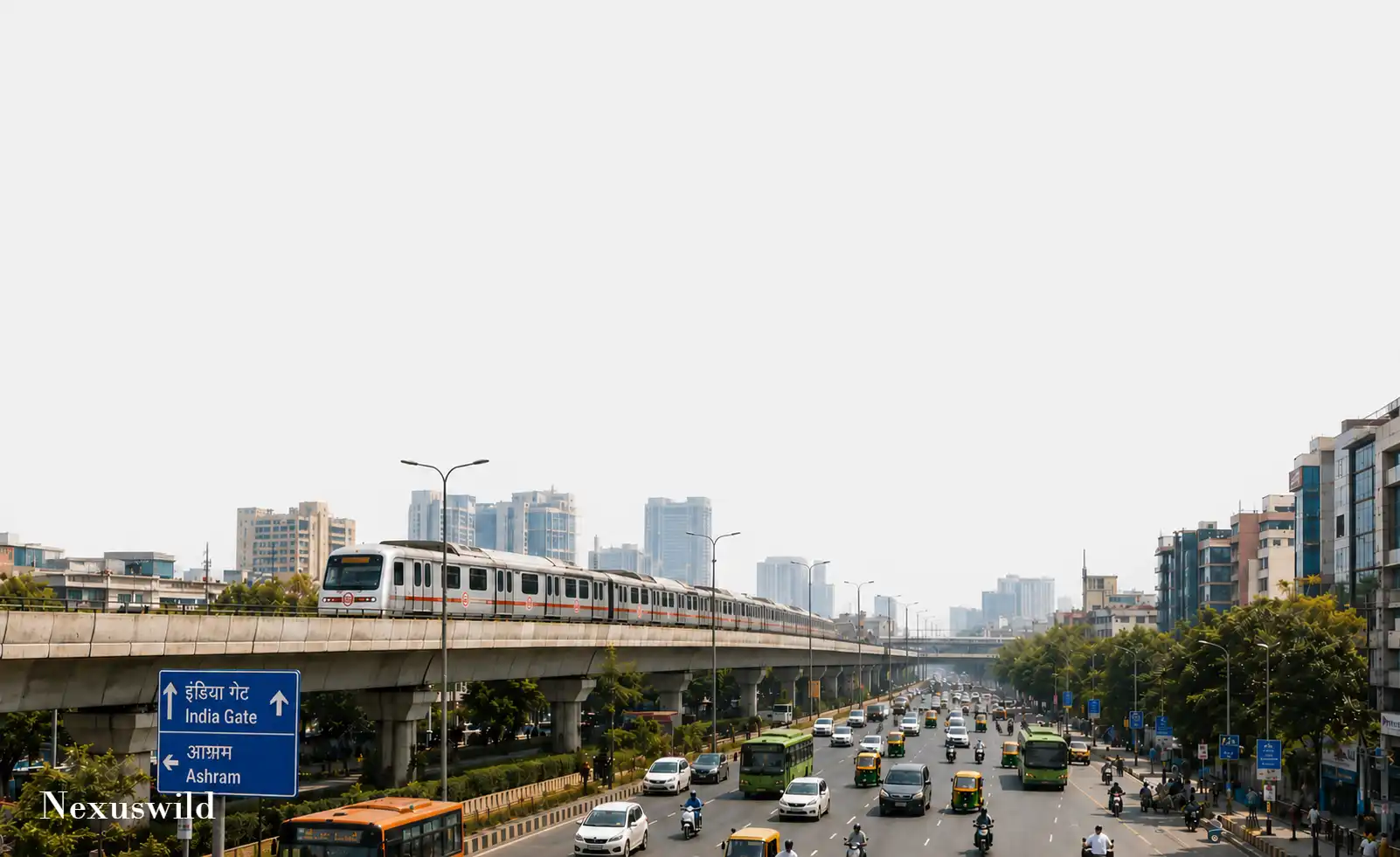
This 24-hour city vision sits within a much larger document. MPD-2047 links it to a broader transit-oriented development push: Delhi's existing 416-km Metro network is set to expand by another 279 km, and roughly 200 sq km around Metro and other mass transit corridors has been identified for dense, mixed-use development combining homes, offices, shops and public facilities. Six new Regional Rapid Transit System corridors are also part of the wider transport vision. None of this is specific to night-time activity, but it forms the backbone that any functioning 24-hour precinct would eventually need.
Proposal, Not Yet an Operating Reality
It is important to separate what has been notified from what is currently operating on the ground. MPD-2047 is now a notified statutory document, but the 24-hour zones themselves are described in the plan as a concept to be identified and promoted, not a list of named locations with fixed rules already in effect. Turning this into reality would require follow-up steps: zonal development plans, local body approvals, and coordination between the Delhi Development Authority (DDA), the Delhi government and civic agencies before any specific market, business district or precinct can legally function around the clock.
This is a different matter from Delhi's existing extended operating hours for hospitality businesses, which are already in effect. In August 2025, then Lieutenant Governor Vinay Kumar Saxena approved a policy allowing restaurants, pubs, eateries and open-air dining cafes to stay open until 1 am, restaurants and bars in three-star hotels to operate until 2 am, and those in four- and five-star hotels to run 24 hours a day, seven days a week. That decision, aimed at boosting Delhi's night-time economy, was implemented through excise and licensing channels and predates MPD-2047 by roughly a year. MPD-2047's 24-hour zones proposal is a separate, longer-term land-use and planning concept, not an extension of that existing hospitality policy, though the two could eventually reinforce each other if implemented well.
What It Could Mean, and What Remains to Be Worked Out
If 24-hour precincts do take shape, the most direct effects would likely be felt by businesses in hospitality, retail and entertainment operating within those designated zones, along with the workers who staff late-night shifts. For that workforce, safe and reliable transport after regular Metro and bus hours, and adequate street lighting and policing, would be practical necessities rather than optional extras. Residents living near any future 24-hour precinct would likely raise the same concerns seen when other Indian cities extended operating hours: traffic congestion, noise late into the night, pressure on parking, and questions about women's safety after dark. These are not concerns specific to Delhi's plan so much as patterns that have played out in cities like Bengaluru and Mumbai when similar late-night measures were introduced, and they would need to be addressed through policing, transport and civic planning rather than through the master plan document alone.
MPD-2047 does build in a review mechanism, with on-ground monitoring and a formal reassessment every five years managed by a dedicated unit within the DDA. That structure suggests the 24-hour zones concept, like much of the rest of the plan, is meant to be rolled out and adjusted incrementally rather than switched on overnight. For now, Delhi has a notified long-term vision that includes room for a more round-the-clock city in select pockets. Whether that vision translates into functioning 24-hour precincts, with the transport, safety and civic infrastructure to support them, will depend on implementation choices still to be made.
Further reading and useful links
Reader questions
Frequently asked questions
Is all of Delhi becoming a 24-hour city?
No. The Master Plan for Delhi 2047 proposes identifying specific 'nodes, precincts or circuits'—likely areas with strong footfall and transit access—to operate 24/7, rather than applying this across the entire capital.
Are restaurants in Delhi already allowed to open 24 hours?
Under a previous policy approved in August 2025, restaurants and bars inside four- and five-star hotels can operate 24 hours a day. Other restaurants and open-air cafes were allowed to stay open until 1 am. The MPD-2047 proposal is a broader urban planning concept for entire commercial zones, distinct from existing hospitality licensing.
When will the 24-hour zones start operating?
While MPD-2047 is now a notified statutory document, the 24-hour zones are a conceptual framework. Making them a reality requires follow-up actions like zonal development plans, local body approvals, and coordination between civic agencies for policing, transport, and infrastructure.
Nexuswild welcomes factual corrections. Email contact@nexuswild.com with evidence and the article URL.