
Environmental Groups Turn to AI for Wildlife Protection While Raising Concerns Over Data Centre Costs
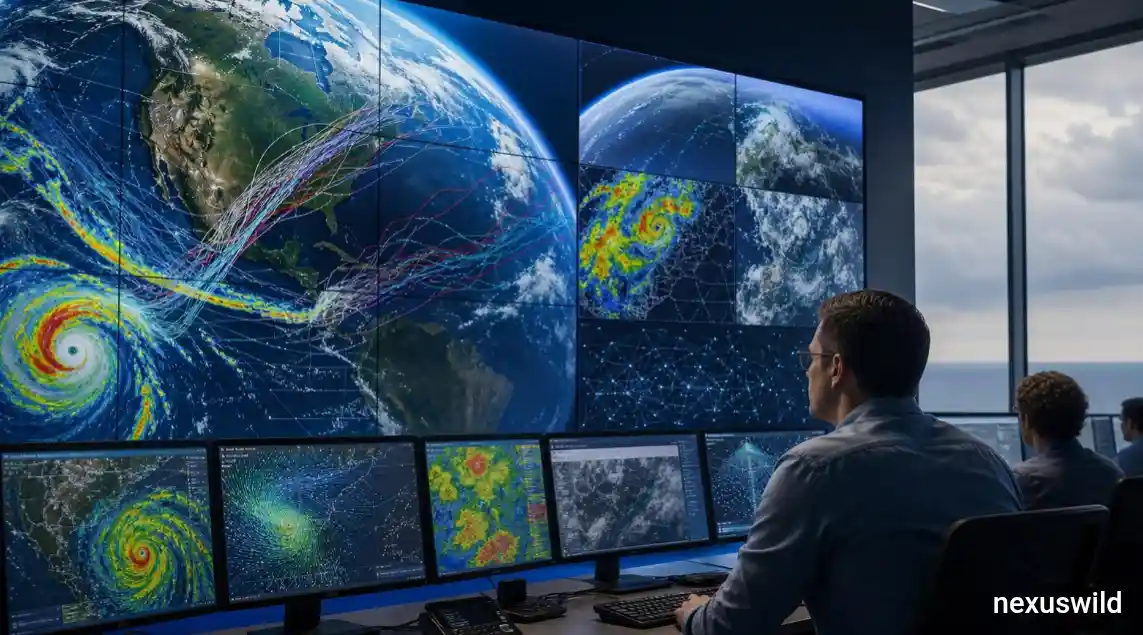
Environmental organisations are using intelligence more and more in conservation work. Artificial intelligence helps watch wildlife, spot forest fires and arrange decades of scientific research.. As artificial intelligence grows environmental organisations face a hard question: how can artificial intelligence help conservation without adding more environmental pressure from large‑scale computing?
A Reuters investigation published on November 7 2026 found that 15 major environmental, conservation and development organisations were already using intelligence in some form. All 15 expressed concerns about the footprint of the data centres that support artificial intelligence, especially the electricity consumption, water usage and greenhouse‑gas emissions of those data centres.
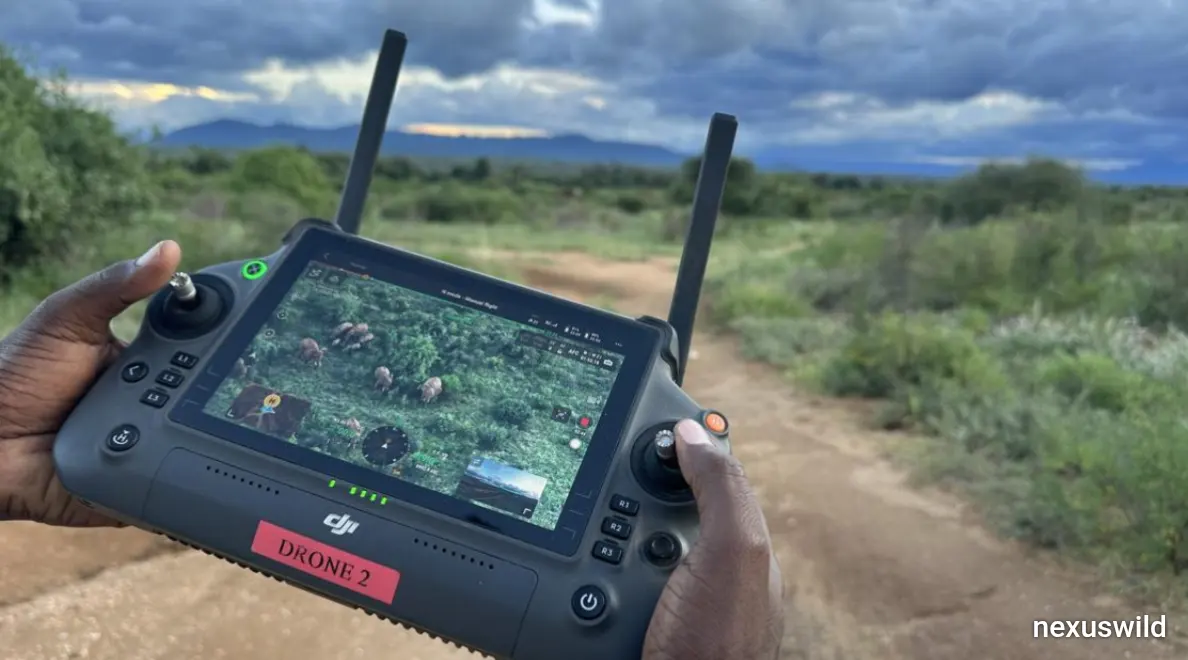
These examples show how artificial intelligence can make conservation work faster and more accessible. In Kenya Save the Elephants uses machine learning to analyse volumes of aerial wildlife photographs. In Tanzania the Jane Goodall Institute uses intelligence to turn handwritten chimpanzee research into searchable digital records. In Cambodia satellite‑based fire detection helps community patrols respond to forest fires quickly.
At the time environmental organisations are exploring ways to limit unnecessary computing reuse artificial intelligence‑generated results and process information locally instead of moving large amounts of data to cloud infrastructure.
Save the Elephants uses intelligence to speed up wildlife surveys
One of the most striking applications comes from Kenya‑based Save the Elephants. Save the Elephants uses machine learning to improve wildlife population surveys and research into elephant communication.
Traditional aerial wildlife surveys produce numbers of photographs that must be examined to identify animals and estimate population numbers. Reviewing these images manually is. Puts a lot of pressure on specialist researchers.
According to Save the Elephants chief executive Frank Pope, a survey of Kenyas largest protected area produced about 200,000 photographs. Nine people previously needed about nine months to review the images
The organisation now uses intelligence models trained on Nvidia GeForce graphics platforms to perform similar analyses in a few hours.
The technology also offers an improvement in the quality of wildlife monitoring. Frank Pope said that earlier human surveys had missed about one‑third of elephants half of zebras and three‑quarters of populations in the relevant survey comparisons.
Comprehensive population information can help environmental organisations understand changes in wildlife numbers identify areas that need protection and make better decisions about resource allocation.
Accurate wildlife data can also support conservation financing. Environmental organisations need evidence about animal populations and habitat conditions when explaining the importance of conservation projects to governments, donors and funding institutions.
The technology does not remove the need for field researchers or scientific verification. Instead it helps process datasets faster allowing specialists to spend more time interpreting results and planning conservation activities.
Jane Goodall Institute speeds up decades of chimpanzee research
Another major application is happening in Tanzania, where researchers from the Jane Goodall Institute are digitising decades of chimpanzee observations collected at Gombe National Park.
The Gombe research archive contains over 60 years of records including handwritten observations that document chimpanzee behaviour, interactions, feeding patterns and ecological information.
Many of these records were originally written on paper using Kiha language elements and scientific shorthand. Converting them into digital information has traditionally been a slow process that requires researchers to examine and manually enter historical observations.
The digitisation project was originally expected to take about 13 to 15 years.
According to Lilian Pintea, vice president of conservation science at the Jane Goodall Institute, an artificial intelligence‑based document‑processing tool developed with Amazon Web Services has cut the estimated timeline to two years.
The system scans records, interprets the information and structures it into digital data that researchers can analyse.
This could greatly improve access to research. Scientists may be able to examine patterns across decades of observations efficiently compare individual chimpanzee behaviour and link historical records with newer ecological datasets.
The project also shows how artificial intelligence can support preservation. Historical research archives contain information that may otherwise be hard to search, compare and analyse.
Human oversight remains important especially when artificial intelligence systems interpret scientific records. Researchers must review entries and validate extracted information to avoid adding errors into long‑term research datasets.
Satellite‑based intelligence helps detect wildfires in Cambodia
Artificial intelligence and satellite monitoring are also being used to support forest protection in Cambodia.
Conservation International has introduced a wildfire detection programme around the flooded forests of the Tonle Sap region, where seasonal dry conditions can make vegetation vulnerable, to fires.
Back in the day community patrol teams could receive wildfire information hours after a wildfire had started. That delay could allow a wildfire to spread before responders reached the affected area. I have seen how this can be dangerous.
The organisation partnered with wildfire detection company OroraTech to use satellite monitoring that identifies heat signals in forest areas. I find it remarkable how satellite can spot a wildfire early.
When a wildfire is detected alerts containing coordinates are sent to local response teams. Community patrol members can then travel to the reported location. Attempt to contain the wildfire before it spreads. I think this quick response saves trees.
Conservation International reported that the programme had helped community teams stop more than 50 wildfires over three years and protect 64,000 hectares of forest. I feel proud of that conservation effort.
The initiative illustrates how satellite data and automated detection can improve environmental response systems in remote locations where conventional monitoring infrastructure may be limited. The satellite helps conservation by spotting wildfire
The human response remains essential. Satellite alerts identify wildfire incidents but trained local patrol teams must reach the affected areas and take action. I know how important human presence is.
The programme therefore combines technology with community participation than relying on automated systems alone. The technology and community together make conservation stronger.
The Nature Conservancy uses edge AI to monitor fishing activity. I am curious about how AI can help with fishing.
The Nature Conservancy is applying AI in an environment: commercial fishing vessels. The AI helps monitor fishing activity on these vessels.
Industrial fishing operations generate quantities of video footage through onboard cameras and electronic monitoring systems. Reviewing this material manually can take time creating delays between fishing activity and the availability of information for regulators and fisheries managers. I think AI can speed this up.
The organisation has developed an AI-powered electronic monitoring system that processes footage aboard fishing vessels. This AI system works on the vessel itself.
This approach uses edge computing, which means that data are analysed on hardware rather than being transferred in full to a central cloud data centre. The edge AI reduces the load on the network.
The system uses computer vision to identify and classify fish in vessel footage helping generate information about catch activity and compare it with logbooks. The AI can spot fish species quickly.
Processing information onboard reduces the volume of video that needs to be transferred and can make useful monitoring results available sooner. The AI speeds up conservation reporting.
The approach also has an advantage. Local processing can reduce requirements and the energy associated with transferring and processing large quantities of video in centralised computing infrastructure. The AI helps keep energy low.
The Nature Conservancy has also worked to make its AI-powered electronic monitoring solution available through an open-source approach with the aim of supporting adoption in fisheries management. I hope more vessels will use this AI.
This example demonstrates how AI efficiency is not about building more powerful computing systems. In some applications designing more localised processing systems can be equally important. The AI shows that smaller can still be powerful.
Conservation groups confront the cost of AI. They worry about the impact of AI on the planet.
Despite these benefits conservation organisations are increasingly examining the environmental impact of the infrastructure supporting AI. The AI infrastructure can be heavy on resources.
Large data centres require electricity to operate servers, networking equipment and cooling systems. Their water requirements can also be significant in facilities that rely on water-intensive cooling technologies. I see how this can strain water supplies.
The International Energy Agency estimates that global data centre electricity consumption could reach 945 terawatt-hours annually by 2030, roughly double current levels at the time of its analysis. That is an increase in energy use.
The agency also projects that annual data centre water consumption could increase from 560 billion litres in 2023 to around 1.2 trillion litres by 2030. Water use is rising sharply.
These projections highlight the scale of infrastructure required to support expanding services, including AI applications. The AI world needs power.
For organisations the issue is particularly relevant because their work often involves reducing climate risks protecting natural resources and preserving biodiversity. Conservation must balance technology and nature.
Using AI to improve wildlife monitoring or identify forest fires may create conservation benefits but the computing infrastructure behind these applications can also contribute to electricity demand and emissions. The AI can add to the carbon load.
This creates a trade-off: organisations want to use technology to improve environmental outcomes while avoiding unnecessary resource consumption. The balance is hard.
Organisations experiment with responsible AI use. They look for ways to reduce impact.
Several environmental groups are developing approaches to reduce the resources consumed by their AI activities. Each group has its plan.
The World Resources Institute for example limits resource-intensive applications, including unnecessary image and video generation. It also reuses cached AI query results so that identical requests do not need to be processed. The institute saves energy this way.
The Nature Conservancys onboard processing approach provides another example of reducing the need for computing and large data transfers. The AI stays on the vessel saving bandwidth.
Greenpeace International has adopted guidelines emphasising transparency, human oversight and intentional AI use. However the organisation has also questioned whether the expansion of data centres is necessary at its current scale. Greenpeace wonders if more data centres are needed.
These positions illustrate that environmental organisations do not share one approach to AI. Some view the technology as a tool for accelerating conservation while others place greater emphasis on its energy and infrastructure costs. The debate continues.
The wider discussion is increasingly focused on deployment rather than simply whether organisations should adopt AI. The focus is, on how to use AI
AI infrastructure becomes part of the sustainability debate. We must consider the impact of AI.
The environmental impact of AI is drawing attention from governments, technology companies and international institutions.
As AI applications grow companies that run infrastructure feel more pressure to explain how their data centres use electricity and water and how their operations affect greenhouse‑gas emissions.
Microsoft, Amazon and Alphabet have already reported rising emissions that are partly linked to data centre expansion.
Technology companies are also buying electricity improving cooling systems and using more efficient hardware to manage the environmental effects of their infrastructure.
However the link between electricity purchases and the overall environmental footprint of data centres is complex. Water consumption, local grid capacity, construction materials and the timing and location of electricity use also matter.
The issue will get attention at the United Nations COP31 climate conference in Turkey in November 2026. Reuters said that Turkey plans to encourage governments, businesses and other institutions to support principles for AI development and deployment.
UN Secretary‑General António Guterres has also asked AI companies to disclose the environmental impacts of their systems.
Greater transparency could help governments, businesses and non‑profit organisations evaluate the costs of AI infrastructure before expanding AI use.
What this means for the future of conservation technology
The adoption of AI by organisations shows that AI is moving beyond commercial software and general‑purpose productivity applications.
Wildlife monitoring, forest protection, historical research and fisheries management are becoming practical areas where machine learning and computer vision can support real‑world operations. I have seen how AI can help track wildlife.
For technology providers this creates opportunities in AI hardware, satellite monitoring, computer vision, edge computing and low‑resource machine learning systems.
For conservation organisations the priority will be ensuring that these technologies deliver environmental benefits while keeping scientific accuracy human oversight and responsible resource use.
The growing interest in edge AI is especially important because edge AI offers an alternative to sending every dataset to centralised computing facilities. Local processing can reduce connectivity needs and unnecessary data movement in remote conservation environments.
However edge computing does not eliminate electricity consumption or the environmental footprint of hardware manufacturing. The benefits of edge computing must be assessed across the life cycle of the technology.
The broader lesson is that the environmental value of AI should be measured not by how quickly AI completes a task but also by the conservation outcomes AI enables and the resources needed to achieve them.
As more organisations integrate AI into their operations balancing efficiency, with environmental responsibility is likely to become a central part of the global sustainability debate.
Nexuswild welcomes factual corrections. Email contact@nexuswild.com with evidence and the article URL.