
The rapid growth of artificial intelligence is raising the need for computing infrastructure across the technology industry. Companies are spending a lot on processors, data centres, electricity supplies and advanced cooling systems to help increasingly complex AI models run.
However building data centres on Earth is becoming hard in many places. Access to electricity suitable land, water and grid capacity can stop expansion while operating costs keep investors on their toes.
Google is looking at an alternative: moving some future AI computing infrastructure into space.
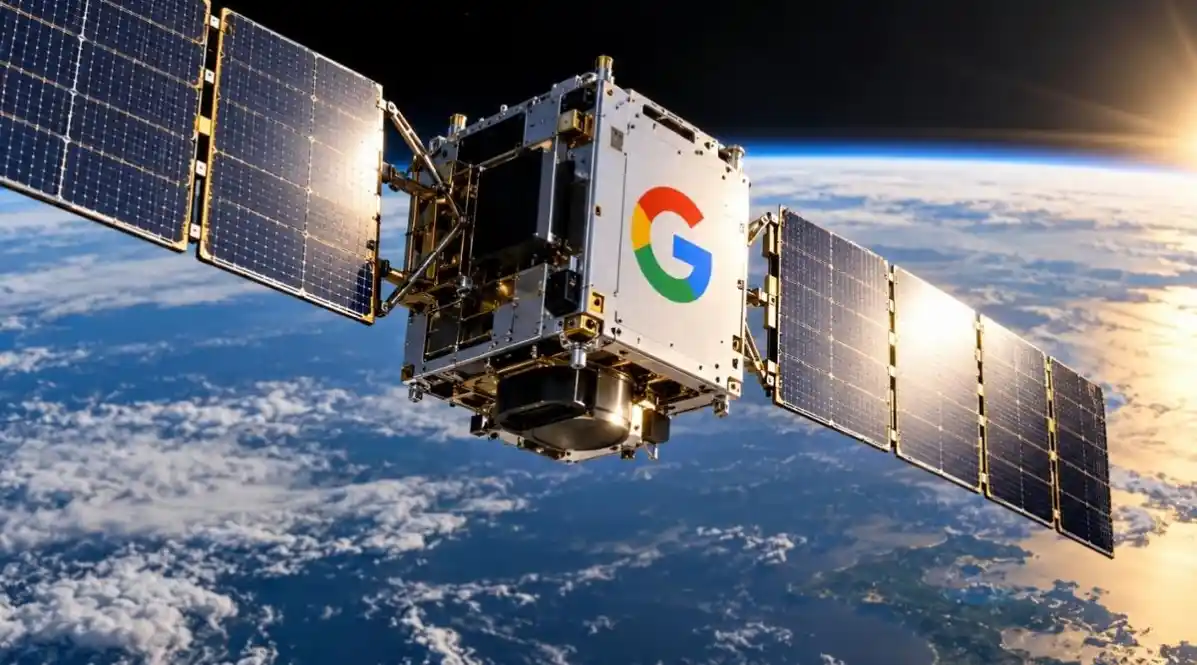
The companys Project Suncatcher research programme is trying to see whether networks of solar‑powered satellites with AI processors could one day do machine‑learning work in orbit.
The project has just hit a milestone. On October 30 2026 Google said that its prototype satellite made its AI answer using an onboard TPU. Engineers sent a prompt to the satellite the satellite ran Googles Gemma 4 model and the answer came back to Earth.
This shows that an AI model can run a job on the satellite’s hardware under orbital conditions. It does not mean Google has already built a working commercial data centre in space.
Still this achievement is progress for a research project that could one day change how parts of the worldwide computing industry think about energy, infrastructure and data processing.
Project Suncatcher Moves From Launch to Actual AI Processing
Google first talked about Project Suncatcher in November 2025 as a long‑term research effort to explore the idea of running machine‑learning infrastructure in space.
The original idea uses a network of satellites that carry Google’s Tensor Processing Units. These satellites would use energy and talk to each other with fast optical links letting many spacecraft work together as one connected computing system.
The first big hardware milestone came on October 1 2026 when a prototype satellite built with Planet went into orbit on SpaceX’s Transporter‑18 rideshare mission.
The satellite went through a commissioning stage where engineers checked its onboard systems turned on the computing hardware and ran early machine‑learning tests.
By October 30 Google said it had sent a prompt to the satellite’s Gemma 4 model and got a reply back through a ground station as the spacecraft flew over Svalbard, Norway.
The demo used a request asking the AI model to write a haiku about space. Google also tried prompts, including ones about spacecraft telemetry.
What matters is not the text that was made. What matters is that the whole technical chain worked: sending a prompt from Earth the satellite doing the work and getting the result back through a link.
That proves that a key part of the proposed system can work outside a data centre on Earth.
The demo is still just an early hardware test. It does not show that the system can run continuously that it has computing power or that it can help outside cloud customers.
Why Google Is Exploring Data Centres Beyond Earth
The main draw of space‑based computing is the ability to use energy.
Earth‑based data centres rely on electricity that must be supplied all the time. As AI work grows the need for electricity has become an issue for technology companies planning new sites.
Google thinks satellites in the low Earth orbits could use almost constant sunlight. Project Suncatcher research says that solar panels in these orbits could make up to eight times energy than similar panels on Earth under the right conditions.
That could lower the need for battery systems and give a strong power source for future computing.
Space‑based sites could also skip some limits tied to land and local grid power. A well‑built orbital system could use energy directly instead of fighting with homes, factories and other businesses for electricity from the ground.
Another possible benefit is environmental. Big data centres need land and a lot of infrastructure and many cooling systems use water. Orbital computing could ease some pressure on Earth resources even though building, launching and running satellites adds environmental costs.
The idea is very relevant as the demand, for AI computing grows faster than some electricity and infrastructure systems can keep up.
However abundant sunlight is one part of the equation. Turning it into computing capacity requires solar arrays, power‑management systems, specialised cooling equipment, reliable communications and hardware capable of surviving years in orbit.
The commercial value will depend on whether those systems can be manufactured and operated at a cost.
Googles AI Chips Must Survive Radiation and Extreme Temperatures
One of the challenges facing Project Suncatcher is whether conventional data‑centre processors can operate reliably in the space environment.
On Earth data‑centre equipment operates inside controlled facilities with managed temperatures, power supplies and physical protection. In orbit the same hardware faces radiation, temperature extremes, launch vibrations and other conditions that can affect components.
Radiation is particularly important. High‑energy particles from events and cosmic rays can interfere with semiconductor operations.
One possible effect is a memory bit flip, in which an electronic value changes unexpectedly. Such errors can corrupt information. Affect the output of a computing process.
Google has already conducted radiation testing of its Trillium TPUs on Earth using a proton‑beam facility at the University of California Davis. However simulated testing cannot completely reproduce the conditions of an orbital mission.
The satellite now gives researchers an opportunity to observe how the processors behave during operations in space.
The company also needs to evaluate the effects of launch stresses. During a rocket launch spacecraft experience vibration and acceleration forces. Components must remain secure and functional throughout the journey into orbit.
These tests are commercially important because a space‑based computing network would depend on hardware. If processors fail frequently or produce results the cost of replacing and managing equipment could undermine the entire business model.
For Google proving that AI chips can perform reliably in orbit is therefore a step before considering larger satellite deployments.
Cooling AI Processors in Space Could Be Difficult Than Expected
Power availability may make space attractive for computing but managing heat is one of the projects most difficult engineering problems.
AI processors generate heat when performing demanding calculations. Terrestrial data centres manage this through air circulation, liquid cooling and specialised heat‑management infrastructure.
Space presents a situation because a vacuum does not allow heat to move through conventional airflow.
Instead computing hardware must transfer heat through systems and release it using radiators. These components need to be designed because overheating can reduce performance, damage processors or interrupt operations.
Google is testing a cooling approach involving heat pipes and radiators. The system is intended to move heat from the processors and release it into space.
The difficulty increases when multiple high‑performance chips operate simultaneously. A large orbital computing facility would need to manage heat loads while keeping its cooling systems compact and light enough to launch economically.
There is also a design trade‑off. Larger radiators may improve heat rejection. Increase spacecraft size and mass. Additional mass can raise launch costs while complex systems introduce additional components that could fail.
This means the long‑term success of computing may depend as much on thermal engineering as on improvements in AI processors.
The current satellite provides an opportunity to gather data but the requirements of a small experimental payload are very different from those of a large‑scale AI data centre.
Laser Communications Could Connect Satellites Into a Computing Network
A major part of Googles long‑term concept involves connecting satellites so that they can operate as a distributed computing system.
Terrestrial AI infrastructure depends on high‑speed connections between processors. Data centres use networking equipment to move large amounts of information between chips, storage systems and servers.
A satellite computing network would require capabilities but the connections would need to operate between spacecraft moving at high speeds relative to one another.
Google plans to investigate free‑space communication using highly focused laser links to transfer data between neighbouring satellites.
These links could allow multiple spacecraft to share workloads rather than operate as completely independent systems.
However maintaining a connection requires extremely accurate positioning and tracking. The satellites must continuously adjust their alignment while travelling through orbit.
Google has identified communication, between satellites as a central research challenge. Its 2027 milestone is expected to involve two satellites testing the optical‑link technology.
If successful this would represent a step towards the modular architecture proposed for Project Suncatcher.
It is still too early to determine whether the system can deliver the communication speeds, reliability and low latency required for demanding AI workloads. The performance of these links will be important in deciding which computing tasks could realistically be handled in orbit.
The Economics of Space Data Centres Remain Uncertain
The business opportunity behind Project Suncatcher is closely connected to the economics of launching and maintaining computing infrastructure.
Terrestrial data centres require land, electrical connections and cooling systems. Space-based alternatives could avoid some of those constraints. They introduce substantial launch, manufacturing and maintenance costs.
In its design research Google explored a scenario in which launch costs fall below $200 per kilogram by the mid-2030s. Under that assumption the company suggested that space-based computing infrastructure could eventually approach the reported energy costs of terrestrial data centres on a per-kilowatt-per-year basis.
That is a long-term scenario, not a commercial cost estimate.
Independent analysis is more cautious. A Boston Consulting Group assessment published in August 2026 estimated that space-based data centres currently carry a 2.5 to three times cost-of-ownership premium over terrestrial facilities, based on its model.
The report estimated a 20‑year cost of approximately $660 million to $750 million per megawatt for orbital infrastructure compared with $230 million to $300 million per megawatt for terrestrial data centres.
BCG also identified launch efficiency, satellite weight, cooling and failure rates as important variables that will influence future costs.
The difference between these assessments highlights the uncertainty surrounding the industry. Google’s long‑term model depends on improvements in launch economics and system design while external analysis indicates that significant cost disadvantages remain.
The commercial opportunity will therefore depend on whether launch costs, improved satellite technology and longer equipment lifetimes can compensate for the additional engineering and operational requirements.
Sources: Google Research’s economic assumptions and Boston Consulting Group’s Space‑Based Data Centres: Cost and Outlook to 2040 August 27 2026.
Space Computing Could Create Opportunities for the Wider Technology Industry
If orbital computing becomes technically and commercially viable its impact could extend beyond Google.
Satellite manufacturers, launch companies, semiconductor designers, optical communication providers and specialised software developers could all become part of an infrastructure market.
The sector could create demand for electronics, advanced power systems, lightweight cooling equipment and high‑bandwidth satellite communication technology.
Companies already involved in satellite manufacturing and space transportation may also find opportunities as demand for larger computing payloads develops.
There is another market: processing data generated in space.
Earth‑observation satellites collect volumes of imagery and sensor information. Much of this information must currently be transmitted to facilities for analysis.
If some processing could take place directly in orbit operators might identify information faster and reduce the amount of raw data that needs to be transmitted to Earth.
Applications could include monitoring, agricultural analysis, disaster observation and spacecraft operations.
For technology companies this could create a market in which the value comes not from replacing conventional data centres but from performing certain tasks closer to where information is generated.
The opportunity will depend on whether customersre willing to pay for the additional infrastructure and operational costs involved.
Regulatory and Environmental Questions Will Become Important
The possibility of large computing satellite networks also raises questions about orbital traffic, space debris, spectrum allocation and long‑term environmental impact.
A large constellation could require thousands of satellites operating in coordinated formations. More spacecraft in orbit would increase the need for collision avoidance, tracking, traffic coordination and responsible disposal at the end of their operational lives.
Space‑based data centres would also need communication frequencies and authorisations to transmit data between satellites and ground stations.
The US Government Accountability Office’s April 2026 assessment of space‑based data centres identified launch economics, cooling, power and communications as barriers. It also warned that large increases, in satellite numbers could create collision risks and affect astronomical research.
These issues are not limited to one company. Any large‑scale orbital computing network would need to operate within space governance arrangements and national licensing requirements.
Environmental considerations must also cover the lifecycle of the system. Although satellites could reduce some pressures associated with data centres, manufacturing electronic equipment, launching rockets and replacing failed spacecraft all have environmental consequences.
The industrys long-term credibility will depend on addressing these issues alongside performance.
What Happens Next?
The next important milestone for Project Suncatcher is the planned 2027 demonstration involving two satellites.
Before reaching that stage Google intends to continue testing how its TPUs perform under radiation and thermal conditions. The company will also need to evaluate system reliability and the effectiveness of its heat‑management design.
The planned twin‑satellite mission will provide a meaningful test of whether multiple spacecraft can exchange information through high‑speed optical links.
For the technology industry important developments will include launch‑cost reductions, advances in reusable rockets improvements in satellite power systems and evidence that orbital computing can support workloads beyond short experimental demonstrations.
Companies and investors will also be watching whether the first commercial applications focus on AI computing or specialised tasks such as processing satellite‑generated data.
A successful experiment could open the door to investment but a commercial space‑based data centre remains a longer‑term objective rather than an immediately available technology.
Googles Project Suncatcher has reached a milestone by demonstrating that an AI model can successfully execute a workload on a data‑centre‑class TPU in orbit and transmit its response back to Earth.
The achievement moves the project beyond planning and initial hardware deployment. However it does not yet establish that large‑scale AI data centres in space are commercially practical.
Radiation exposure, thermal management, satellite communications, launch costs and orbital reliability remain challenges. The next phase, the planned 2027 interconnected‑satellite test will help determine whether the concept can develop beyond a small research demonstration.
For Google and the wider technology industry the opportunity is substantial. Space‑based computing could eventually provide energy options and specialised processing capabilities as demand for AI infrastructure continues to expand.
The realistic outcome may not be the replacement of Earth‑based data centres but the development of a complementary computing network designed for workloads where the advantages of operating in orbit justify the additional cost.
Project Suncatcher is still in its stage but its first successful orbital AI response has brought that possibility closer, to a real engineering test.
Nexuswild welcomes factual corrections. Email contact@nexuswild.com with evidence and the article URL.