
Key Findings
- 800,000+ Microbial Genomes Catalogued: The largest genomic survey ever conducted on the Great Barrier Reef, drawn from seawater collected at 48 reef sites.
- 584 Entirely New Bacterial Species: Of 876 distinct bacterial and archaeal species identified, roughly two-thirds had never been documented before.
- 362,802 Distinct Viruses: Including a previously unknown marine strain of Crassvirales, a virus first identified in the human gut.
- A New Conservation Tool: The resulting Great Barrier Reef Microbial Genomes Database (GBR-MGD) is now public and can be used to detect environmental stress before visible damage like coral bleaching occurs.
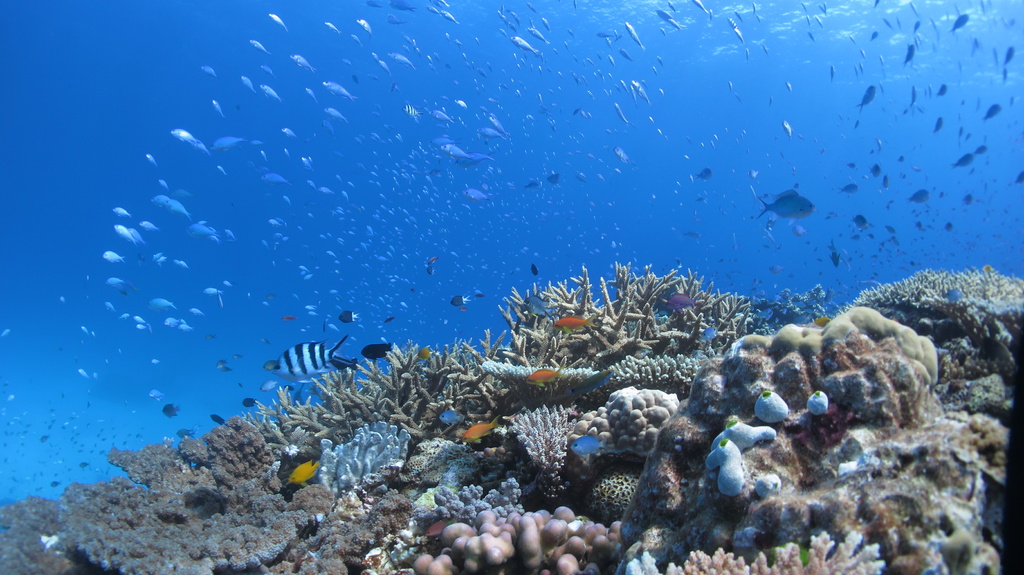
When people picture the Great Barrier Reef, they picture the visible majesty of it - vibrant corals, sea turtles gliding past, schools of colourful fish moving through sunlit water. Beneath that visible spectacle, however, lies a microscopic universe that functions as the biological engine of the entire ecosystem. In a study published in the journal Nature, researchers have mapped that invisible world for the first time.
Led by scientists from the University of Queensland (UQ) and the Australian Institute of Marine Science (AIMS), the project analyzed seawater from 48 different reefs, uncovering more than 500 new bacterial species and over 300,000 distinct viruses. Here is how that hidden world was mapped, and why it matters for the future of reef conservation.
How Do You Map an Invisible Ocean?
For decades, studying marine microbes was difficult because scientists could only meaningfully examine the small fraction of species that could be grown in laboratory petri dishes. To move past that limitation, the UQ and AIMS team used a technique called metagenomics - collecting seawater directly from the reef using devices called Niskin bottles, then extracting and sequencing the DNA present in the water itself, rather than trying to culture individual organisms first.
A single drop of ocean water contains thousands of different, closely related microbes. According to UQ researcher Dr Steven Robbins, many ocean microbes are adapted to low-nutrient environments, which results in unusually low levels of "G" and "C" - two of the four base chemicals that make up DNA. That low-GC content, combined with the sheer genetic complexity of seawater, has historically made genome sequencing of these organisms extremely difficult.
To overcome this, the team used advanced long-read sequencing technology, which reads much larger strands of DNA at once rather than breaking them into small fragments. Dr Robbins likened the process to assembling a massive jigsaw puzzle: the new technology essentially provided far larger puzzle pieces, making it possible to reconstruct complete microbial genomes that shorter-read methods had been missing entirely - a limitation the research team's own paper confirms, noting that standard short-read assemblies miss these populations due to strain heterogeneity and low-GC sequencing bias.
The Findings, By the Numbers
The research produced a database of more than 800,000 microbial genomes, now formally published as the Great Barrier Reef Microbial Genomes Database (GBR-MGD). The scale of the discovery underlines just how much of the ocean's microscopic life remains undocumented.
| Category | Genomes Identified | Notable Detail |
|---|---|---|
| Bacteria & Archaea | 5,283 genomes, representing 876 distinct species | 584 species (roughly two-thirds) were entirely new to science |
| Viruses | 808,585 viral genomes | Representing an estimated 362,802 distinct kinds of virus |
| Picoeukaryotes | 20 chromosome-level genomes | Includes complete chromosomes of Bathycoccus and *Ostreococcus*, two of the reef's most abundant microalgae |
Among the viral discoveries was a newly described marine clade of Crassvirales, a virus that infects bacteria and was first identified in the human gut in 2014. It was originally considered a potential indicator of human or animal waste contamination. This study demonstrates that Crassvirales also occurs naturally in the open waters of the Great Barrier Reef, unconnected to contamination - a finding that will matter for how scientists interpret its presence in future water-quality testing.
Why the Marine Microbiome Matters
Microbes form the foundational layer of ocean life. Dr Yun Kit Yeoh, a senior research scientist at AIMS, has pointed out that these microorganisms underpin the entire marine food web. Many of the microbes living on the reef are microalgae capable of photosynthesis - taking in sunlight and carbon dioxide to produce oxygen. Ocean microalgae collectively produce a substantial share of the oxygen humans breathe, and these same organisms are consumed by krill and zooplankton, which in turn feed larger predators. This invisible microbial base supports everything from the smallest coral polyps to the largest whales in the reef system.
Now we can start to explore what makes a healthy reef microbiome and how these invisible communities respond to changes on the Great Barrier Reef such as bleaching, storms, sediment, fishing and other stresses.
- Professor Philip Hugenholtz, University of Queensland
A New Tool for Reef Conservation
The most consequential outcome of the study may not be the discovery count itself, but what researchers can now do with it. The Great Barrier Reef Microbial Genomes Database has been made publicly available to reef researchers worldwide, giving scientists a shared baseline for what a "healthy" reef microbiome actually looks like.
Microbial populations are highly sensitive and often shift measurably before any physical damage - such as coral bleaching - becomes visible to the naked eye. That sensitivity is what makes the microbiome useful as an early-warning system. Tracking it can help scientists detect:
- The onset of climate-driven heat stress, often before visible bleaching occurs.
- Heavy metal or pollutant contamination entering reef waters.
- Signs of human disturbance, including whether illegal fishing has occurred inside protected "no-take" zones - an application the research team specifically validated using existing AIMS fisheries management data.
As the research team notes, this work is designed to complement long-term monitoring of the Great Barrier Reef, which AIMS has carried out for more than forty years through its Long Term Monitoring Program - adding a genomic, invisible layer of surveillance to decades of physical reef observation.
What Comes Next
By making the invisible visible, the GBR-MGD gives conservation scientists a genuinely new lens for protecting one of the planet's most biodiverse ecosystems. The database's public availability means the discovery isn't confined to the original research team - reef managers, climate scientists, and marine biologists elsewhere in the world can now draw on it to interpret changes in their own coral systems, using the Great Barrier Reef's newly documented microbial baseline as a reference point. The full study, "The planktonic microbiome of the Great Barrier Reef," is published in Nature.
Nexuswild welcomes factual corrections. Email [email protected] with evidence and the article URL.