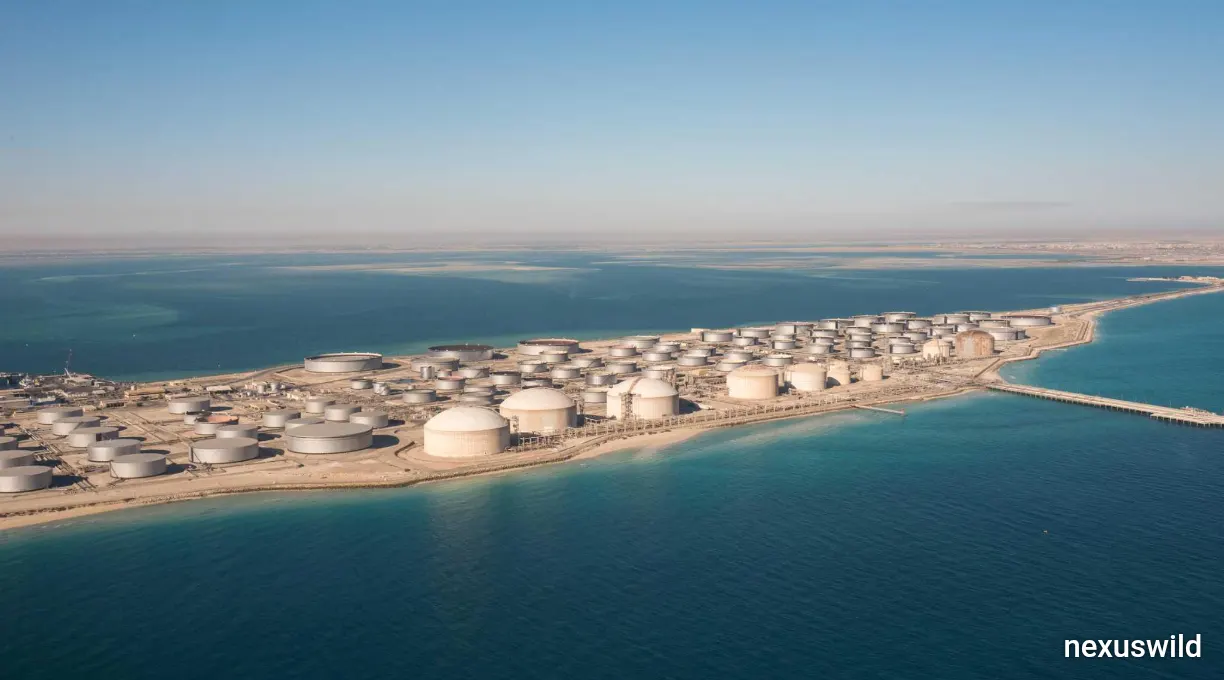

Oil prices rose on Wednesday, October 28, after Yemen’s Iran-aligned Houthi movement claimed it had struck Saudi Arabia’s Ras Tanura refinery with a ballistic missile, renewing concerns about energy infrastructure security in the Middle East.
Brent crude futures advanced 1.4%, or $1.31, to $115.47 a barrel, while US West Texas Intermediate (WTI) crude gained 1.4%, or $1.43, to $101.33, according to Reuters. The rise followed a decline in prices in the previous session, when hopes for regional diplomacy had helped ease some immediate supply concerns.
The Houthi claim was not independently confirmed by Saudi authorities. The group’s military spokesperson, Yahya Saree, said the missile had hit the refinery and caused a fire. Saudi officials reported intercepting missiles launched toward the kingdom, but had not publicly confirmed a direct strike on the refinery or provided a formal damage assessment.
What is known about the reported incident?
The Houthis said on Tuesday, October 27, that they had targeted the Ras Tanura refinery in Saudi Arabia’s Eastern Province. The complex is located on the Persian Gulf coast and includes oil infrastructure and a shipping terminal.
Reuters reported that the group claimed a ballistic missile strike had caused a fire at the site. Separately, Bloomberg, citing a person familiar with the matter, reported that Saudi Arabia had contained a fire near the Ras Tanura oil terminal following an attack in the region. The extent of any damage was not immediately clear.
These accounts provide context for the market reaction, but they do not establish that the refinery’s processing units were struck, that operations were suspended, or that oil exports from the facility were interrupted.
The distinction matters because the refinery and the wider oil hub are major energy assets, but a reported fire near the terminal does not automatically mean that the refinery itself has sustained damage or that crude supply has been lost.
Why Ras Tanura matters to oil markets
Ras Tanura is one of Saudi Arabia’s major oil facilities. The refinery has a reported processing capacity of approximately 550,000 barrels per day and is connected to a wider complex that includes a major crude export terminal.
Saudi Arabia is the world’s leading crude oil exporter, and its export infrastructure is important to global energy flows. Nearly all Saudi crude exports move through two main ports: Ras Tanura on the Gulf coast and Yanbu on the Red Sea, according to Reuters reporting.
Any credible threat to these facilities can attract close attention from oil traders, even when the extent of physical damage is unclear. The market may react not only to a confirmed reduction in supply, but also to the possibility that further attacks could disrupt production, processing, loading operations or shipping.
However, the price response does not establish that Saudi oil output or exports have actually fallen. It reflects concern about possible future disruption and the uncertainty surrounding regional security.
Oil prices react to renewed supply concerns
The latest price gains came as traders assessed the risk of additional attacks on energy infrastructure amid wider regional tensions.
Brent crude rose to $115.47 a barrel, while WTI reached $101.33. The gains reflected renewed concern that the conflict could affect oil production or export routes in a region central to global energy supplies.
Oil prices had recently eased as diplomatic developments raised hopes of reduced hostilities. The Houthi claim and reports of a fire near Ras Tanura brought supply risks back into focus.
The market’s reaction also comes against a backdrop of elevated crude prices and continued uncertainty around regional security. Even without confirmed damage to the refinery, traders may demand a higher risk premium when they believe the probability of supply disruption has increased.
That premium can change quickly. A confirmed interruption to exports could place additional upward pressure on prices, while evidence that facilities remain operational and shipping continues normally could reduce some of the immediate concern.
Potential consequences for consumers and businesses
A sustained increase in crude prices can affect the cost of fuel and energy-intensive operations, but the effect is not immediate or uniform.
Refineries, fuel distributors, airlines, shipping companies and manufacturers may face higher input costs if crude prices remain elevated. Transport and logistics businesses can also be exposed to fuel-price movements, while consumers may eventually see changes in petrol, diesel or other fuel prices depending on local pricing systems, taxes, currency movements and supply conditions.
The latest rise alone does not establish that retail fuel prices will increase by a specific amount. The impact depends on whether crude prices remain higher, how regional supply develops and how costs pass through to domestic markets.
For countries that import a large share of their crude oil, a sustained increase can also raise the cost of energy imports and place pressure on trade balances. In India, the eventual effect would depend on the duration of the price move, the rupee-dollar exchange rate and domestic fuel-price decisions.
Regional security remains a key market risk
The Ras Tanura claim comes amid a broader period of heightened security concerns involving Saudi Arabia and Yemen’s Houthi movement.
Saudi authorities have reported intercepting missiles launched toward the kingdom, while the Houthis have claimed attacks on energy and military targets. The conflict and its potential effect on maritime routes have increased uncertainty around regional oil flows.
For traders, the central question is whether the latest incident remains an isolated security event or signals a broader escalation that could threaten production, export terminals or shipping.
The Strait of Hormuz is another major concern for energy markets because it is a critical route for oil shipments from the Gulf. Ras Tanura lies west of the strait, but threats to Saudi infrastructure and regional shipping can influence market expectations across the wider Gulf.
What to watch next
The next important developments are official Saudi statements on the Ras Tanura incident, any confirmed assessment of damage, and information about refinery and terminal operations.
Traders will also monitor whether Saudi crude production and exports continue without interruption, whether further attacks are reported, and whether diplomatic efforts reduce or intensify regional tensions.
For now, the key confirmed market development is that crude prices rose after the Houthi claim and amid reports of a fire near the oil hub. The alleged direct missile hit on the refinery, the extent of any damage and the operational impact remain unconfirmed by Saudi authorities.
The incident illustrates how quickly geopolitical risk can influence energy markets. Whether the price increase persists will depend less on the claim itself than on what subsequent reporting establishes about infrastructure damage, supply flows and the possibility of further escalation.
Nexuswild welcomes factual corrections. Email contact@nexuswild.com with evidence and the article URL.