
Lionel Messi’s status in Argentina now appears almost unquestioned, but the relationship between the country and its greatest modern footballer was not always straightforward.
For much of his international career, Messi lived with an unusual contradiction. He was celebrated worldwide for his achievements with Barcelona while repeatedly being asked at home why he had not reproduced the same trophy-winning success with Argentina.
The debate was never simply about ability. Few seriously disputed Messi’s talent. Instead, the criticism centered on identity, leadership and the absence of a senior international title during the first decade and a half of his national-team career.
That changed gradually, then decisively.
Argentina’s victory at the 2021 Copa América, followed by the 2022 FIFA World Cup in Qatar, transformed Messi’s international story. The player once compared unfavorably with Diego Maradona came to occupy his own place in Argentina’s sporting culture.
Messi Grew Up Away From Argentina
Part of the early distance between Messi and the Argentine public came from his unusual football upbringing.
Born in Rosario in 1987, Messi joined Barcelona’s academy as a teenager after leaving Argentina with his family. His professional identity was therefore formed largely in Spain.
By the time he became one of the best players in the world, Argentine supporters knew him primarily through his performances for Barcelona.
That contrasted sharply with Maradona, whose rise had been deeply embedded in Argentine domestic football before he moved to Europe.
Messi still represented Argentina at youth level and helped the country win the 2005 FIFA World Youth Championship before collecting an Olympic gold medal in Beijing in 2008.
But senior international football proved more complicated.
Club Success Made International Failure More Visible
Messi’s extraordinary success at Barcelona intensified expectations whenever he returned to the national team.
He won league titles, Champions League trophies and individual awards in Spain while Argentina continued to fall short in major tournaments.
The contrast became one of the dominant narratives surrounding his international career.
Argentina reached the quarterfinals of the 2006 and 2010 World Cups, then suffered a particularly painful defeat in the 2014 World Cup final, losing 1-0 to Germany after extra time at the Maracanã in Rio de Janeiro.
Messi won the Golden Ball as the tournament’s best player, but that individual recognition did little to resolve the larger national debate.
For many supporters, the missing World Cup remained the defining comparison with Maradona, who had led Argentina to the 1986 title.
Three Consecutive Final Defeats Deepened the Pressure
The 2014 World Cup was followed by two more major final defeats.
Argentina lost the 2015 Copa América final to Chile on penalties and then suffered another penalty-shootout defeat against the same opponent in the 2016 Copa América Centenario final.
Messi missed Argentina’s first penalty in the 2016 shootout.
After the match, an exhausted Messi announced that his international career was over.
The decision reflected the extraordinary pressure surrounding Argentina’s repeated failures. He had reached four senior international finals by that point, including the 2007 Copa América, without winning one.
His retirement announcement also exposed a change in public attitudes.
Instead of celebrating his departure, large numbers of supporters called for him to return.
“Don’t Go, Leo” Marked an Important Turning Point
The reaction to Messi’s 2016 retirement became one of the clearest signs that Argentina’s relationship with him was changing.
Supporters organized campaigns urging him to reconsider. The phrase “No te vayas, Lio” — “Don’t go, Leo” appeared across social media and public demonstrations.
Argentina’s then-president Mauricio Macri publicly urged him to continue playing for the national team.
Messi reversed his decision weeks later.
The episode mattered because it challenged the idea that Argentina simply rejected him whenever the team failed.
Criticism remained, but many supporters had begun separating Messi’s individual responsibility from broader problems within Argentine football.
The 2018 World Cup Brought Another Low Point
Argentina entered the 2018 World Cup in Russia after a difficult qualifying campaign and struggled throughout the tournament.
The team drew with Iceland, suffered a 3-0 defeat against Croatia and eventually lost 4-3 to France in the round of 16.
Messi scored once during the tournament.
The chaotic campaign reinforced questions about Argentina’s tactical organization and institutional stability rather than focusing exclusively on its captain.
After the tournament, Lionel Scaloni was initially appointed on an interim basis.
That decision eventually changed both Messi’s national-team career and Argentina’s trajectory.
Scaloni Built a Different Team Around Messi
Scaloni gradually refreshed Argentina’s squad.
Players including Rodrigo De Paul, Emiliano Martínez, Cristian Romero, Leandro Paredes and Lautaro Martínez became important parts of a younger group around Messi.
The national team also developed a stronger collective identity.
Rather than treating Messi as the solution to every attacking problem, Argentina increasingly provided him with a structure in which defensive work, midfield intensity and emotional leadership were distributed throughout the squad.
The relationship between Messi and the team also appeared different.
Younger players had grown up admiring him and openly described their desire to help him win with Argentina.
That environment became visible at the 2019 Copa América, where Argentina finished third despite losing to Brazil in the semifinal.
The breakthrough came two years later.
Copa América 2021 Changed the Story
Argentina defeated Brazil 1-0 at the Maracanã on July 10, 2021, to win the Copa América.
Ángel Di María scored the winning goal.
For Messi, the result ended a long wait for a senior international trophy.
He had been central to Argentina’s tournament, finishing with four goals and contributing heavily in the buildup to the final.
But the importance of the victory extended beyond statistics.
When the final whistle sounded, Argentina’s players immediately ran toward Messi.
The images of him surrounded by teammates captured how the national team had changed. This was no longer a story of one superstar being expected to carry an entire football culture.
Messi finally had the title that had been used for years as evidence against his international career.
Winning in Brazil Added Symbolic Weight
The location made the victory particularly meaningful.
Argentina defeated Brazil at the Maracanã, one of football’s most famous stadiums, and did so against its historic South American rival.
It was Argentina’s first senior international trophy since the 1993 Copa América.
For Messi, the victory removed the most persistent criticism of his national-team career: that he had never won a major senior title for his country.
The discussion around him changed almost immediately.
The question was no longer whether Messi could win with Argentina.
It became whether he could go one step further at the World Cup.
Qatar Began With a Shock
Argentina entered the 2022 World Cup on a long unbeaten run but lost its opening match 2-1 to Saudi Arabia.
The defeat threatened to turn the tournament into another disappointment.
Instead, Argentina recovered.
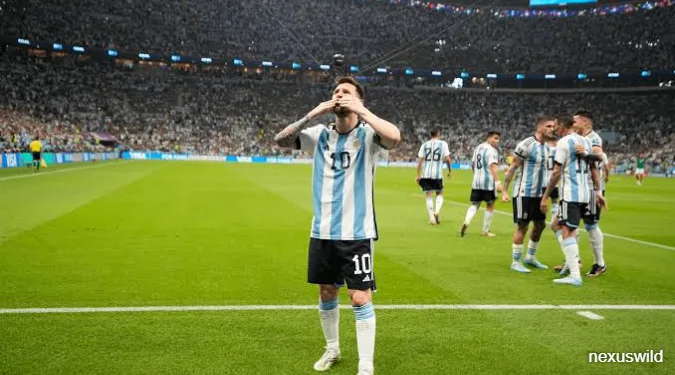
Messi scored against Mexico in a critical 2-0 group-stage victory, then remained central as Argentina defeated Poland, Australia, the Netherlands and Croatia to reach the final.
The tournament also revealed a version of Messi that differed from the quieter public image associated with much of his earlier career.
He was more visibly emotional, confrontational and expressive.
Argentine supporters responded strongly to that side of him.
The Netherlands Match Revealed a Different Messi
Argentina’s quarterfinal against the Netherlands became one of the tournament’s most intense matches.
Argentina surrendered a 2-0 lead before eventually winning on penalties.
After the game, Messi publicly confronted Dutch players and criticized comments made before the match.
The moment became culturally significant in Argentina because supporters saw a captain who appeared emotionally immersed in the confrontation rather than detached from it.
For years, one criticism had been that Messi did not express Argentine football culture in the same theatrical way as Maradona.
By Qatar, that argument had largely disappeared.
Messi did not become Maradona.
Instead, Argentina increasingly accepted his personality on its own terms.
The World Cup Final Completed the Transformation
Argentina faced France in the World Cup final on December 18, 2022.
Messi scored twice in a dramatic 3-3 draw after extra time.
Argentina then won the penalty shootout 4-2, with goalkeeper Emiliano Martínez playing a decisive role.
Messi finished the tournament with seven goals and won the Golden Ball.
More importantly for Argentina, he lifted the World Cup.
The victory gave the country its third men's world title after 1978 and 1986.
The scenes that followed showed how completely Messi’s relationship with Argentina had changed.
Millions Celebrated in Buenos Aires
Argentina’s World Cup victory produced enormous public celebrations.
Millions of people gathered in and around Buenos Aires when the team returned home.
The planned open-top bus parade eventually had to be abandoned because the crowds made the route impossible to complete safely, and players were transferred to helicopters.
Messi was no longer being measured only against the national team’s past.
He had become part of it.
Murals, shirts and public tributes spread across the country, while images of Messi lifting the trophy became part of Argentina’s sporting iconography.
Messi and Maradona No Longer Had to Be Opposites
For years, discussion of Messi in Argentina was often structured around Maradona.
Maradona had won the World Cup.
Maradona appeared more emotionally Argentine.
Maradona had played domestically before becoming a global superstar.
Messi’s career followed a different path.
The 2022 title did not eliminate arguments over generations or personal preference, but it reduced the need to define one player by diminishing the other.
Argentina could recognize Maradona’s singular cultural importance while celebrating Messi on his own terms.
Their stories were different, but both were now connected to World Cup victories.
The 2024 Copa América Reinforced the New Relationship
Argentina’s success did not end in Qatar.
The national team won another Copa América in 2024, defeating Colombia 1-0 after extra time in the final.
Messi left that match injured, but Argentina’s ability to win without depending entirely on him reinforced the strength of the team built during the Scaloni era.
By then, Messi’s status within Argentina was fundamentally different from the years when every tournament defeat prompted questions about his national identity or leadership.
The trophies mattered, but so did the journey toward them.
The Shift Was About More Than Winning
It would be too simple to say Argentina began loving Messi only because he won trophies.
The transformation had started before 2021.
The reaction to his 2016 retirement showed that many supporters already recognized how much pressure had been placed on him.
Argentina’s subsequent institutional problems also encouraged a broader understanding that international tournaments could not reasonably be reduced to one player.
At the same time, winning clearly mattered.
Footballing cultures judge their greatest players partly through collective achievements, and Messi’s Copa América and World Cup victories resolved the most visible gap in his Argentina career.
Messi’s Public Identity Also Changed
Messi himself became more open during the later stages of his international career.
He spoke more frequently about what representing Argentina meant to him and appeared increasingly comfortable expressing emotion around the national team.
That mattered in a country where supporters had sometimes mistaken his reserved personality for distance.
His bond with teammates became another important part of the story.
The group that won in Brazil and Qatar consistently presented Messi not as an isolated celebrity but as their captain and teammate.
That collective identification helped reshape the way the public viewed him.
From Questioned Captain to National Symbol
Messi’s Argentina career eventually produced nearly every major achievement available at international level.
He won the World Youth Championship, Olympic gold, the Copa América, the Finalissima and the World Cup.
But the cultural change cannot be explained by a trophy list alone.
For years, Messi represented an unresolved national debate about what an Argentine football hero should look like.
He was quiet rather than theatrical, raised footballistically in Barcelona rather than Buenos Aires and globally celebrated before he was fully embraced at home.
Over time, Argentina stopped asking him to fit an existing model.
That may be the most important change of all.
Conclusion
Lionel Messi’s journey with Argentina was not a simple progression from rejection to acceptance.
He was always admired, but admiration existed alongside unusually intense expectations and persistent comparisons with Diego Maradona.
Defeats in the 2014 World Cup and the 2015 and 2016 Copa América finals deepened that tension. His brief retirement in 2016 revealed how much public sentiment had already begun to shift.
The decisive transformation came with victory over Brazil in the 2021 Copa América final and Argentina’s triumph at the 2022 World Cup.
Those victories ended the argument that Messi’s international career lacked collective success, while the team built around him under Lionel Scaloni gave supporters a different view of their captain.
By the time Messi lifted the World Cup in Qatar, Argentina was no longer debating whether he belonged among its defining football figures.
The country had learned to celebrate him not as another Maradona, but as Lionel Messi.
Nexuswild welcomes factual corrections. Email contact@nexuswild.com with evidence and the article URL.