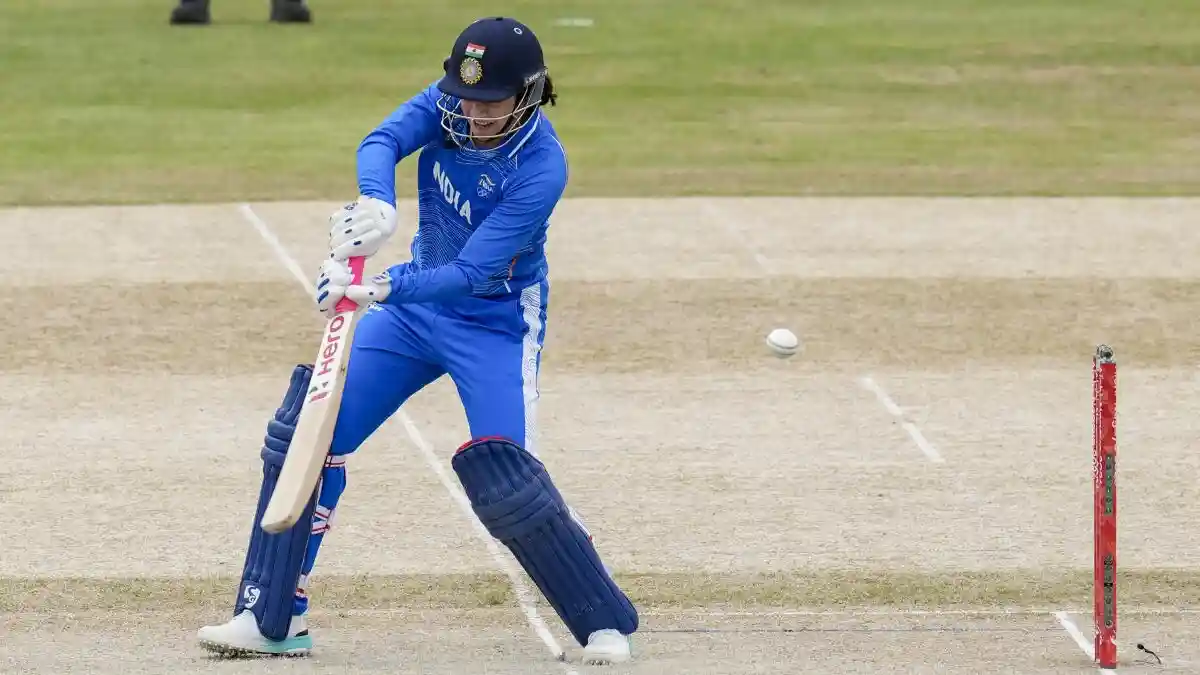

The landscape of international women's cricket witnessed a historic milestone on September 20, 2026, as Indian opening batter Smriti Mandhana cemented her legacy as the most prolific run-scorer in the shortest format of the game. During a high-stakes semi-final encounter against Bangladesh at the 2026 Asian Games, Mandhana surpassed New Zealand's Suzie Bates to become the all-time leading run-scorer in Women's Twenty20 International (T20I) cricket.
For years, the top echelon of the T20I run-scoring charts has been a tightly contested battleground among a select group of modern cricketing greats. However, Mandhana's exceptional consistency, aggressive stroke play, and ability to dominate bowling attacks across all conditions have finally propelled her to the absolute summit. By reaching a career aggregate of 4,788 runs, the Indian vice-captain has not only etched her name in the record books but has also underscored the growing dominance of Indian batters on the global stage.
This achievement is a testament to a career defined by continuous evolution and an unrelenting appetite for runs. As the global cricket community celebrates this monumental feat, it is essential to examine the match context, the statistical magnitude of the record, and the broader impact of Mandhana's career on the women's game.
The Match Context: Dominance at the Asian Games
The record-breaking moment occurred during the women's cricket semi-final of the 2026 Asian Games, held at the Korogi Sports Park in Nisshin, Japan. The Asian Games represent a crucial platform for regional supremacy, and the Indian women's cricket team entered the tournament as overwhelming favorites. Winning the toss and electing to bat first against Bangladesh, the Indian opening pair of Smriti Mandhana and Shafali Verma walked out to the middle with clear intent.
From the very first over, the duo launched a relentless assault on the Bangladeshi bowling attack. The strategy was apparent: maximize the field restrictions during the Powerplay and put the opposition under immediate scoreboard pressure. Early in her innings, Mandhana reached the necessary total to eclipse Suzie Bates and claim the world record. The elegant left-hander displayed her trademark timing, piercing the off-side field with surgical precision and clearing the boundary ropes with remarkable ease.
The opening partnership yielded a blistering 72 runs within the first six overs, effectively taking the game away from Bangladesh before the fielding restrictions were even lifted. Mandhana eventually departed for a highly impactful 37 off just 19 deliveries, a knock characterized by swift acceleration and classical cricketing shots. While her time at the crease was relatively brief, her contribution laid the perfect foundation for a massive team total.
Following Mandhana's dismissal, her opening partner Shafali Verma took center stage, unleashing a brutal display of power-hitting. Verma notched a spectacular century in just 49 balls, striking nine sixes and three boundaries to record India's first hundred in the competition. Supported by Indian captain Harmanpreet Kaur, who contributed a steady 40 runs off 33 balls, India ultimately posted a formidable total of 195 for 4 in their allotted 20 overs. The match served as a perfect showcase of India's batting depth, but the day undoubtedly belonged to Mandhana and her historic ascent to the top of the T20I run-scoring charts.
Breaking the Record: Surpassing a New Zealand Legend
To fully appreciate the magnitude of Smriti Mandhana's achievement, one must acknowledge the legacy of the player she surpassed. Suzie Bates of New Zealand is widely regarded as one of the pioneers of the modern women's game. For a significant period, Bates held the record for the most runs in Women's T20I cricket, setting a formidable benchmark of 4,758 runs. Bates' record was built on longevity, immense physical fitness, and a gritty determination that made her the anchor of the New Zealand batting lineup for over a decade.
The race for the top spot has been closely monitored by cricket statisticians and fans globally. Over the past two years, Mandhana has been steadily closing the gap, capitalizing on India's packed international calendar and her own rich vein of form. Going into the Asian Games, it was only a matter of time before the record changed hands.
By pushing her career aggregate to 4,788 runs, Mandhana now sits exactly 30 runs ahead of Bates. This transition at the top of the leaderboard marks a generational shift in women's cricket. While Bates built her record during an era where 120 was often considered a winning score in women's T20Is, Mandhana has accumulated her runs in a hyper-aggressive era where scores in excess of 160 are the new normal. Mandhana's ability to maintain a high batting average while simultaneously increasing her strike rate to meet the demands of the modern game is what sets her apart from her predecessors.
Statistical Significance in Women's T20I Cricket
Smriti Mandhana's career statistics paint the picture of a batter who has consistently performed at the highest level across diverse conditions. Since making her T20I debut, she has been the linchpin of the Indian batting order. Her total of 4,788 runs has been accumulated over years of rigorous international cricket, encompassing bilateral series, ICC T20 World Cups, Commonwealth Games, and the Asian Games.
Beyond the aggregate run tally, Mandhana's innings against Bangladesh highlighted another significant statistical milestone. Known primarily for her timing and placement rather than brute force, Mandhana has evolved her game to incorporate high-risk, high-reward aerial shots. This evolution has made her one of the most dangerous boundary hitters in the world. As she accumulated her 37 runs off 19 balls against Bangladesh, she continued to build on her impressive tally of maximums, joining the elite club of batters who possess the ability to consistently clear the ropes in international cricket.
Furthermore, her career statistics reflect remarkable consistency for an opening batter. Opening the batting in T20I cricket is arguably the most challenging role, requiring the player to negotiate the moving new ball while simultaneously taking calculated risks to exploit the Powerplay fielding restrictions. Mandhana's ability to balance these conflicting demands is a primary reason for her success. She frequently provides India with rapid starts, setting a tempo that allows the middle-order batters to play with freedom. Her combination of half-centuries and impactful cameos underscores a batting philosophy that prioritizes team momentum over individual milestones.
Comparing the Top Five Run-Scorers in Women's T20I History
To provide comprehensive context to Mandhana's achievement, it is necessary to analyze the elite club of batters who dominate the all-time run-scoring charts. The top five run-scorers in Women's T20I history represent the absolute pinnacle of batting excellence over the past fifteen years:
- Smriti Mandhana (India) - 4,788 runs: The newly crowned leader of the pack, Mandhana combines classical technique with modern T20 aggression. Her record is a product of consistency at the top of the order and a proven ability to perform in high-pressure tournament knockout matches.
- Suzie Bates (New Zealand) - 4,758 runs: A stalwart of New Zealand cricket, Bates held the record for an extended period. Her run-scoring ability was built on excellent running between the wickets, sweeping against spin, and an unmatched competitive spirit. Although she has now dropped to second place, her legacy as a pioneer of the format remains secure.
- Harmanpreet Kaur (India) - 4,327 runs: The current Indian captain occupies the third spot on the prestigious list. Kaur is renowned for her immense power and her ability to hit sixes down the ground. Her presence in the top three highlights the batting firepower that the Indian team possesses. Unlike Mandhana, Kaur primarily bats in the middle order, making her run accumulation equally impressive as she often has fewer deliveries to face.
- Chamari Athapaththu (Sri Lanka) - 4,282 runs: The Sri Lankan captain is a one-woman army for her national side. Athapaththu is arguably the most destructive batter in world cricket on her day. Her ability to single-handedly win matches against top-tier opposition makes her aggregate runs incredibly valuable. She recently demonstrated her class by leading Sri Lanka to the Asian Games final with a brilliant opening partnership against Pakistan.
- Sophie Devine (New Zealand) - 3,817 runs: The New Zealand captain rounds out the top five. Devine is the quintessential modern T20 all-rounder, possessing raw power that few in the women's game can match. Her ability to hit the ball out of the stadium and her consistency over a long career have made her one of the most feared openers in international cricket.
This elite list features three opening batters and two middle-order powerhouses. The fact that India boasts two players in the top three is a clear indicator of the country's ascendancy in global women's cricket and the heavy investments made by the Board of Control for Cricket in India (BCCI) in developing the women's game.
The Impact on Indian Women's Cricket
Smriti Mandhana's record is not just an individual triumph; it is a monumental moment for Indian women's cricket. Over the past decade, the profile of the women's game in India has undergone a radical transformation. The team has transitioned from playing in front of sparse crowds to performing in packed stadiums and commanding prime-time television audiences.
Milestones like this serve as vital catalysts for the continued growth of the sport. Mandhana is a household name in India, and her ascent to the top of the global run-scoring charts provides a powerful narrative for aspiring young female cricketers across the country. It proves that Indian players are not just competing globally but are actively setting the ultimate benchmarks for excellence.
The official platforms of the International Cricket Council (ICC) and various global sporting bodies immediately highlighted the historic nature of her innings. The recognition of this record on the world stage validates the structural improvements within Indian domestic cricket, which have increasingly provided young batters with the facilities and competitive exposure necessary to succeed at the highest level.
Furthermore, achieving this record during a multi-sport event like the Asian Games adds an extra layer of prestige. The Asian Games expose cricket to a broader sporting audience beyond the traditional cricketing fraternity. Mandhana's record-breaking performance in Japan will undoubtedly elevate the profile of the sport as it continues its push for wider inclusion in global multi-sport competitions, including the Olympic Games.
Looking Ahead: The Asian Games Final
With the individual record now secured, Mandhana's immediate focus will shift back to team objectives. India's dominant 195-run performance and subsequent victory over Bangladesh have secured their place in the gold medal match of the 2026 Asian Games.
In the final, India will face a confident Sri Lankan side, who comprehensively defeated Pakistan in the other semi-final. The Sri Lankan chase was anchored by their own batting superstar, Chamari Athapaththu, who currently sits fourth on the all-time run-scoring list. The final promises to be a thrilling contest featuring some of the greatest run-scorers in the history of the sport.
For Mandhana, the final represents an opportunity to add a prestigious gold medal to her growing list of accolades. While individual records provide historical context and personal satisfaction, major tournament victories are the ultimate currency in international sports. Having set the tone brilliantly in the semi-final, the Indian vice-captain will be eager to replicate her explosive Powerplay batting against the Sri Lankan bowling attack.
Conclusion
Smriti Mandhana's achievement of becoming the highest run-scorer in Women's T20I cricket is a defining moment in a stellar career. By surpassing a legend like Suzie Bates and reaching 4,788 runs, she has cemented her status as one of the true modern greats of the game.
The speed, elegance, and consistency with which she has accumulated these runs have revolutionized the role of the opening batter in women's cricket. As India prepares for the Asian Games final and future global tournaments, Mandhana's form and leadership at the top of the order will remain the cornerstone of the team's strategy. Her record is a testament to her individual brilliance, but it also reflects the golden era of Indian women's cricket, inspiring a new generation of players to aim for global supremacy.
Further reading and useful links
Reader questions
Frequently asked questions
Who holds the record for the most runs in Women's T20I cricket?
Smriti Mandhana of India holds the record for the most runs in Women's T20 International cricket. She achieved this milestone on September 20, 2026, during the Asian Games semi-final against Bangladesh.
How many runs has Smriti Mandhana scored in T20I cricket?
As of her record-breaking match against Bangladesh at the 2026 Asian Games, Smriti Mandhana has scored a total of 4,788 runs in her T20I career.
Whose record did Smriti Mandhana break?
Smriti Mandhana surpassed the world record previously held by New Zealand cricketer Suzie Bates, who scored 4,758 runs in the format.
When and where did Smriti Mandhana break the run-scoring record?
The record was broken on September 20, 2026, during the Women's Cricket Competition semi-final at the 2026 Asian Games, held at the Korogi Sports Park in Nisshin, Japan.
Who are the top five run-scorers in Women's T20I history?
The top five leading run-scorers in Women's T20I cricket are Smriti Mandhana (4,788), Suzie Bates (4,758), Harmanpreet Kaur (4,327), Chamari Athapaththu (4,282), and Sophie Devine (3,817).
Nexuswild welcomes factual corrections. Email [email protected] with evidence and the article URL.