
HSBC Group Chief Executive Georges Elhedery said on October 20 that investment in energy and logistics routes could make the Strait of Hormuz largely redundant within five years as Gulf countries seek to reduce their exposure to regional conflict and disruptions to shipping.
Speaking at HSBC Future Forum in Dubai Elhedery argued that new infrastructure could help Gulf economies recover and continue growing despite the risks facing established trade routes. The strategy involves investment in pipelines and transport links that allow energy and other goods to reach markets without depending entirely on the Strait of Hormuz.
The proposal reflects a reassessment of energy security following the conflict involving Iran and the disruption of maritime traffic in the region. It also points to a wave of infrastructure investment although the projects required to substantially reduce reliance on the strait would take time to plan, finance and build.
Why the Strait of Hormuz matters
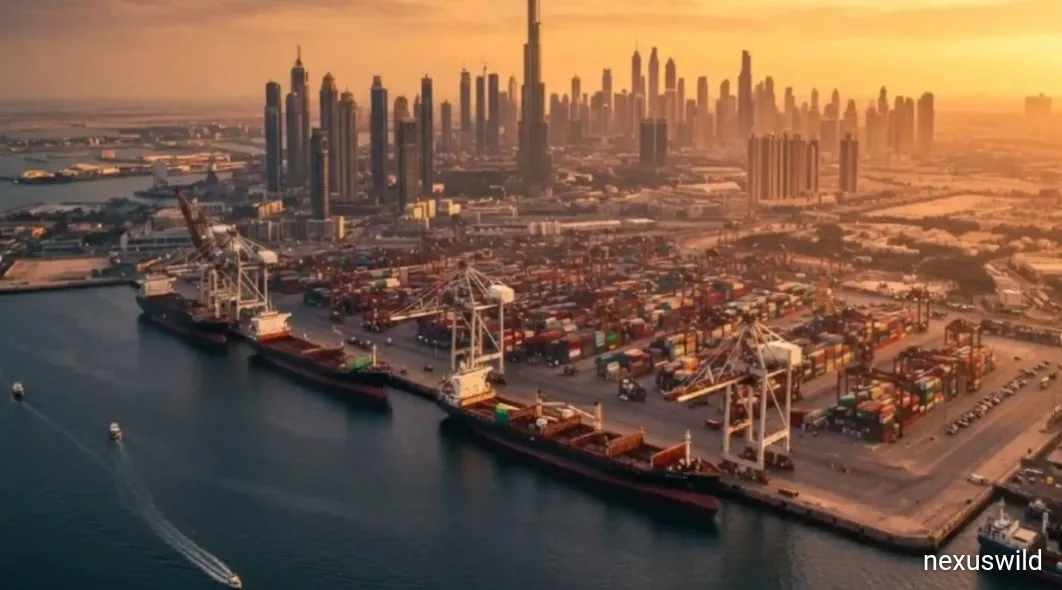
The Strait of Hormuz connects the Persian Gulf with the Gulf of Oman and the Arabian Sea. It is one of the worlds important energy chokepoints because major oil and liquefied natural gas shipments from Gulf producers pass through the narrow waterway.
According to the US Energy Information Administration oil flows through the strait averaged 20 million barrels per day in 2024 equivalent to roughly one-fifth of global petroleum liquids consumption. About one-fifth of liquefied natural gas trade also passed through the route primarily from Qatar.
The waterway is particularly important for energy importers, including China, India, Japan and South Korea. Disruptions can affect oil and gas availability, shipping costs, insurance premiums and energy prices beyond the Middle East.
Although some alternative pipelines already exist the EIA has warned that current bypass capacity can move part of the volumes normally transported through Hormuz. Expanding that capacity is therefore an infrastructure challenge, rather than a quick substitute for maritime shipping.
Gulf states look beyond a chokepoint
Elhederys comments reflect a strategic shift towards building more resilient export networks. Pipelines can move oil and other energy products from inland or Gulf locations to ports outside the strait while expanded port capacity and supporting transport infrastructure can provide additional options for international trade.
Saudi Arabia already operates an East-West pipeline connecting its oil-producing region with Red Sea export facilities. The United Arab Emirates also has a pipeline route that allows some crude exports to bypass Hormuz.
However these alternatives do not eliminate the regions exposure to risk. Red Sea shipping routes face their security challenges and pipelines cannot necessarily replace the full range of oil, gas and other cargoes transported by sea.
Making Hormuz less strategically important would therefore require a combination of capacity suitable export terminals, reliable inland logistics and continued investment in infrastructure security. The five-year timeframe expressed by Elhedery should be understood as a projection, not a confirmed deadline for completing specific projects.
A $1.4 trillion infrastructure pipeline
HSBC has identified a pool of potential investment across the Middle East, North Africa and Türkiye known as the MENAT region.
The bank cited an infrastructure pipeline worth approximately $1.4 trillion in planned but unawarded projects and programmes. Within that total $872 billion was represented by project packages.
These figures indicate the scale of projects being considered across the region. They should not be interpreted as money already spent construction contracts already signed or funding that is guaranteed to become available.
Infrastructure development depends on factors, including government budgets, private investment, financing costs, construction capacity, regulatory approvals and the security environment. Projects may be delayed, redesigned or cancelled if costs rise or economic conditions change.
So the potential pipeline highlights the opportunity for engineering, procurement and construction companies, equipment suppliers, logistics operators and infrastructure investors if proposed projects advance.
Energy security and the global economy
Reducing dependence on Hormuz could offer Gulf producers flexibility in moving energy to international markets during periods of disruption. For importing economies diversified export routes could reduce the risk associated with relying heavily on a single maritime passage.
The benefits would not be automatic. Alternative pipelines and ports require capital, maintenance and security arrangements. Some routes may also involve journeys, additional handling or exposure to other vulnerable transport corridors.
Oil and gas markets would continue to respond to global demand, production decisions, inventories and geopolitical developments. New infrastructure could reduce the consequences of a disruption at Hormuz without eliminating volatility from energy markets.
For companies involved in manufacturing, electricity generation and transport the issue is important because energy supply interruptions can raise operating costs and complicate planning. Greater route diversity could improve resilience over time provided projects are completed and remain operational during crises.
HSBC reaffirms its commitment to the Gulf
Alongside his comments on infrastructure Elhedery reaffirmed HSBCs commitment to the Gulf Cooperation Council economies. The bank views the region as a market for investment, trade and financial services despite the immediate effects of conflict.
The challenge for governments and investors is to balance the urgency of improving energy security against the cost and complexity of infrastructure programmes. International capital may be available. Projects still need attractive financial structures credible demand assumptions and clear risk allocation to proceed.
The proposed shift also has implications for competition. Countries that can offer secure export routes, reliable infrastructure and predictable investment conditions may be better positioned to attract long-term capital.
What happens next?
The key indicators to watch are whether Gulf governments approve pipeline capacity commit funding to new export terminals and advance projects within the wider infrastructure pipeline. Progress will also depend on security and the availability of private and institutional financing.
Elhederys comments outline a direction for the Gulfs long-term energy strategy. They do not establish that the Strait of Hormuz will become unnecessary nor do they mean that the route will cease to carry trade.
For now the message is that regional conflict has increased the incentive to diversify. If investment proceeds at scale the Gulfs energy and logistics network could become less dependent on a chokepoint, over the coming years. The size and timing of that change remain uncertain.
Nexuswild welcomes factual corrections. Email contact@nexuswild.com with evidence and the article URL.