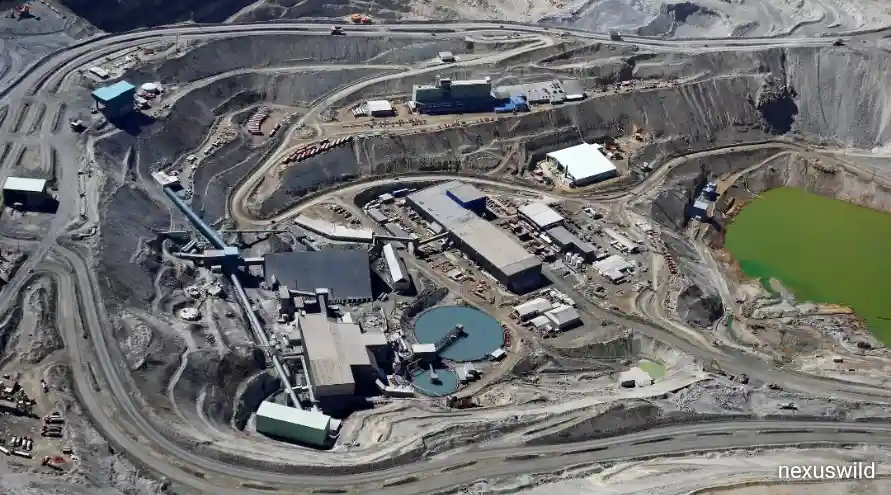

Anglo American reported a 5% year-on-year drop in third-quarter copper production on October 20. The decline came as winter weather in Chile and lower-grade ore affected output at key mining sites. The London-listed mining group produced 174,900 tonnes of copper in the three months ended September 30. That is down from 183,500 tonnes in the period the year before.
Despite the drop the company kept its year 2026 copper production guidance at 700,000 to 760,000 tonnes. Management said it expects ore grades in the fourth quarter to help boost production. The company is working hard to meet its target.
The report shows how vulnerable copper supply can be to disruptions in top producing countries. Copper is vital for electricity networks, renewable energy systems, electric vehicles and the power infrastructure needed by growing data centres.
Extreme winter weather disrupts Chilean operations
Copper production in Chile fell 6% year on year to 94,200 tonnes in the quarter. That compares to 100,200 tonnes in the period of 2025.
Anglo American said the drop was partly due to winter weather. This included record snowfall and unplanned maintenance. These conditions hurt mining operations. Led to lower output during the quarter.
Weather was not the problem. Planned lower ore grades at Collahuasi and El Soldado also hurt output. Ore grade refers to the amount of copper found in the material dug up from a mine. When grades go down miners usually need to process rock to get the same amount of copper.
Performance varied across mines. Production at Los Bronces rose 2% year on year to 42,500 tonnes. That was helped by throughput and better recovery after the restart of its second plant.
This increase helped make up for results in other parts of the Chilean portfolio. It also shows that the overall production drop cannot be blamed equally on every mine.
Collahuasi and the importance of ore grades
Collahuasi is one of Chile’s copper mining operations. It faced challenges tied to lower-grade stockpile ore. Anglo American said processing material with copper content contributed to the drop in total copper output.
Collahuasi is a venture. Anglo American owns 44% of the operation. Production figures are reported at 100%. The amount directly linked to Anglo American is smaller.
The mix of weather problems and changing ore grades can make production planning hard. Mining companies must manage extraction, processing, maintenance, transport and the availability of equipment and workers. Severe weather can. Stop several of these activities at once.
Anglo American’s quarterly report shows how a short-term disruption can affect output. Even when progress is made at sites one weak quarter can still have a big impact.
Peru provides an offset
Copper production in Peru reached 80,700 tonnes. That is down 3% from 83,300 tonnes a year. That decline also played a role in the drop.
Peruvian output improved 8% compared to the second quarter of 2026. In that quarter production was 75,000 tonnes. Anglo American said production at its Quellaveco mine improved due to ore grades.
Across Chile and Peru total copper production rose slightly from the quarter. Output went up 1% to 174,900 tonnes from 173,200 tonnes.
For the nine months of 2026 the company produced 518,500 tonnes of copper. That is 1% below the 525,700 tonnes in the same period the year before.
This year-to-date comparison gives context. Even though the third quarter was weak the overall shortfall has stayed small.
Full-year production guidance remains unchanged
Anglo American kept its 2026 copper production forecast at 700,000 to 760,000 tonnes. The forecast assumes production will improve in the quarter thanks to better ore grades.
Based on production of 518,500 tonnes through September the company would need to produce 181,500 to 241,500 tonnes in the quarter to reach the lower and upper ends of the annual range. That is a range showing the uncertainty.
This calculation shows the amount needed. It does not guarantee the target will be met. The result depends on operating conditions ore grades, maintenance needs and how well the company avoids disruptions.
Anglo American also lowered its expected 2026 copper unit cost. It now expects about 139 US cents per pound. That is down from its forecast of around 145 cents. The change comes from by-product results and cost control in Peru. In Chile unit costs are expected to stay 210 cents per pound.
Why copper production matters to industry
Copper is central to electrical systems. It is used because of its conductivity. It is found in wiring, motors, transformers and power distribution equipment. Demand is driven by investment in electricity grids, renewable energy, electric transport and digital infrastructure.
A drop in production at a mining company does not always mean a global shortage or a price rise. Copper prices are also shaped by demand from China and other large economies, inventory levels, recycling, supply from producers and expectations for future economic growth.
Still disruptions at mines can affect market expectations. This is especially true when inventories are low or when several producers have problems at the time.
What investors will watch next
The spotlight is now on whether Anglo American can boost production in the quarter. Investors will also watch Chile’s weather, how Collahuasi operates and whether ore grades improve at the company’s mines.
For now Anglo American has kept its target despite a tough third quarter. The next production update will show if the expected improvement, in ore grades and operations is enough to make up for the setback.
The report reminds us that copper supply depends not on long-term investment and demand forecasts. It also depends on the real-world conditions that mines face every day. Weather, maintenance and ore quality all play a role.
Nexuswild welcomes factual corrections. Email contact@nexuswild.com with evidence and the article URL.