
Indian equity markets staged a strong rebound on Thursday, November 19, 2026, with benchmark indices advancing more than 1% as investors increased exposure to automobile, banking and other domestic-facing companies.
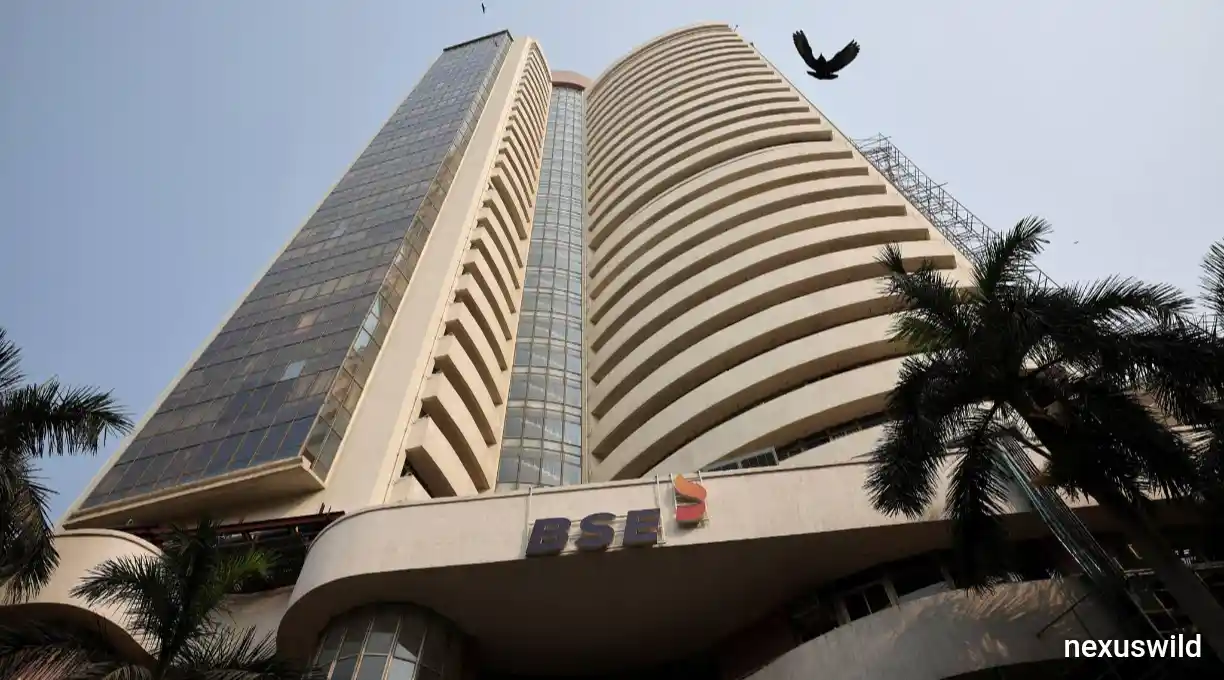
The BSE Sensex climbed 989.94 points, or 1.21%, to close at 83,021.75. The NSE Nifty 50 advanced 286.35 points, or 1.14%, finishing at 25,514.30. The Nifty Bank index gained 1,024.35 points, or 1.65%, to settle at 63,063, marking a record closing level.
The rally was led by automobile manufacturers and selected financial stocks. Consumer-facing businesses also participated, while information technology shares moved in the opposite direction.
The session was notable because Indian equities advanced despite weaker sentiment across several international markets. Reuters reported that Indian shares outperformed a broader Asian sell-off, with falling commodity prices and foreign investor buying helping offset pressure on technology stocks.
The rebound also followed a weaker session on November 18, when investors had booked profits after the market's recent advance. Thursday's gains restored upward momentum and pushed the Nifty back above the psychologically important 25,500 level.
The move strengthened the market's November performance, although a sharp one-day advance should not be interpreted as evidence that equity-market volatility or external risks have disappeared.
Market Closing Figures: Sensex, Nifty and Bank Nifty
The principal Indian indices ended Thursday's session higher.
Index| November 19 close| Daily change BSE Sensex| 83,021.75| +989.94 (+1.21%) NSE Nifty 50| 25,514.30| +286.35 (+1.14%) Nifty Bank| 63,063.00| +1,024.35 (+1.65%)
The Sensex's advance brought the benchmark back above 83,000, while the Nifty crossed 25,500.
The Bank Nifty's closing level was particularly significant because it established a new record closing high. The gain reflected broad interest in financial shares, although individual banks did not move uniformly.
The market's performance was not limited to the largest companies. Mid-cap and small-cap indices also finished higher, indicating that the session's buying interest extended beyond the benchmark constituents.
Reuters reported that the Nifty and Sensex had advanced approximately 10.7% and 11.5%, respectively, during November up to the November 19 session. It also reported record monthly foreign inflows of US$11.28 billion, alongside strong corporate earnings and a substantial decline in crude oil prices.
These figures point to a favourable shift in investor sentiment during the month, but they do not remove the possibility of profit-taking or renewed volatility.
Automobile Stocks Lead the Market Advance
Automobile companies were among the strongest performers on Thursday.
The Nifty Auto index gained 4.40%, outperforming the broader market. Maruti Suzuki led the major Nifty 50 gainers with a 7.58% rise. Eicher Motors advanced 4.66%, while Mahindra & Mahindra gained approximately 4.46%.
The movement reflected a combination of improving market sentiment and easing concerns about industrial input costs.
Automobile manufacturers rely on a wide range of raw materials, including steel, aluminium, copper, rubber and petroleum-based products. Changes in commodity prices can influence manufacturing expenses, component procurement costs and operating margins.
Reports on November 19 highlighted a sharp decline in industrial metals, with copper reaching a seven-month low. Aluminium and other metals also weakened. Falling crude oil prices added to the more favourable cost backdrop.
Lower input prices can provide relief to manufacturers, particularly when companies have sufficient inventory flexibility and can purchase materials at lower prevailing rates.
However, the relationship between commodity prices and company profitability is not immediate or automatic. Manufacturers may have existing supply contracts, inventory purchased at earlier prices, hedging arrangements and other cost pressures. The timing of any benefit depends on procurement cycles and the ability to maintain selling prices.
For automobile companies, demand is another important variable. Stronger vehicle sales can support production volumes and operating leverage, while weaker consumer demand can offset improvements in material costs.
The rally therefore reflects expectations of a potentially more supportive operating environment, rather than proof that all automobile manufacturers will immediately report higher margins.
Maruti Suzuki, Eicher Motors and Mahindra & Mahindra Outperform
Maruti Suzuki was the standout stock among the major benchmark gainers, advancing 7.58% during Thursday's session.
Eicher Motors and Mahindra & Mahindra also recorded substantial gains, reinforcing the strength of the automobile sector.
The broader movement suggests that investors were positioning for a combination of lower input-cost pressure, domestic vehicle demand and improving confidence in cyclical businesses.
The automobile sector has a meaningful connection to India's domestic economic activity. Vehicle purchases are influenced by household income, financing conditions, employment expectations, rural demand, infrastructure investment and consumer confidence.
Two-wheeler and entry-level passenger-vehicle demand can be particularly sensitive to rural incomes and household purchasing power. Commercial vehicles are more closely connected to freight activity, infrastructure spending and industrial demand. Premium vehicles and utility vehicles respond to a different mix of income and consumer preferences.
As a result, the performance of the automobile index does not necessarily imply that every vehicle category is experiencing the same demand conditions.
For investors, the important question is whether the improvement in sentiment is supported by sustained sales volumes, healthier inventory levels and stronger earnings expectations.
Banking Stocks Support the Rally
Banking shares provided another major source of support.
The Nifty Bank index rose 1.65% to close at 63,063, establishing a record closing high. Financial stocks also benefited from the broader improvement in domestic market sentiment.
Banks are closely linked to the performance of the domestic economy because their earnings depend on credit demand, asset quality, deposit mobilisation, funding costs and the ability to maintain lending margins.
A stronger economic outlook can support demand for retail loans, business credit, housing finance and working-capital facilities. At the same time, banks must manage the cost of deposits and the risks associated with lending to households and businesses.
The record Bank Nifty close indicates strong investor demand for banking shares during the session. It does not, by itself, establish that credit quality or profitability has improved across the entire banking system.
Investors will continue to monitor loan growth, non-performing assets, deposit competition and net interest margins when assessing whether the sector's market performance is supported by fundamentals.
The banking rally also contributed to the broader market's resilience at a time when export-oriented technology stocks were under pressure.
Consumer-Facing Stocks Add to Market Strength
Consumer-oriented sectors also participated in Thursday's advance.
Consumer durables and FMCG shares recorded gains, reflecting the broader preference for companies with exposure to domestic demand.
Consumer durables businesses can benefit from lower prices for selected industrial inputs, although the impact varies by product category. Manufacturers of air conditioners and other electrical appliances, for example, use metals and components whose prices can affect procurement costs.
Falling copper prices attracted attention because copper is used in electrical equipment, wiring, motors and cooling systems.
The potential benefit to manufacturers depends on inventory levels, procurement contracts, competition and the extent to which lower input costs are retained as additional margin rather than passed on to consumers through lower prices.
FMCG companies operate under a different set of cost and demand conditions. Their performance is influenced by household consumption, distribution expenses, agricultural commodity prices, packaging costs and pricing power.
The gains in these sectors indicate that investors were not concentrating solely on banks and automobile companies. Nevertheless, the one-day performance should not be treated as a reliable forecast of future consumption or corporate earnings.
IT Stocks Decline as Technology Sentiment Weakens
The Nifty IT index was the principal sectoral laggard, declining approximately 1.10%.
Major technology companies including TCS, Tech Mahindra and Infosys ended lower. Their weakness contrasted with the strength in automobile, banking and consumer-facing shares.
Reuters linked the pressure on IT stocks to renewed concerns about the US Federal Reserve's interest-rate outlook after the release of minutes from its October meeting.
For Indian technology-services companies, the United States is a major source of business. Changes in US corporate spending, interest-rate expectations and technology investment can influence client budgets and demand for outsourcing and consulting services.
Higher borrowing costs or uncertainty about the economic outlook can encourage businesses to delay discretionary technology projects. Technology companies may also face pressure when investors reassess valuations across the global sector.
The decline in Indian IT shares therefore reflected a different set of drivers from the domestic factors supporting automobile and banking stocks.
It is important not to interpret the sector's one-day fall as evidence that India's technology-services export industry has entered a structural decline. A single trading session cannot establish a change in long-term demand, revenue growth or contract pipelines.
The divergence instead highlights how Indian equities can respond differently to domestic economic expectations and global technology-sector sentiment.
Foreign Investment Supports November's Market Momentum
Foreign investor activity has been another important feature of India's November market performance.
Reuters reported that foreign inflows had reached a record US$11.28 billion for the month as of its November 19 coverage. The report also identified foreign buying, corporate earnings and lower crude prices as important supports for the market's advance.
Foreign portfolio investment can influence equity valuations, market liquidity and investor confidence. Strong inflows may increase demand for large-cap stocks and improve sentiment across broader market segments.
However, foreign flows can reverse quickly when global risk appetite changes. International interest rates, currency movements, geopolitical developments and relative valuations can all influence allocation decisions.
Domestic institutional investors also play an important role in absorbing market supply and providing liquidity. The balance between foreign and domestic flows can therefore affect the sustainability of a rally.
For this reason, the November inflow figure should be viewed as evidence of a favourable period for foreign investment rather than a guarantee that the same pace of buying will continue.
Commerce Secretary Says India Is on Track for $1 Trillion Exports
Alongside the equity-market rally, India's trade outlook received attention after Commerce Secretary Rajesh Agrawal said the country remained on track to achieve US$1 trillion in combined merchandise and services exports during FY2026–27.
The statement was made on November 18 at an industry event organised by FICCI.
India recorded total exports of US$863.1 billion in FY2025–26, its highest annual figure at the time. The new target would require the country to increase the value of combined goods and services exports by a substantial amount during the current fiscal year.
The government has pointed to growth across multiple export categories and trading partners as evidence supporting its outlook.
The target is ambitious, particularly because exporters continue to operate in an uncertain global environment. Demand conditions vary across major markets, while tariff changes, geopolitical tensions, freight costs and currency movements can influence the competitiveness of Indian products and services.
The Commerce Secretary's statement is therefore best understood as an official assessment of the current trajectory, not confirmation that the milestone has already been achieved.
Export Growth Statistics: The April–September and April–October Distinction
The export figures need to be read with their correct reporting periods.
The government's September trade release estimated combined merchandise and services exports at US$476.20 billion for April–September FY2026–27, compared with US$418.31 billion in the corresponding period a year earlier. That release reported growth of 13.84%.
A later government backgrounder cited a revised first-half total of approximately US$479.0 billion.
The 16.66% growth figure cited in the November export data applies to the seven-month period from April through October 2026. The Commerce Ministry estimated combined exports at US$568.84 billion, compared with US$487.59 billion in April–October 2025–26.
The seven-month figure includes October and must not be described as the growth rate for the first half of the fiscal year.
This distinction matters because the two periods have different totals and growth rates. Using the seven-month growth rate as a first-half statistic would overstate the reported April–September performance.
The April–October figures also show that merchandise and services exports both contributed to the expansion. Merchandise exports were estimated at US$309.06 billion, while services exports were estimated at US$259.78 billion.
The services figure includes estimates because the latest available underlying data did not cover every month of the reporting period. Such estimates can be revised when more complete data become available.
For the broader export outlook, the seven-month performance provides an additional data point beyond the first-half results. It also shows why the $1 trillion projection needs to be assessed using the full-year trajectory rather than a single growth percentage.
ASEAN Emerges as a Major Export Growth Market
One of the strongest regional developments has been India's export growth to ASEAN markets.
Government data show that exports to ASEAN increased by 58% during April–September FY2026–27, reaching US$28.06 billion.
The rise was not confined to a single destination. The government's trade-partner data highlighted strong increases in shipments to Singapore, Malaysia and other regional markets.
Exports to Singapore increased by 103%, while shipments to Malaysia rose 83% and exports to Sri Lanka increased 73%. India also recorded growth in exports to Japan and South Korea.
These figures suggest that Indian exporters are expanding their reach across Asian markets.
ASEAN is commercially significant because it includes economies with different industrial structures, consumer markets and supply-chain roles. Regional demand for machinery, engineering goods, chemicals, electronics, agricultural products and services can create opportunities for Indian businesses.
The growth also highlights the importance of trade relationships that extend beyond India's largest traditional export destinations.
However, a high growth rate does not automatically mean that a market has become India's largest export destination. Growth rates should be assessed alongside absolute export values, product composition, trade balances and the sustainability of demand.
The 58% ASEAN figure is therefore an important indicator of regional export momentum, but it should not be used to claim that India's dependence on Western markets has already been eliminated.
Diversification Across Africa, Latin America and Other Markets
India's export strategy increasingly places importance on expanding commercial relationships across multiple regions.
Diversification can reduce the risks associated with relying too heavily on a small number of export destinations. When demand weakens in one market, exporters may be able to redirect products or develop customers elsewhere, provided their products meet local requirements and remain competitive.
Africa and Latin America offer potential opportunities in sectors such as pharmaceuticals, engineering products, agricultural goods, automobiles, digital services and industrial equipment.
Yet diversification is not simply a matter of increasing the number of countries receiving shipments. Businesses need suitable distribution networks, financing, logistics, regulatory approvals and local market knowledge.
Exporters must also consider exchange-rate volatility, payment risks, import restrictions and competition from established suppliers.
The strongest evidence in the current government release is the reported growth across ASEAN and several other named trading partners. Broader claims about Africa and Latin America should be supported with specific trade figures before being presented as major quantified drivers of the current export increase.
India–EU Trade Agreement: Opportunity, but Not Yet an Operational Guarantee
The India–European Union free trade agreement is another important part of the longer-term trade outlook.
Negotiations were concluded in January 2026, and the European Commission subsequently advanced proposals for the agreement's signature and conclusion.
However, completion of negotiations is not the same as the agreement entering into force.
The European Commission's published process identifies further formal steps, including Council action, signature, European Parliament consent and India's own procedures.
Consequently, the agreement should not be described as certain to become operational in early 2027.
If implemented, the agreement could improve market access and create opportunities for exporters in both regions. Its actual effect would depend on tariff schedules, rules of origin, product standards, customs procedures and the ability of businesses to satisfy regulatory requirements.
For Indian exporters, potential benefits could extend across manufacturing, pharmaceuticals, textiles, engineering goods, chemicals and services. The scale and timing of those benefits will depend on the final legal arrangements and implementation schedule.
The agreement is strategically relevant to India's trade ambitions, but it should be treated as a prospective source of market access rather than an already realised contribution to current export growth.
What the Market Rally and Export Forecast Say About India's Economy
The November 19 market rally and the government's export projection represent two different aspects of India's economic outlook.
The equity-market advance reflects investor expectations about corporate earnings, domestic demand, foreign capital flows and commodity costs.
The export target reflects the government's assessment of the country's ability to expand merchandise and services sales in international markets.
The two developments can reinforce one another, but they are not interchangeable measures.
A rising stock market does not necessarily mean that exports are accelerating. Similarly, higher exports do not automatically translate into stronger equity returns for every listed company.
The market's sectoral pattern is particularly relevant. Automobile and banking stocks benefited from domestic demand expectations and improving sentiment, while IT shares
Nexuswild welcomes factual corrections. Email contact@nexuswild.com with evidence and the article URL.