
India’s digital payments ecosystem reached a high in October when UPI processed a record 25.47 billion transactions worth ₹31.53 lakh crore. The latest figures from the National Payments Corporation of India (NPCI) show how UPI is playing a larger role in India’s retail, commercial and financial activities.
The number of transactions grew by 23% compared with October 2025. The total value of payments grew by 16% from the previous year. UPI also recorded its average daily transaction value reaching ₹1,01,707 crore for the month. The average daily transaction volume climbed to 822 million payments, up from around 802 million in September.
The October performance beat the monthly record of 24.51 billion transactions that was set in August. It also pushed the transaction value past ₹30 lakh crore for the first time showing how far India has moved toward a digital payment system.
The festive season helped the rise as consumers used UPI for shopping, dining, online purchases, travel and everyday payments. October had 31 days, one than September giving UPI an extra day of activity.. The increase in average daily transactions shows that the longer month was not the only reason for the record.
This development matters beyond banks. UPI has become a part of India’s digital economy linking consumers, merchants, banks, payment apps and fintech companies through one shared payment network. As UPI sees transactions the reliability, security and sustainability of that network grow in importance.
October Numbers Reveal the Scale of Indias Digital Payments Growth
The latest NPCI figures show that UPI hit highs in both transaction volume and value.
UPI processed 25.47 billion transactions in October compared with 24.07 billion in September and 24.51 billion in August. In money terms the total value reached ₹31.53 lakh crore, up from ₹29.37 lakh crore in September.
The monthly rise came with daily activity. UPI handled 822 million transactions each day and the average daily transaction value hit ₹1,01,707 crore. In September the averages were about 802 million transactions and ₹97,913 crore.
These figures reveal two trends. First more transactions flow through UPI as consumers and businesses use payment apps more. Second the total value transferred is growing too showing that UPI supports a range of financial activity.
The difference between transaction volume and transaction value is very important. Volume shows how payments UPI processes while value shows the total money moved. A rise in volume can mean small payments like buying at local shops while a rise in value can mean bigger merchant payments and bank transfers.
October’s 23% annual growth in transaction count versus 16% growth in transaction value suggests that the number of payments grew faster than the total money moved. This does not mean that consumers spent less on each purchase because UPI includes types of transactions and the published totals do not separate each payment by purpose.
The milestone still shows how often UPI is used across India’s system.
Festive Shopping Adds Momentum to Digital Payment Activity
October’s record timing is closely linked to India’s calendar.
Navratri, Durga Puja and the broader festive shopping season encouraged consumers to buy at stores, restaurants, online markets and service businesses. E-commerce sales and seasonal promotions also added to payment activity during the month.
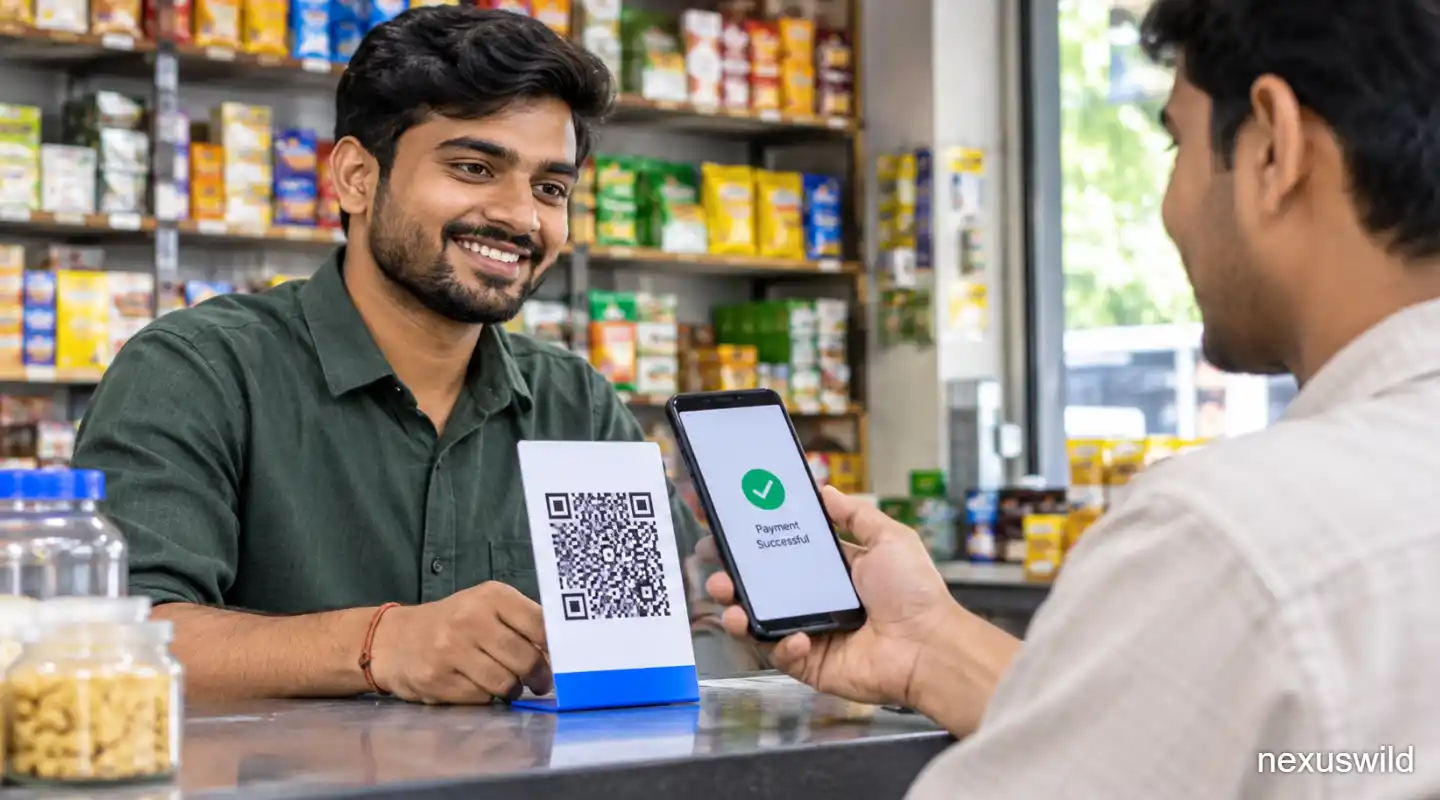
UPI is especially good for purchases because it lets customers move money directly between bank accounts using mobile apps. Consumers can scan a QR code at a shop pay a service provider settle a restaurant bill or send money to another person without using cash.
The convenience of UPI payments has made UPI a common choice across businesses. Small retailers can accept payments with QR codes while larger merchants can add UPI to checkout systems and online platforms.
According to NPCI’s October data daily transaction activity hit 873 million payments on October 9 stayed high until October 19 and then eased later in the month. This pattern matches activity, around the main festive shopping period.
However festive demand should not be seen as the reason for the record. UPIs base usage has grown over years as more banks, merchants and customers have joined the system. Seasonal shopping adds to that established base not creating the increase.
Octobers 31 days also helped the comparison.. The average daily UPI transactions rose from September showing that the increase went beyond the extra calendar day.
The next monthly figures will help decide if the higher UPI activity continues into November, when Dhanteras and Diwali are expected to boost seasonal purchases.
UPI Has Become a Core Part of Indias Digital Infrastructure
Launched in 2016 the Unified Payments Interface was created to make digital bank transfers easier and more interoperable. It lets users link bank accounts to supported applications and pay without entering full bank account details each time.
The system is run by NPCI, an organisation set up by the Reserve Bank of India and the Indian Banks Association to develop and manage payment systems in the country.
UPIs growth has been helped by features. Payments can be made through applications QR codes and supported identifiers. The system links participating banks and payment applications letting customers who use providers transact with each other.
This interoperability is one of UPIs advantages. A customer does not have to use the payment application as a merchant or recipient. The network lets transactions happen across participating institutions helping build a digital payments environment.
The government has also marked UPI as a part of Indias Digital Public Infrastructure. Alongside identity and other technology‑based public systems digital payments have helped widen access to financial services.
According to government figures published in April 2026 UPI handled about 24,162 crore transactions around ₹314 lakh crore in the 2025‑26 financial year. The government said that than 700 banks were linked to the system by March 2026.
The October 2026 record shows how much the UPI platform has grown since those annual figures were reported. It also shows that UPI is now working at a scale where its performance directly affects businesses and consumers across the country.
Small Businesses and Retailers Benefit From Wider Digital Payment Adoption
One of the visible effects of UPIs growth is the increasing availability of digital payments among small businesses.
Local grocery stores, restaurants, street vendors, transport operators and independent service providers are increasingly accepting payments through QR codes. This gives customers an alternative to cash. Lets merchants receive money straight into participating bank accounts.
For businesses accepting digital payments can cut the need to keep large amounts of physical cash. It can also make transactions easier to record and reconcile depending on the merchants accounting systems and payment provider.
Digital payment records may help businesses see sales patterns, track payments and keep more organised financial information. Such records can help with applications for financial services although a transaction history does not automatically mean credit will be granted.
The benefits also matter to businesses. E‑commerce companies, subscription services and digital platforms can add UPI into their payment processes giving customers an used domestic payment option.
As more merchants accept UPI the network becomes more useful to consumers. Greater consumer adoption in turn pushes businesses to add digital payment facilities. This creates a network effect that can drive expansion.
However the benefits are not shared equally. Businesses still need smartphones or payment devices reliable connectivity, access to banking services and the ability to resolve failed or disputed transactions.
Some merchants may also face problems when payments are delayed bank servers have interruptions or customers get conflicting transaction notifications. As digital payments grow more important to sales the ability to fix these problems fast becomes a business requirement.
Banks and Fintech Companies Face a Commercial Opportunity
The record transaction volume also has implications for Indias banking and fintech industries.
Banks are players in the UPI ecosystem because customer accounts are tied to the payment network through participating institutions. Every rise, in activity makes their ability to process transactions manage account security and keep service even more important.
Payment applications and fintech companies also work in a market that is getting more competitive. They compete through user experience, merchant services, payment reliability, customer support and extra financial products.
A bigger UPI user base gives chances to provide tools for merchants features to manage money, credit options and software for businesses. Companies can also make services that help payments, analyze transactions and support digital shopping.
More transactions do not always mean more profit for each payment firm. UPI has become popular because it is easy to use and the money made in the system relies on how banks, tech vendors and payment firms cover their costs.
Companies have to weigh how easy it is for customers against the expenses of building technology protecting against cyber attacks stopping fraud helping customers and getting merchants.
For fintech firms the future advantage may be not in handling more payments but also in creating extra services that connect with the payment process.
Banks and payment firms that keep their infrastructure dependable while creating lasting business models will probably be in a spot as digital payment use keeps growing.
Merchant Discount Rate Debate Highlights the Cost of Maintaining UPI
The fast rise of UPI has also drawn focus to how the payment system is paid for.
One topic is the merchant discount rate or MDR. This is a charge that merchants pay when they process some payments. The debate is whether chosen UPI transactions should include this fee and it has become a conversation among payment firms, banks, merchants and policy makers.
A planned MDR plan for some merchant transactions was set to start in October 2026.. The NPCI UPI and Services Steering Committee delayed it until after Diwali and a new start date will be announced later.
The plan is said to add a 0.4 percent fee for merchant transactions that exceed ₹2,000 with a cap on the fee for each transaction. Some categories might have their flat charges while person-to-person transfers will not be part of the new merchant fee system.
The debate shows a problem. UPI is used by shoppers and merchants yet running the system demands money for technology, payment handling, security, fraud watching and customer help.
Payment firms and banks must have funds to keep and grow these services. At the time extra merchant fees could change how much it costs for small businesses, which often have thin margins to take digital payments.
Delaying the plan means that the final details and timing of the framework are still key things to watch. The October transaction data alone does not show that the fee system has started.
The result could change how payment providers pay for infrastructure and how merchants handle the cost of taking digital payments.
Cybersecurity and Reliability Become More Important at Record Scale
Because UPI handles hundreds of millions of transactions protecting against cyber attacks and keeping operations smooth become more vital.
Digital payment systems must keep users safe from payments, phishing, identity theft, social engineering and other kinds of fraud. As digital payments grow fast more users and businesses risk being scammed.
Fraudsters can take advantage of how people know payment apps by sending fake support messages using bad QR codes pretending to be someone else and asking for payment approvals. Sometimes users are tricked into giving away data or approving payments.
So security cannot rely on tech companies and banks. People must be aware use login and practice careful payment habits.
For banks and payment apps keeping trust means monitoring, good fraud detection, clear payment alerts and easy ways to solve complaints.
Reliability matters as much. If a payment stops working during a shopping time a customer might not finish buying and a merchant might not know if the money came in. At the October level short outages can hurt users.
Thus the network needs to plan for capacity have backup systems coordinate responses to incidents and communicate well among all partners.
As more transactions happen keeping the service steady could become as vital as drawing customers.
UPIs Growth Strengthens Indias Position in Global Digital Payments
Indias UPI growth also matters outside the country.
The platform shows how a real‑time cross‑border payment system can back an economy. Its design has drawn interest as other nations look for faster easier cheaper digital payments.
India is also trying to widen UPIs reach by making deals that let people pay in chosen foreign markets. These moves can open chances for tourism, shopping and money flow, across borders.
The government reported in August 2026 that UPI was operational in 11 countries. The international expansion remains dependent on regulatory approval banking partnerships, technical integration and the availability of participating merchants.
Cross-border adoption is different from use. A payment system must address currency conversion, settlement arrangements, compliance requirements and consumer protection rules when transactions involve than one country.
Nevertheless UPIs domestic scale provides a foundation for international cooperation. A system that already processes billions of transactions each month offers experience in operating large-scale payment infrastructure.
For Indias fintech industry international expansion could create opportunities in technology partnerships, payment services and financial infrastructure development.
What the Record Means for Indias Digital Economy
The October figures demonstrate that digital payments are becoming increasingly embedded in Indias activity.
For consumers UPI offers a way to pay for everyday purchases and transfer money. For merchants it provides an accepted digital payment channel. For banks and fintech companies it creates a platform on which additional financial and commercial services can be developed.
The record also reflects the importance of Indias digital infrastructure. Mobile connectivity, bank-account access, QR-code acceptance and interoperable payment systems have helped bring transactions into everyday commercial activity.
However transaction records should be interpreted carefully. The ₹31.53 lakh crore figure represents the value transferred through UPI, not the value of goods and services purchased by Indian consumers alone. The network also processes person-to-person transfers and other types of payments.
Similarly rising transaction volume does not independently establish that household consumption or economic output has increased by the percentage. It is an indicator of payment activity rather than a complete measure of economic growth.
For policymakers and businesses the next challenge is to ensure that the expansion remains inclusive, secure and financially sustainable.
That means improving access in areas with connectivity strengthening fraud prevention making dispute resolution more effective and ensuring that smaller merchants can continue to participate in the system.
What Happens Next?
November will provide the important test for Indias digital payments ecosystem. With Dhanteras and Diwali falling during the month seasonal shopping and higher-value purchases could support growth in transaction volume and value.
Banks and payment companies will also be watching the implementation timeline for the proposed MDR framework. Its final structure could influence how payment services are funded and how merchants respond to changes in processing costs.
Over the term the focus will shift towards infrastructure capacity, cybersecurity, international expansion and the commercial sustainability of the UPI ecosystem.
Indias October record is an indication of the scale achieved by its digital payment network. Processing 25.47 billion transactions ₹31.53 lakh crore in a single month demonstrates how deeply UPI has become integrated into the countrys financial activity.
The next phase of growth will not be measured only by larger transaction totals. The real test will be whether the system can continue to deliver reliable and secure payments while supporting consumers, small businesses, banks and fintech companies.
For Indias economy UPI is no longer simply an alternative, to cash. It has become a piece of financial infrastructure and its continued performance will increasingly shape how businesses and consumers participate in the countrys expanding digital marketplace.
Nexuswild welcomes factual corrections. Email contact@nexuswild.com with evidence and the article URL.