
South Korea’s Exports Surge as Artificial Intelligence Investment Drives Semiconductor Demand
South Korea’s exports nearly doubled in October, reaching a record $115.28 billion as strong global demand for artificial intelligence infrastructure accelerated shipments of semiconductors, computer equipment and other technology-related products. The 93.7% year-on-year increase marked the country’s strongest export growth since January 1974, highlighting the growing influence of the global AI investment cycle on international trade.
The latest figures underline South Korea’s position as one of the most important suppliers in the global technology supply chain. Semiconductor exports alone climbed 259.4% to $56.44 billion, accounting for almost half of the country’s total export value. Computer exports also recorded an exceptional increase, rising 496.6% as demand for servers and equipment used in AI services expanded.
The export performance comes as major technology companies continue investing in data centres, advanced computing systems and the infrastructure required to develop and operate increasingly sophisticated AI models. These investments are creating demand across the semiconductor industry, particularly for high-performance memory and other components used in AI computing systems.
However, the October figures also require some context. The timing of South Korea’s Chuseok holiday meant the country had more working days than in October 2025, amplifying the annual growth rate. Even after accounting for this calendar effect, the increase in average daily exports indicates that the improvement was not simply the result of additional working days.
With exports reaching $930 billion between January and October, South Korea is moving closer to an annual export milestone of $1 trillion. The development could strengthen the country's economic outlook, although it also highlights the risks associated with relying heavily on a technology-driven export cycle.
Semiconductor Shipments Account for Nearly Half of Total Exports
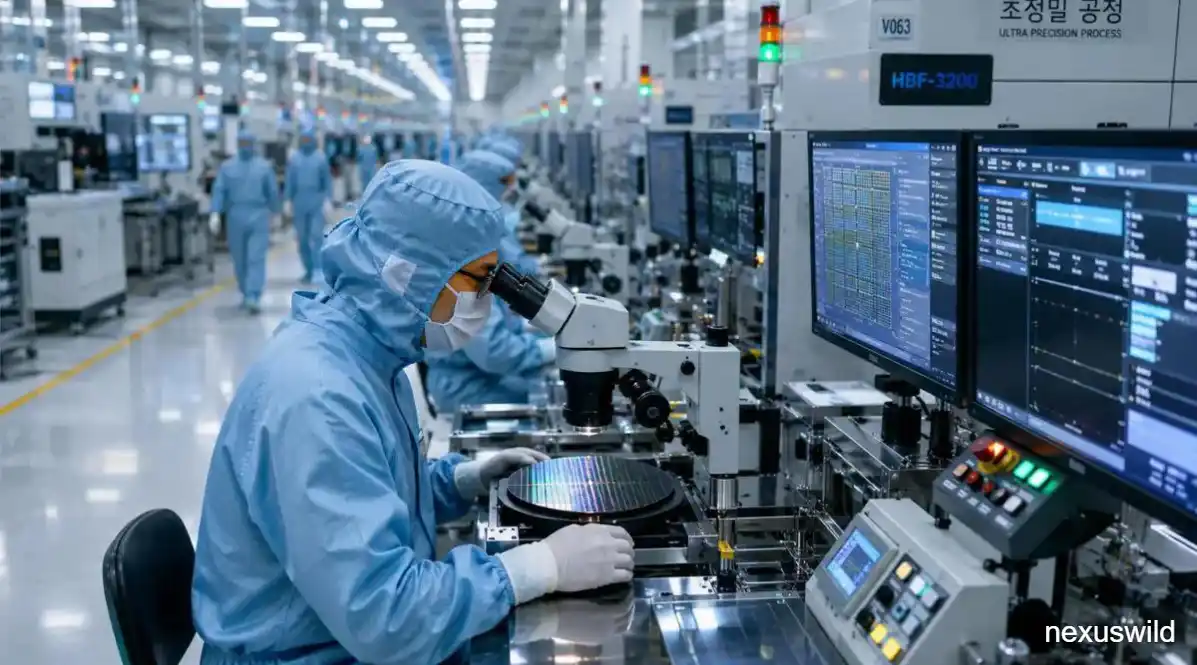
Semiconductors were the central driver of South Korea’s October trade performance. Exports of the products increased 259.4% from a year earlier to $56.44 billion, reflecting higher prices, strong shipment volumes and continued investment in AI-related infrastructure by global technology companies.
The semiconductor industry has become increasingly important as companies expand their computing capacity to support generative AI, cloud services, large-scale data processing and advanced digital applications.
AI systems require substantial computing power. Training and operating large models depends on specialised processors, high-bandwidth memory, storage systems and interconnected computing equipment. This creates demand for a broad range of semiconductor products rather than a single category of chip.
South Korean manufacturers are particularly important in memory semiconductors. Their products are used in servers, data centres, computers and other electronic devices. As AI infrastructure expands, the need for high-performance memory and advanced components has become an increasingly significant part of technology companies’ investment plans.
The latest export figures also demonstrate how quickly semiconductor demand can influence a country's overall trade performance. When chip shipments rise sharply, the impact extends beyond manufacturers themselves. It can support investment, industrial production, supplier networks, logistics activity and corporate earnings.
However, the scale of the increase also means that South Korea’s export performance is becoming more closely connected to the semiconductor market. Any slowdown in global technology investment, changes in chip pricing or reduction in orders could have consequences for the country's trade figures.
AI Server Demand Pushes Computer Exports Higher
Computer exports recorded another major increase in October, rising 496.6% year on year as demand for servers used in AI services strengthened.
The growth reflects the changing structure of global technology spending. Traditional computer demand remains important, but a growing share of investment is directed towards specialised infrastructure capable of handling large volumes of data and complex computing workloads.
AI servers are designed to support demanding processing requirements. They often combine powerful processors, high-performance memory, specialised accelerators and advanced cooling systems. These machines are deployed in data centres operated by cloud service providers, technology companies and organisations developing AI applications.
The rapid expansion of AI services is encouraging companies to increase computing capacity. Businesses need infrastructure not only to train AI models but also to operate them for customers, employees and software applications. As the number of users and applications increases, demand for server capacity can rise accordingly.
South Korea benefits from its established electronics manufacturing base and its position in the semiconductor supply chain. The country's export growth in both semiconductors and computers suggests that the AI investment cycle is generating demand across connected technology categories.
The development is also significant for suppliers beyond chip manufacturers. Server production depends on electronic components, storage devices, printed circuit boards, power systems and other specialised equipment. Increased orders can therefore create opportunities for companies operating across the wider hardware ecosystem.
Nevertheless, the exceptionally high growth rate in computer exports should be viewed against the previous year's comparison base. A percentage increase does not, by itself, reveal how much of the growth is sustainable or whether the same pace will continue in subsequent months.
More Working Days Amplify October’s Export Growth
Although the export increase was substantial, calendar effects played an important role in the year-on-year comparison.
South Korea's Chuseok holiday, one of the country's major annual holidays, fell at a different time in 2026 compared with 2025. This resulted in more working days during October 2026, allowing exporters additional time to process orders and ship products.
The effect matters because monthly trade statistics compare the value of goods shipped during one calendar month with the corresponding month a year earlier. When the number of working days changes significantly, the comparison can exaggerate or reduce the apparent pace of underlying activity.
October's 93.7% growth therefore should not be interpreted as evidence that South Korea's export capacity or global demand increased by the same amount in a single year.
A more useful measure is average daily exports, which adjusts for the number of working days. South Korea's average daily export value increased approximately 76% year on year to $5.24 billion, according to the reported trade figures. That remains an exceptionally strong increase, indicating that the performance was supported by more than the holiday calendar.
The distinction is important for investors, economists and businesses assessing the country's export outlook. Calendar adjustments help separate temporary statistical effects from changes in demand, pricing and actual shipment activity.
September had already delivered strong export growth, with the monthly total exceeding $120 billion. October's result continued that momentum, although its headline value was lower than September's. The two months together point to a particularly strong period for South Korean exporters, led by semiconductor shipments.
China, the United States and Europe Drive Export Growth
South Korea's export expansion was not limited to one destination. Shipments increased across several major markets, reflecting the international nature of the AI infrastructure investment cycle.
Exports to China rose 133.6% year on year to $26.98 billion. Strong semiconductor shipments and wireless communications equipment contributed to the increase. China remained South Korea's largest export destination in October, with shipments exceeding $20 billion for the fifth consecutive month.
The United States recorded an even larger increase in percentage terms, with exports climbing 185.8% to $24.9 billion. Demand for semiconductors, computers and electrical equipment used in AI infrastructure supported the expansion.
The US technology sector is a major source of investment in data centres, cloud computing and AI development. Its demand for advanced hardware creates opportunities for South Korean suppliers that manufacture critical components used in computing systems.
Exports to Southeast Asia increased 128% to $21.33 billion, while shipments to the European Union grew 56.4% to $8.1 billion. Semiconductor and automobile exports contributed to the growth in both markets.
The geographical spread is important because it demonstrates that the increase was connected to multiple international markets rather than depending entirely on one destination. South Korean manufacturers supply components and finished products to companies operating across different regions, making the country's trade performance closely linked to global industrial and technology demand.
However, these figures also highlight the importance of maintaining access to major export markets. Changes in trade policy, tariffs, supply-chain regulations or geopolitical conditions could influence future shipments.
For South Korean businesses, the challenge will be to preserve their position in international markets while managing the uncertainty associated with changing trade relationships.
South Korea Moves Closer to the $1 Trillion Export Milestone
The October performance has brought South Korea closer to a significant annual trade milestone.
Exports between January and October reached $930 billion, surpassing $900 billion for the first time during the corresponding ten-month period. The total represents a substantial increase from the same period in 2025 and places the country within reach of $1 trillion in annual exports.
The government has indicated that the milestone could be reached as early as November if the current momentum continues. South Korea would join the United States, China and Germany among the countries that have recorded annual exports exceeding $1 trillion.
Reaching that level would represent more than a symbolic achievement. It would demonstrate the scale of South Korea's role in global manufacturing, technology and international trade.
The country's export base includes semiconductors, automobiles, ships, petrochemical products, refined petroleum, electronics and consumer goods. These industries connect South Korean manufacturers with businesses and consumers across major economies.
However, the composition of export growth is as important as the total value. The latest figures show that semiconductors are contributing an unusually large share of the increase. This creates an opportunity for the economy, but it also means that the annual target is increasingly influenced by conditions in the global technology industry.
The $1 trillion milestone should therefore be understood as an indication of export scale rather than a guarantee of permanently stronger growth. Future performance will depend on demand, pricing, production capacity and international economic conditions.
Stronger Imports Reflect Industrial Demand and Higher Costs
South Korea's export boom has also coincided with a significant increase in imports.
Imports rose 36% year on year to $72.78 billion in October. The increase reflected higher crude oil prices as well as demand for semiconductor manufacturing equipment and automobiles.
This development illustrates an important feature of South Korea's export-oriented economy. Producing goods for international markets often requires imported energy, raw materials, machinery and specialised components.
Semiconductor manufacturing is particularly capital-intensive. Producing advanced chips requires sophisticated equipment, highly controlled manufacturing environments and continuous investment in production technology. As companies expand capacity, demand for imported machinery and related materials can increase.
Higher energy costs can also affect manufacturers. South Korea imports much of the energy it requires, making industrial production sensitive to international oil and gas prices. An increase in energy import costs can raise operating expenses for manufacturers, transport companies and other businesses.
Despite the rise in imports, South Korea recorded a trade surplus of $42.50 billion in October. The surplus was substantial, although narrower than September's record surplus of $49.97 billion.
The combination of rising exports and imports suggests that industrial activity and international trade flows remain strong. However, the increase in import costs means that businesses and policymakers must also monitor the impact of energy prices and production expenses.
Samsung Electronics and SK Hynix Remain Central to the AI Supply Chain
South Korea's semiconductor performance places its major chip manufacturers at the centre of the global AI infrastructure expansion.
Samsung Electronics and SK Hynix are among the country's most important semiconductor companies. Both operate in markets that supply essential components to the global electronics and computing industries.
The growth of AI workloads has increased the importance of high-performance memory. Large AI systems process enormous quantities of information, and their performance depends partly on how quickly data can move between processors and memory.
High-bandwidth memory has become particularly important in advanced AI computing systems. It allows processors to access large amounts of data at high speeds, supporting demanding workloads used in model training and inference.
The growing demand for these components has increased the strategic importance of memory manufacturers. Companies able to supply advanced products at scale can benefit from rising orders, stronger pricing conditions and long-term relationships with major technology customers.
However, the opportunity also requires continued investment. Semiconductor manufacturing facilities are expensive to build and operate, while technology requirements change rapidly. Manufacturers must spend on research, production equipment, process improvements and capacity expansion to remain competitive.
The October export figures provide evidence of strong demand across the sector, but they do not guarantee that every manufacturer will benefit equally. Corporate performance will depend on product mix, production yields, customer relationships, pricing and investment decisions.
For South Korea, maintaining technological competitiveness will be essential if the country wants to convert the current AI-driven export boom into a longer-term industrial advantage.
The Economic Opportunity Comes With Concentration Risks
The latest trade figures are positive for South Korea's economy, but they also reveal a potential vulnerability.
Semiconductors accounted for approximately 49% of October's total exports. Such a large contribution means that changes in the chip industry can have an immediate impact on national trade performance.
The global semiconductor market is cyclical. Periods of strong demand and limited supply can push prices higher, encouraging manufacturers to increase investment. If supply later expands faster than demand, prices can weaken and companies may delay new orders or reduce production.
The AI investment cycle introduces another source of uncertainty. Technology companies are committing significant resources to data centres and computing infrastructure, but their spending decisions depend on expected returns, financing conditions and the commercial success of AI services.
If AI adoption continues to expand, demand for advanced chips, memory and servers could remain strong. If companies become more cautious about infrastructure spending, suppliers may face slower order growth.
Trade policy is another risk. South Korean manufacturers depend on international markets and complex supply chains. Tariffs, export restrictions and changes in technology regulations could affect access to customers, production costs and investment decisions.
The country must also manage competition from other semiconductor-producing economies. Maintaining leadership requires investment in research, skilled workers, advanced manufacturing and reliable supply networks.
Diversification across export industries and markets could help reduce exposure to sudden changes in the semiconductor cycle. South Korea's automobile, shipbuilding, chemical, cosmetics and other manufacturing sectors remain important parts of its wider export base.
What the October Figures Mean for the Global Economy
South Korea's export data provide an important indication of how the AI infrastructure boom is influencing international trade.
The expansion of artificial intelligence is often discussed through software applications, investment announcements and technology company earnings. However, the physical infrastructure behind these services depends on factories, semiconductor production, server manufacturing, energy systems and international logistics.
The October figures demonstrate how investment in AI computing can translate into higher demand for manufactured goods across multiple countries and industries.
For semiconductor suppliers, strong orders can support revenue growth and encourage additional capacity investment. For server manufacturers and component suppliers, expanding data-centre construction can create new business opportunities. For shipping and logistics companies, increased trade volumes can support demand for transportation and supply-chain services.
The impact can also reach commodity markets. Semiconductor manufacturing requires significant electricity, water, chemicals and specialised materials. Expanding production capacity can increase demand for these inputs, although the effect varies across products and regions.
South Korea's performance is therefore relevant beyond its domestic economy. It offers a practical measure of how global technology investment is affecting manufacturing and trade flows.
At the same time, the figures should not be treated as proof that every part of the global economy is experiencing similar growth. South Korea has a highly developed export sector and a particularly important position in semiconductor manufacturing. Its results may not represent the broader condition of consumer demand, employment or industrial activity in every country.
What Happens Next?
The next major indicator will be whether South Korea can maintain strong export growth through the final months of 2026 and reach the government's projected $1 trillion annual milestone.
November trade data will help determine whether October's performance reflects sustained demand or a combination of strong semiconductor conditions and temporary calendar effects.
Investors and manufacturers will also watch orders from major technology companies, semiconductor prices, AI server investment and production capacity. These indicators will help show whether the current demand cycle can continue into 2027.
For South Korean policymakers, the challenge is to support export competitiveness while addressing the risks of dependence on a limited number of high-value industries. Investment in advanced manufacturing, research, workforce development and diversified trade relationships could help strengthen the country's long-term position.
The October figures represent a major achievement for South Korea's export sector. Semiconductor shipments, AI server demand and stronger trade across major markets have pushed monthly exports to an unprecedented level.
Yet the longer-term significance will depend on whether the country can turn this exceptional period into sustainable industrial growth. The AI boom is creating a substantial opportunity for South Korean manufacturers, but maintaining that advantage will require continued innovation, investment and resilience against shifts in the global technology cycle.
For now, the message from October's trade data is clear: the expansion of AI infrastructure is no longer confined to technology company balance sheets. It is increasingly visible in factory output, semiconductor shipments and the movement of goods across the global economy.
Nexuswild welcomes factual corrections. Email contact@nexuswild.com with evidence and the article URL.