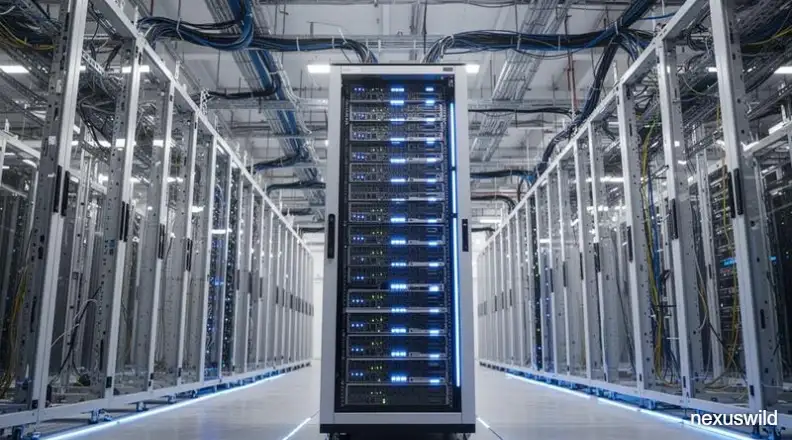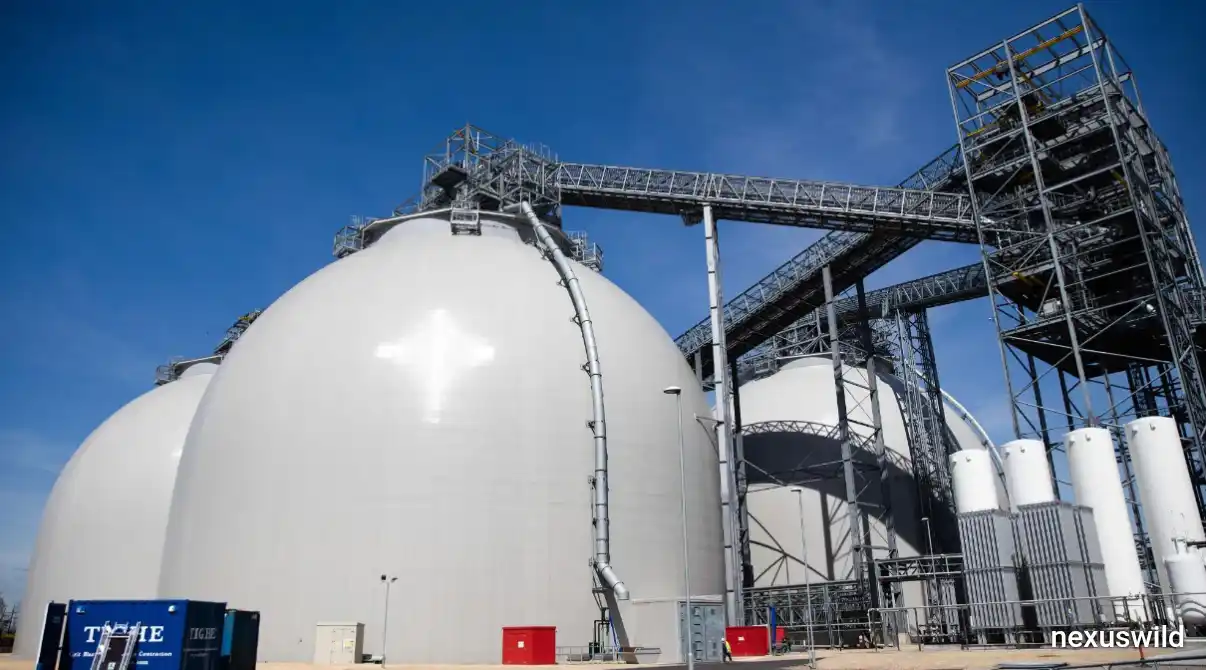

British power generator Drax Group has entered into a strategic partnership with Brookfield and its UK-headquartered AI infrastructure platform Radiant to develop a large-scale artificial intelligence data centre campus at Drax Power Station in North Yorkshire.
Announced on November 3, 2026, the project could attract more than £20 billion in investment over multiple development phases. The initial phase is expected to involve up to £2.5 billion in potential backing and target a data centre with up to 100 megawatts (MW) of computing capacity, with commercial operations targeted from the first quarter of 2028.
The partnership brings together Drax's land and energy infrastructure, Brookfield's investment capabilities and Radiant's expertise in developing and operating AI computing infrastructure. Capital and operating support will be provided through the Brookfield-Qai AI infrastructure joint venture.
The announcement comes as demand for computing capacity increases alongside the expansion of artificial intelligence services, cloud platforms and data-intensive business operations. It also highlights the growing importance of access to electricity, grid infrastructure and suitable industrial locations when developing large AI facilities. [1][2]
A phased development with potential investment above £20 billion
The proposed campus is expected to be developed in several stages rather than constructed as one completed facility.
Phase 1 targets up to 100 MW of data centre capacity, with commercial operations planned from Q1 2028. Brookfield estimates that the initial phase could receive £2.5 billion in backing.
The second phase aims to increase capacity by an additional 500 MW between 2028 and 2031. Further expansion is planned after 2031, with the overall development targeting more than 1 GW of data centre capacity.
Brookfield estimates that the full development could potentially exceed £20 billion in investment.
These figures represent the partners' development ambitions and estimates, rather than a completed construction programme or a fully deployed investment. Each stage will depend on planning permissions, regulatory requirements, network arrangements, customer demand and investment decisions.
The distinction is important because a data centre's proposed capacity does not necessarily translate into immediately available computing infrastructure. Construction, power arrangements, cooling systems and customer commitments all need to progress before the facilities can become operational. [1][2]
Why Drax Power Station is central to the project
The location is one of the partnership's most important advantages.
Drax Power Station sits on an industrial estate in North Yorkshire covering approximately 1,000 acres. According to Drax, the site has access to a 4-gigawatt (GW) grid connection, 2.6 GW of active dispatchable generation capacity and existing cooling infrastructure.
The site is also close to the UK's fibre network, an important consideration for data centres that require high-speed connectivity to customers, cloud platforms and other digital infrastructure.
Drax will contribute the land, power integration and planning capabilities. Radiant will lead the design, customer engagement and commercialisation of the data centre development.
The partners intend to use existing infrastructure to support development at a location that already has a long history of electricity generation.
However, the site's 4 GW grid access should not be interpreted as 4 GW of electricity already reserved exclusively for the proposed data centre. Actual power availability will depend on network arrangements, approvals and the requirements of each development phase.
For the initial phase, Drax's regulatory announcement says the facility is expected to import electricity directly from the grid, with Drax managing the power arrangements. The partners are also exploring the broader potential of integrating the site's generation capabilities into later development stages. [1][3]
Brookfield, Radiant and Qai bring different capabilities
The partnership combines organisations with different roles in the proposed infrastructure programme.
Brookfield is a global investment and asset management group with experience in developing and operating large infrastructure businesses. Its involvement provides access to investment capital and infrastructure operating capabilities.
Radiant, Brookfield's UK-headquartered AI infrastructure platform, will focus on developing and commercialising the computing facilities. Its responsibilities include design, customer engagement and securing commitments from potential users.
Qai, a technology company headquartered in Qatar, is involved through the Brookfield-Qai AI infrastructure joint venture. The joint venture was announced in 2025 and forms the capital and operating platform supporting the development.
Drax contributes the physical site, power infrastructure and experience in operating a major electricity-generation facility.
This division of responsibilities reflects the complexity of modern AI infrastructure projects. Building a large data centre requires more than land and buildings: developers also need financing, electricity, cooling systems, connectivity, hardware procurement and long-term customers.
The partners are seeking to combine these capabilities at a single industrial location. [1][4]
UK government policy and sovereign AI infrastructure
The announcement also comes as the UK government seeks to expand domestic data centre capacity and strengthen its position in artificial intelligence.
AI infrastructure has become an important economic and strategic consideration because businesses, researchers and public institutions increasingly depend on computing resources to develop and operate advanced digital services.
Domestic data centre capacity can support local businesses and institutions while providing infrastructure within the UK's legal and regulatory environment.
Drax and its partners have welcomed the government's new Data Centre Covenant, saying their initial assessment indicates that the proposed development aligns with its key criteria.
The partners believe the project could contribute to energy security, local economic development, reindustrialisation and access to secure computing infrastructure.
However, the partnership's reference to the Covenant does not mean the project has automatically received planning permission or priority grid access. The development still needs to progress through the relevant approval processes.
The proposed campus therefore represents a private-sector investment aligned with the government's broader digital infrastructure ambitions, rather than an already approved government-backed construction programme. [1]
Community benefits and local employment
The companies have also outlined plans for a voluntary community benefits fund.
The fund is expected to be developed in consultation with communities around the Drax Power Station site. According to the announcement, it would be separate from existing community initiatives and any obligations imposed through the planning process.
Drax says the development could help protect hundreds of jobs associated with the site and support additional employment through construction, infrastructure operations and supply-chain activity.
The potential economic benefits will depend on how much of the proposed campus is eventually built and how the project develops over time.
A public consultation for the first phase is expected to begin shortly, followed by the formal planning process. This will give local communities an opportunity to engage with the proposals and their potential effects.
Energy requirements and environmental questions
The proposed development also raises questions about how large AI data centres will obtain electricity while meeting environmental and energy-system requirements.
AI computing facilities can require substantial and continuous electricity supplies, particularly when operating large-scale GPU clusters and other high-performance computing systems.
Drax's existing electricity infrastructure offers a potential starting point, but the eventual power arrangement will depend on approvals and the partners' decisions about grid imports and possible direct integration with the site's generation assets.
Drax Power Station is a major biomass electricity generator, and its environmental performance has been the subject of public and regulatory scrutiny. The expansion of energy-intensive digital infrastructure at the site is therefore likely to draw attention to the source of electricity, emissions accounting and the sustainability of future power arrangements.
The announcement does not establish that the entire data centre campus will be powered directly by biomass generation. The first phase is planned to draw electricity from the grid.
What happens next?
The immediate priorities are the public consultation, preparation of the first-phase planning application, regulatory and network approvals, and securing a suitable anchor customer.
The initial 100 MW facility is targeted to begin commercial operations in early 2028. If the first phase progresses successfully, the partners intend to expand the campus towards 500 MW between 2028 and 2031, followed by additional capacity after 2031.
The proposed development illustrates how existing industrial and energy infrastructure could become part of the UK's expanding AI economy.
For Drax, it offers a potential new role for its North Yorkshire site. For Brookfield and Radiant, it provides an opportunity to develop large-scale AI infrastructure in the UK. For the wider technology sector, it highlights the increasingly close relationship between computing capacity, electricity supply and industrial investment.
The project's eventual impact will depend on whether its ambitious investment and capacity targets translate into approved, financed and operational facilities.
Nexuswild welcomes factual corrections. Email contact@nexuswild.com with evidence and the article URL.