
PETERSFIELD, England, Sept. 17, 2026 - A small British automotive engineering company has created one of the most unusual visual identities in the modern hypercar world.
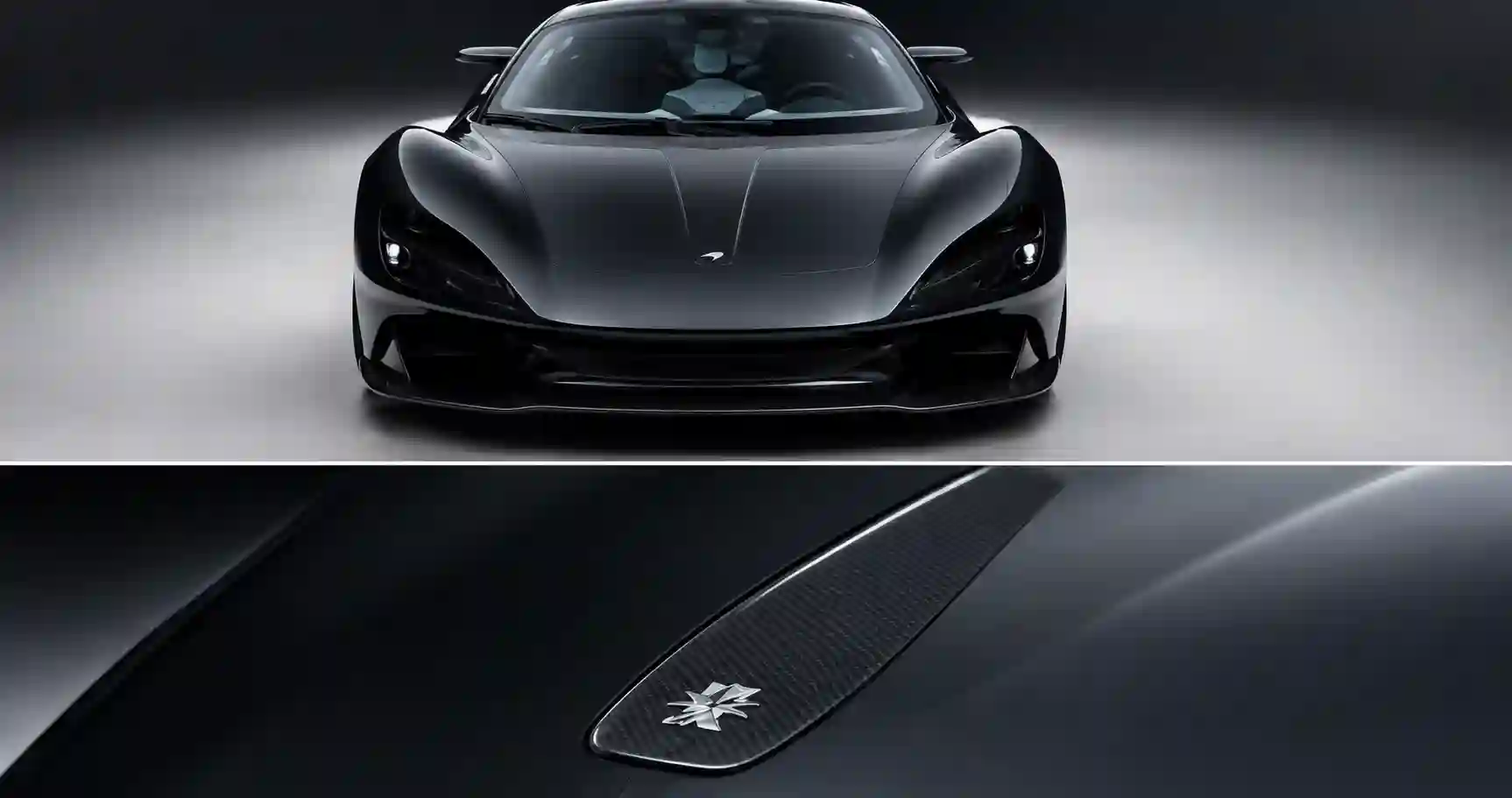
Lanzante’s 95-59 is a three-seat, carbon-fibre performance car with more than 850 bhp, a central driving position and a production run limited to 59 examples.
It also carries a crest derived from Ganesh, one of the most recognisable deities in Hindu tradition.
The badge has attracted global attention because it looks unlike the animal emblems, initials and abstract shields normally associated with high-performance cars.
But the deeper story is more interesting than the viral version.
The Ganesh identity did not suddenly appear for the 95-59. Lanzante had already been using Ganesh branding in official merchandise before the car was unveiled, including a named Ganesh Signature collection. In 2026, the company also used a repeating Ganesh motif across the camouflage of the 95-59 development car.
The 95-59 therefore did not invent the symbol. It made an existing Lanzante identity far more visible.
What the 95-59 actually is
The 95-59 was created to mark 30 years since Lanzante’s victory at the 1995 24 Hours of Le Mans.
The name itself explains the tribute.
“95” refers to 1995.
“59” refers to the race number of the winning car.
Lanzante had been selected to run the McLaren F1 GTR that took overall victory at Le Mans that year.
Three decades later, the company used that history as the foundation for a limited-production road-car programme.
The 95-59 was unveiled publicly at the 2025 Goodwood Festival of Speed as a production-intent design concept. By 2026, the programme had progressed to running prototypes and a production-form public showing.
Lanzante says customer production is scheduled to begin at the start of 2027.
Only 59 examples are planned.
The Ganesha crest is part of the brand, not a one-off decoration
Online discussion often presents the Ganesha-inspired emblem as if it was created specifically for the 95-59.
Lanzante’s own material shows otherwise.
Before the 95-59 was publicly revealed, the company was already selling an official “Ganesh Signature” merchandise collection including clothing, bags, keyrings and pin badges.
At the 2026 dynamic debut of the 95-59, the development car’s camouflage was formed from repeating versions of the Ganesh logo.
That changes the interpretation.
The emblem is not simply an exotic motif added to one expensive car.
It is part of Lanzante’s wider visual identity.
The 95-59 is simply the most prominent road car yet to carry it.
The reported George Harrison connection
A widely repeated account links the origin of Lanzante’s Ganesh emblem to George Harrison.
The reported story says Harrison, whose interest in Indian spirituality is extensively documented, was close to Lanzante founder Paul Lanzante and encouraged the use of a Ganesh image as a company symbol.
That account has appeared repeatedly in automotive and cultural reporting.
However, the public Lanzante pages reviewed for this article do not provide a detailed first-party account confirming the exact conversation or date on which the emblem was adopted.
The responsible distinction is simple.
Lanzante’s use of Ganesh branding is directly verifiable from the company’s own material.
The George Harrison origin story is widely reported brand history, but the current primary-source material reviewed here does not document the original exchange in detail.
Why the symbol fits Lanzante’s engineering identity
Ganesh is widely associated in Hindu tradition with auspicious beginnings, wisdom and the overcoming of obstacles.
Those associations make the image unusually compatible with an engineering company built around difficult automotive projects.
Lanzante’s reputation was formed not through mass-production cars but through restorations, road conversions, low-volume engineering programmes and highly modified performance vehicles.
The 95-59 continues that pattern.
It is not simply a body-kit project.
Lanzante has re-engineered the underlying carbon-fibre architecture to accommodate a central driver and two passengers while developing new bodywork, aerodynamics, exhaust systems, packaging and interior components.
Seen in that context, the Ganesh crest is more than visual novelty.
Its symbolism aligns naturally with a company that has spent decades solving unconventional engineering problems.
Three seats, with the driver in the middle
The defining architectural feature of the 95-59 is its three-seat cabin.
The driver sits in the centre.
Two passengers sit slightly behind and to either side.
Lanzante says the car was designed from the outset around this layout rather than adapting a conventional two-seat cabin late in development.
That changes the geometry of the vehicle.
The steering, pedals, seating, visibility, ventilation, interior packaging and passenger access all have to work around the central driving position.
Lanzante describes the central seat as lightweight and moveable, while the passenger seats are integrated into the re-engineered chassis.
The objective is not simply theatre.
The company says it wants the car to remain usable on long journeys, with luggage capacity and extended cruising range.
More than 850 bhp from a twin-turbo V8
The current official specification lists a 4.0-litre twin-turbocharged V8.
Power is quoted at more than 850 bhp with 880 Nm of torque.
A seven-speed SSG transmission is listed.
The chassis is a re-engineered carbon-fibre monocoque and the exterior bodywork is full carbon fibre.
Lanzante has not published every final acceleration or top-speed figure.
That is important because development cars often attract speculative performance numbers online.
The verified figures are already substantial.
More than 850 bhp.
880 Nm.
A target weight as low as 1,250 kg with the lightweight configuration.
And an advertised power-to-weight figure of 700 bhp per tonne.
The LM30 package
The optional LM30 enhancement is the lightest and most focused version of the car.
Lanzante says it saves around 20 kg.
The package includes lightweight forged aluminium wheels, Inconel exhaust headers, titanium secondary and tailpipes, titanium body fixings and gold-plated heat shielding around the engine and exhaust.
It also receives subtle Le Mans-related identifiers.
The purpose is straightforward.
Reducing mass improves acceleration, braking, steering response and the workload placed on tyres and suspension.
At this level of performance, 20 kg does not transform a car by itself, but it illustrates the engineering philosophy: reduce unnecessary mass wherever practical.
The design was led by Paul Howse
The 95-59 was designed by Paul Howse.
The exterior is deliberately modern rather than retro.
Although the car celebrates a 1995 Le Mans victory, it is not styled as a copy of a 1990s racing car.
Its carbon-fibre body was developed around the three-seat cabin and modern aerodynamic requirements.
The current specification includes a floating active rear wing.
For customers wanting a more aggressive setup, Lanzante has also developed a high-downforce option with a fixed high-mounted rear wing and roof-mounted air intake.
That option was confirmed in 2026 as the car moved closer to production.
A proven platform, heavily re-engineered
Lanzante says the 95-59 uses a current McLaren platform as its engineering base.
The carbon-fibre monocoque is re-engineered for the three-seat layout.
That choice matters economically.
Developing a completely new road-legal hypercar platform from zero is extraordinarily expensive.
Using a proven carbon structure and powertrain architecture gives Lanzante a validated foundation.
The company’s value comes from the re-engineering: packaging, body design, weight reduction, aerodynamics, materials, chassis changes and bespoke low-volume assembly.
This is not mass manufacturing.
It is specialist engineering.
Why only 59 cars
Production is capped at 59 examples.
The number directly references the 1995 Le Mans-winning race car.
It also fits the economics of the project.
A car built in dozens rather than tens of thousands cannot spread engineering and tooling costs across a large production base.
Each car carries a meaningful share of development, materials, validation and hand assembly.
At its July 2025 unveiling, Lanzante announced a project price of £1.02 million before local taxes.
That was the official launch price.
It should not be treated as a guaranteed final delivered price for every customer because options, taxes and later specifications can change the total.
Production begins in 2027
The 95-59 was not a finished customer-delivery vehicle when it first appeared.
The sequence matters.
In 2025, Lanzante presented the design concept.
In 2026, a production-intent prototype was demonstrated dynamically and later shown in production form.
Lanzante says customer production is scheduled to start at the beginning of 2027.
Claims suggesting that all 59 cars are already on the road would therefore be incorrect.
Why the crest became globally visible now
The symbol itself was not new.
The visibility was.
The 95-59 gave Lanzante a car with its own name, a central-seat layout, a seven-figure price and a global launch platform.
Images of a Ganesha-inspired badge on that kind of machine naturally travelled widely online.
The contrast is striking.
An ancient religious symbol appears on a machine built from carbon fibre, twin-turbocharged engineering, active aerodynamics and digital design.
But the more accurate story is not that Indian symbolism suddenly appeared on a British hypercar.
It is that a long-running Lanzante brand mark became visible to a much larger audience when the company launched its most ambitious limited-production road-car programme.
Cultural identity and respectful use
Religious imagery carries meaning beyond branding.
That matters when sacred symbols are used commercially.
In Lanzante’s case, the emblem appears to be a long-term part of the company’s identity rather than a temporary campaign device.
The official Ganesh Signature merchandise predates the 95-59 launch, and the symbol has appeared repeatedly across the company’s branding and development vehicles.
That continuity is important.
It suggests the crest is not being used merely because Indian imagery became fashionable online.
Whether every observer views the use in the same way is a cultural judgment.
The factual point is that the symbol is embedded in Lanzante’s established brand identity.
What the 95-59 says about modern low-volume carmaking
The car also illustrates how specialist automotive manufacturing has changed.
A small engineering firm can now combine a proven donor architecture with advanced scanning, digital design, carbon-fibre manufacturing, low-volume tooling and highly specialized suppliers.
That makes projects possible that once required the resources of a major carmaker.
The difficult part is no longer just creating a dramatic prototype.
The real challenge is validating cooling, durability, electronics, serviceability, quality and repeatability across every customer car.
That is where Lanzante’s decades of low-volume and motorsport work matter most.
The strict conclusion
The Lanzante 95-59 is real, limited to 59 examples and scheduled for production from 2027.
Its verified specification includes a re-engineered carbon-fibre monocoque, full carbon bodywork, a central three-seat cabin, a 4.0-litre twin-turbo V8, more than 850 bhp, 880 Nm and a target weight as low as 1,250 kg in its lightweight form.
Its name commemorates Lanzante’s 1995 Le Mans victory and the number 59 of the winning car.
And the Ganesh-derived crest is not a one-off badge created for online attention.
Lanzante had already established a Ganesh Signature identity before the 95-59 appeared, and the symbol was used throughout the 2026 development car’s camouflage.
The George Harrison connection remains an intriguing and widely reported part of the company’s history, but it should be distinguished from what Lanzante’s current primary material directly documents.
That careful distinction makes the story stronger.
The 95-59 is where three histories meet:
a British motorsport victory, a modern low-volume engineering programme, and an Indian religious symbol that had already become part of Lanzante’s identity before most of the world noticed it.
Reader questions
Frequently asked questions
What is the Lanzante 95-59?
The Lanzante 95-59 is a limited-production three-seat hypercar created to celebrate 30 years since Lanzante’s 1995 victory at the 24 Hours of Le Mans.
Why is the car called 95-59?
The name combines 1995, the year Lanzante won the 24 Hours of Le Mans, with 59, the race number of the winning car.
Does the Lanzante 95-59 use a Ganesha-inspired logo?
Yes. Lanzante uses a Ganesh-derived brand crest, and the 95-59 carries that identity. The company also used the Ganesh logo throughout the camouflage of its 2026 development prototype.
Was the Ganesha crest created specifically for the 95-59?
No. Lanzante had already used Ganesh branding in its official Ganesh Signature merchandise collection before the 95-59 was publicly unveiled.
What is the George Harrison connection?
A widely repeated account says George Harrison encouraged founder Paul Lanzante to adopt the Ganesha image. The current official Lanzante pages reviewed for this article do not provide a detailed first-party record of that original conversation.
How powerful is the Lanzante 95-59?
Lanzante lists a 4.0-litre twin-turbo V8 producing more than 850 bhp and 880 Nm, paired with a seven-speed SSG transmission.
How many Lanzante 95-59 cars will be built?
Production is limited to 59 examples globally.
How much does the Lanzante 95-59 cost?
At its July 2025 unveiling, Lanzante announced a project price of £1.02 million before local taxes. Final delivered prices can vary with taxes, options and specification.
When will production begin?
Lanzante said in its 2026 programme update that production is scheduled to begin at the start of 2027.
Nexuswild welcomes factual corrections. Email [email protected] with evidence and the article URL.