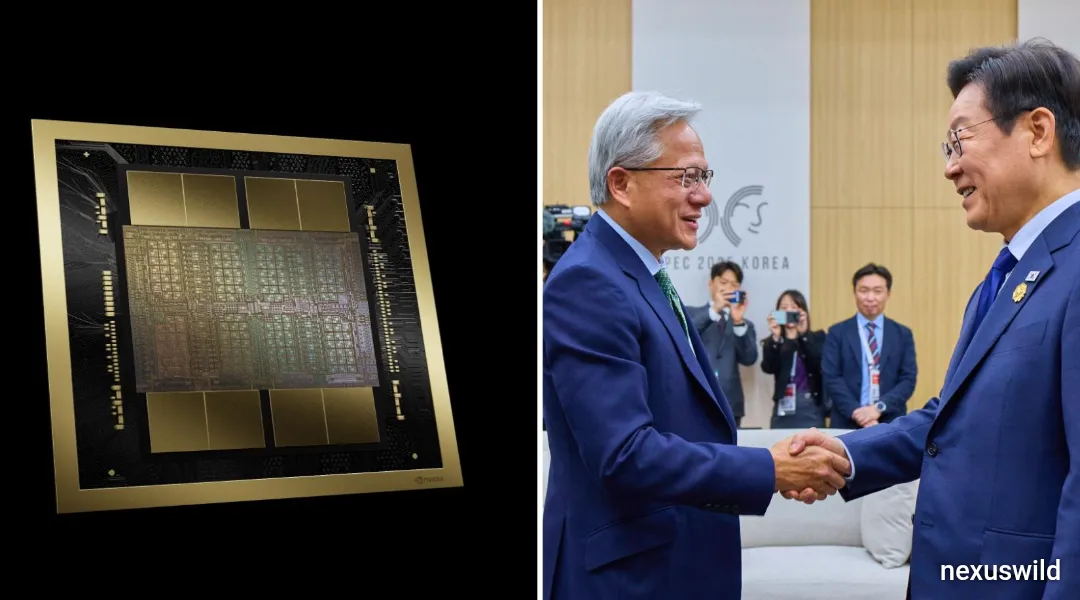

Nvidia says it will still provide up to 260,000 computer chips to South Korea even after the head of the company Jensen Huang stepped down. This is a message that a big plan to build strong computer systems for artificial intelligence in South Korea will continue even though there was a sudden change in leadership.
The Deputy Prime Minister and Minister of Science and ICT in South Korea, Bae Kyung-hoon said on November 13 that Nvidia confirmed the plan to provide the computer chips and work with Korean companies. This happened after a meeting between government officials and people from Nvidia to check on any problems after Jensen Huang left his job.
This announcement is important for South Koreas plan to have computer power for artificial intelligence and to use more artificial intelligence in industries like making things, phones, cars and government services. The computer chip plan involves some of the companies in South Korea and government projects.
The original plan was announced in October 2025 during a meeting in South Korea. It said that Nvidia would give up to 260,000 computer chips for places that make artificial intelligence and computer systems with Naver Cloud, Samsung Electronics, SK Group, Hyundai Motor Group and the South Korean government.
The latest news makes people feel more sure that the plan will go on.. There is a difference between saying something will happen and actually doing it. The project still depends on buying the parts making sure the buildings are ready putting everything in place and slowly getting the computer chips.
Nvidia says it will still provide computer chips to South Korea
The minister said the government looked at the plan for the computer chips and the work with Nvidia on November 13. The meeting was led by the top official in the ministry and focused on whether the new leader at Nvidia would change any of the old plans.
According to the ministers comments Nvidia said at the company level that it still wants to go ahead with the plan to give up to 260,000 powerful computer chips and work with local companies.
This promise is important because the original plan was announced when Jensen Huang visited South Korea and met with business leaders and government officials. His personal involvement made the partnership a big part of the countrys plan for intelligence.
The latest news shows that the promise is now being treated as a regular business deal instead of something that depends only on the old boss.
The plan includes more than buying hardware. It is also about making computer facilities using intelligence in industries making sure the country can handle its own artificial intelligence and working with South Korean tech companies.
For the government in Seoul keeping things going is important because big projects need planning for years. Companies need to make sure the computer parts work with power, cooling, internet, buildings, software and workers.
A big company changing its boss can create questions about what comes. Nvidias promise helps people feel better. Actual steps in getting the parts will show how well the plan is working.
Why Jensen Huangs leaving caused questions
Nvidias change in leadership was an event for the world of artificial intelligence. The company has become one of the important companies that provide the computer parts needed for training and using artificial intelligence models.
Jensen Huangs leadership has also been closely tied to Nvidia expanding into computer centers, faster systems and artificial intelligence platforms. His meetings with government officials and business leaders have helped build relationships in many places.
Nvidia said that the companys board accepted Jensen Huangs leaving on November 11 2026. The board chose the head of the finance department, Colette Kress to be the boss while it looks for a new leader.
This change doesn't automatically change any existing contracts or promises. Public companies work through boards, teams, legal papers and processes that keep going even if a boss leaves.
Governments and big business customers might want to know if a big promise that was linked to a famous boss is still valid. South Koreas meeting was an effort to find out if the new boss at Nvidia would change things.
The ministers statement that Nvidia had promised to keep going with the plan helped solve that worry. Now the question is if the company can keep making the parts on time as the plan moves forward.
How the Plan with 260,000 Computer Chips Works
The plan announced in October 2025 involved big South Korean companies and a government part.
The plan included:
- Naver Cloud: 60,000 computer chips from Nvidia for artificial intelligence computing systems.
- Samsung Electronics: more than 50,000 computer chips for an artificial intelligence factory that helps with semiconductors, electronics and digital changes.
- SK Group: more than 50,000 computer chips for artificial intelligence systems and industrial uses like robots and smart machines.
- Hyundai Motor Group: about 50,000 computer chips for developing artificial intelligence models, manufacturing and self-driving cars.
- South Korean government: up to 50,000 computer chips for the countrys own artificial intelligence systems and computer power.
These numbers show the plan. They don't mean that every company has already gotten all its parts.
The plan is meant to give South Korea access to powerful computing and support artificial intelligence in both the government and private sectors.
The company parts also show the way South Koreas businesses work. Samsung has parts in making chips and electronics SK Group has interests in phones and materials Hyundai is working on cars and making things and Naver Cloud helps with digital services.
By giving computing power to these companies South Korea wants to connect intelligence with what they already do well instead of putting all the computer parts in one place.
Government Buying: Some Parts Are But Not All
The government part is important because the latest numbers show that the 50,000 computer chips are being bought in more than one way.
The minister said that South Korea has gotten about 21,000 of the 35,000 computer chips it expected directly from Nvidia. Another 14,000 are expected by 2027.
The government is also getting about 15,000 computer chips through the National AI Computing Center.
This breakdown explains the difference between the target and what is actually happening. It also shows that the countrys plan is moving through ways instead of just one big shipment.
The government plans to use the computer parts to help universities, research centers, new companies and government groups. This kind of help can give access to computer systems for groups that may not have the money to build big computer setups on their own.
The National AI Computing Center is especially important for the countrys plan to have its artificial intelligence. Shared computer systems can help with making models, research and testing while letting many groups use computers.
Getting the parts is just the first step. Buildings need to have power, cooling, fast internet and systems before the computer chips can be used.
Samsung, SK and Hyundai Use Computer Chips for Industry Work
The plan for the companies in South Korea is meant to support work that goes beyond normal computer systems.
Samsung can use a lot of computer chips for making intelligence studying chips making things better and changing how they work. Artificial intelligence systems can help look at production steps improve quality and support new designs.
SK Groups plans are linked to making computer systems for industry, phones and robots that do work. These jobs need computers that can handle a lot of data from sensors, machines and connected devices.
Hyundai is looking at intelligence for making cars, self-driving vehicles, robots and smart ways of making things. Strong computer systems can help with testing, training and checking in situations.
Naver Clouds plan is to make its computer systems and cloud support stronger. This can help with business services making intelligence and digital platforms in the country.
The important part is combining computer power with the data, research and networks that these companies already have. Just having computer chips won't make them better at intelligence but it can be a base for companies that have the data, teams and ideas to use it.
NVLink Fusion Helps South Korean Computer Chips Work
Along with the bigger plan for computer chips Nvidia is working more with the companies that make computer parts in South Korea.
On November 9 Nvidia, a Korean company that makes artificial intelligence chips called Rebellions and SK Telecom announced a partnership using Nvidias NVLink Fusion technology.
This project is meant to connect Rebellions computer chips with Nvidias systems. Rebellions plans to put its R200 chips with NVLink Fusion and use Nvidias MGX rack system to build big systems.
SK Telecom plans to use these systems in its data centers combining them with its computers, models and services.
This is important because artificial intelligence doesn't always need one kind of computer for all tasks. Different computers can be made for jobs, power needs and conditions.
By letting local computer chips work with a system the partnership could give South Korean chip makers access to a bigger environment.
It might also help Korean companies learn how to connect their own chips with big systems used around the world.
This partnership is a specific technical plan with Rebellions and SK Telecom. It shouldn't be seen as proof that all Korean companies making artificial intelligence chips are already connected to Nvidias system.
What NVLink Fusion Means for Computer Makers
NVLink is a way for computers to talk to each other made by Nvidia. It helps processors and other parts share data quickly.
NVLink Fusion adds to Nvidias system by letting companies chips work with it. This can help companies that make special artificial intelligence chips to use them in systems.
For Rebellions this means they can connect their chips to Nvidias system. For SK Telecom it could give options, for building systems that use different kinds of computer parts.
This development also has meaning for South Koreas plan to build better computer parts.
The country is home to memory makers and a growing group of AI chip designers. Its ability to create AI systems will depend not only on making parts but also on linking those parts to software, networks, system designs and customer uses.
An ecosystem that works well together could help local companies take part in global AI markets without having to make every part of the system on their own.
The challenge will be to show performance, software compatibility, reliability and business interest. Technical linking is a step but putting things to work needs a full system that customers can use on a big scale.
Physical AI Expands the Partnership Beyond Data Centres
The partnership between Nvidia and South Korea also includes AI, a field that uses artificial intelligence in machines and systems that work in the real world.
Physical AI uses include robots, self-driving cars, smart factories and systems that interact with real environments using sensors and controls.
South Korea has a base in car making, electronics, shipbuilding, robotics and advanced production systems. These industries offer places to use AI in world tasks.
For example AI systems can help robots understand where they are work better together and do jobs in changing places. Factories can use AI to look at data try out processes and help with fixing things before they break.
Self-driving cars need a lot of computing power for seeing, planning and testing. AI models have to be trained and tested on situations before they are ready for real life.
Nvidia and South Korea have said they will keep working on AI research and training people. These efforts might help the country link AI computing with uses.
The public statement does not list all the projects, how much money is involved or when things will be done. Progress should be watched through project updates and real results.
Why Sovereign AI Matters to South Korea
Sovereign AI is when a country can create, run and manage AI systems using resources, data, skills and rules that match its goals.
For South Korea this idea is important for strategic reasons. The country has companies, a strong tech industry and lots of need for AI in making things and public services.
Access to computing can help local language models, special industry AI systems and research that uses Korean data and business needs.
Sovereign AI does not mean making everything at home. It can include makers while keeping control over important uses, data rules, system planning and model building.
Nvidias GPU plan gives access to a lot of computing power. Korean companies can use that with their software, industry knowledge, research groups and chip making.
The NVLink Fusion project adds another way for Korean-designed chips to link with Nvidia systems.
The overall plan is not about buying more GPUs. It is about creating a system that mixes tech, local industry and home AI work.
Supply and Infrastructure Readiness Are Still the Main Issues
with the agreement the project still has some real problems.
The first is when things get done. The total plan is big and moving the GPUs to projects will need careful planning.
The second is if the buildings and systems are ready. Big GPU groups need a lot of power, good cooling, network gear and special data center places. Delays in power or building can stop the use of chips even when they arrive.
The third is people. Running AI systems needs engineers, researchers, system designers, model builders, security experts and data center staff.
The fourth is if the systems are used. Companies need work to make the cost of big computing clusters worth it. A place with a lot of GPU power might not make money if it is not used enough.
Finally the local AI chip industry must show their products can be as good as others in speed how well they work and how reliable they are. The NVLink Fusion project gives a chance. Real success depends on results.
These points mean the 260,000-GPU plan should be seen as a step by step system project and not one time buying.
Market Effects for Nvidia and South Korea
For Nvidia the agreement keeps a partnership in an important tech market. South Korea is a center for memory chips, electronics, telecom and car making.
The countrys big companies can become users of AI computing systems giving Nvidia chances to sell hardware, networks, software and full systems.
For South Korea the plan offers a way to grow computing power and speed up AI use in industries. It could also help the country be better at making its AI systems and industrial uses.
The deal might also give AI chip companies a chance if they can work with bigger systems and make reliable products.
The plan also shows how few big companies supply advanced AI systems. Getting high-performance GPUs is important. Countries trying to grow AI must manage ties with a small number of big makers.
Making local chips and building systems that work together can offer choices over time but these steps need ongoing money and tech progress.
What Investors and Leaders Should Watch
The next part will be about what happens not what is said.
Investors should watch when Nvidia sends the chips, how the government buys them and how the AI centers are built. Getting the hardware is a moment but using it well is more important for real value.
How the NVLink Fusion project works will also matter. The R200 link and SK Telecoms plan to use it could show how local AI chips work with Nvidia systems.
For leaders making sure there is power building data centers keeping things safe having good research and training workers will be key.
The government will also need to make sure that the computing power is available to groups, like research places, startups and public services.
Nexuswild welcomes factual corrections. Email contact@nexuswild.com with evidence and the article URL.