
PM Modi arrives in Manila for ASEAN and East Asia Summits as India ASEAN Trade reaches $128.38 Billion
Manila visit puts Indias Asian strategy in focus
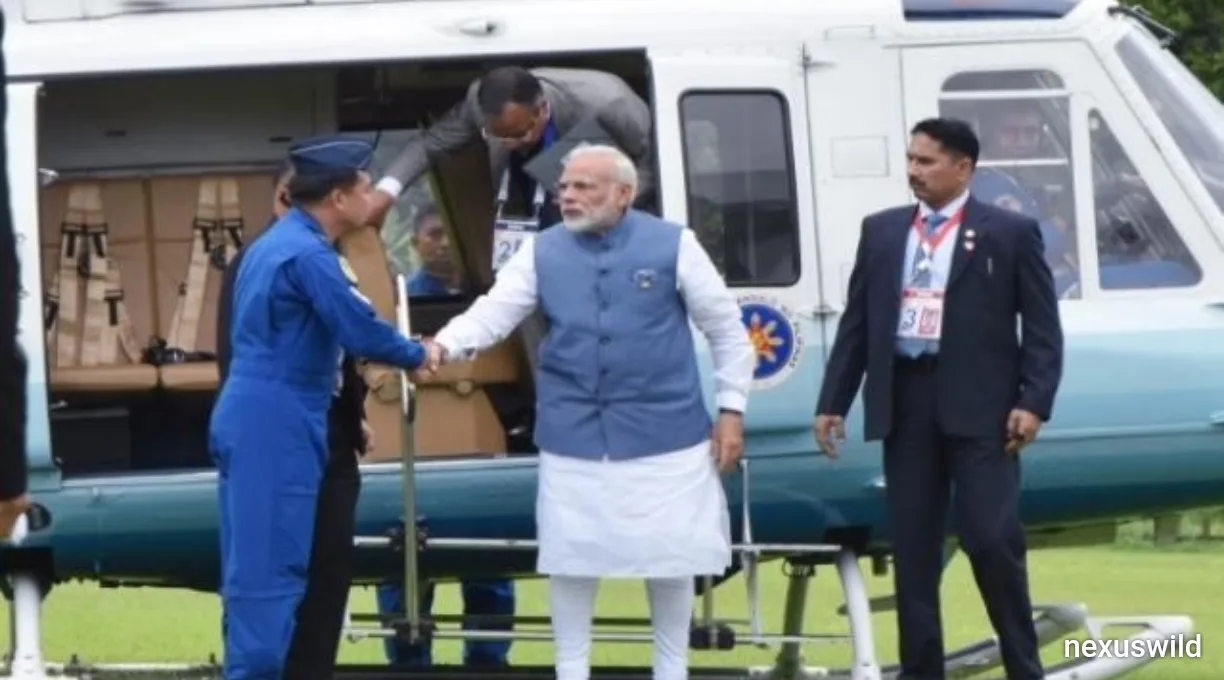
Indian Prime Minister Narendra Modi arrived in Manila on November 16 2026 for a visit centered on two major regional diplomatic gatherings: the 23rd ASEAN India Summit and the 21st East Asia Summit. Both meetings are scheduled for November 17 during the Philippines year as chair of the Association of Southeast Asian Nations.
Modi is visiting at the invitation of Philippine President Ferdinand R. Marcos Jr. The Prime Ministers Office confirmed that the visit would include participation in the two summits and engagement with leaders. In his departure statement Modi described Indias relationship with ASEAN as central to the countrys Act East Policy and an important component of its MAHASAGAR vision.
The visit comes at a moment for Indias engagement with Southeast Asia. Trade has expanded substantially investment links have. Maritime cooperation has become a more prominent element of the bilateral and regional agenda. At the time the growth of merchandise trade has not translated into a balanced exchange for India. The countrys imports from ASEAN remain substantially higher than its exports to the bloc.
That combination. Strategic convergence alongside a trade relationship. Provides the central economic and diplomatic context for the Manila meetings.
Two major summits, two diplomatic platforms
The ASEAN India Summit is the principal annual leaders level platform for reviewing relations between India and the ten Southeast Asian countries that formed the bloc before Timor Lestes accession alongside the wider 11 member ASEAN grouping. The meeting provides an opportunity to assess progress in the Comprehensive Strategic Partnership and identify areas for cooperation.
The East Asia Summit has a regional membership and brings together ASEAN and its dialogue partners to discuss strategic, political and economic issues. Its agenda typically encompasses stability, security, connectivity and shared development challenges.
For India participation in both forums serves purposes. The ASEAN India format focuses directly on the countrys relationship with Southeast Asia while the East Asia Summit gives New Delhi a platform to discuss Indo Pacific developments with other major regional powers.
The PMOs departure statement identified peace, stability and cooperation in the Indo Pacific as themes for the East Asia Summit. It also highlighted trade, connectivity, maritime security, technology and people to people relations as areas of Indias partnership with ASEAN.
The distinction between the two meetings matters. The ASEAN India Summit is where bilateral partnership priorities can be reviewed in detail. The East Asia Summit provides a diplomatic setting for discussing regional challenges and the principles that should guide cooperation.
India ASEAN trade reaches $128.38 billion
The scale of the relationship is one of the strongest reasons for India to sustain high level engagement with Southeast Asia. The Department of Commerce reported that bilateral merchandise trade between India and ASEAN reached US$128.38 billion in FY2025 26. ASEAN accounted for 10.55% of Indias global trade according to the departments September 2026 statement.
The trade figure represents a commercial relationship spanning energy, machinery, electronics, chemicals, agricultural products, metals and manufactured goods. ASEAN economies are suppliers to Indian businesses and consumers while the region also provides a large market for Indian exports.
The export import composition however shows an imbalance. The supplied trade breakdown records exports to ASEAN at US$38.42 billion and imports from the bloc at US$89.96 billion. These figures produce a merchandise trade deficit of US$51.54 billion.
There is a rounding discrepancy across official and reported totals. The Department of Commerce published US$128.38 billion while the MEA figure reported on November 16 was US$128.37 billion. Since the export and import components add up to US$128.38 billion that is the consistent headline total for this article.
The deficit should not be interpreted in isolation. Imports from ASEAN include goods that support manufacturing, energy requirements and domestic consumption. Imported components and intermediate products can also contribute to exports when they are incorporated into finished goods. A trade deficit is therefore not evidence of an unhealthy commercial relationship.
Nevertheless the scale of the imbalance is a policy concern. It raises questions about the competitiveness of exporters the composition of regional supply chains, market access and the way preferential trade rules are being used.
A persistent trade imbalance raises pressure for reform
The difference between Indias exports and imports is a part of the economic debate surrounding the ASEAN India Trade in Goods Agreement commonly known as AITIGA.
The agreement entered into force in 2010. Was intended to facilitate trade by reducing or eliminating tariffs on a wide range of goods. Over time however businesses and policymakers have raised concerns about the agreements operation, including market access, rules of origin non tariff barriers and the distribution of commercial benefits.
India wants the review to produce a balanced and business friendly framework. For exporters the effectiveness of an agreement depends not only on the tariff written into a schedule but also on whether products can meet origin requirements clear customs procedures and satisfy standards in the destination market.
The Department of Commerce has described the review as an effort to make AITIGA balanced, effective user friendly and trade facilitative. That language reflects the governments stated negotiating objectives; it does not mean that the parties have already agreed to a new set of concessions.
The 15th AITIGA Joint Committee meeting took place in Jakarta from October 6 to 9 2026. The committee directed its sub committees to accelerate work on chapters. Three sub committees met alongside the gathering covering legal and institutional issues, national treatment and market access and rules of origin.
The next Joint Committee meeting was scheduled for January 2027 in India. This timetable indicates that the review remains active and that further technical negotiations are expected after the Manila summit.
Why rules of origin matter to Indian businesses
Rules of origin determine whether a product qualifies for tariff treatment under a trade agreement. They are designed to ensure that the benefits of a trade arrangement go to goods that genuinely originate in or have undergone production within the participating economies.
For India the issue has both offensive dimensions. Stronger and transparent origin procedures can help prevent goods from third countries from being routed through an ASEAN member simply to obtain preferential access to the Indian market. At the time rules that are too restrictive or complicated can raise costs for legitimate manufacturers that depend on regional components.
Electronics supply chains illustrate the challenge. A finished device may contain semiconductors, displays, batteries, connectors and other components sourced from economies. Manufacturers need rules to determine whether the final product qualifies for preferential treatment.
Similar questions arise in machinery, chemicals, pharmaceuticals, automotive components and engineering products. For businesses operating across Asian markets inconsistent documentation requirements or unclear origin calculations can increase compliance costs and delay shipments.
A successful AITIGA review would therefore need to balance enforcement with usability. Rigorous rules are not necessarily better if they make legitimate regional production prohibitively complicated. The objective is to reduce misuse while preserving cross border manufacturing.
ASEAN investment remains a part of Indias economic relationship
Trade is only one dimension of the partnership. The MEA figure reported on November 16 placed ASEAN investment into India at US$196.96 billion between 2000 and 2025.
The time period is important: this is a historical figure, not the amount invested during FY2025 26. It reflects the long term contribution of Asian investors to Indias economy and should not be compared directly with a single year of merchandise trade.
Investment links can support manufacturing, logistics, financial services, infrastructure, energy and other sectors. They also connect businesses to distribution networks and provide opportunities for Indian companies to participate in wider Asian production systems.
For India the strategic value of investment is not limited to the headline amount. The quality of investment matters: whether it creates capacity introduces technology strengthens local suppliers, supports employment and connects Indian businesses to international markets.
A deeper investment relationship could also help address some of the weaknesses behind the trade deficit. If more production takes place in India and Indian firms become integrated into supply chains the country may gain additional opportunities to export higher value goods and services.
However investment inflows do not automatically reduce a trade deficit. The outcome depends on the sectors receiving investment the imported inputs required by facilities the competitiveness of local suppliers and the ability of businesses to sell into ASEAN markets.
Maritime cooperation becomes a strategic pillar
The 2026 ASEAN India Year of Maritime Cooperation gives the Manila meetings an additional strategic dimension. India and ASEAN are connected by sea routes that carry energy supplies, manufactured goods, raw materials and other essential commodities.
The ASEAN India Plan of Action for 2026 2030 identifies security and safety freedom of navigation and overflight unimpeded commerce, confidence building and peaceful dispute resolution as areas for cooperation. It also refers to maritime domain awareness, emergency response, search and rescue humanitarian assistance and disaster relief.
Maritime domain awareness is particularly important because governments need information about activity at sea to respond to accidents, illegal fishing, piracy, trafficking and other security risks. Information sharing and capacity building can help participating countries improve coordination without requiring every country to operate maritime systems.
The plan also recognises cooperation in the economy sustainable fisheries, marine environmental protection and biodiversity. These areas link security with economic development and environmental management.
For India stronger maritime cooperation with ASEAN complements its Indo Pacific engagement. It supports the protection of sea lanes encourages practical coordination with regional partners and creates opportunities, for training, technology exchange and institutional collaboration.
Policy promises need to be separated from actual results. Just because there is a plan does not mean that new surveillance systems, joint patrols or permanent sea bases have been built. Putting things into action will rely on meetings, available money, country strengths and agreement among the countries involved.
The South China Sea and the role of law
The South China Sea is still a tricky topic for regional politics because of overlapping claims, competition for influence and the importance of sea routes for global trade.
India cares about stability and clear rules in the Indo-Pacific area. Its official stance focuses on settling disputes keeping sea routes open and respecting international law, including the United Nations Convention on the Law of the Sea.
The ASEAN–India Plan of Action includes words that back safety, open sea routes, free movement of air and sea traffic, trade without barriers and solving problems peacefully under international law, including UNCLOS.
This setup is important when talking about a Code of Conduct between ASEAN and China for the South China Sea. However the visit to Manila should not be called as if a new Code of Conduct was agreed upon or a big step forward in talks. The official documents show Indias support for international law and working together at sea, not a new deal on the Code.
This difference matters for reporting. Indias position can be talked about as part of its way of dealing with the region. A meeting statement, a proposal and an actual agreement are three different things.
How Indias Act East Policy has grown
Modis speech after leaving connected ASEAN relations with both the Act East Policy and the MAHASAGAR plan. Together these ideas show Indias interest in building economic, strategic and sea connections across the Indo-Pacific and the larger Indian Ocean area.
The Act East Policy has gone beyond diplomacy to include trade, building roads, connecting areas working on security and connecting people. ASEAN is a part of this because Southeast Asia is where important sea routes and big production networks meet.
MAHASAGAR adds focus on the sea and building up the region. Its connection to working with ASEAN can be seen in efforts to improve safety, security, training and using the ocean resources in a way.
The real test for both plans is putting them into action. Trade deals need to give access to markets. Projects that connect places need to make it easier to move goods and people. Sea cooperation needs to lead to teamwork and stronger systems. Political statements need to be followed by programs.
The Manila meetings give a place to talk about these ideas. Their real value will depend on what governments do after the leaders go back home.
What the trade numbers mean for businesses
The size of trade between India and ASEAN gives chances for many big industries but the trade gap also shows places where Indian companies may need to get better at competing.
For companies that make electronics being part of the supply chain can help them get parts and production partners.. The ability to sell finished products depends on costs, technology, quality and clear rules about where things are made.
Pharmaceutical companies could gain from access to regional markets but they still need to get approval register products and follow rules for each country. Companies that make machines and tools need customs rules and accepted standards. Firms that make chemicals have their problems with safety rules, technical details and other trade barriers.
For sellers a better trade deal could make things easier but for those who buy from ASEAN any changes must keep them able to get materials and parts at good prices.
The goal should not be to cut imports without reason. It should be to build up what India can make expand what it sells and create supply chains where Indian companies can do well in quality, cost and reliability.
Business and market effects
The visit to Manila is not a business deal on its own. The policies discussed matter for companies that have business in India and Southeast Asia.
First progress on AITIGA could affect the cost and predictability of trading across borders. Companies will look for changes in tax rates rules about where things come from customs steps and access to markets. Any final changes will need to be looked at for each product not seen as a benefit for all sellers.
Second working together at sea affects how reliable shipping is and how strong supply chains are. Better sharing of information safer seas and working together in emergencies can help risks for businesses. The effect depends on projects being done.
Third investments from ASEAN into India can help build up factories and long-term business ties. Investors will check for rules, good roads, workers, access to markets and the ability to fit Indian businesses into regional supply chains.
Fourth the trade gap will stay a policy issue. It could push India to focus on making its products and removing barriers for local companies.. A gap alone does not mean a trade deal is failing. A full check needs to look at services, investments, parts, productivity and the overall benefits of being part of the region.
Risks and limits that the partnership faces
problems might slow down progress.
The first is the difficulty of trade talks. AITIGA covers areas and technical topics and different ASEAN countries have different business goals. Getting a deal needs giving and taking on access to markets rules for where things come from and rules for how things are made.
The second is the difference between promises and action. A plan can list areas but governments still need money organizations, skills and clear ways to get things done.
The third is how different ASEAN countries are. The members have economies, rules, roads and goals. Indias work needs to take these differences into account not assume one plan will fit all markets.
The fourth is the political situation. Rivalry and sea disputes can make cooperation harder. Keeping talks and respecting international law will stay important for keeping things calm.
Finally India has to fix its problems with making things that can compete. High costs for moving goods missing roads, complicated rules and not being part of some chains can stop Indian companies from getting the most out of trade deals.
What comes next after the meetings in Manila
The next part of the India–ASEAN relationship will be judged more by what happens after the meetings than what was said.
In trade the meeting of the AITIGA Joint Committee in January 2027 is a step. Negotiators need to check what has been done on parts and move toward a deal that works for both sides.
In working at sea the 2026–2030 Plan of Action gives a way to work on safety seeing what is happening at sea making sure it is safe protecting the environment and dealing with emergencies. Progress depends on projects and steady teamwork.
In investment the main goal is to change term economic ties into better factories, partnerships for technology and stronger supply chains in the region. More Indian companies will need to be good, at supplying parts to ASEAN.
Nexuswild welcomes factual corrections. Email contact@nexuswild.com with evidence and the article URL.