
The electrical infrastructure industry is going through big changes as more money is put into artificial intelligence, data centres, power networks and industrial growth. This is creating a need for better electrical products. Companies that make cables distribute electricity. Offer infrastructure solutions are adding more items to their list to take advantage of the new opportunities from electrification and digital change.
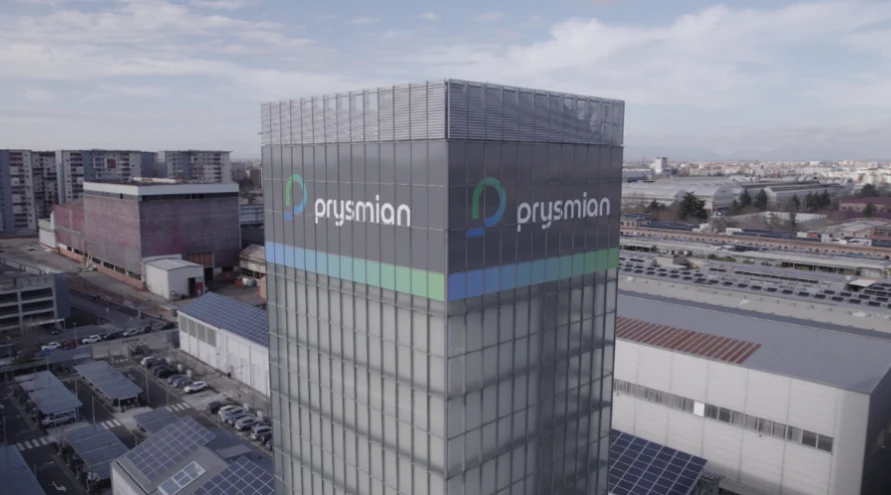
In a move for the industry an Italian cable company named Prysmian S.p.A. Has finished buying a US company called Atkore Inc. For about three billion eight hundred million dollars. That is three billion three hundred million euros.
The buying happened on October 19 2026. This happened after the people who own Atkore agreed and after all the legal rules were followed.
The deal was made on August 2 2026. In that deal Prysmian took all the shares of Atkore. Paid cash for each share.
This deal helps Prysmian be more known in the United States. It also helps Prysmian offer kinds of products than just making cables. Now they can offer conduits, cable systems and metal framing.
The new company will be able to work with customers in data centres, power companies, commercial buildings and industrial areas.
For Prysmian this deal is a move in their plan to go from being a big cable maker to being a full electrical solutions provider.
This deal also shows a trend in the industry where companies are buying other companies that fit well with them. This helps them be stronger in markets that are growing because of work on intelligence, better energy systems and more electricity needs.
Details of the $3.8 Billion Acquisition
Prysmian agreed to buy Atkore with all cash. The deal is worth three billion eight hundred million dollars. That is the same as three billion three hundred million euros.
Every person who owns shares in Atkore got ninety-five dollars for each share they had.
The price was thirty percent higher than the price of Atkore before the deal was announced. That last price was seventy-two dollars and ninety-six cents on July 31 2026.
The deal was signed on August 2 2026.
After the deal was done Atkore became a company that is completely owned by Prysmian. The shares of Atkore no longer trade on the New York Stock Exchange.
This deal ended Atkore’s time as a company that's open to the public. It now is part of the infrastructure business of Prysmian.
The deal gives control of a big US company that makes many electrical products and has a good way to get those products to customers.
It also gives access to customers and big projects in important industries.
Why Prysmian Wanted to Buy Atkore
Prysmian has always been known for making cables systems for moving energy and things that help with phone and internet connections.
Their products are used in places that make power in places that give power to homes and businesses in projects that use energy in places that make things and in places that need internet connections.
Atkore makes kinds of electrical infrastructure.
Their products include things like tubes, cable systems and metal frames that help with building structures.
These products are needed in buildings, factories, power systems and big places where computers work.
By joining the two companies Prysmian can give customers products they need to finish electrical projects.
For example a big computer centre needs more than power cables. It also needs tubes for wires systems to hold cables, metal frames, ways to move power and other things needed for building.
Before customers would get these things from companies.
The new company from Prysmian and Atkore can help customers buy from one place. That helps make the buying easier and gives service.
This plan helps build relationships with customers gives more chances to sell more items and helps make more value from the way products are sold.
So this deal is about giving kinds of electrical solutions instead of just making cables.
Atkores Products Help the New Company
Atkore has kinds of products that fit with what Prysmian already makes.
Atkore makes things like:
- Tubes and channels that protect wires.
- Systems to hold and organize cables.
- Metal frames for building structures.
- Ways to manage cables in places like buildings and computer centres.
- Parts that help with putting the cables in place.
These products are used in areas, like offices, hospitals, factories, power companies and places where people move around.
Atkore has brands that many people know and relationships with people who sell and buy products.
This deal gives Prysmian access to people who build and fix electrical systems.
It also helps the new company offer types of products to customers by combining what they already have.
A big benefit is where the companies are located.
After the deal the new company has over sixty places where they make and send their products in the United States.
This local way of working helps get products to customers makes shipping quicker and helps build better relationships.
For building projects getting parts on time is important because delays can stop the whole project.
This network can help Prysmian give service and be stronger, in the North American market.
AI Data Centres Become a Major Growth Opportunity
One of the strongest strategic reasons behind the acquisition is the rapid expansion of artificial intelligence infrastructure.
Technology companies are investing heavily in data centres to support cloud computing, generative AI applications and high-performance computing systems.
These facilities require substantial electrical infrastructure to distribute power safely and reliably across thousands of servers, networking systems and cooling installations.
As data-centre developments become larger and more complex, demand is increasing for electrical cables, conduits, cable trays and equipment that supports the installation and protection of power systems.
Prysmian's cable manufacturing capabilities and Atkore's electrical infrastructure products create opportunities to serve a wider portion of this growing market.
The combined business can potentially offer more integrated solutions to data-centre developers, electrical contractors and infrastructure operators.
This is particularly relevant in the United States, where investment in AI computing capacity is encouraging the development of large-scale data-centre facilities.
The acquisition could also help Prysmian strengthen relationships with major technology infrastructure customers by offering complementary products through a wider distribution network.
However, the companies will need to maintain competitive pricing, delivery reliability and product quality to convert this opportunity into sustainable revenue growth.
Power Grid Modernisation Strengthens the Strategic Rationale
Beyond AI infrastructure, electricity grid investment represents another important source of long-term demand.
Many countries are investing in the modernisation of electricity transmission and distribution networks to support growing consumption, renewable energy integration and industrial electrification.
The expansion of electric vehicles, renewable power generation and electricity-intensive manufacturing is increasing the need for reliable electrical infrastructure.
Prysmian already has significant expertise in power transmission cables and grid connectivity solutions.
Atkore adds complementary products used in the installation and organisation of electrical systems within buildings, industrial facilities and infrastructure projects.
Together, these capabilities could allow the combined group to participate in a broader range of electricity-related investments.
The opportunity is particularly significant in North America, where ageing infrastructure, data-centre development and industrial investment are supporting demand for electrical equipment.
For Prysmian, the acquisition provides another way to benefit from electrification without depending exclusively on demand for traditional cable products.
The company can now pursue opportunities across a wider range of infrastructure requirements. Expected $150 Million Annual Synergies Prysmian expects the acquisition to generate approximately $150 million in annual run-rate pretax synergies within three years of closing.
These expected benefits are based on opportunities to improve operational efficiency, strengthen purchasing arrangements, optimise distribution and combine complementary commercial activities.
Potential areas of improvement include:
Procurement efficiencies: Combining purchasing requirements could improve negotiations with suppliers and create opportunities for better input costs.
Distribution optimisation: The companies could coordinate their manufacturing and distribution networks to reduce delivery times and improve product availability.
Cross-selling opportunities: Prysmian can introduce Atkore products to its existing cable customers, while Atkore's distributor relationships can create additional opportunities for Prysmian's cable portfolio.
Operational integration: Coordinating manufacturing facilities, logistics and support functions could reduce overlapping expenses and improve operating efficiency.
Product development: Combining engineering expertise could support the development of integrated products designed to improve installation productivity and infrastructure reliability.
Prysmian also expects the acquisition to deliver high-single-digit earnings-per-share accretion in the first full year following closing, before synergies.
The company expects this contribution to increase to double-digit accretion once the targeted synergies reach their full run-rate level.
These are management projections rather than guaranteed financial outcomes. Their achievement will depend on successful integration, customer demand and the actual costs involved in combining the businesses.
Financial Performance Provides Context for the Acquisition
Prysmian's financial performance indicates that the acquisition is taking place while the company is already experiencing strong growth across several business segments.
For the third quarter of 2026, Prysmian reported revenue of €6.417 billion, representing 13.1% organic growth compared with the previous year's corresponding quarter.
Adjusted EBITDA reached €851 million, increasing 32.1% year over year.
For the first nine months of 2026, group revenue totalled €17.656 billion, while adjusted EBITDA reached €2.182 billion.
Its Industrial & Construction division, which includes Encore Wire, generated €2.564 billion in third-quarter revenue, with adjusted EBITDA of €304 million.
This segment has benefited from increasing demand for electrical infrastructure, particularly in North America, where data-centre investment is supporting growth.
Importantly, these third-quarter financial figures do not include Atkore's contribution.
The acquisition closed on October 19, after the September reporting period. Prysmian stated that Atkore would be fully consolidated into its financial results for November and December 2026.
This means the first consolidated financial contribution from Atkore will appear in Prysmian's subsequent reporting period.
Atkore's own financial performance provides additional context. For the nine months ended June 26, 2026, it reported net sales of approximately $2.18 billion, an increase of 4% year over year.
However, adjusted EBITDA declined 17.3% to approximately $218.8 million, reflecting higher input costs that increased more quickly than average selling prices.
This highlights why integration and cost management will be important. While Atkore brings an established portfolio and distribution network, Prysmian will need to improve the acquired business's profitability while capturing the expected synergies.
Leadership and Integration Strategy
Following the completion of the acquisition, Prysmian moved quickly to establish its integration leadership.
On November 4, 2026, the company appointed Brian Moriarty as President of Atkore.
Moriarty also retained his position as Senior Vice President of Industrial & Construction for Prysmian and Encore Wire.
His responsibilities include leading Atkore while overseeing the wider Industrial & Construction organisation.
The appointment is strategically important because Moriarty previously helped manage Prysmian's integration of Encore Wire, following its acquisition.
His experience in commercial leadership, manufacturing and industrial markets is expected to support the integration of the newly acquired business.
Former Atkore Chief Executive Bill Waltz will serve as a strategic adviser to support the transition.
Prysmian's approach is to combine the companies' complementary capabilities while maintaining attention to customers, employees and long-term operational performance.
The company has also indicated that the integration will build on its previous acquisitions, including General Cable, Encore Wire and Channell.
These transactions have provided Prysmian with experience in integrating businesses across different product categories and geographical markets.
However, combining operations on this scale requires careful attention to employee retention, manufacturing coordination, distribution arrangements and customer relationships.
The success of the acquisition will depend on how effectively management can integrate the two businesses without disrupting existing operations.
Competition and Industry Consolidation
The acquisition places Prysmian in a stronger competitive position within the US electrical infrastructure market.
The industry includes major companies supplying cables, electrical conduits, cable management equipment and industrial installation products.
Competitors such as Southwire, Eaton and nVent operate across overlapping parts of the electrical infrastructure supply chain.
These companies compete through product quality, manufacturing capacity, distribution networks, pricing and technical support.
Prysmian's acquisition of Atkore changes the competitive landscape by bringing complementary product categories under one ownership structure.
The expanded portfolio may allow Prysmian to compete for larger infrastructure projects where customers prefer suppliers capable of delivering multiple electrical products.
The deal also reflects a broader consolidation trend in industrial manufacturing.
As investment in AI, electricity networks and infrastructure increases, established manufacturers are seeking greater scale, stronger customer relationships and wider product portfolios.
Larger combined businesses may benefit from improved purchasing power, distribution efficiencies and greater investment capacity.
However, consolidation also increases the responsibility to maintain competitive pricing and reliable customer service.
For Prysmian, successfully integrating Atkore could create a stronger competitor in the North American electrical infrastructure market.
Challenges and Risks Following the Acquisition
Despite its strategic advantages, the acquisition involves several financial and operational challenges.
Integration costs: Combining manufacturing facilities, distribution systems and corporate operations could generate additional expenses during the initial integration period.
Synergy execution: Prysmian's $150 million annual synergy target depends on achieving operational efficiencies and commercial improvements within three years.
Market competition: Established electrical infrastructure manufacturers could respond through pricing strategies, product development and increased investment.
Input cost volatility: Copper, steel, plastics and other industrial materials influence manufacturing expenses. Higher prices could put pressure on operating margins.
Demand fluctuations: A slowdown in data-centre investment, construction activity or electricity infrastructure spending could affect future order volumes.
Financial commitments: The acquisition's $3.8 billion enterprise value represents a substantial investment, making debt management and cash generation important considerations.
Another important challenge involves maintaining the specialised strengths of both businesses.
Atkore has established customer relationships, product brands and technical knowledge across electrical infrastructure markets. Disrupting these strengths during integration could reduce the commercial value of the acquisition.
Prysmian will therefore need to balance operational coordination with the preservation of local market expertise.
Future Outlook: Building a Broader Electrical Solutions Business
The acquisition strengthens Prysmian's ability to participate in several long-term industrial trends.
AI data-centre development is increasing demand for reliable power distribution and electrical installation products.
Electricity grid modernisation is creating opportunities for cable manufacturers and infrastructure suppliers.
Industrial electrification is encouraging investment in manufacturing facilities, commercial buildings and energy-related equipment.
These developments could support demand for both Prysmian's existing products and Atkore's complementary solutions.
The company is also expected to benefit from wider commercial opportunities through its expanded US manufacturing and distribution network.
The first important financial milestone will be the successful inclusion of Atkore's operations in Prysmian's consolidated accounts.
Subsequently, investors will monitor revenue contributions, operating margins, integration costs and progress towards the announced synergy targets.
If the integration proceeds successfully, the acquisition could help Prysmian strengthen its position as a major international supplier of complete electrical infrastructure solutions rather than remaining primarily associated with cable manufacturing.
Conclusion
Prysmian's completion of the $3.8 billion Atkore acquisition represents a major strategic development in the global electrical infrastructure industry.
The transaction combines Prysmian's cable manufacturing expertise with Atkore's established portfolio of electrical conduits, cable management systems and metal framing products.
For Prysmian, the deal provides a stronger position in the United States and expands its exposure to growing markets such as AI data centres, utilities and industrial construction.
The expected $150 million in annual pretax synergies and projected earnings-per-share improvements provide an important financial rationale for the acquisition.
However, achieving these benefits will require effective integration, disciplined cost management and continued investment in customer relationships.
As global electricity demand increases and digital infrastructure expands, the combined business could become an increasingly important supplier within the electrical solutions market.
Nexuswild welcomes factual corrections. Email contact@nexuswild.com with evidence and the article URL.