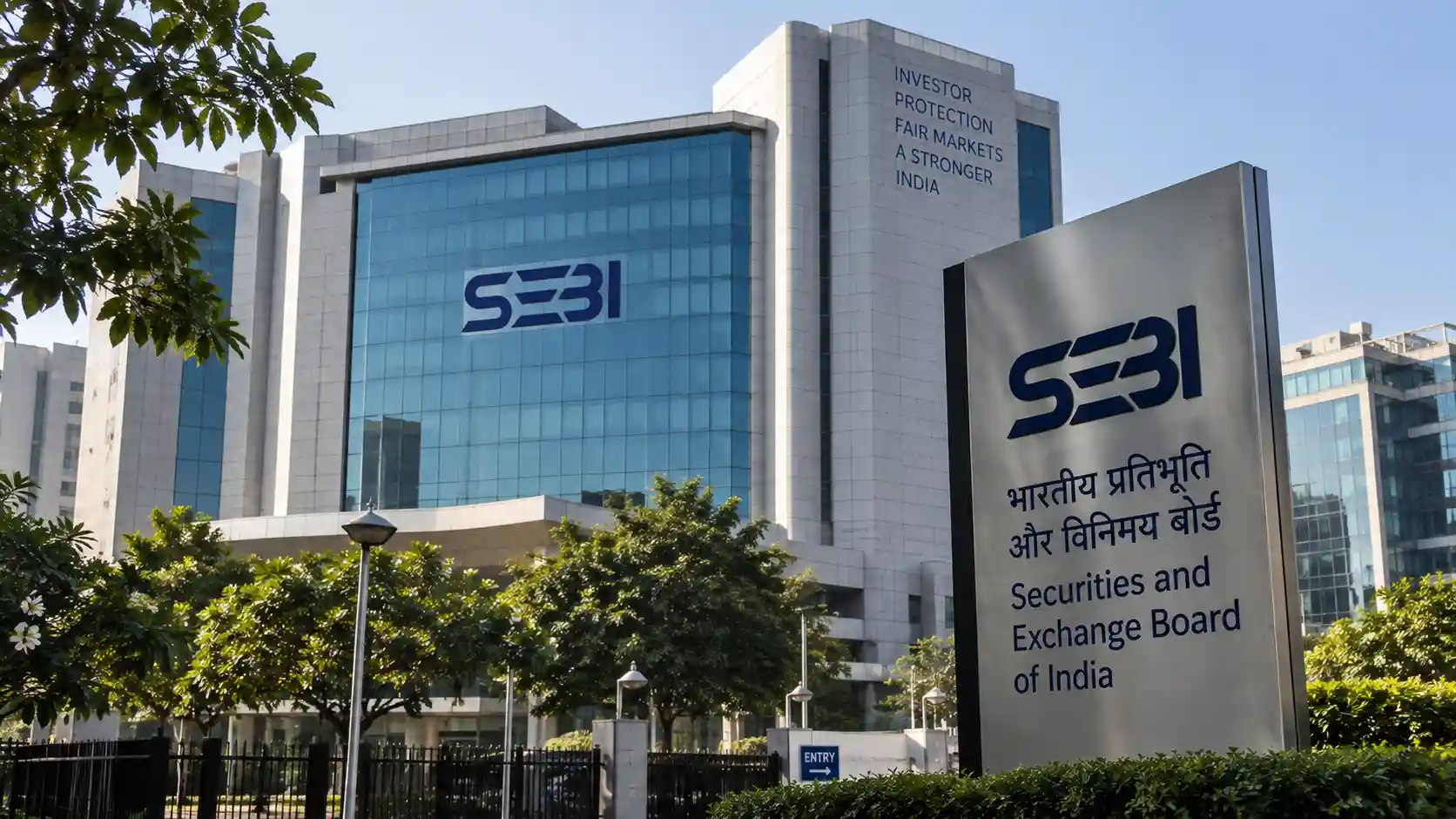

SEBI is redesigning how some of its most difficult enforcement cases can end
India's securities regulator is making one of the most consequential changes to its settlement framework in years.
The Securities and Exchange Board of India approved new Settlement of Administrative and Civil Proceedings Regulations at its September 24 board meeting, replacing the framework established under the 2018 Settlement Proceedings Regulations once the new rules are formally notified and take effect.
The overhaul changes how settlement amounts are calculated, introduces earlier settlement opportunities, creates fast-track routes for smaller and specified cases and opens settlement more explicitly to matters involving misrepresentation of financial statements and diversion or siphoning of corporate funds.
That last change is particularly important for shareholders.
A conventional enforcement proceeding can continue through investigation, a show-cause notice, hearings, a final SEBI order and multiple levels of appeal.
By the time the litigation ends, years may have passed.
If money was allegedly diverted from a listed company, the company's financial position may have deteriorated significantly during that period.
SEBI's new approach attempts to change that equation.
Instead of treating settlement only as a payment made to the regulator, the framework can require diverted funds to be brought back, wrongful gains to be disgorged and remedial or regulatory conditions to be satisfied as part of the settlement.
SEBI Chairman Tuhin Kanta Pandey has described the return of siphoned money as non-negotiable where applicable.
The regulatory theory is simple: shareholders may benefit more from recovering corporate money quickly than from waiting years for a contested proceeding to reach finality.
The new rules were approved on September 24
SEBI's board approved the Securities and Exchange Board of India (Settlement of Administrative and Civil Proceedings) Regulations, 2026 on September 24.
They are intended to replace the SEBI (Settlement Proceedings) Regulations, 2018.
The distinction between approval and legal commencement matters.
The new regulations are scheduled to come into force on the day following the expiry of 30 days from their formal notification.
Until that notification occurs and the commencement period expires, the existing framework continues to govern settlement proceedings.
SEBI first published a consultation paper on the overhaul on August 14 and sought public comments before placing the revised structure before its board.
The regulator said the objective was to make settlement simpler, more predictable and less discretionary while retaining sufficient deterrence against securities-law violations.
Fund diversion can now be addressed through a structured settlement route
One of the most significant provisions explicitly addresses misrepresentation of financial statements and diversion or siphoning of funds.
Under the approved framework, such proceedings can be settled subject to appropriate Remedial and Regulatory Terms, or RRT.
Those terms can include corrective disclosures and the return of diverted funds.
This means a settlement in a fund-diversion matter cannot necessarily be understood as an entity simply paying SEBI and walking away.
The regulatory response can contain several financial layers.
There can be a settlement amount.
There can be disgorgement of wrongful gains.
There can be interest.
There can be restoration of money to the company.
There can be disclosures or governance-related remedial terms.
Those components perform different functions.
The settlement amount is intended to resolve the regulatory proceeding.
Disgorgement removes quantified unlawful economic benefit.
Restitution or bringing back diverted money can restore value to the affected corporate entity.
RRT can address continuing regulatory or governance problems that a monetary payment alone would not solve.
Why faster recovery can matter to shareholders
Consider a listed company from which ₹500 crore is alleged to have been diverted.
If the dispute takes eight years to reach finality, recovery at the end of the process may be far less useful than recovery near the beginning.
Assets can disappear.
Companies can enter insolvency.
Promoters can lose control.
Corporate structures can change.
Records become harder to reconstruct.
The financial condition of counterparties can deteriorate.
Even when a regulator ultimately wins a legal case, collecting the money can become a separate enforcement challenge.
SEBI officials therefore argue that a settlement structure capable of producing earlier restitution can protect investors more effectively in certain cases.
Whole-time member Kamlesh Chandra Varshney said the objective is to get money back into the company with interest while still requiring the settlement amount and applicable remedial terms.
The argument is not that litigation has no value.
It is that enforcement effectiveness should partly be measured by whether investors and listed companies actually recover economic value.
Settlement does not establish guilt
A settlement must be distinguished from an adjudicated finding.
SEBI settlements generally allow proceedings to be resolved without the applicant admitting or denying the alleged violations.
That feature is important in serious cases involving corporate financial statements or alleged fund diversion.
A settlement tells investors that the regulatory proceeding has been resolved on specified terms.
It does not necessarily establish every allegation as a proven fact after a contested hearing.
This distinction should remain clear in company disclosures and financial reporting.
It is also one reason the expanded settlement route may generate debate.
Some investors may prioritize faster recovery and remediation.
Others may consider formal findings of responsibility important in serious corporate-governance matters.
The effectiveness of the new system will depend on whether SEBI can balance both objectives without allowing settlement to become a cheaper alternative to accountability.
Wrongful gains will be separated from the settlement amount
Another major structural change concerns how the financial amount is calculated.
The 2026 framework separates quantified wrongful gains, losses avoided or losses caused to investors from the base settlement calculation.
Where those amounts can be quantified, they are to be disgorged separately.
This is intended to remove what SEBI identified as double counting within the previous methodology.
The distinction can be illustrated simply.
Suppose an entity earned an unlawful gain of ₹20 crore.
That ₹20 crore is conceptually different from the regulatory settlement payment imposed for the violation.
The new system can require the ₹20 crore to be disgorged separately while calculating the settlement amount through a defined penalty-linked formula.
This makes it easier to distinguish between taking away the economic benefit of misconduct and determining the amount required to settle the enforcement proceeding.
SEBI is replacing a complicated formula with a more transparent one
Under the approved structure, the settlement amount is calculated broadly through the formula:
Settlement Amount = Base Amount × (S + R + G + A - M) + Legal Costs.
The Base Amount is linked to the minimum statutory penalty for the relevant securities-law violation, with applicable multipliers depending on the applicant.
S represents the stage of the proceeding.
R represents previous regulatory action.
G reflects the gravity or category of the default.
A represents aggravating factors.
M represents mitigating factors.
The structure is designed to make settlements more predictable.
An entity that attempts to resolve a matter earlier can face a different stage factor from an entity that seeks settlement only after lengthy litigation.
A repeat offender can face a different regulatory-action factor from an entity without a comparable history.
Cooperation and corrective conduct can also affect the calculation through mitigating factors.
The goal is not to eliminate regulatory judgment entirely.
It is to place more of that judgment inside an identifiable framework.
Earlier settlement is deliberately encouraged
Timing is one of the central themes of the overhaul.
SEBI plans to introduce a settlement notice before issuing a formal show-cause notice in applicable cases.
The recipient will generally have 60 days to submit a settlement application.
This creates an opportunity to resolve a matter before a fully adversarial proceeding begins.
The approach has been compared with the U.S. Wells process, although the two systems are not identical.
A U.S. Wells notice generally informs a person that enforcement staff intend to recommend action and provides an opportunity to respond.
SEBI's settlement notice is specifically designed to create an early route toward settlement.
No such pre-show-cause settlement notice is expected where prosecution or an interim regulatory order is contemplated.
That exclusion preserves SEBI's ability to take urgent or more serious action without delaying it through the early settlement process.
Companies will have 90 days after a show-cause notice
The ordinary settlement application window after service of a show-cause notice is also being expanded.
Under the new framework, applicants will receive 90 days rather than the previous 60-day period.
This may appear like a small procedural change.
In complex corporate cases, it can be significant.
A large listed company receiving a detailed regulatory notice may need to review years of accounting records, consult auditors, examine transactions across subsidiaries, obtain legal advice and assess the financial implications of settlement before deciding whether to apply.
A longer filing window may increase the number of entities able to make an informed settlement decision without seeking procedural extensions.
Small cases can move through a fast-track route
SEBI is also introducing a faster settlement mechanism for less complex matters.
One route applies where the calculated settlement amount does not exceed ₹10 lakh.
Eligible cases can move from the Internal Committee directly to a panel of whole-time members rather than being processed through the complete committee structure used for larger settlements.
A second fast-track mechanism can apply to specified categories of violations, including certain disclosure matters.
For those cases, SEBI can specify an amount in a settlement notice and conclude the proceeding after payment and approval through the designated panel.
The objective is to prevent relatively minor cases from consuming the same enforcement resources as complex market manipulation, financial fraud or corporate-governance investigations.
Faster minor settlements could free investigators for larger cases
Settlement reform is partly about resource allocation.
Every regulator operates with finite investigative and adjudication capacity.
If officers spend years processing technical violations with limited market impact, fewer resources remain available for serious cases involving manipulation, insider trading, corporate fraud or investor losses.
Lawyers and market experts have argued that the new formula and fast-track structure could increase settlement rates for smaller cases and free SEBI's adjudication machinery for higher-impact enforcement.
That outcome would depend on whether the simpler routes actually reduce processing times rather than merely adding another procedural layer.
The regulator's eventual implementation data will therefore matter.
A one-time 90-day settlement opportunity will reopen some old cases
The transition to the new framework also includes a one-time opportunity for certain pending proceedings.
For 90 days from commencement of the new regulations, eligible entities that did not previously apply for settlement, or whose earlier applications were rejected, withdrawn or returned under the 2018 regulations, can receive another opportunity to apply.
The window is limited to specified matters that remain pending before SEBI.
Applicants using it will generally face an additional 20% settlement amount.
The provision could cause a temporary increase in settlement applications after the regulations take effect.
It may also allow older disputes to be resolved under the new methodology rather than continuing indefinitely under the existing enforcement track.
Some rejected applications may get another opportunity during appeal
The framework also widens access at later stages.
An application rejected earlier may in specified circumstances be reconsidered at the appellate stage when the original ground for rejection no longer exists.
Such cases are also expected to carry an additional 20% settlement amount.
The policy creates a financial incentive to settle earlier rather than wait until after adjudication or appeal.
That is consistent with the broader formula, in which the stage of proceedings affects the settlement amount.
Early resolution saves regulatory resources.
Late settlement receives less favorable treatment.
Interest makes delayed disgorgement more expensive
The new structure also formalizes interest on disgorgement amounts.
Legal analyses of the approved board framework say that for proceedings pending before SEBI, interest on applicable disgorgement will generally be calculated at 9% annually from the date of violation to the filing of the settlement application.
For other matters that have already reached a final order, the framework provides for 9% annual interest up to the final order and 12% annually thereafter until a settlement application is filed.
Interest is not intended to compound on previously charged interest.
The economic logic is straightforward.
If an entity retained wrongful gains for several years, returning only the original amount would effectively allow it to benefit from the time value of that money.
Interest attempts to neutralize part of that advantage.
Bringing diverted money back is different from disgorgement
The terminology can become confusing in fund-diversion cases.
Suppose a listed company's money is transferred improperly to a promoter-linked entity.
Bringing that money back into the listed company restores an asset that belonged to the company.
Disgorgement, by contrast, is intended to remove wrongful economic gains obtained through securities-law violations.
Depending on the facts, both concepts can be relevant.
The settlement framework therefore gives SEBI flexibility to combine monetary and non-monetary remedies rather than treating every case as a simple penalty calculation.
For ordinary shareholders, this distinction is critical.
A ₹50 crore payment to the regulator does not repair a company whose ₹500 crore was removed.
Returning ₹500 crore to the company can have a direct balance-sheet impact.
The reform could change corporate settlement strategy
Listed companies, promoters, directors and other entities facing SEBI proceedings will now have to evaluate enforcement risk differently.
Under a more predictable formula, legal teams may be able to estimate settlement exposure earlier.
The pre-show-cause notice can force boards to decide whether they want to settle before detailed allegations become the subject of a formal proceeding.
Where diverted funds are involved, the entity may also need to assess whether restitution is financially possible.
For promoters, this could create substantial liquidity requirements.
For independent directors, audit committees and institutional shareholders, an early settlement proposal may also create governance questions about who bears the economic cost.
A company paying a settlement amount from corporate funds is economically different from promoters returning money allegedly diverted from the company.
Boards will need to distinguish carefully between the two.
Disclosure of the new settlement notice remains an open issue
One question has not yet been fully resolved.
Listed companies are subject to material disclosure requirements when certain regulatory actions occur.
SEBI's new settlement notice arrives before a formal show-cause notice.
After the board meeting, whole-time member Kamlesh Chandra Varshney said that because a settlement notice is not itself a show-cause notice, the existing disclosure requirement may not automatically arise, while adding that SEBI would examine the issue.
This could become important for investors.
A settlement notice may indicate that SEBI has reached prima facie findings serious enough to consider formal proceedings.
If investors are unaware of the notice while settlement discussions continue privately, questions could arise about information asymmetry.
On the other hand, requiring disclosure of every preliminary notice could publicize allegations before the recipient has had an opportunity to respond.
SEBI will need to clarify that balance.
Fund-diversion cases are particularly sensitive
Diversion and siphoning allegations are different from routine procedural defaults.
They can involve questions about promoter conduct, related-party transactions, misleading financial statements and corporate assets that should have remained available to public shareholders and creditors.
SEBI has dealt with several high-profile cases involving alleged diversion or misrepresentation in recent years.
Examples include proceedings concerning Reliance Home Finance, LEEL Electricals and other listed entities where the regulator examined whether corporate resources were transferred through related or connected parties.
Each case turns on its own facts and legal findings.
The new regulations are not a judgment on any past or pending matter.
They change the enforcement mechanism available for future eligible proceedings and certain pending cases.
Existing settlements show why terminology needs care
SEBI has already settled proceedings involving entities connected with investigations that included allegations of fund diversion.
For example, in May 2026 four entities linked to the former Indiabulls Real Estate matter paid a combined approximately ₹10.5 crore to settle proceedings arising from an investigation into alleged layered diversion of funds.
That history means it would be too broad to describe every fund-diversion-related settlement as completely impossible under the 2018 framework.
The 2026 overhaul is more accurately understood as creating an explicit and structured route for settlement of financial-misstatement and diversion or siphoning matters, coupled with defined requirements around restitution, disgorgement and remedial terms.
That distinction is important for accurate reporting.
The framework attempts to separate punishment from restoration
The most significant conceptual improvement may be the separation of different regulatory objectives.
Securities enforcement has several purposes.
It punishes violations.
It deters future misconduct.
It removes wrongful gains.
It protects investors.
It attempts to repair continuing governance problems.
One monetary amount rarely performs all of those functions well.
The new settlement framework separates them more clearly.
The settlement amount addresses resolution of the proceeding.
Disgorgement deals with unlawful economic benefit.
Restitution can restore diverted company money.
RRT can require disclosures, governance corrections, trading restrictions or other remedies where appropriate.
This structure gives SEBI more flexibility to design an outcome around the economic harm of a case.
Critics will ask whether serious cases should be settled at all
The overhaul also raises an unavoidable policy question.
Should cases involving alleged financial misrepresentation or diversion of shareholder money be capable of settlement without an admission of wrongdoing?
There are arguments on both sides.
Settlement can produce faster recovery, reduce litigation costs and free enforcement capacity.
It can also impose significant financial and remedial obligations without requiring years of appeals.
But formal adjudication produces public findings that can clarify responsibility, develop securities law and create reputational accountability.
If serious misconduct is routinely settled, critics may worry that wealthy entities can treat enforcement as another financial cost.
The strength of the new framework will therefore depend less on the existence of settlement and more on the terms SEBI demands in important cases.
A settlement that returns all diverted money with interest, removes wrongful gains and imposes meaningful restrictions is economically very different from one involving only a modest payment.
SEBI retains discretion to reject settlement
Settlement is not an automatic right.
SEBI retains authority to consider the nature, gravity and market impact of alleged violations before agreeing to resolution.
Cases involving prosecution or urgent interim measures can also fall outside the pre-show-cause settlement mechanism.
That discretion is important because some cases may have broader market-signalling value that justifies a contested order.
A major manipulation scheme or systemic fraud can establish principles affecting thousands of market participants.
Resolving every case privately would reduce the body of public enforcement precedent.
The regulator therefore has to decide not only whether settlement is economically sufficient but whether public adjudication serves a wider market-integrity purpose.
Predictability could increase the number of settlements
One of the weaknesses of settlement systems is uncertainty.
An entity may be unwilling to abandon litigation if it cannot estimate how much settlement will cost.
SEBI's new formula attempts to provide greater visibility into that calculation.
Lawyers expect that a simpler penalty-linked formula could make settlement more attractive in technical and lower-level violations where previous settlement amounts were considered disproportionate.
More settlements are not automatically evidence of weaker enforcement.
If the regulator collects appropriate amounts faster while redirecting investigative capacity toward serious misconduct, enforcement could become more efficient.
The opposite is also possible if settlement amounts become too low or serious cases are resolved without sufficient remedial conditions.
Implementation will determine which outcome emerges.
Investor protection will ultimately be measured in recoveries
For shareholders affected by alleged fund diversion, the central issue is not the elegance of the regulatory formula.
It is whether money returns to the company.
A final enforcement order declaring misconduct after years of litigation can be important.
But if the assets are no longer recoverable, shareholders may receive little economic benefit.
SEBI's new model places greater emphasis on restoration while a settlement is being negotiated.
If an applicant cannot or will not return diverted funds where SEBI considers that necessary, the settlement route may become unavailable or unattractive.
That gives restoration greater leverage earlier in the enforcement process.
The rules could also accelerate governance repair
Fund diversion is rarely an isolated accounting event.
It can expose weaknesses in boards, audit committees, internal controls, related-party oversight and disclosure systems.
Remedial and Regulatory Terms can potentially address those weaknesses.
A settlement might require corrected disclosures.
It could require specified governance changes.
It could include voluntary debarment or restrictions in appropriate cases.
It can combine those measures with financial payments.
This can make settlement more than a backward-looking penalty.
It becomes a mechanism for changing future conduct.
The new system is not yet operational
Investors should not treat the September 24 board decision as if the new rules already govern every SEBI case.
The regulations still require formal notification.
They are scheduled to become effective only after the specified 30-day period following notification.
Detailed implementation and SEBI's eventual use of the framework will matter just as much as the board approval itself.
The regulator may also need to clarify practical questions including disclosure of pre-SCN settlement notices and how remedial conditions will be calibrated in complex diversion cases.
The real test will come in the first large fund-diversion settlement
The framework is ambitious on paper.
It creates an earlier route to settlement.
It separates wrongful gains from the penalty calculation.
It gives SEBI tools to demand restoration of diverted money.
It applies interest.
It enables remedial conditions.
And it attempts to resolve disputes before years of litigation erode the possibility of meaningful recovery.
The first major corporate case resolved under the 2026 regulations will show how aggressively those tools are used.
If a serious fund-diversion matter ends with substantial money returned to the listed company, wrongful gains removed, interest recovered and governance problems corrected, SEBI will have evidence that settlement can strengthen investor protection rather than weaken enforcement.
If serious cases are instead resolved mainly through modest payments without meaningful restoration, criticism of the expanded settlement route will intensify.
That makes the overhaul more than an administrative reform.
It is a test of a broader enforcement philosophy: whether securities regulators can obtain faster economic remedies for investors without sacrificing accountability for serious corporate misconduct.
Reader questions
Frequently asked questions
What did SEBI change in its settlement rules?
SEBI approved a new 2026 framework with a simpler settlement formula, earlier settlement notices, longer application timelines, fast-track routes, separate disgorgement and explicit treatment of financial-misstatement and fund-diversion cases.
Can fund-diversion cases now be settled with SEBI?
The approved 2026 regulations expressly provide for settlement of cases involving diversion or siphoning of funds, subject to appropriate remedial and regulatory conditions, including bringing back diverted money where applicable.
Does settlement mean diverted money does not need to be returned?
No. SEBI has stated that settlement can require restoration of diverted funds in addition to the settlement payment, disgorgement and other remedial terms.
What is disgorgement in a SEBI settlement?
Disgorgement is the recovery of wrongful economic gains or other quantified benefits associated with a securities-law violation. Under the new framework it is treated separately from the settlement amount.
What are Remedial and Regulatory Terms?
RRT are non-financial or corrective settlement conditions that can include disclosures, return of diverted funds, restrictions or other measures necessary to address the consequences of a violation.
What is SEBI's new settlement formula?
The approved structure is Settlement Amount = Base Amount × (S + R + G + A - M) + Legal Costs, with factors reflecting the stage of proceedings, regulatory history, gravity and aggravating or mitigating circumstances.
Why are wrongful gains calculated separately?
SEBI wants to avoid double counting. Wrongful gains and quantified losses are removed from the base settlement calculation and can instead be recovered separately through disgorgement.
What is the new SEBI settlement notice?
In applicable cases SEBI can issue a settlement notice before a formal show-cause notice, giving the recipient 60 days to apply for settlement.
How long does an entity have to settle after a show-cause notice?
The approved framework increases the application period from 60 days to 90 days after service of the show-cause notice.
What is SEBI's fast-track settlement route?
Eligible matters with a settlement amount of up to ₹10 lakh, along with specified categories of violations, can use a simplified and faster settlement process.
Can previously rejected settlement cases be reopened?
The 2026 framework creates a one-time 90-day opportunity for certain pending cases where an entity did not previously apply or where its application was rejected, withdrawn or returned, generally with an additional 20% settlement amount.
Will SEBI charge interest on disgorgement?
Yes. The approved framework provides for interest on applicable disgorgement amounts, with the rate and period depending on the stage and status of the proceeding.
Does a SEBI settlement mean the company admits wrongdoing?
No. Settlement proceedings generally conclude without the applicant admitting or denying the alleged violations.
How could the new rules help shareholders?
If diverted corporate funds can be returned with interest through settlement earlier than they would be recovered after years of litigation, the company's shareholders may receive an economic benefit sooner.
Are the new SEBI settlement rules already in force?
Not yet. The board approved them on September 24, 2026, but they require formal notification and are scheduled to take effect after the specified 30-day period following notification.
Why could the new framework be controversial?
Some observers may question whether serious allegations involving financial misstatements or diversion should be resolved without a formal finding of wrongdoing. SEBI's challenge will be balancing faster recovery with adequate deterrence and accountability.
Nexuswild welcomes factual corrections. Email [email protected] with evidence and the article URL.