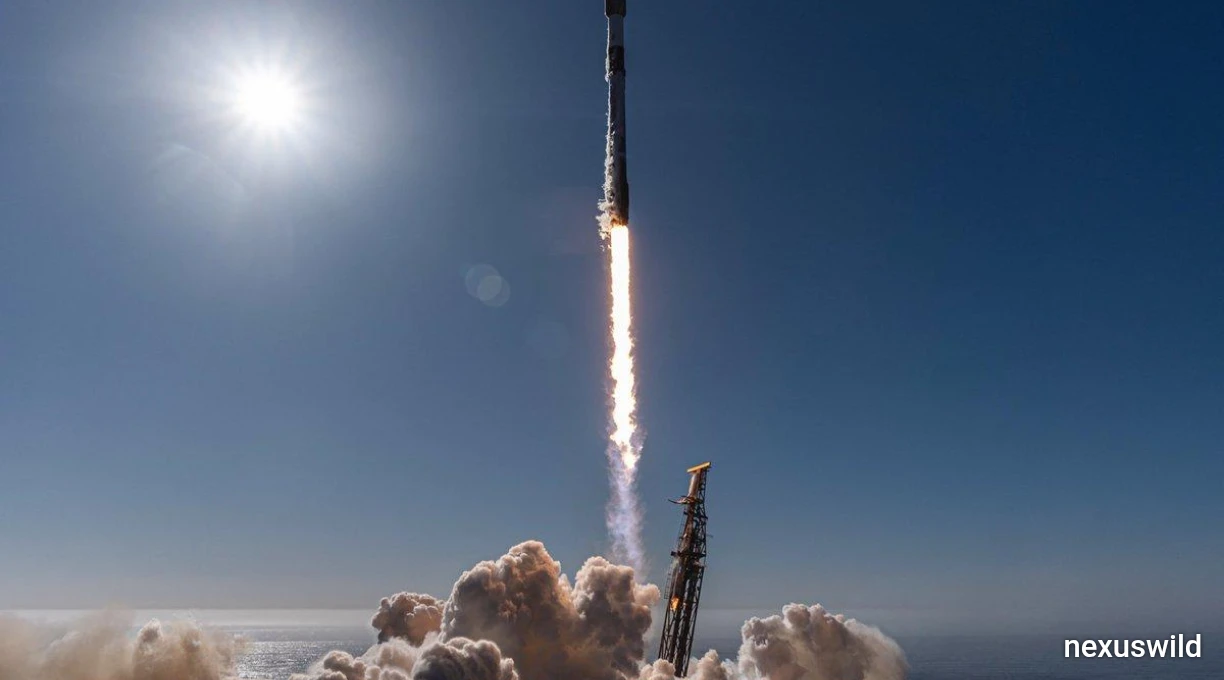

The financial needs of the AI infrastructure have become a significant challenge for SpaceX, as the company has raised $40 billion in debt to buy graphics processing units (GPUs) from Nvidia. Elon Musk made the announcement on October 25, 2026 stating that the debt will be used to cover the purchase of GPUs which should begin in the first and second quarter of 2027.
This deal follows a battle among tech firms for top-of-the-line processors and to expand computing power needed to train and inference AI applications and other data-heavy tasks. It also highlights the benefits that might accrue to those companies with proven revenues and creditworthiness over the specialised providers of infrastructure that are heavily reliant on borrowing.
Why SpaceX Is Raking in $40 billion.
The advanced GPUs are a vital part of the AI infrastructure in today's world. They take care of the numerous mathematical computations needed for training AI models and deploying them at scale. Businesses are spending a significant amount of money on processors, data centres, networking equipment, power systems and cooling hardware, as demand continues to increase.
Musk stated that the $40 billion debt-financing package was for SpaceX to buy GPUs, which the company used to develop its rockets.According to Musk, the $40 billion debt financing was mostly to buy GPUs which SpaceX uses to make its rockets. The financing comes after the company reported earlier this month that it was looking to raise some $40 billion to buy Nvidia chips.
The initial proposal for financing was in terms of bank loans and investment grade debt, Reuters reports. All the final composition, pricing and contractual details of the final package were not clearly available in the first reporting.
The size of the deal reflects the growing significance of financing as a competitive advantage in the world of AI infrastructure. Advanced processors, however, are expensive to obtain and need to be run in computers to generate money.
Starlink and Launch Services are providing financial support.
SpaceX's success in getting the financing to date, he writes, is due to its investment-grade credit rating and "outside-AI data centre" revenue. This includes its satellite Internet service, Starlink, and its commercial rocket operations.
The activities, which are well known, set SpaceX apart from companies whose revenues are driven mainly by renting out computing power for AI developers. Satellite connectivity and launch services will generate further cash flow to fund investment, but will not be without risk, particularly when taking on significant debt.
As reported by Reuters, major credit rating agencies have given SpaceX investment grade ratings in 2026. This rating can enhance a company's ability to secure debt financing and may enable it to secure terms of debt financing more favourable than companies with lower ratings.
However, just because an investment grade does not mean that a company will not have financial troubles. Credit ratings may vary due to changes in the level of debt, operating performance, market conditions and capital needs.
The terms of the $40 billion deal, as well as the financial structure, are still significant factors when investors consider how SpaceX will finance its growing computing ambitions.
The company anticipates shipping its devices equipped with GPUs in 2027.
The money will go mostly towards the delivery of GPUs, slated for the first half of 2027, according to Musk. It's these processors that are meant to 'scale up' the company's computing capabilities as it pursues its activities around AI.
The buying time frame is important as it is not the last step in the ladder of building an AI infrastructure. In addition, companies need to acquire appropriate facilities, electricity, cooling systems and networking capabilities prior to large deployments of GPUs.
Availability of power has become a critical factor in the development of data-centres. While a business may be able to afford and acquire the latest processors, the delays in electrical connections, construction or equipment set-up will delay when the investment starts making money.
The investment marks a major step for SpaceX in terms of investing in AI computing. The ultimate return will be a function of how efficient it is used in the hardware, and how much demand there is for the computing services it provides.
Musk foresees consolidation in the AI cloud service space.Musk says it expects AI Cloud providers to "consolidate.
In a related move, Musk cautioned that “specialized AI cloud services,” also known as neoclouds, may become a victim of a general implosion and consolidation.
Neocloud firms focus on offering computing power that relies on GPUs for AI developers and others. Their business models are often based on high initial costs such as processors and data-centre hardware, and revenue comes from customers as they pay for the use of their processors.
However, Musk suggested that the debt markets had become much less accessible to companies other than AI data centre operators that did not have significant revenues outside of AI data centres. He foretold that numerous providers will find it difficult, but others will survive.
The concern is part of a wider financial struggle plaguing the AI industry. It takes a lot of capital to build the computing infrastructure and it's always hard to predict customer demand, or returns on investment.
Providers with significant borrowing to increase capacity might be at higher risk in the event of slow spending by customers, lower rental prices for GPUs, or higher financing rates. Businesses that have multiple deals with customers that last longer, have diversified revenue and good balance sheets will be less affected by market pressures.
The prediction is not a prediction of the number of companies that will die, it's a business forecast. How much consolidation will occur will be dependent on the future demand, financing options, operating costs and competition.
How the funds are being allocated for the AI sector.How are the funds being distributed in the AI industry?
The deal comes as a reminder of the growing disparity in funding availability between those companies with the big money to finance large infrastructure programmes and those who have little if any of it.
In large technology firms it is often possible to utilize operating cash flow, equity and borrowing to fund hardware purchases. Smaller operators may be more dependent on outside capital and financing, which they face the risk of depending on lender appetite and market conditions.
That doesn't mean that smaller AI infrastructure firms can't thrive. Serviced and specialised providers can remain competitive by doing so in efficient ways, through services that are differentiated, building strong relationships with customers and through discipline in capital allocation.
However it is becoming more important to consider the economics of GPU infrastructure. In addition to the cost of the processors themselves, companies have to take into account the depreciation, electricity, cooling, maintenance and utilisation rates, as well as the cost of financing.
Even as demand for advanced processors is forecast to falter, Nvidia and other chip suppliers have continued to invest in infrastructure, which can aid demand for their products. Future demand, however, will rely on whether the customers can convert computing power into a revenue stream that is sustainable and whether they have to invest more money.
What to Watch Next
Important milestones to track are the additional computing capacity to be deployed and the commercial demand to justify the investment, as well as SpaceX's plans to buy more GPUs during the first half of 2027, and the final terms and conditions for the financing.
Nexuswild welcomes factual corrections. Email contact@nexuswild.com with evidence and the article URL.