The 2026 Strait of Hormuz crisis will likely be remembered as the moment the global energy architecture fractured. When the United States and Israel launched coordinated strikes against Iranian targets in late February 2026, Tehran retaliated by effectively shutting down the world's most critical maritime chokepoint. Overnight, a waterway that typically handled 25 percent of the world's seaborne oil trade and 20 percent of its liquefied natural gas (LNG) became a heavily militarized no-go zone.
The economic shockwaves were immediate. Brent crude shattered the $126-per-barrel mark, resulting in the steepest monthly price hike in modern oil market history. Nearly 2,000 ships were left stranded in the Persian Gulf as insurance premiums skyrocketed. But beneath the headline numbers, the crisis revealed a stark divergence in how the world’s two most populous nations—India and China—weathered the storm.
The Anatomy of a Selective Blockade
Iran did not impose a blind, total blockade. Instead, the Islamic Revolutionary Guard Corps (IRGC) implemented a highly calibrated selective access policy. Vessels linked to the US, Israel, and their allies were explicitly banned, while "friendly nations"—a list encompassing China, Russia, and India—were theoretically permitted to pass.
However, theoretical access meant little in an active warzone. Between mine-laying operations, US-led naval clearing missions like Operation Project Freedom, and a shadowy quasi-toll system imposed by intermediaries, daily transit plummeted from around 130 vessels to just three or four ships a day.
India’s Acute Vulnerability
For India and its immediate South Asian neighbours, the crisis exposed deep, systemic fragilities. While New Delhi managed to keep petrol and diesel prices relatively stable at the pumps through aggressive excise tax cuts, the real bottleneck emerged in the domestic cooking supply chain.
India entered the 2026 conflict with roughly 90 to 92 percent of its liquefied petroleum gas (LPG) imports reliant on the Hormuz route. Compounding this geographic concentration was a glaring lack of a safety net: India’s strategic reserves for LPG covered a mere 1.5 to 2 days of national demand. The resulting supply shock forced emergency rationing of cooking gas and highlighted how profound import dependence remains the Achilles' heel of India's economic security.
How China Kept the Lights On
Across the Himalayas, the narrative was remarkably different. Despite being the world’s largest consumer of imported oil, China absorbed the West Asia shock with surprising resilience. Beijing’s relative immunity was not a stroke of luck; it was the dividend of a decade-long, heavily capitalized strategy to insulate itself from precisely this scenario.
First, China entered 2026 sitting on massive Strategic Petroleum Reserves (SPR) estimated to cover 96 to 120 days of imports, providing a massive buffer that India simply did not possess.
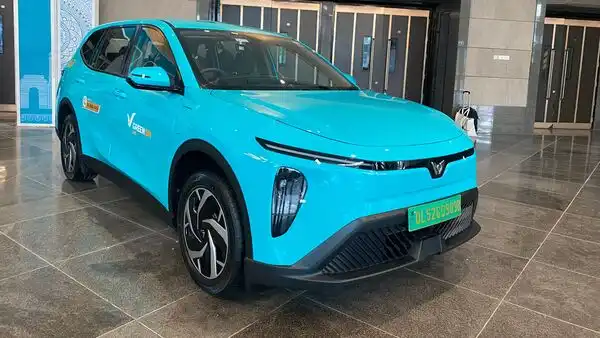
Second, China’s advantage is highly structural. The country’s aggressive, state-backed transition to electric vehicles (EVs) has begun to meaningfully decouple its domestic transport sector from global crude volatility. Furthermore, China leveraged its mature coal-to-chemicals industry to substitute imported petrochemicals. While India scrambled for imported LPG to fuel residential cooking, China utilized domestic coal gasification and an extensive piped natural gas network to keep its economy humming.
Beijing’s geopolitical maneuvering also paid off. Years of cultivating deep, transactional ties with both Riyadh and Tehran—including a 25-year strategic partnership with Iran—ensured China retained premium status on Iran's "friendly nations" list. Furthermore, China has heavily invested in overland pipelines from Russia and Central Asia, creating reliable energy arteries that completely bypass maritime naval blockades.
A Strategic Reckoning for New Delhi
The contrast between the two Asian giants offers a harsh strategic reckoning for India's foreign policy and energy planners. While India has successfully shifted a large portion of its LPG imports to the United States in recent years to reduce dependence on the Gulf, relying on long-haul trans-oceanic shipments during a global maritime crisis remains logistically strained.
The immediate lessons for India are clear. The country’s mitigations must follow a cascading logic. Energy security can no longer rely merely on diversifying the countries it buys from; it must diversify the routes and the actual fuels. This means aggressively building out strategic reserves across all fuel categories, scaling up domestic coal gasification for blending, and accelerating the transition to piped natural gas (PNG) for residential use, which has a much lower Hormuz exposure (53%) compared to LPG.
What Happens Next?
Is China’s advantage permanent? Not entirely. A prolonged closure of the Strait of Hormuz, or an escalation that severely damages Gulf port infrastructure, would eventually burn through even China’s vast strategic reserves. Moreover, Beijing still faces its own maritime vulnerability at the Strait of Malacca—a chokepoint heavily monitored by the US and its allies.
Yet, in the context of the 2026 West Asia crisis, China proved that structural preparation works. For India, the crisis is a mandate to accelerate domestic energy transitions before the next geopolitical flashpoint erupts. Until New Delhi builds the strategic buffers and alternative infrastructures that Beijing now enjoys, the Indian economy will remain dangerously tethered to the volatile waters of the Persian Gulf.
Further reading and useful links
Reader questions
Frequently asked questions
What caused the 2026 Strait of Hormuz crisis?
The crisis was triggered in late February 2026 when the United States and Israel launched coordinated strikes on Iranian targets. In retaliation, Iran's Islamic Revolutionary Guard Corps (IRGC) imposed a selective blockade on the Strait of Hormuz, drastically reducing global shipping traffic.
How did the Strait of Hormuz closure affect India?
India was severely affected because over 90% of its LPG imports pass through the Strait of Hormuz, and its strategic reserves for LPG covered only 1.5 to 2 days of demand. This resulted in supply shocks and emergency rationing of cooking gas, though petrol and diesel prices were stabilized via tax cuts.
Why was China less affected by the West Asia crisis than India?
China had prepared structurally by accumulating massive Strategic Petroleum Reserves (96-120 days), rapidly adopting electric vehicles (EVs), utilizing its domestic coal-to-chemicals industry to replace petrochemicals, and building alternative overland pipelines from Russia and Central Asia to bypass maritime blockades.
Nexuswild welcomes factual corrections. Email contact@nexuswild.com with evidence and the article URL.