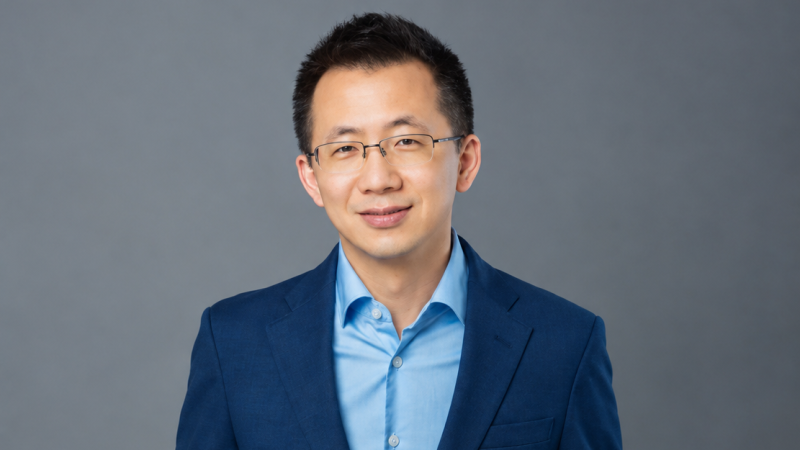

Zhang Yiming, the Chinese entrepreneur who founded ByteDance, the parent company of TikTok, has become Asia's richest person for the first time, according to the Bloomberg Billionaires Index. As of the ranking reported on September 15, 2026, Zhang's estimated net worth stood at approximately 105.5 billion dollars, edging ahead of Indian industrialist Gautam Adani, whose fortune was estimated at about 104.8 billion dollars on the same index. The shift places a 43-year-old technology entrepreneur, whose wealth is drawn almost entirely from his stake in a privately held company, ahead of the industrial and energy conglomerates that have historically dominated Asia's wealth rankings.
This article lays out what is known about the $105.5 billion estimate, including its source and the date it was reported, explains the business factors Bloomberg cited behind the increase, and places the figure in context against other leading fortunes in Asia, while being clear about the inherent uncertainty involved in valuing a stake in a company that is not publicly traded.
The Wealth Update: Source and Date
The $105.5 billion figure comes from the Bloomberg Billionaires Index, a wealth-tracking tool maintained by Bloomberg that estimates the net worth of the world's wealthiest individuals using a combination of public disclosures, private-market transaction data, and, for stakes in private companies, third-party valuation estimates. According to reporting citing the index, Zhang's net worth was calculated at approximately 105.5 billion dollars in the ranking reported on September 15, 2026, placing him ahead of Adani's roughly 104.8 billion dollar estimate on the same date. Some outlets reported the figure with slightly less precision, describing it simply as "more than $105 billion," while Bloomberg's own more specific figure, cited by Gulf News and other outlets tracking the index directly, put the gap between Zhang and Adani at approximately 700 million dollars, or about 0.7 percent, a narrow margin given the scale of both fortunes.
It is important to note that billionaire wealth estimates of this kind are not exact market valuations in the way a publicly traded company's market capitalization is. Because ByteDance remains a privately held company, Bloomberg's estimate of Zhang's stake relies on valuation marks from institutional investors rather than a continuously quoted share price. According to reporting from BigGo Finance, Zhang's net worth rose by more than 12 billion dollars during September 2026 alone, after Bloomberg incorporated updated ByteDance valuations reported by investment firms including BlackRock, Fidelity Investments and T. Rowe Price. That same reporting noted that Bloomberg's calculation applies a 10 percent risk discount to Zhang's stake specifically because of ByteDance's status as a private, rather than publicly listed, company, a methodological detail that reflects the additional uncertainty involved in valuing private holdings compared with publicly traded shares.
Given this, readers should understand the $105.5 billion figure as a current, dated estimate from a specific and reputable wealth-tracking source, Bloomberg, rather than as a fixed or independently audited number. Wealth estimates of this kind are recalculated frequently and can move significantly based on new valuation data, meaning the figure reported here reflects Zhang's estimated position as of mid-September 2026 specifically.
Zhang Yiming's Background
Zhang Yiming was born on April 1, 1983, in Longyan, Fujian province, China. He studied software engineering at Nankai University in Tianjin, graduating in 2005. His early career involved a series of roles at Chinese technology startups before he founded the company that would become ByteDance. According to biographical accounts of his career, Zhang joined the Chinese travel search company Kuxun in 2006 as its fifth employee and was promoted to technical director within roughly a year. In 2008, he briefly worked at Microsoft but reportedly felt constrained by the company's corporate structure and left to join Fanfou, a Chinese microblogging startup often described as a Twitter-like service, which was forced to shut down temporarily in 2009 amid censorship measures related to unrest in China, and which was ultimately unable to compete effectively once it reopened.
Following Fanfou, and around the time travel company Expedia acquired Kuxun, Zhang took over Kuxun's real estate search operations and used them as the basis for his first independent company, a real estate search platform called 99fang.com, which he left after approximately three years.
In March 2012, Zhang founded ByteDance together with Liang Rubo, reportedly working out of a four-bedroom apartment in Beijing. His founding vision centered on using artificial intelligence and machine-learning-driven recommendation algorithms to help mobile internet users find relevant content, at a time when he believed Chinese smartphone users were struggling to find useful information amid mobile apps that mixed search results with undisclosed advertising. This vision reportedly did not resonate with most venture capital investors initially, and Zhang struggled to secure funding until Susquehanna International Group agreed to invest in the fledgling company. ByteDance launched its first product, the Toutiao news aggregation app, in August 2012, and the app attracted more than 13 million daily users within its first two years. Sequoia Capital, which had initially declined to invest, later led a 100 million dollar investment round in ByteDance in 2014, an early signal of the company's growing significance in China's technology sector.
Zhang stepped down as ByteDance's chief executive officer on November 4, 2021, completing a leadership transition that had first been announced in May 2021, and has since focused on his role as chairman of ByteDance's board, where various sources describe him as the company's largest individual shareholder. Reporting from Reuters has previously indicated that Zhang maintains more than 50 percent of ByteDance's voting rights, a level of control common among founders of Chinese technology companies that use dual-class share structures to separate economic ownership from voting power, though the precise current breakdown of his economic stake versus voting control was not specified in the sources reviewed for this article.
ByteDance's Role and Global Business
ByteDance has grown since its 2012 founding into one of the world's largest privately held technology companies, with a portfolio of apps spanning content, entertainment and, more recently, artificial intelligence products. Its flagship offerings include Toutiao, described in company-related materials as the largest general news platform in China, and Douyin, the Chinese short-video platform whose international counterpart, TikTok, has become one of the most widely used social media applications globally. ByteDance's broader app portfolio has, at various points, also included Xigua Video, Resso, Helo and Vigo Video, with the company's platforms collectively reported to span roughly 150 markets and 75 languages.
TikTok specifically became the primary driver of ByteDance's global visibility and user growth over the past several years, competing directly with other major social media platforms for younger users' attention through short-form video content. Company-related materials have previously described ByteDance's stated mission as being "to inspire creativity and enrich life."
More recently, ByteDance has expanded its business focus to include artificial intelligence products, an area that multiple reports covering Zhang's wealth increase specifically tied to the company's rising valuation. According to Gulf News, this AI expansion includes the Doubao chatbot and the Seedance video-generation tool, positioning ByteDance within the broader wave of Chinese technology companies investing heavily in generative AI products alongside their existing consumer platforms.
On the company's financial scale, reporting from BigGo Finance indicated that ByteDance posted revenue of approximately 120 billion dollars in the first half of 2026, an increase of roughly 30 percent year on year, with overseas revenue accounting for more than 30 percent of that total. The same reporting placed the company's net profit for the period at approximately 20 billion dollars, described as down slightly compared with the prior year. These figures, drawn from a single reporting source rather than an official, audited ByteDance financial disclosure, should be understood as reported estimates of the private company's performance rather than confirmed, audited results, consistent with ByteDance's status as a company that does not publish full public financial statements in the way listed companies do.
Factors Driving the Increase in Zhang's Estimated Wealth
The immediate catalyst for Zhang's jump to the top of Bloomberg's Asia wealth ranking was a series of upward revisions to ByteDance's implied valuation by major institutional investors holding stakes in the company. According to reporting citing Bloomberg, Zhang's net worth increased by more than 12 billion dollars during September 2026 alone, following Bloomberg's incorporation of updated valuation marks from investment firms including BlackRock, Fidelity Investments and T. Rowe Price. Because these firms hold positions in ByteDance through private investment vehicles, their periodic internal reassessments of what those stakes are worth feed directly into third-party wealth estimates like Bloomberg's index, even though ByteDance shares are not traded on a public exchange.
Beyond this specific September valuation update, the broader, multi-year trajectory of Zhang's wealth reflects ByteDance's sustained growth as a company, driven by TikTok's continued global user growth and, more recently, by the company's expansion into generative AI products. Bloomberg first began tracking Zhang's fortune in March 2019, when it was estimated at approximately 13 billion dollars. Since that point, his estimated wealth has grown roughly sevenfold to eightfold, depending on the specific comparison period cited across different reports, reaching its current estimated level of 105.5 billion dollars as of mid-September 2026.
It is worth noting that Zhang's wealth trajectory has not moved in a straight line, and various financial publications and data providers have published a range of net worth estimates for him at different points over the past several years, reflecting both real changes in ByteDance's valuation and differences in the estimation methodologies used by different wealth-tracking organizations, such as Forbes compared with Bloomberg. This article relies specifically on the Bloomberg Billionaires Index figure of $105.5 billion as reported on September 15, 2026, as the basis for describing Zhang's current position as Asia's richest person, since that is the specific, dated estimate underlying the reported ranking shift.
How Zhang's Wealth Compares With Other Asian Billionaires
According to the Bloomberg ranking cited in reporting from Gulf News and other outlets covering this wealth shift, the top five richest individuals in Asia as of mid-September 2026 were: Zhang Yiming of ByteDance, China, with approximately 105.5 billion dollars; Gautam Adani of the Adani Group, India, with approximately 104.8 billion dollars; Mukesh Ambani of Reliance Industries, India; Tadashi Yanai of Fast Retailing, the parent company of Uniqlo, Japan; and Masayoshi Son of SoftBank, Japan.
This ranking reflects a notable shift in the composition of Asia's wealthiest individuals. For much of the past decade, the top of Asia's wealth rankings had been dominated by fortunes built in energy, infrastructure, industrial conglomerates and, in Ambani's case, a diversified business spanning petrochemicals, telecommunications and retail. Zhang's ascent to the top spot marks the first time an individual whose fortune is built primarily on an internet platform and artificial intelligence business, rather than physical infrastructure or industrial assets, has led Asia's wealth rankings on the Bloomberg index, according to the reporting reviewed for this article. Reporting from BigGo Finance specifically characterized Zhang as the only individual among Asia's top five wealthiest whose fortune is built on internet platforms and artificial intelligence, framing the shift as symbolic of a broader change in how significant wealth is being generated across the region.
It is worth noting that rankings of this kind have shifted before and are likely to continue shifting, since they depend on frequently updated estimates of both public share prices, in Adani's, Ambani's, Yanai's and Son's cases, and private valuation marks, in Zhang's case. Earlier Bloomberg-based rankings reviewed in the course of researching this article show the top position in Asia's wealth rankings changing hands between Ambani and Adani on multiple occasions in recent years, illustrating that such rankings reflect a snapshot at a specific point in time rather than a fixed or permanent hierarchy. This article does not speculate about how the ranking may change in the future.
Recent ByteDance Developments Relevant to the Valuation
Several recent developments help explain the broader context behind ByteDance's rising valuation and, in turn, Zhang's increasing estimated wealth. The company's expansion into generative AI products, including the Doubao chatbot and the Seedance video-generation tool, represents a strategic diversification beyond its original content and social media platforms, positioning ByteDance within the broader wave of Chinese technology companies investing heavily in competitive AI products. According to the revenue and profit figures reported by BigGo Finance for the first half of 2026, ByteDance's overseas revenue, accounting for more than 30 percent of its roughly 120 billion dollar first-half total, indicates that the company's international operations, including TikTok's global user base outside China, continue to represent a substantial and growing share of its overall business.
Coverage of Zhang's wealth increase has also placed it against the backdrop of TikTok's history of regulatory scrutiny, particularly in the United States, where the platform faced several years of political and regulatory pressure over national security concerns tied to its Chinese ownership. One report characterized this period succinctly, noting that Washington had spent roughly three years attempting to restrict or force a sale of the app before Zhang's fortune reached its current scale, framing his wealth growth as having occurred despite, rather than because of, this sustained regulatory pressure. This article does not take a position on the merits or outcome of that regulatory history, noting only that it forms part of the documented backdrop against which ByteDance's valuation and Zhang's estimated wealth have continued to grow.
Distinguishing Personal Wealth From Company Valuation
Throughout this report, it is important to maintain a clear distinction between Zhang's personal estimated net worth, the figure discussed as $105.5 billion, and ByteDance's overall company valuation, which would be a larger figure reflecting the total estimated worth of the company across all its shareholders, not just Zhang's individual stake. Bloomberg's $105.5 billion estimate for Zhang specifically reflects the calculated value of his personal holdings in ByteDance, adjusted for the private-company risk discount described earlier, rather than the company's total valuation. This article has not identified a single, precisely dated, and independently confirmed figure for ByteDance's total company valuation as of September 2026 that would allow for a direct company-level comparison, and readers should not assume that Zhang's personal wealth figure can be used to directly back out ByteDance's total valuation without knowing his exact percentage ownership stake, which was not specified with precision in the sources reviewed.
Conclusion
Zhang Yiming's rise to become Asia's richest person, with an estimated net worth of $105.5 billion according to the Bloomberg Billionaires Index as of September 15, 2026, reflects both a specific, recent upward revision in ByteDance's private-market valuation by major institutional investors and the company's longer-term growth since Zhang founded it in 2012, driven by TikTok's global expansion and, more recently, by ByteDance's investment in generative AI products including its Doubao chatbot and Seedance video-generation tool. His fortune, built almost entirely on a stake in a company that remains privately held, has grown from approximately 13 billion dollars when Bloomberg began tracking it in March 2019 to its current estimated level, surpassing Gautam Adani's roughly 104.8 billion dollar fortune by a narrow margin on the same index. As with any wealth ranking based on private-company valuations, this figure represents a specific, dated estimate rather than a fixed or independently audited amount, and it sits within a broader Asian wealth landscape that includes Adani, Ambani, Yanai and Son among the region's other leading fortunes as of the same reporting period.
Further reading and useful links
Reader questions
Frequently asked questions
What is Zhang Yiming's estimated net worth?
According to the Bloomberg Billionaires Index reported on September 15, 2026, Zhang Yiming's estimated net worth stood at approximately $105.5 billion.
Whom did Zhang Yiming surpass to become Asia's richest person?
Zhang Yiming surpassed Indian industrialist Gautam Adani, whose fortune was estimated at approximately $104.8 billion on the same date.
What drove the recent increase in Zhang Yiming's wealth?
The increase was driven by upward valuation marks for ByteDance by institutional investors, including BlackRock, Fidelity Investments, and T. Rowe Price, alongside ByteDance's expanding revenue and investments in generative AI products.
Who are the top five richest people in Asia according to this ranking?
The top five individuals on the index were Zhang Yiming (ByteDance), Gautam Adani (Adani Group), Mukesh Ambani (Reliance Industries), Tadashi Yanai (Fast Retailing), and Masayoshi Son (SoftBank).
Nexuswild welcomes factual corrections. Email [email protected] with evidence and the article URL.