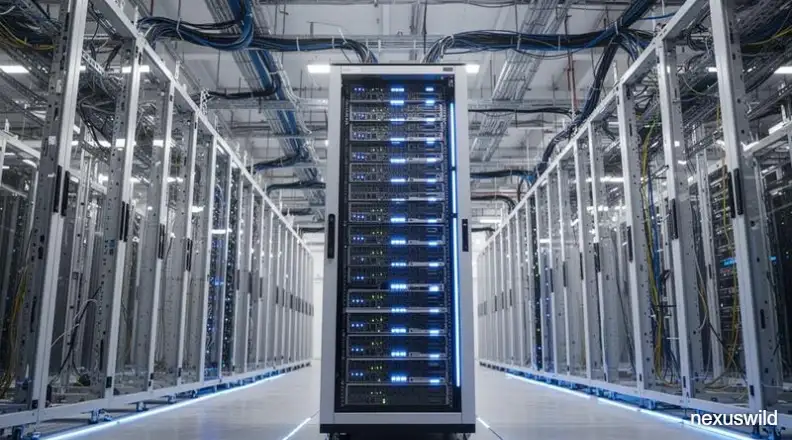

The global artificial intelligence investment boom is entering a demanding phase. Technology companies, cloud providers and semiconductor manufacturers continue to commit sums to data centres, advanced processors and computing infrastructure. However as spending accelerates investors are asking a fundamental question: how quickly can these investments generate sustainable profits?
Artificial intelligence has become one of the important drivers of corporate investment and financial market expectations. Major technology companies are expanding computing capacity to support sophisticated AI models, enterprise applications and cloud-based services. Semiconductor manufacturers, equipment suppliers, electricity providers and construction businesses are also benefiting from the demand created by this expansion.
Yet strong demand for AI infrastructure does not automatically translate into returns for every company involved. Building and operating large‑scale data centres requires capital while the commercial benefits of AI applications may take longer to materialise.
This gap between investment and financial returns is becoming an issue for global markets. Investors are no longer evaluating technology companies on their ability to expand AI capacity. They increasingly want evidence that spending can produce recurring revenue improve operating efficiency and support free cash flow.
Nearly $1 Trillion in AI Spending Raises the Stakes
The scale of investment illustrates why the issue matters. J.P. Morgan Global Research estimated in October 2026 that global AI‑related capital expenditure could reach $900 billion during the year. Its longer‑term projections suggest that cumulative global AI capital expenditure could reach $5.5 trillion by 2030.
The five major US hyperscalers, Amazon, Alphabet, Meta, Oracle and Microsoft are collectively expected to spend around $900 billion in 2026 according to the research firm’s estimates.
These investments are directed towards expanding data centre capacity purchasing graphics processing units developing networking infrastructure and securing the electricity required to operate increasingly powerful computing systems.
The spending also supports an industrial ecosystem. Semiconductor companies supply processors and memory equipment manufacturers provide hardware and construction and energy businesses help build and operate data centre facilities.
For suppliers the investment cycle has already created commercial opportunities. However the financial position of companies financing the infrastructure is more complicated.
The largest technology companies must balance the cost of expanding capacity against the revenue they can generate from cloud computing, AI subscriptions, enterprise contracts and other commercial services.
If demand continues to grow the investments could create long‑term advantages. If customer adoption develops slowly than expected however companies could face under‑used infrastructure, rising operating expenses and pressure on returns.
Revenue Growth Is Encouraging. The Financial Picture Is Mixed
There are signs that AI investments are generating meaningful commercial activity.
Cloud computing has become one of the channels through which technology companies can monetise AI demand. Businesses need computing capacity to train models run AI applications, store data and integrate automated systems into existing operations.
J.P. Morgan’s October research highlighted cloud revenue growth among major providers. Its analysis reported growth of 37 % for Amazon Web Services 43 % for Microsoft’s Azure business and 82 % for Google Cloud using the latest reporting periods available in its assessment.
The research also pointed to expanding contracted revenue suggesting that some providers have secured substantial customer commitments.
These figures offer evidence that AI‑related infrastructure is supporting commercial demand. They also help explain why technology companies continue to invest despite the cost of expansion.
However revenue growth alone does not establish whether an investment is profitable. Companies must also account for the cost of electricity, hardware, maintenance, staffing, financing and depreciation.
A cloud division can report sales while the parent company experiences pressure on overall cash flow because it is spending heavily to build additional capacity.
This distinction is important for investors. The central question is not simply whether customers are buying AI services. Whether the revenue generated is sufficient to cover the full cost of providing them and deliver an attractive return on invested capital.
Free Cash Flow Becomes a Critical Measure
Free cash flow is emerging as one of the closely watched indicators of the AI investment cycle.
It represents the cash a company generates after accounting for capital expenditure. Strong free cash flow gives businesses flexibility to repay debt distribute dividends buy back shares or fund additional projects without relying heavily on external financing.
When capital expenditure rises faster, than operating cash flow that flexibility can decline.
A July 2026 analysis of US hyperscalers highlighted the scale of this challenge. Estimates suggested that their combined capital expenditure could exceed the cash flow they generate by 2027. The analysis also identified growing pressure on companies as infrastructure investment accelerated.
This does not necessarily mean that AI investment is financially unsustainable. Large infrastructure projects often require upfront spending before they begin generating their full commercial returns.
However prolonged pressure on cash generation can change how investors evaluate a company. Businesses may need to borrow more issue shares or reduce other financial commitments to maintain their investment programmes.
The financing mix therefore matters much as the headline spending figure.
Companies with balance sheets and established cash‑generating businesses may be better positioned to absorb temporary pressure. Businesses with financial flexibility could face greater risks if borrowing costs rise or customer demand disappoints.
Depreciation Could Reduce Future Profit Growth
Another challenge is the long‑term accounting cost of infrastructure investment.
Data centres, servers, networking equipment and specialised processors are capital assets. Their costs are generally recognised over time through depreciation than being charged entirely in the year they are purchased.
As technology companies build infrastructure depreciation expenses can increase significantly.
This creates a mismatch between the timing of investment and its impact on reported profitability. A company may initially benefit from demand for new computing capacity but the depreciation associated with that equipment can weigh on operating income in subsequent years.
Goldman Sachs Research highlighted this issue in its September 2026 analysis of AI investment and corporate earnings. It estimated that AI‑related investment was responsible for half of S&P 500 earnings‑per‑share growth in 2026.
The research also warned that the contribution from AI investment could fade as capital spending growth slows and depreciation charges increase. By 2028 the accounting burden could offset the earnings contribution from further AI investment according to its projections.
This does not mean AI will stop creating value. Rather it suggests that the early financial benefits of infrastructure spending may become harder to sustain unless companies generate revenue and productivity improvements.
For investors the distinction between short‑term earnings growth and long‑term profitability will become increasingly important.
The Risk of Uneven Returns Across the AI Industry
The AI investment cycle is creating opportunities across industries but the benefits are not distributed equally.
Semiconductor manufacturers and infrastructure suppliers can earn revenue when technology companies purchase equipment. Cloud providers generate income by selling computing capacity and related services. Businesses developing AI applications meanwhile must persuade customers that the technology delivers value to justify subscription fees or implementation costs.
These business models carry financial risks.
Hardware suppliers may benefit from demand during periods of rapid infrastructure expansion but they can also be exposed to changes in purchasing cycles, competition and technology transitions.
Cloud providers must manage the cost of maintaining infrastructure while competing for enterprise customers. AI application developers face another challenge: converting user interest into recurring revenue and profitable customer relationships.
The important question is whether spending across the industry is supported by genuine end‑user demand.
If businesses continue adopting AI tools and paying for productivity improvements the investment cycle could support a broad range of profitable services. If adoption remains concentrated among a number of large technology companies some parts of the market could become more vulnerable to a slowdown in spending.
This is why investors are increasingly examining the relationship between infrastructure suppliers, cloud providers and the businesses ultimately purchasing AI services.
Corporate Customers Must Demonstrate Real Productivity Gains
The long‑term commercial case for AI depends heavily on adoption beyond the technology sector.
Banks, manufacturers, retailers, healthcare organisations, logistics companies and professional service providers are exploring AI applications to improve operations and reduce costs.
Potential uses include automated customer support, software development assistance, document processing, fraud detection, predictive maintenance and supply‑chain management.
However introducing AI systems can involve expenses. Businesses may need to purchase computing capacity integrate software with existing systems train employees and establish data security controls.
Some projects may deliver efficiency improvements while others require years of investment before producing measurable financial benefits.
For customers the decision to expand AI spending will depend on whether the technology produces tangible improvements in revenue operating costs or employee productivity.
This creates a layer of pressure, for AI providers. They must demonstrate that their products solve business problems than simply offering new technological capabilities.
Companies that can show measurable returns for their customers may build stronger recurring revenue streams. Providers that cannot prove value could face pricing pressure as competition grows.
Investors Are Becoming Selective
The shift toward profitability is also changing how the financial markets view technology companies.
In the days of the AI boom news about new data centres, chip purchases and infrastructure partnerships drew a lot of attention. Investors were ready to give value to the idea that AI demand would grow fast.
Now that spending has reached record levels investors are demanding more from the results.
Goldman Sachs’ October 30 review of the third‑quarter US earnings season said that earnings growth stayed strong even though the pace of improvement might slow. It also pointed out the huge capital spend by hyperscalers and the pressure that infrastructure costs can put on cash flow.
The problem is not that investors have lost faith in intelligence. They are simply getting better at telling the difference between companies that benefit from investment activity and those that can turn that activity into lasting earnings.
This could widen the gap in market performance across the technology sector.
Businesses with cloud revenue, high customer retention, disciplined capital allocation and clear profitability targets may be better positioned than companies that rely mainly on future demand expectations.
For shareholders the ability to generate cash and the return on invested capital may become as important as revenue growth and market share.
What Happens Next?
The next phase of the AI investment cycle will hinge on whether commercial demand keeps up with infrastructure expansion.
Several developments will be crucial for investors and corporate leaders.
First cloud revenue growth must justify spending on data centres and computing capacity. Strong customer demand and expanding contracted revenue would show that infrastructure investments are being used wisely.
Second companies must show improved cash flow. Investors will watch whether operating cash generation can eventually match rising capital expenditure.
Third AI adoption outside the technology industry will be critical. Wider use across businesses could build a customer base and reduce reliance on a small group of hyperscalers.
Finally companies must prove that AI applications improve productivity and profitability. Measurable cost savings, extra revenue and higher operating margins would strengthen the long‑term case for continued investment.
Energy availability, financing costs, hardware supply and regulatory requirements will also shape the speed and cost of infrastructure expansion.
A New Test for the AI Economy
Artificial intelligence remains a technological and economic opportunity but the financial expectations around the industry are changing.
The huge investment in computing infrastructure has already created revenue opportunities for cloud providers, semiconductor manufacturers and other suppliers.. The next stage will require companies to prove that these investments can generate sustainable returns not just rely on endless capital spending.
For technology leaders the challenge is to balance expansion with discipline. For customers it is to turn AI adoption into measurable business improvements. For investors it is to spot which companies can convert demand into lasting profitability.
The AI boom is now facing a mature financial test. Its long‑term success will depend not on how much companies spend or how powerful their systems become but, on whether the economic value created is large enough to justify the cost.
Nexuswild welcomes factual corrections. Email contact@nexuswild.com with evidence and the article URL.