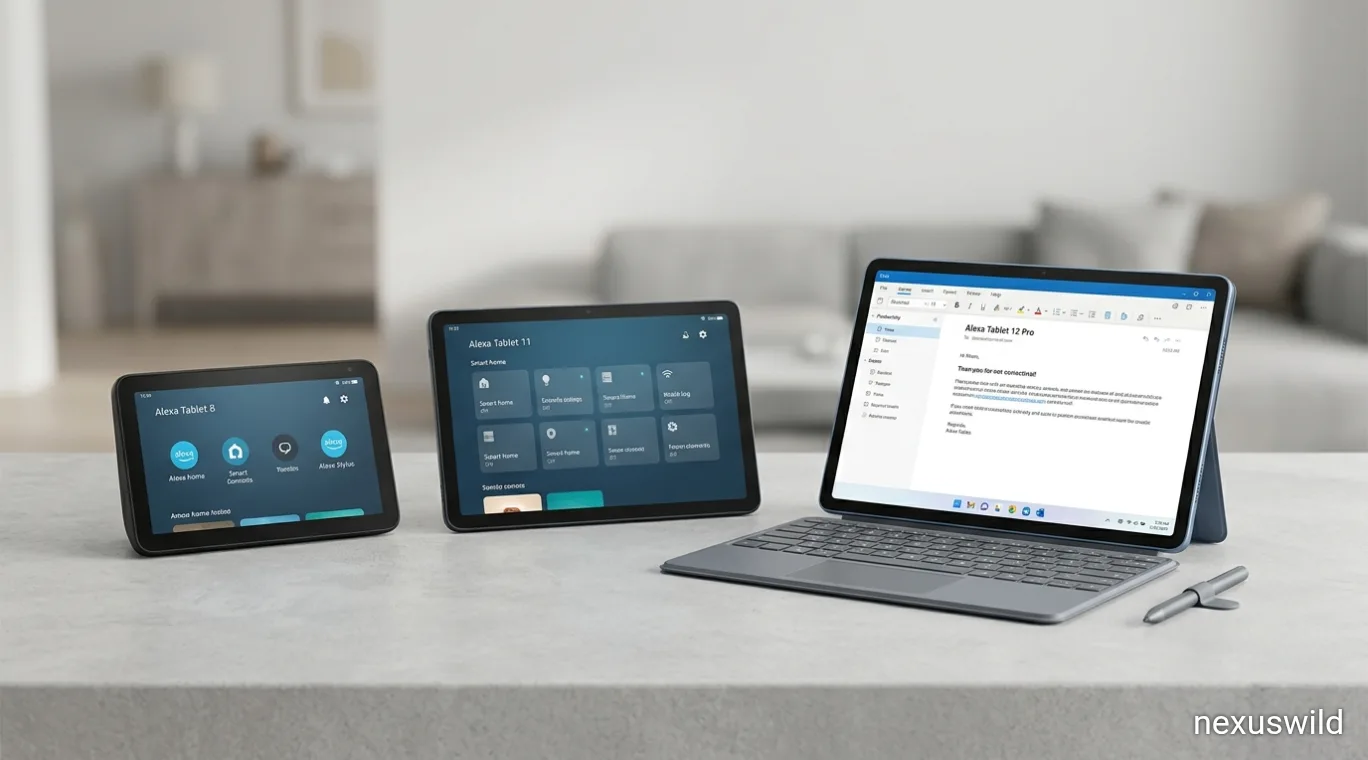

Amazon is preparing to replace its familiar Fire tablet branding with a new Alexa-branded lineup that brings Google-certified Android software and access to the Google Play Store, according to a report published by Ars Technica on October 8, 2026. The reported range includes three devices: the Alexa Tablet 8, Alexa Tablet 11, and premium Alexa Tablet 12 Pro. With redesigned aluminum bodies, updated hardware and deeper integration with Amazon's AI assistant, the tablets represent a substantial departure from the company's traditional approach to affordable Android-based devices. The most significant change is software. Earlier Fire tablets relied on Amazon's customised Fire OS and the company's own app marketplace rather than Google's standard Android services. The reported transition would give customers access to the Play Store and a broader selection of familiar Android applications. Amazon moves beyond the Fire tablet era For years, Amazon's Fire tablets have competed primarily on affordability and integration with the company's digital services, including Prime Video, Kindle, shopping and Alexa. However, the company's software approach created a limitation for customers who wanted access to Google's applications and services without installing unofficial software or relying on workarounds. According to Ars Technica, the new Alexa tablets will run Google-certified Android, including the Google Play Store. That would allow users to download compatible applications directly rather than depending exclusively on Amazon's app marketplace. The change could make the devices more attractive to people who already use Google's ecosystem for productivity, entertainment and communication. It also gives Amazon a different competitive position. Instead of relying predominantly on its own software environment, the company can combine mainstream Android compatibility with its shopping services, content offerings and AI assistant. Nevertheless, access to Android applications does not guarantee that every application will be optimised for a tablet's larger screen. The quality of the available experience will still depend on individual developers and how their applications adapt to different display sizes. Three tablets target different budgets The reported lineup covers entry-level and premium segments. The Alexa Tablet 8 is expected to start at $230, while the Alexa Tablet 11 reportedly starts at $330. Both feature aluminum unibody designs and displays with a 16:10 aspect ratio, a format suited to video playback and general entertainment. According to Ars Technica, these models use MediaTek's budget-oriented 8189 processor. Although they are positioned below the premium model, the updated hardware is intended to improve on previous-generation Fire tablets. The flagship Alexa Tablet 12 Pro reportedly starts at $500 and targets users who want more screen space and performance for multitasking. Its listed specifications include a MediaTek Dimensity 8400 processor, 8GB of RAM and 128GB of storage. The device is also reported to feature a 12-inch-class display with a resolution of 2800 × 1840 pixels, a 120Hz refresh rate and peak brightness of 500 nits. Unlike the smaller models, the 12 Pro uses a 3:2 aspect ratio. That taller format can provide additional vertical space for documents, browsing and applications displayed side by side. Amazon is also reported to offer a matte-display upgrade for an additional $50, alongside a keyboard priced at $150 and a stylus priced at $90. These accessories could make the premium model more useful for note-taking, writing and productivity. However, its practical value will depend on software support, typing comfort and how well Android applications take advantage of the larger screen. Alexa+ takes centre stage Although the reported transition brings Google services to Amazon's tablets, Alexa+ remains central to the experience. Users will reportedly be able to activate Amazon's AI assistant using the Alexa wake word, ask questions and receive recommendations. The assistant is also described as being able to use on-screen context when responding to requests. This could make the tablets more useful for tasks such as finding information, understanding displayed content and navigating Amazon's services. The integration also creates a commercial opportunity for Amazon. Product recommendations can connect conversations with the company's shopping platform, potentially making it easier for customers to discover and purchase items. At the same time, users should understand how contextual features operate and review the device's privacy settings before allowing an assistant to access information displayed on the screen. Because the tablets reportedly support the Google Play Store, customers could also install compatible AI applications, including Google's Gemini, alongside Amazon's own assistant. The resulting experience would combine Amazon's services with a broader Android software environment rather than restricting customers to a single company's applications. Pricing puts Amazon against Apple The reported prices move Amazon's new tablets beyond the company's traditional budget positioning, particularly at the premium end. Ars Technica compared the lineup with Apple's tablet range, noting that the iPad mini starts at $600, the iPad Air at $750 and the base iPad at $450, according to the publication's October 8 report. At $230, the Alexa Tablet 8 would offer a lower entry price than those Apple options. The $500 Alexa Tablet 12 Pro, meanwhile, would compete on a combination of screen size, hardware specifications and Android flexibility. Price alone, however, will not determine which device offers better value. Buyers will also need to consider software support, display quality, battery life, accessory costs and long-term updates. Amazon's established retail presence and integration with its services could help the new tablets attract customers. Yet the company will still need to demonstrate that its software experience justifies the move into more expensive devices. Availability and what comes next According to Ars Technica, the new tablets were available for preorder at the time of its October 8 report, with shipping scheduled to begin on October 14, 2026. Those dates and regional availability should be confirmed through Amazon's official product listings before publication. The transition raises a broader question about Amazon's hardware strategy: whether the company can preserve the affordability and simplicity associated with Fire tablets while delivering the flexibility customers expect from mainstream Android devices. The combination of Google Play access, updated hardware and Alexa+ integration gives Amazon a new proposition in a competitive market. Its success will depend on how reliably the tablets run everyday applications, how long they receive software support and whether customers consider the premium models worth their prices. For existing Fire tablet users, the change could offer a more straightforward path to Google's app ecosystem. For prospective buyers, the key consideration will be whether Amazon's new tablets deliver a sufficiently complete Android experience to compete with established alternatives. Sources Original reporting: Ars Technica, published October 8, 2026. The supplied article is the basis for the reported product specifications and pricing. Amazon official website: https://www.amazon.com/ Amazon devices and tablets: https://www.amazon.com/tablets Verification note: The original Ars Technica article is the primary reference for the claims in this report. Amazon's official announcements and product listings should be checked independently to confirm the models, specifications, prices and shipping dates before publication.
Nexuswild welcomes factual corrections. Email contact@nexuswild.com with evidence and the article URL.