
AMD Introduces Helion AI Rack for Agentic Workloads
AMD has introduced Helion, an open rack-scale infrastructure blueprint designed to support the next phase of artificial intelligence, in which AI agents carry out multi-step tasks, use software tools and coordinate calls to different models.
Announced on October 12, 2026, the platform gives cloud providers and enterprise customers a framework for configuring computing resources around the demands of agentic AI. AMD said the design supports both CPU-only racks for large-scale deployments and integrated systems that combine central processing units with graphics processing units.
The company is developing the platform with hardware and infrastructure partners, with Helion rack configurations planned to become available in November 2026. AMD also intends to contribute the specification to the Open Compute Project, an industry organisation that develops open standards for data-centre hardware.
The announcement comes as technology companies look beyond the training of large AI models and focus increasingly on the infrastructure needed to run those models reliably and economically at scale.
Why agentic AI needs a different infrastructure approach
Traditional AI applications often respond to a single prompt or perform a narrowly defined task. Agentic systems can work through several steps, call external tools, retrieve information, execute code and make repeated requests to one or more AI models before completing a task.
That creates a different pattern of computing demand. A system may need substantial CPU resources to coordinate agents and execute software, alongside GPU acceleration for model inference. The balance varies depending on the application, the size of the models involved and how frequently the agents interact with them.
For example, an enterprise coding agent might inspect a software repository, generate code, run tests and revise its output. A business workflow agent could retrieve documents, query internal systems and prepare a report. These activities can involve both general-purpose computing and AI acceleration.
AMD's Helion design is intended to let customers select infrastructure configurations suited to these requirements instead of assuming that every agent workload needs the same combination of processors.
Two configurations, different workloads
AMD outlined two examples of how Helion could be deployed.
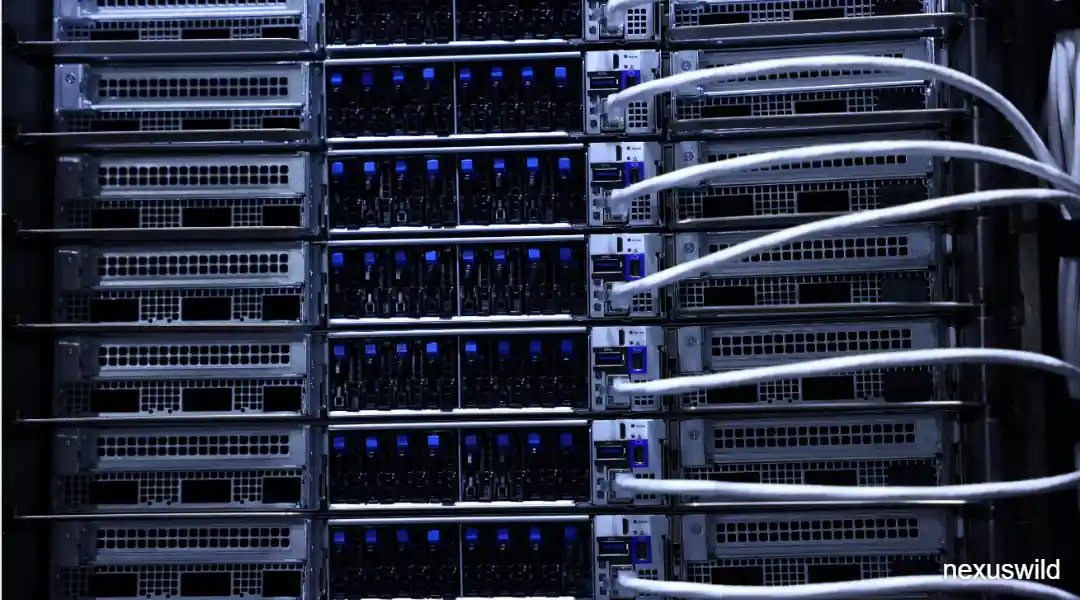
One is a CPU-only rack built around its sixth-generation EPYC processors. AMD says this configuration can support up to 32,768 CPU cores and is designed for hyperscale customers that need dedicated capacity to execute agents and connect them to separate infrastructure for AI model inference.
The second is an integrated rack that combines AMD EPYC CPU nodes, AMD Instinct MI350P GPU nodes and general-purpose computing resources. This arrangement is intended to bring agent execution and AI acceleration together in one platform for enterprise deployments.
The company also says the blueprint can support air-cooled and liquid-cooled designs. That flexibility matters because data centres differ in their power availability, cooling systems, physical layouts and operational requirements.
These configurations are examples of the platform's intended flexibility, not confirmation that every system has already been deployed commercially. AMD said its Helion rack configurations remain under development with ecosystem partners.
An open blueprint rather than a single fixed server
A central feature of Helion is its open-design approach. AMD is positioning the platform as a specification that manufacturers and infrastructure partners can adapt, rather than a single fixed server configuration sold identically to every customer.
The company plans to submit the specification to the Open Compute Project for further development and adoption. Open hardware standards can give operators more choices among system manufacturers and make it easier to adapt infrastructure to existing data-centre designs.
AMD named several companies working with it on the ecosystem, including Dell Technologies, Cisco, Hewlett Packard Enterprise, Lenovo, Supermicro, Foxconn and Wiwynn. Their roles vary, with work spanning system integration, networking, cooling and rack-level deployment.
An open blueprint does not automatically guarantee that components from different vendors will work together without additional engineering. Software compatibility, security, validation and support remain important considerations for customers building production systems.
Still, the model could appeal to organisations that want to tailor their AI infrastructure without committing to one rigid hardware design.
Helion and Helios serve related but distinct roles
The name Helion is similar to AMD's existing Helios rack-scale AI platform, but the two should not be confused.
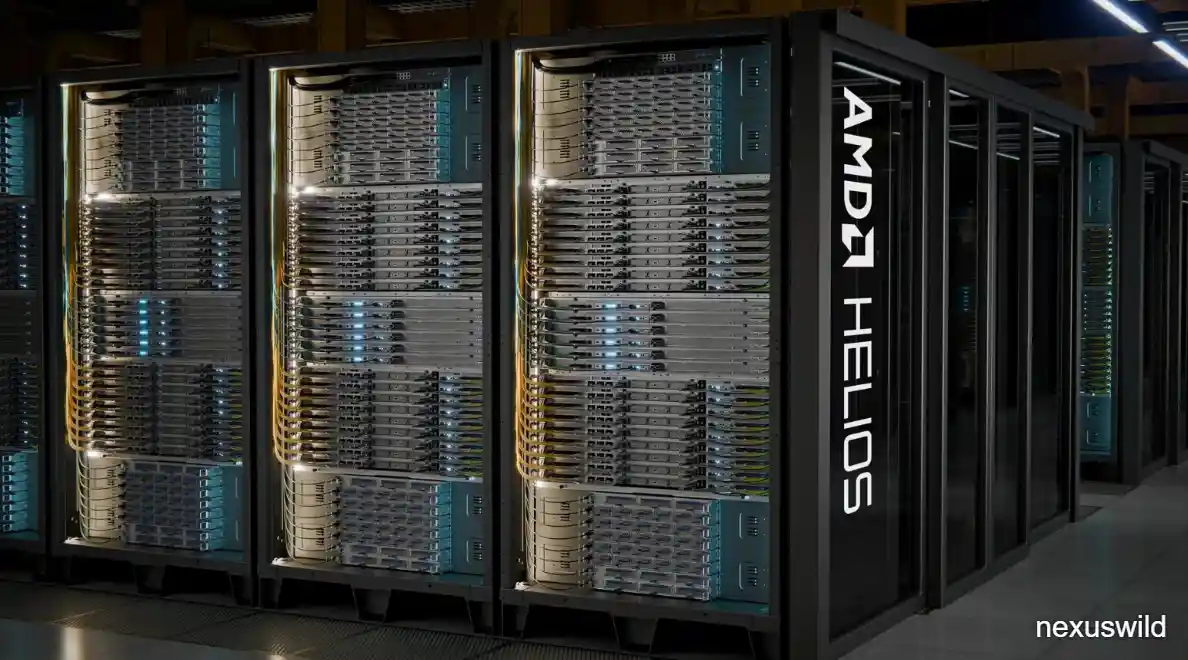
AMD introduced Helios in July 2026 as an integrated system for large-scale AI training and inference. Its design combines Instinct MI455X GPUs, sixth-generation EPYC processors, Pensando networking and ROCm software. AMD has described Helios as a platform for large AI clusters and reported interest from major AI developers and cloud providers.
Helion builds on the same broader emphasis on rack-level design and open infrastructure, but its announcement specifically focuses on flexible computing configurations for agentic workloads. It is intended to give customers more choice in balancing CPU capacity, GPU acceleration, power consumption and deployment costs.
This distinction matters as AMD broadens its AI portfolio. Competition is increasingly about the performance of complete systems — including processors, memory, networking, software and cooling — rather than a single chip's specifications.
Competition in the AI infrastructure market
Nvidia remains a major force in AI accelerators and integrated data-centre systems. AMD is seeking to expand its position by offering an alternative based on its EPYC CPUs, Instinct GPUs, networking technologies and ROCm software ecosystem.
For cloud providers and large enterprises, additional platform choices can create opportunities to compare performance, cost and flexibility. However, actual results will depend on workload characteristics, software optimisation, system availability and the effort required to integrate and operate the hardware.
AMD's Helion announcement does not establish that its platform will outperform competing systems across all agentic AI tasks. Its significance lies in the configurable architecture and the company's effort to build an ecosystem around it.
The timing is also important. As organisations experiment with AI agents, they need to determine whether the technology can deliver reliable business results at a manageable operating cost. Infrastructure designed to allocate resources more precisely could help, but customers will need evidence from real deployments.
What comes next
The next milestone is the planned availability of Helion rack configurations in November 2026. The extent of partner participation, production readiness and customer adoption will help show how quickly the blueprint moves from development to commercial use.
AMD's plan to submit the specification to the Open Compute Project will also be worth watching. Broader adoption could encourage additional system designs, although industry uptake will depend on implementation quality and customer demand.
For now, Helion reflects a clear shift in AI infrastructure strategy: as AI agents become more capable, hardware providers are designing systems around the full sequence of computing tasks those agents perform. AMD is betting that an open, configurable rack design will give customers more flexibility as those workloads grow.
Nexuswild welcomes factual corrections. Email contact@nexuswild.com with evidence and the article URL.