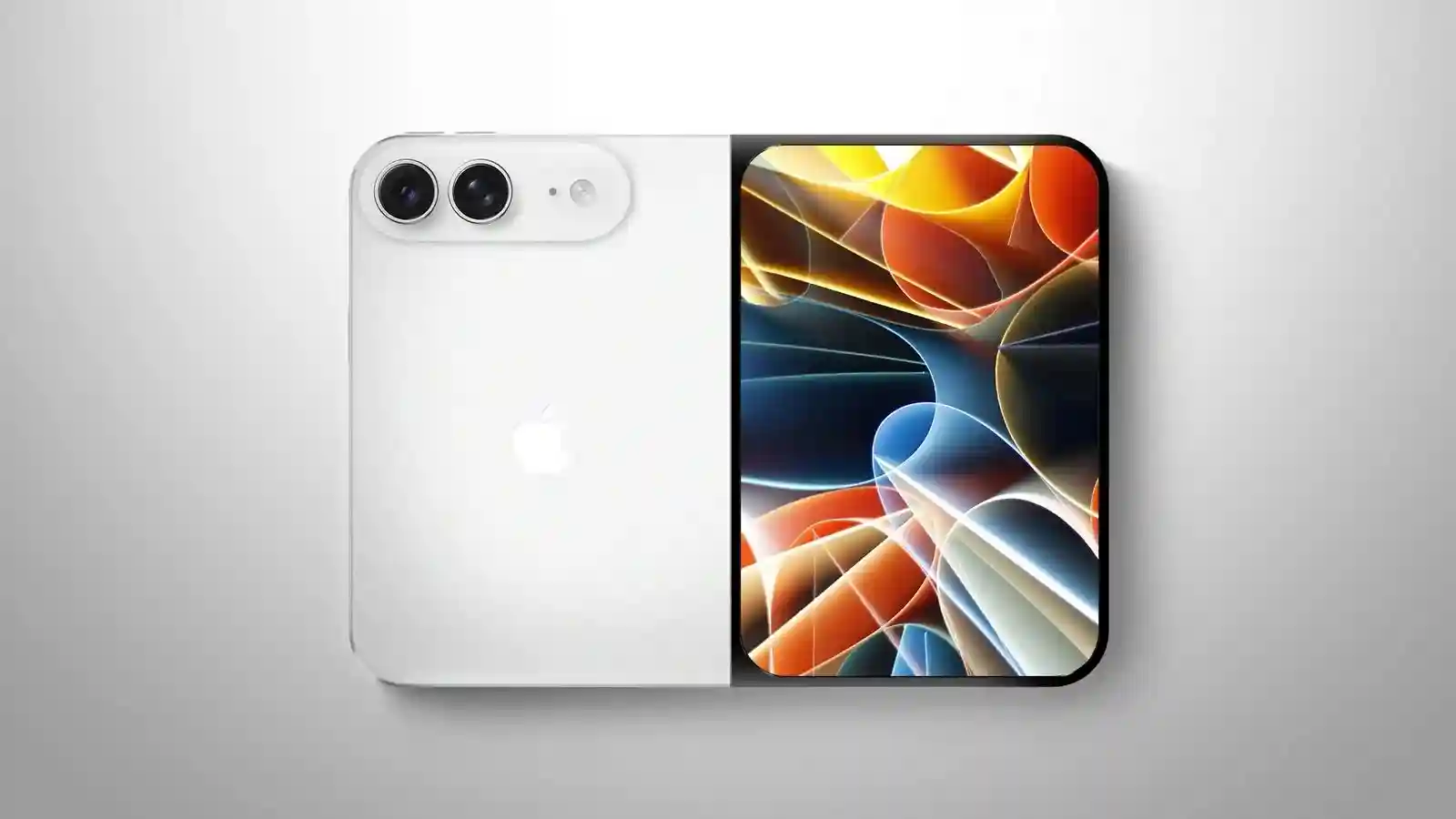

Apple’s foldable iPhone is moving closer to reality
Apple is approaching one of the most significant hardware changes in the iPhone’s history, with its first foldable model expected to transform the familiar smartphone form into a device that opens into a substantially larger display.
The project has been years in development. Apple has explored flexible displays, folding mechanisms, hinge systems and new forms of protective glass as it worked toward a design that could meet the durability and usability standards expected from an iPhone.
The device is expected to sit above Apple’s conventional flagship models and establish an entirely new ultra-premium tier within the iPhone lineup.
Pricing under consideration has centered around the $2,000 level for an entry configuration, while higher-storage versions could move closer to $3,000. Final pricing remains subject to Apple’s official announcement.
A $2,000 iPhone would establish a new pricing tier
A foldable iPhone priced around $2,000 would immediately become one of the most expensive mainstream smartphones sold by Apple.
The company has reportedly spent significant time attempting to control the cost of the device while dealing with expensive components including the flexible display, specialized hinge assembly and advanced materials required to make the product durable enough for daily use.
Pricing discussions have included figures around $2,000 to $2,200 for the entry model, depending on configuration and final component costs.
Higher storage tiers could push the product toward the $3,000 mark.
The strategy would position the foldable as a category above the iPhone Pro Max rather than as a direct replacement for Apple’s mainstream smartphones.
That distinction matters financially. Apple already sells higher-storage iPhone configurations at substantial premiums, and a foldable design creates an additional opportunity to increase average selling prices without raising the cost of every iPhone in the lineup.
The design could combine an iPhone and small tablet
The expected hardware uses a book-style folding design rather than the compact clamshell format used by some competing foldable phones.
When closed, the device is expected to feature an external display measuring roughly 5.5 inches.
Opening the phone could reveal an internal display of approximately 7.8 inches, creating a screen closer in usable area to a small tablet while keeping the folded device compact enough for everyday portability.
The proportions are expected to be wider than several existing foldable smartphones.
A wider external screen could help applications retain a more conventional iPhone-like layout while the larger internal display provides room for productivity, reading, video and multitasking.
That approach could address one of the persistent weaknesses of earlier foldable phones: exterior screens that feel unusually narrow or compromised during normal use.
Eliminating the crease became a major engineering challenge
The visible crease found on many foldable displays has reportedly been one of Apple’s most important engineering targets.
A folding smartphone repeatedly bends the same section of its display, placing unusual mechanical stress on the panel and protective layers above it.
The hinge must distribute that force consistently while maintaining structural rigidity across thousands of opening and closing cycles.
Apple has spent years exploring hinge structures, flexible display assemblies and cover materials designed to reduce stress along the fold.
Patent filings over several years show extensive work involving flexible displays, foldable electronic-device housings and sophisticated hinge mechanisms.
The production device is expected to incorporate premium metals and a specially engineered flexible display structure intended to minimize the appearance of the crease while maintaining durability.
For Apple, simply producing a phone that folds is not enough. The mechanism needs to feel sufficiently refined that the hinge becomes almost invisible to the user during everyday operation.
Apple entered the foldable market later than its rivals
Samsung helped establish the modern foldable smartphone category years before Apple entered the market.
Huawei, Google, Motorola, Xiaomi and other manufacturers subsequently expanded the category with increasingly refined devices.
By 2026, foldable smartphones have moved well beyond the experimental stage.
That gives Apple both an advantage and a disadvantage.
The company has been able to observe years of real-world problems involving display durability, hinge reliability, awkward proportions, visible creases and immature software experiences.
Apple can therefore enter with a more mature interpretation of the category rather than learning those lessons publicly through multiple generations of hardware.
At the same time, expectations are much higher.
A foldable iPhone arriving years after competing products must offer more than novelty. Apple will need to demonstrate why its implementation materially improves the experience.
Software may determine whether the product succeeds
The physical hinge could attract attention, but software is likely to determine whether a foldable iPhone becomes genuinely useful.
A roughly 7.8-inch display creates significantly more usable space than a conventional smartphone screen.
That space becomes valuable if applications can intelligently rearrange themselves when the device opens, if multiple applications can operate effectively together and if users can move seamlessly between the external and internal displays.
Apple’s control over hardware, operating systems, processors, applications and developer frameworks gives the company an important advantage.
Instead of treating the larger screen simply as an expanded iPhone display, Apple could use the format to introduce deeper multitasking and adaptive interfaces.
That integration may ultimately matter more than the mechanical specifications of the hinge itself.
The foldable may involve first-generation compromises
A first-generation foldable iPhone is unlikely to outperform Apple’s conventional flagship phones in every category.
The design creates difficult engineering trade-offs involving battery capacity, cameras, thickness and structural durability.
Components must be distributed across two extremely thin halves while leaving enough internal space for the hinge and flexible display system.
That could require Apple to prioritize the folding experience over maximum camera hardware or battery capacity.
The value proposition would therefore be different from a conventional Pro-series iPhone.
Consumers would be paying primarily for a new computing format rather than simply for better specifications.
The central benefit is the ability to carry a normal-sized smartphone that transforms into a significantly larger display when needed.
Even modest sales could create a major new business
Apple would not need to sell foldable iPhones at the same scale as conventional iPhones for the product to become financially meaningful.
At an average selling price above $2,000, several million units could generate billions of dollars in annual revenue.
That is one reason the foldable category is strategically important.
Apple has historically relied on premiumization, services and higher-value hardware configurations to expand revenue even when global smartphone unit growth slows.
A foldable device creates another layer above the existing Pro lineup.
If demand proves durable, Apple could gradually expand the category with additional sizes, configurations and price points over subsequent generations.
The real test is whether folding becomes useful rather than impressive
Foldable displays are no longer technically surprising.
The more important question is whether Apple can make the form factor useful enough that customers consider it worth a substantial premium.
A device approaching $2,000 or more competes not only with other smartphones but also with premium laptops, tablets and other high-end electronics for consumer spending.
Apple therefore needs the larger internal display to provide an experience that cannot be replicated simply by purchasing a conventional iPhone with a slightly larger screen.
Productivity, multitasking, reading, gaming, photography workflows and video consumption could all become central to that argument.
If Apple succeeds, the foldable iPhone could become the biggest physical redesign of the company’s most important product in years.
If the larger screen delivers limited practical value, the price could keep the device confined to a relatively small premium audience.
Years of development are approaching a commercial test
Apple’s foldable project represents years of work across display engineering, materials, mechanical design, software and manufacturing.
The expected approximately 5.5-inch external display and 7.8-inch internal display would give the iPhone a dramatically different physical character from every previous generation.
Its reported pricing is equally significant.
An entry price around $2,000, with premium configurations potentially approaching $3,000, would create a new ceiling for the iPhone business.
The technical challenge has been making a foldable phone that meets Apple’s standards for durability and usability.
The commercial challenge will be harder: convincing consumers that opening an iPhone into a small tablet is valuable enough to justify the most expensive iPhone Apple has ever produced.
Reader questions
Frequently asked questions
How much could Apple’s foldable iPhone cost?
Current reporting indicates that the entry configuration could be priced around $2,000, while higher-storage versions could approach $3,000. Apple has not officially confirmed final retail pricing.
How large will Apple’s foldable iPhone display be?
The device is expected to have an external display of roughly 5.5 inches and an internal folding display measuring approximately 7.8 inches.
What type of foldable design is Apple expected to use?
Apple is expected to use a book-style design that opens horizontally into a larger tablet-like display rather than a vertically folding clamshell design.
Why has Apple waited so long to release a foldable iPhone?
Apple has spent years working on challenges including display durability, hinge reliability, crease reduction, device thickness and software optimization before bringing a foldable design to market.
Nexuswild welcomes factual corrections. Email contact@nexuswild.com with evidence and the article URL.