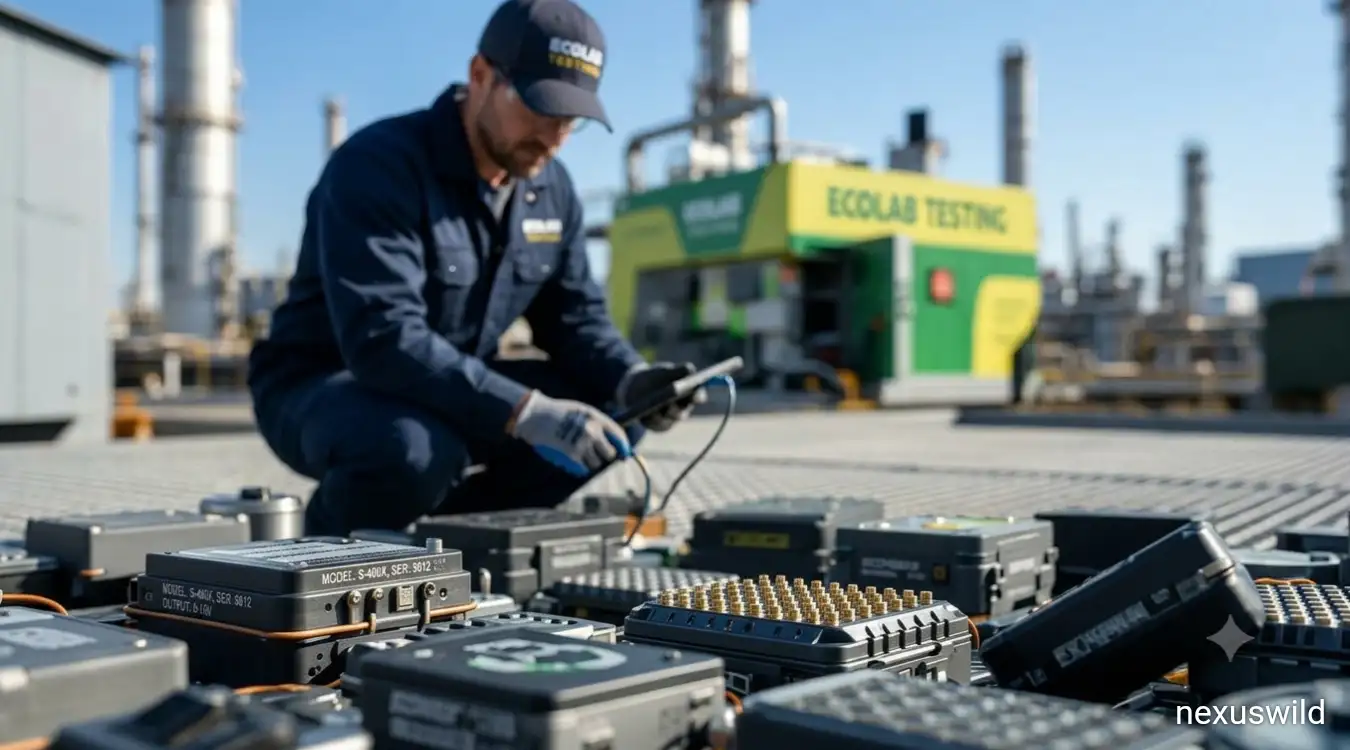

Used electric-vehicle batteries contain valuable lithium, nickel and cobalt, yet 2026 has shown how hard it is to make money recovering them. Ascend Elements, a US recycler, filed for Chapter 11 bankruptcy in April. Lithium prices have swung widely. Policymakers are meanwhile betting that recycling will become a pillar of critical-mineral supply.
A year of setbacks
Ascend Elements started Chapter 11 proceedings in April after raising more than $1.1 billion in equity and grants, Bloomberg reported. TechCrunch put the investor total at nearly $900 million. Chief executive Linh Austin said the financial difficulties were "insurmountable."
The company faced a softer US EV market and the cancellation of a $316 million federal grant for a Kentucky plant, of which $204 million had been paid, TechCrunch reported. Canary Media said buyers of recycled materials had also pushed back their timelines.
It was the second major North American failure. Li-Cycle filed for bankruptcy in May 2025 and was later bought by Glencore, according to Energy-Storage.news. Redwood Materials, the best-known US player, cut about 135 jobs, roughly 10% of its workforce, in 2026. It has also built a storage business that reuses EV packs, which Canary Media described as a reuse strategy rather than a recycling breakthrough.
Where the money is made, and lost
Recyclers shred batteries into "black mass," a powder containing the metals, then refine it. Value depends on chemistry. Fastmarkets estimated, at May 2023 prices, that a tonne of nickel-manganese-cobalt (NCM) cells held about $8,700 of lithium, nickel and cobalt, versus about $3,170 for lithium iron phosphate (LFP) cells. It put hydrometallurgical refining costs at roughly $1,500 to $1,800 per tonne of black mass, which makes LFP hard to refine profitably.
That matters because LFP is gaining share. Shanghai Metals Market's first-half 2026 report found LFP black mass prices tracked lithium carbonate closely, falling to 6,725 yuan per lithium point on 30 June. Prices for ternary black mass, which contains nickel and cobalt as well, fell less because several metals cushioned the drop.
Lithium itself has been volatile. Reuters data cited by Farmonaut shows Guangzhou futures closing at 104,740 yuan per tonne on 12 October, about half the 209,880 yuan peak of 13 May. Such swings can turn recycling margins on and off.
An NPR feature on 13 July examined why a battery full of valuable materials can still leave an auto recycler with a large bill, according to Collision Repair magazine. The Automotive Recyclers Association has called for more producer responsibility and for access to battery-condition data.
Some equipment makers advertise margins of 15% to 45%. Those claims come from a vendor and are not audited results.
Feedstock and policy
Supply is a constraint. EV batteries can last well over a decade, so end-of-life volumes lag demand for recycled material, Grist reported. A US Energy Department official told Grist that long-term supply chains will depend heavily on recycling.
Regulation is trying to close the gap. The EU Batteries Regulation sets lithium recovery targets of 50% by the end of 2027 and 80% by the end of 2031, according to the International Energy Agency. It also requires recycled content of 16% for cobalt and 6% each for lithium and nickel by August 2031.
Benchmark Mineral Intelligence found the EU has enough feedstock to meet the targets if recyclers deliver, but reaching 80% lithium recovery needs substantially more hydrometallurgical capacity. A Fastmarkets analyst called the 2027 target unambitious, since many European recyclers already meet it. Fastmarkets also reported that market participants expect the EU to classify black mass as hazardous waste, which would limit exports.
What investors should weigh
Reported evidence points to several tests. Recyclers with diversified revenue, such as storage reuse, have fared better than those relying on a single product. Chemistry mix matters, since NCM carries more recoverable value than LFP. Access to feedstock and long-term buyers is critical. Policy support is another risk: Ascend's grant cancellation shows subsidies can be reversed.
The sources reviewed give no audited, industry-wide profitability figure. Black mass is not traded on a standardised exchange, and many market statistics come from vendors or aggregators. This article is information, not investment advice.
What to watch next
Ascend's restructuring will show whether its assets and technology find new owners. Watch lithium prices, which have fallen sharply since May, and whether black mass payables recover. Watch the EU's 2027 recovery deadline and any black mass export rules, and whether US policy changes strengthen demand for domestically recycled material.
Nexuswild welcomes factual corrections. Email contact@nexuswild.com with evidence and the article URL.