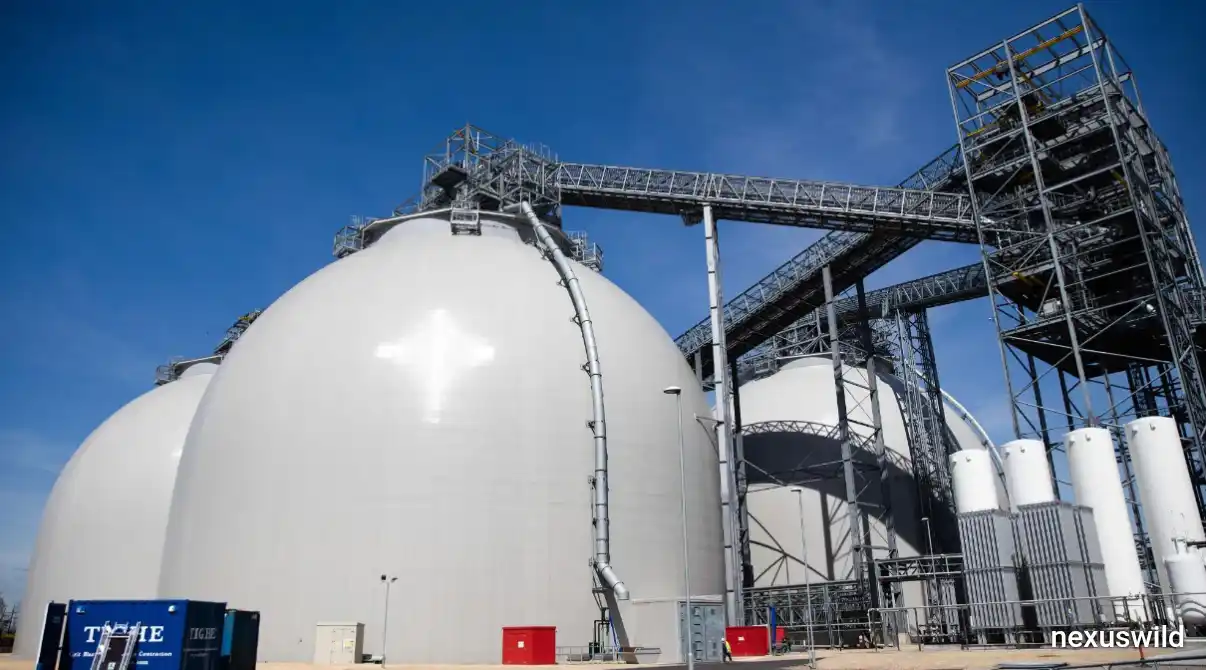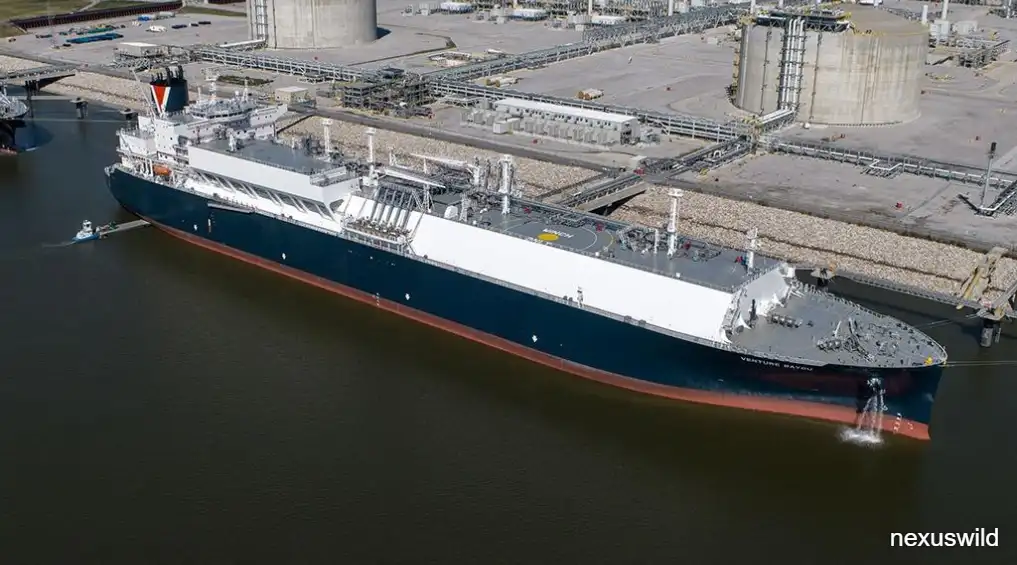

Institutional investors are increasing their exposure to energy infrastructure as global demand for reliable natural gas supplies encourages new investment in export facilities, pipelines and processing capacity. A major transaction involving Blackstone, Canadian pension funds and Japan's Mitsubishi Corporation highlights how long-term investment capital is entering the international liquefied natural gas market.
On November 2, 2026, Blackstone announced that funds managed by its Credit and Insurance division, alongside leading Canadian institutional investors, had agreed to invest in a Mitsubishi subsidiary holding an interest in LNG Canada, a major natural gas export project in British Columbia.
The investor group is acquiring a 49.9% non-controlling interest in the holding company. The group includes Canada Pension Plan Investment Board (CPP Investments), Ontario Municipal Employees Retirement System (OMERS), the Investment Management Corporation of Ontario (IMCO) and the Public Sector Pension Investment Board (PSP Investments).
Blackstone described the investment as US$3.1 billion. Mitsubishi, however, announced that the sale of the 49.9% holding-company interest was valued at approximately US$1.6 billion, or around ¥250 billion. The two announcements do not explain the difference, so the figures should be treated as separately disclosed transaction values rather than combined or assumed to be equivalent.
The deal is strategically important because it gives institutional investors exposure to an LNG export business preparing for a substantial expansion. It also allows Mitsubishi to bring in financial partners while maintaining its position in the natural gas and LNG supply chain.
The investment comes at a time when energy security, supply diversification and long-term infrastructure financing are becoming increasingly important to governments and energy companies.
Understanding the Structure of the Investment
The transaction involves an indirect investment in LNG Canada rather than the purchase of nearly half of the entire export facility.
Mitsubishi's holding company owns a 15% interest in the LNG Canada joint venture. Under the agreement, the Blackstone-led group will acquire a 49.9% non-controlling interest in the Mitsubishi subsidiary that holds this project interest.
Mitsubishi will retain the controlling 50.1% position in the holding company. This arrangement allows the Japanese trading group to bring in outside capital without giving up control of its investment vehicle.
The distinction is important when assessing the scale of the transaction. The investor group is not acquiring 49.9% of LNG Canada itself. It is acquiring a minority interest in the company through which Mitsubishi holds its 15% participation in the project.
Mitsubishi said it would remain involved across the Canadian natural gas and LNG value chain. Its existing customer relationships and LNG offtake volumes are not expected to change because of the transaction.
The holding company currently takes approximately 2.1 million tonnes of LNG annually in proportion to its ownership interest. Following the planned expansion, that volume is expected to increase to approximately 4.2 million tonnes a year.
The LNG is marketed to customers in Asia, primarily Japan, through Diamond Global Energy, Mitsubishi's wholly owned LNG marketing subsidiary based in Singapore.
This structure gives investors exposure to the economic value of a major export facility while allowing Mitsubishi to maintain its commercial role in gas procurement, LNG marketing and customer supply.
According to Mitsubishi, the transaction is expected to close in November 2026. Completion will establish the financial partnership at the holding-company level, rather than changing the ownership structure of LNG Canada's operating joint venture directly.
Why LNG Canada Is Attracting Institutional Investors
LNG Canada is a strategically important energy infrastructure project because it connects natural gas production in Western Canada with international buyers through an export terminal on the country's Pacific coast.
Located in Kitimat, British Columbia, the facility benefits from access to Canadian natural gas resources and an ice-free harbour. Its geographical position supports shipments to Asian markets without requiring LNG cargoes to travel through the Panama Canal on every route.
The project began production in June 2025 and is Canada's first large-scale LNG export terminal. Its initial production capacity is approximately 14 million tonnes per annum.
The ownership structure of the operating joint venture includes Shell with a 40% interest, PETRONAS with 25%, PetroChina with 15%, Mitsubishi Corporation with 15% and Korea Gas Corporation with 5%.
These participants bring experience in gas production, processing, shipping, trading and international energy markets. The project operates through an equity-lifting arrangement, under which each partner is responsible for its proportionate share of LNG production and the associated gas supply.
For institutional investors, infrastructure of this type can provide exposure to an essential part of the global energy supply chain. Export terminals require substantial upfront capital, but once operating, they can support long-term commercial relationships and recurring activity linked to natural gas production and overseas demand.
The investment is also connected to the project's next development stage. LNG Canada has already approved a major expansion, meaning investors are entering at a point when additional infrastructure and production capacity are being developed.
Phase 2 Expansion Will Double Export Capacity
The timing of the investment is closely connected to LNG Canada's Phase 2 expansion.
On September 29, 2026, LNG Canada and its joint venture partners reached a final investment decision to proceed with the next stage of development at Kitimat. The expansion is designed to increase annual production capacity from 14 million tonnes to 28 million tonnes.
The project will add two additional LNG processing units, commonly known as trains. It will also require another LNG storage tank, a condensate tank, an additional loading berth and expanded utility and processing systems.
The existing Coastal GasLink pipeline will also need additional capacity to deliver gas to the export terminal. Plans include expanding the existing 670-kilometre pipeline through the construction of five new compressor stations.
The expansion will therefore involve more than adding production equipment. It requires coordinated investment across the supply chain, from natural gas transportation to liquefaction, storage and shipping.
Shell has indicated that commercial operations from Phase 2 are expected to begin in the early 2030s. This means the additional capacity will not generate its full commercial contribution immediately, even though major investment and construction activity will take place in the years ahead.
The scale of the project helps explain why long-term financial partners are relevant. Large infrastructure developments require capital over extended periods, and bringing in institutional investors can help existing owners manage their financial exposure.
For Mitsubishi, the Blackstone-led investment provides an opportunity to improve capital efficiency while remaining connected to a project expected to become one of the world's largest LNG export facilities.
Blackstone and Canadian Pension Funds See Long-Term Infrastructure Potential
The composition of the investor group is an important part of the transaction.
Blackstone is participating through funds managed by Blackstone Credit & Insurance, while the Canadian institutional investors include some of the country's largest pension and public-sector investment organisations.
CPP Investments manages assets on behalf of the Canada Pension Plan. OMERS invests retirement contributions for municipal employees in Ontario. IMCO manages investment portfolios for public-sector clients in the province, while PSP Investments manages pension assets for federal public-service participants.
These organisations generally invest across multiple asset classes and geographical markets. Their involvement in LNG infrastructure reflects the role that long-term institutional capital can play in financing large projects.
Energy infrastructure can offer exposure to assets with long operating lives, significant construction requirements and demand linked to industrial activity, electricity generation and international trade.
For pension investors, however, such projects also carry risks. Returns depend on construction performance, plant reliability, commercial contracts, gas availability, regulatory conditions and the economics of LNG exports.
The Blackstone-led group is therefore not simply betting on higher natural gas prices. Its investment is tied to the longer-term commercial performance of the holding-company interest and the export infrastructure it indirectly represents.
The investor group also gains exposure to a project in which Mitsubishi will remain commercially involved. That continuity may be important because Mitsubishi has experience across natural gas production, LNG liquefaction, shipping and sales.
The investment demonstrates how alternative asset managers and pension institutions are increasingly participating alongside traditional energy companies in projects that require large amounts of capital.
Mitsubishi Uses the Deal to Improve Capital Efficiency
For Mitsubishi, the agreement is part of a broader effort to manage capital allocation while continuing to participate in important energy projects.
Developing and operating LNG infrastructure requires considerable financial resources. Companies must fund upstream gas production, pipelines, processing facilities, storage systems and export terminals, while also managing the risks associated with long project timelines.
By selling a minority interest in its holding company, Mitsubishi can introduce an external financial partner without fully exiting the LNG Canada investment.
This approach can be described as capital recycling. A company brings in new investors or sells part of an existing asset to release capital, while retaining some ownership and strategic involvement.
Mitsubishi said the transaction would help advance the LNG Canada expansion and improve the capital efficiency of its investment. It also confirmed that the arrangement would not affect its LNG offtake volumes or customers.
This is particularly important because the company's commercial position extends beyond the holding-company investment. It has an integrated natural gas business in Western Canada, connecting production, LNG processing and marketing.
Maintaining access to the project's LNG output allows Mitsubishi to continue serving customers, especially in Asia, while sharing part of the investment exposure with outside financial partners.
The arrangement also helps distribute the capital burden associated with expansion. Rather than relying entirely on its own financial resources, Mitsubishi can work with investors that specialise in financing long-term infrastructure and asset-based opportunities.
The effectiveness of this strategy will depend on the final transaction terms and how successfully the additional capital supports the project's next stage.
Canada's Position in the Global LNG Market Could Strengthen
The investment also supports Canada's wider ambition to become a larger supplier of natural gas to international markets.
LNG exports allow natural gas to be transported by specialised vessels to countries that are not directly connected through pipelines. This provides producers with access to overseas markets and gives importing countries more options for securing energy supplies.
Canada's Pacific coastline provides a route to Asian buyers, including major energy-consuming economies such as Japan and South Korea.
LNG Canada Phase 2 is expected to strengthen this export capacity by adding another 14 million tonnes of annual production. The expansion also supports Canada's objective of diversifying its trade relationships and increasing the international role of its natural gas industry.
The Canadian government has identified Phase 2 as a major infrastructure project and estimates that it will attract approximately C$33 billion in private-sector capital.
The project is expected to support around 6,000 direct construction jobs and up to 240 operational jobs across the LNG facility and associated pipeline. These are project estimates rather than confirmed employment outcomes.
The expansion could also strengthen the country's position in energy trade with Asia and Europe. However, the benefits will depend on construction progress, production reliability, transport capacity and demand from international customers.
For Canada, the Blackstone-led investment is another example of global financial institutions participating in its energy export infrastructure.
Indigenous Participation and Local Economic Impact Remain Important
The expansion also involves Indigenous communities and local economic development.
LNG Canada's Kitimat facility is located on the traditional territory of the Haisla Nation. The development of major energy infrastructure in this region involves relationships with Indigenous communities, local governments, contractors and workers.
In July 2026, LNG Canada announced an equity option arrangement involving MNT Investments LP, a partnership representing the economic development organisations of five neighbouring First Nations: Gitga'at Nation, Gitxaała Nation, Haisla Nation, Kitselas First Nation and Kitsumkalum.
The arrangement creates an opportunity for these First Nations to invest up to C$1 billion for a majority ownership interest in the new Phase 2 LNG storage tank through a special-purpose entity.
The Canadian government has described this as a potentially significant Indigenous ownership position in major infrastructure.
This participation is separate from the Blackstone-led investment in Mitsubishi's holding company. The two arrangements involve different assets and ownership structures, but both illustrate how large infrastructure projects can involve several types of capital.
Indigenous equity participation can provide communities with a direct financial interest in infrastructure, alongside employment, contracting and other economic opportunities.
The expansion will still need to manage construction impacts, environmental considerations, local consultation and the long-term responsibilities associated with operating large energy facilities.
The quality of these partnerships will be an important part of the project's broader economic and social performance.
LNG Demand Outlook Creates Opportunities, but Risks Remain
The commercial case for LNG infrastructure is linked to the outlook for global natural gas consumption.
Countries use LNG to support electricity generation, industrial activity and energy supply diversification. Its ability to be shipped between markets makes it particularly important for economies that depend on imported natural gas.
Shell's 2026 LNG outlook estimates that global LNG demand could rise from approximately 422 million tonnes in 2025 to nearly 700 million tonnes by 2050. This is an industry forecast, not a guaranteed outcome, and actual demand will depend on economic growth, energy policies, competing technologies and the pace of the energy transition.
The forecast nevertheless provides context for why companies are continuing to develop long-term export capacity.
However, new LNG projects face several risks. Natural gas prices can fluctuate, international demand can change, and competing exporters may bring additional supply to the market.
Large facilities also require reliable gas feedstock and transportation infrastructure. Delays in pipelines, construction or equipment delivery can increase costs and postpone the point at which projects begin earning revenue.
Environmental considerations are another factor. While LNG can provide an alternative to coal in some power-generation markets, its overall climate impact depends on methane emissions during gas production and transportation, energy used in liquefaction and shipping, and emissions when the fuel is ultimately burned.
Governments and investors are therefore likely to examine both the commercial performance and environmental standards of new LNG developments.
The long-term value of LNG Canada will depend not only on expanding capacity, but also on operating efficiently and maintaining competitive access to overseas customers.
The Difference Between the Two Disclosed Deal Values Needs Clarification
One detail deserves particular attention from investors and financial analysts.
Blackstone's November 2 announcement describes a US$3.1 billion investment by the Blackstone-led group to acquire a 49.9% non-controlling interest in a Mitsubishi subsidiary.
Mitsubishi's announcement on the same date places the value of the sale of the 49.9% interest at approximately US$1.6 billion.
The two companies describe the same holding-company ownership percentage, but their published figures are materially different. The available announcements do not provide a detailed explanation of how the two amounts relate to one another.
It would therefore be inaccurate to report the difference as an additional investment, a separate project commitment or a confirmed valuation adjustment without further clarification.
For readers evaluating the transaction, the distinction is important. The US$3.1 billion figure is the amount stated by Blackstone for the investor group's commitment, while US$1.6 billion is Mitsubishi's stated transaction valuation.
Further details from the companies or transaction documentation would be needed to reconcile the figures fully.
This reporting distinction does not change the central strategic development: a Blackstone-led group and major Canadian institutional investors are entering Mitsubishi's LNG Canada holding-company structure as financial partners.
What Happens Next?
The immediate focus will be on completing the ownership restructuring and integrating the new financial partners into the holding-company arrangement.
Mitsubishi indicated that the transaction was expected to close in November 2026. After completion, attention will turn towards how the additional financial resources support the LNG Canada expansion.
Construction and supporting pipeline work will be critical to increasing the facility's capacity. The expansion involves multiple processing, storage, loading and transportation requirements, so its progress will depend on coordination across different parts of the energy supply chain.
Investors will also monitor whether LNG demand develops in line with long-term industry forecasts and whether the project can maintain competitive production and delivery costs.
For Blackstone and the Canadian pension funds, the investment creates exposure to a strategically important export facility. For Mitsubishi, it offers a way to maintain its commercial position while improving capital efficiency.
The wider energy market will be watching whether this structure becomes a model for other companies seeking to attract institutional capital into large infrastructure assets.
Conclusion
The Blackstone-led investment in Mitsubishi Corporation's LNG Canada holding company marks an important development in global energy infrastructure financing.
By acquiring a 49.9% non-controlling interest in the holding company, Blackstone and its Canadian institutional partners are gaining indirect exposure to a major LNG export project preparing to double its production capacity.
For Mitsubishi, the transaction offers an opportunity to bring in financial partners while retaining control of the holding company and preserving its existing LNG offtake arrangements.
The deal also reflects the growing role of pension funds and alternative investment managers in financing long-term energy assets. As LNG demand, supply security and infrastructure requirements remain central to international energy markets, access to institutional capital could become increasingly important for major projects.
However, the transaction's disclosed financial values require clarification, and the success of the broader investment will depend on construction progress, market demand, operational performance and environmental considerations.
The central message is that global energy infrastructure is attracting a broader investor base. Traditional energy companies are increasingly working with financial institutions to fund expansion, manage capital requirements and maintain access to international markets.
Nexuswild welcomes factual corrections. Email contact@nexuswild.com with evidence and the article URL.