
Bengaluru-based quick-service restaurant (QSR) company Boba Bhai has raised $18 million in a Series B funding round led by US-based consumer investment firm Left Lane Capital, bringing another international investor into India's expanding food and beverage startup ecosystem.
The round also includes BIG Capital and existing investor Titan Capital. The investment will support Boba Bhai's plans to expand its restaurant footprint across India and develop additional consumer food concepts under its multi-brand business, Boba Bhai Ventures.
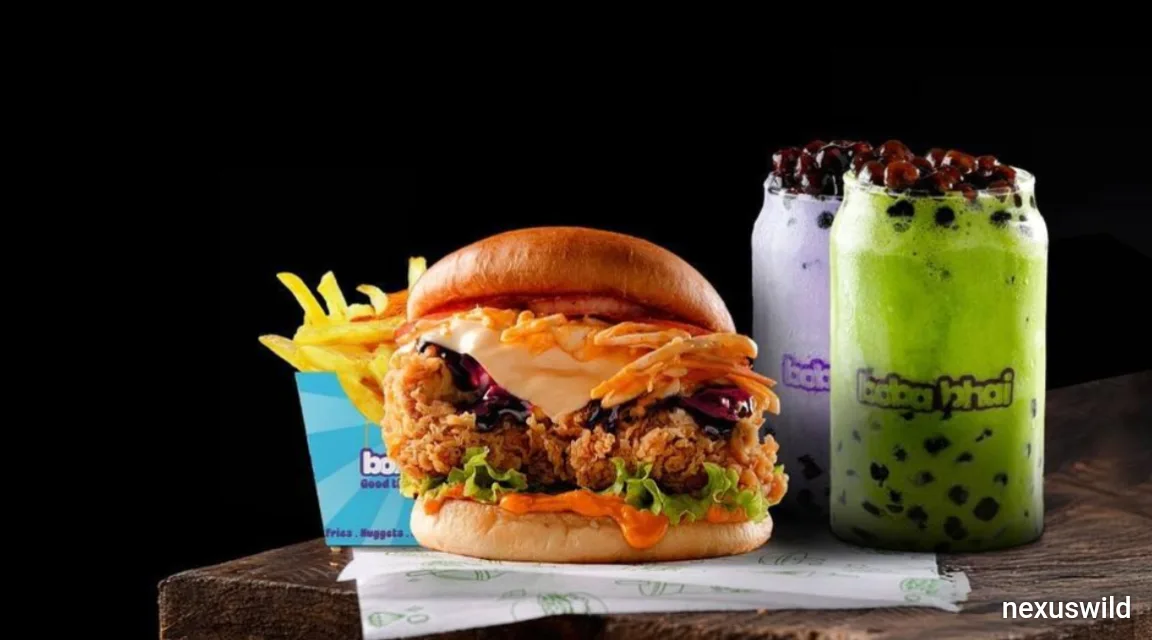
Founded in October 2023 by entrepreneur Dhruv Kohli, Boba Bhai has built its business around bubble tea, Korean-inspired street food and fusion offerings. The company reports operating more than 120 stores and processing over 300,000 orders each month through its physical outlets and digital distribution channels.
The latest investment marks another funding milestone for the young company. It also signals a strategic transition: rather than concentrating exclusively on expanding one restaurant brand, Boba Bhai wants to use the operating capabilities developed through its first business to build additional consumer food brands.
However, the next phase will involve a different set of challenges. Expanding a restaurant chain and building a multi-brand food platform require sustained operational discipline, consistent product quality, reliable supply chains and attractive store-level economics.
The $18 Million Series B Funding Round
Boba Bhai announced an $18 million Series B funding round on November 19, 2026.
Left Lane Capital led the investment, marking its entry into the company's investor group. BIG Capital increased its investment, while Titan Capital continued its participation as an existing backer.
The precise allocation of capital among the investors has not been publicly disclosed. The company has also not announced a post-money valuation for this financing round.
The investment is intended to finance two broad areas of development:
- Expanding Boba Bhai's existing store network across India.
- Launching and scaling additional consumer food brands under Boba Bhai Ventures.
The financing follows a ₹40 crore funding round announced in March 2026. That earlier round was led by 8i Ventures, Titan Capital Winners Fund and Global Growth Capital, with participation from BIG Capital and other investors.
The progression from the March financing to the November Series B demonstrates the company's ability to attract additional institutional capital. Nevertheless, funding announcements alone do not establish that a restaurant chain has achieved sustainable profitability.
For investors, the more important questions will be how efficiently the company deploys its new capital, how quickly new stores reach stable sales levels and whether additional brands can operate successfully without increasing the complexity of the overall business.
Left Lane Capital Enters India's Consumer Food Market Through Boba Bhai
The arrival of Left Lane Capital is one of the notable elements of the funding round.
The US-based investment firm has backed consumer and food businesses, including Blank Street Coffee and 7th Street Burger. Its participation brings an investor with experience in consumer-facing food concepts into Boba Bhai's next expansion phase.
Left Lane's reported investment assessment included consideration of Boba Bhai's growth, store-level profitability and payback periods. These are important measures for restaurant businesses because rapid store expansion can create significant capital requirements before new locations reach operating maturity.
A restaurant chain can report strong overall order growth while individual locations perform very differently. Factors such as rent, labour costs, location quality, local demand, delivery commissions, ingredient costs and operating hours can materially affect the profitability of each outlet.
Store-level performance therefore provides a more useful picture of expansion quality than the total number of outlets alone.
Left Lane's investment also reflects the appeal of food formats that can attract consumers through distinctive products while maintaining repeat-purchase potential.
Bubble tea and Korean-inspired food have benefited from growing consumer exposure to international food cultures. However, consumer interest in a particular format does not guarantee that a restaurant can build a profitable nationwide network.
The ability to standardise products, control costs and maintain a consistent customer experience will be central to Boba Bhai's next phase.
From a Bengaluru Startup to a Nationwide Restaurant Network
Boba Bhai was founded by Dhruv Kohli in October 2023.
The business entered the market with a menu combining bubble tea, Korean street food and fusion products designed for Indian consumers. Its positioning brings together beverages and food formats associated with international youth culture while adapting them to local preferences.
Since its launch, the company has expanded beyond its original Bengaluru market and built a presence across multiple Indian cities.
Boba Bhai reports more than 120 stores across India. It also reports processing over 300,000 orders every month through physical and digital channels.
These numbers indicate that the company is no longer operating only as a small experimental food brand. It has developed a retail and distribution network that requires coordinated procurement, food preparation, logistics, staffing, marketing and customer-service systems.
However, the reported store count should not be confused with the number of wholly owned locations. The company has not provided a detailed public breakdown of its store ownership and operating structure in the funding announcement.
Similarly, the monthly order figure is a company-reported operating metric rather than an independently audited measure.
The figures are useful indicators of the company's reported scale, but they do not independently establish revenue per outlet, average order value, contribution margins or customer retention.
The Bubble Tea and Korean Street Food Opportunity
Boba Bhai operates in a consumer segment influenced by changing food preferences, social media discovery and increasing experimentation with international cuisine.
Bubble tea has developed a recognisable consumer identity through flavoured tea, milk-based drinks, tapioca pearls and other toppings. Korean-inspired food has also gained attention through the popularity of Korean entertainment, food culture and distinctive snack formats.
For Indian restaurant operators, these categories offer opportunities to build brands around products that are visually distinctive and can be adapted to local tastes.
Boba Bhai combines beverages with Korean street-food-inspired offerings rather than relying on a single product category.
That combination can potentially increase the number of occasions in which customers interact with the brand. A consumer may visit for a drink, a snack or a more substantial food order.
It can also support cross-selling within a single transaction.
But a wider menu brings operational challenges. Different products may require separate ingredients, preparation processes, storage conditions and quality-control systems. More menu categories can also increase wastage and inventory complexity if demand is not forecast accurately.
For a fast-growing QSR operator, product innovation must therefore be balanced against operational simplicity.
The business must establish which products generate repeat demand and which can be produced consistently at scale.
More Than 300,000 Monthly Orders: What the Number Reveals
Boba Bhai's reported monthly order volume of more than 300,000 provides an indication of its distribution reach.
The company serves customers through several channels:
- Physical stores.
- Third-party food-delivery platforms.
- Quick-commerce and other digital channels.
This multi-channel approach allows the brand to reach consumers who may not live near one of its outlets or may prefer ordering food and beverages for home consumption.
Physical stores provide direct customer interaction and a visible brand presence. Delivery platforms extend geographic reach and provide access to established digital ordering systems. Quick-commerce distribution can support selected packaged products and beverages where the product format and platform economics are suitable.
However, these channels do not necessarily generate equivalent economics.
A store order, a third-party delivery order and a packaged product sold through quick commerce can involve different costs, commissions, packaging requirements and fulfilment arrangements.
For example, delivery platforms can expand demand but may also charge commissions and require additional packaging. Quick-commerce distribution can provide convenience and product discovery, but packaged goods have different inventory and distribution requirements from freshly prepared restaurant meals.
The important metric is therefore not simply how many orders the company processes.
Investors will want to understand the revenue and contribution generated by each channel after accounting for the associated costs.
Boba Bhai has not publicly disclosed a detailed channel-wise breakdown in the funding announcement.
Boba Bhai Ventures: The Move Towards a Multi-Brand Food Platform
The most strategically important part of the funding announcement may be the planned development of Boba Bhai Ventures.
The company intends to use its existing operating capabilities to launch and scale additional food brands.
This represents a shift from a single-brand restaurant expansion strategy towards a broader consumer-food platform.
Instead of building every new concept from the ground up, Boba Bhai aims to leverage capabilities developed through its existing business. These may include operational teams, supplier relationships, procurement processes, distribution channels, technology systems and digital customer acquisition.
The logic is straightforward.
A company that already operates a restaurant network may be able to support another food brand without duplicating every part of its infrastructure.
For example, an established procurement team may be able to negotiate with suppliers for several brands. Existing logistics relationships may support the movement of ingredients and packaged products. Technology and customer-service systems may be adapted to manage multiple menus and consumer-facing identities.
However, the extent of shared infrastructure will depend on the specific products and operating models of the new brands.
A beverage-led concept, a fresh-food restaurant and a packaged snack business may have substantially different storage, preparation, distribution and regulatory requirements.
The company has not disclosed the names, launch dates, menus or financial targets of its planned additional brands.
It would therefore be premature to describe Boba Bhai Ventures as an established multi-brand platform with proven economics. At this stage, it is a strategic expansion initiative backed by the new funding round.
Why a Shared Operating Platform Could Matter
Building additional consumer brands around an existing operating system can create several potential advantages.
Shared procurement: Multiple brands may be able to use common supplier relationships and procurement processes where their ingredients and packaging requirements overlap.
Distribution efficiency: Existing delivery and logistics relationships could help new concepts reach customers without establishing entirely separate distribution arrangements.
Technology reuse: Order management, inventory systems, customer relationship management and performance reporting may be adapted across brands.
Operational knowledge: Experience in site selection, menu pricing, staffing and restaurant management could help the company avoid repeating some of the mistakes associated with launching a new food business.
Customer acquisition: A company with an existing digital audience may be able to introduce additional products to customers already familiar with its main brand.
These are potential benefits rather than guaranteed outcomes.
Shared infrastructure only creates an advantage when the additional brands genuinely use the same capabilities efficiently. If each concept requires separate kitchens, specialised staff, different suppliers and distinct distribution systems, the expected cost benefits may be smaller.
The company will also need to ensure that launching additional brands does not divert management attention from the performance of its original restaurant network.
Store-Level Economics Will Determine the Quality of Expansion
For a QSR business, store-level economics are among the most important measures of sustainable growth.
Opening additional outlets can increase total revenue, but each location also creates recurring costs.
These include:
- Rental and property-related expenses.
- Employee salaries and training.
- Ingredients and food preparation.
- Utilities and maintenance.
- Packaging and delivery-related expenses.
- Marketing and customer acquisition.
- Technology and payment-processing costs.
A successful expansion model requires stores to generate enough gross profit and operating contribution to cover their recurring costs and eventually recover the initial investment.
The time required to recover the cost of opening a store is generally described as its payback period.
A shorter payback period can allow a restaurant operator to recycle capital into additional locations more quickly. A longer period can increase funding requirements and expose the business to changing demand, rental costs and competition.
Although investor commentary indicates that store-level economics were considered during the investment assessment, detailed figures have not been publicly disclosed.
Boba Bhai has not published a complete store-level profitability schedule, average opening investment, outlet contribution margin or payback-period distribution in the funding announcement.
These details will be important when evaluating whether its reported footprint can expand profitably.
The Financial Context: Growth Alongside Losses
Boba Bhai's expansion plans should also be considered in the context of its reported financial performance.
According to Entrackr's reporting based on company financial information, Boba Bhai's revenue from operations increased 139% to ₹68 crore in FY2026, compared with ₹28.44 crore in FY2025.
However, its reported losses also widened.
The company recorded a loss of approximately ₹21.8 crore in FY2026, compared with ₹9.96 crore in the previous financial year.
These figures present a more balanced picture of the company's growth.
Revenue growth suggests that Boba Bhai has expanded its commercial activity substantially. At the same time, the increase in losses indicates that scaling the business has involved significant expenses.
It is important not to interpret the reported loss figures as proof that individual stores are unprofitable. Company-level losses can reflect central operating expenses, expansion costs, marketing, depreciation, financing and other items.
Likewise, strong revenue growth does not establish that the business has reached positive cash flow or attractive returns on invested capital.
The financial challenge for Boba Bhai will be to translate its expanding store network and order volumes into stronger operating performance.
The $18 million financing provides additional capital to pursue that objective, but it does not remove the need for disciplined spending.
India's QSR Market and the Competitive Environment
Boba Bhai is expanding in a competitive Indian food-service market that includes established restaurant groups, independent outlets, delivery-first brands and emerging consumer-food startups.
Competition takes place across several dimensions:
- Product quality and taste consistency.
- Pricing and value for money.
- Brand recognition.
- Store accessibility.
- Delivery speed and availability.
- Menu innovation.
- Customer retention.
- Operational efficiency.
International food formats can attract attention, particularly among consumers interested in trying new cuisines. But the long-term success of a restaurant brand depends on converting initial curiosity into repeat purchases.
This is especially important in categories where consumers can choose from independent cafés, local beverage stores, established QSR chains and online delivery brands.
Boba Bhai's combination of bubble tea and Korean-inspired food gives it a recognisable market position. Its challenge will be to maintain that differentiation while expanding across locations with different customer preferences and purchasing power.
The company will also need to adapt its menu and pricing without making the operating model unnecessarily complicated.
Quick Commerce Adds Another Distribution Layer
The company's presence across physical retail, food delivery and quick-commerce channels reflects a broader change in how food and beverage brands reach Indian consumers.
Quick-commerce platforms have created distribution opportunities for selected packaged food and beverage products.
For a brand such as Boba Bhai, this can provide an additional route to reach consumers outside its immediate restaurant catchment areas.
However, quick commerce is not interchangeable with a restaurant delivery business.
Packaged products need suitable shelf life, storage, packaging and inventory management. Freshly prepared restaurant food has different requirements and may not be suitable for every quick-commerce fulfilment model.
Brands must also evaluate platform fees, promotional spending, product margins and inventory turnover.
The economics of selling a packaged beverage through a quick-commerce platform may differ considerably from serving a freshly prepared drink at a physical outlet.
Boba Bhai's multi-channel presence could help it reach more customers, but the profitability of each channel will need to be assessed separately.
The Risks of Expanding Too Quickly
The new funding creates an opportunity for Boba Bhai to accelerate its expansion, but rapid growth also increases execution risk.
- Maintaining product consistency
A restaurant brand must deliver a consistent customer experience across locations. Differences in ingredients, preparation methods, staff training and local supply conditions can affect quality.
- Managing expansion costs
Opening stores requires capital for deposits, fit-outs, equipment, staffing and initial inventory. If new locations take longer than expected to reach stable demand, capital recovery can slow.
- Protecting margins
Food inflation, rental expenses, employee costs, delivery commissions and promotional spending can reduce profitability even when sales are increasing.
- Managing multiple brands
Additional concepts introduce more menus, suppliers, operating processes and marketing requirements. The company must avoid creating unnecessary complexity.
- Sustaining customer demand
A concept that initially benefits from novelty must develop repeat customers. Consumer preferences can change, and new competitors can quickly enter attractive food categories.
- Balancing growth with financial discipline
The reported widening of losses makes capital allocation especially important. Expansion should be measured against the quality of store economics and the long-term financial contribution of each new business.
These risks do not invalidate the investment thesis. They identify the areas that will determine whether the company can turn funding and brand recognition into a durable bu
Nexuswild welcomes factual corrections. Email contact@nexuswild.com with evidence and the article URL.