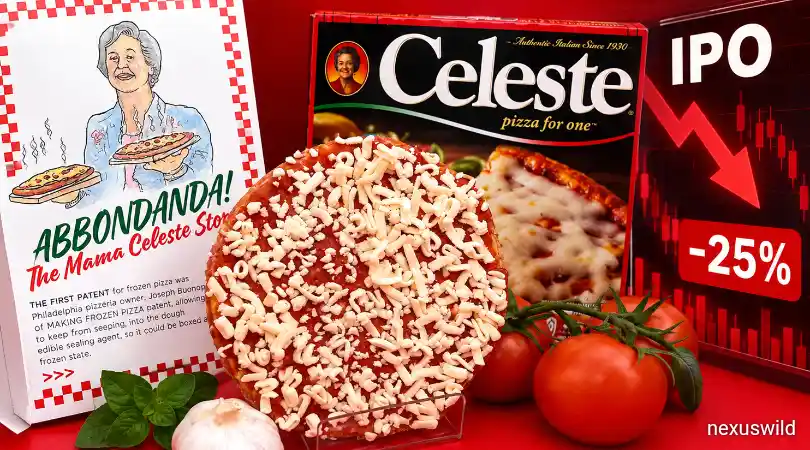

Celeste frozen pizza, a familiar freezer-aisle brand with roots stretching back decades, is being discontinued after owner Conagra Brands stopped production as part of a wider effort to simplify its product portfolio.
Conagra disclosed its decision to exit the Celeste frozen pizza business during its fiscal first-quarter 2027 earnings presentation on September 30.
Chief Executive John Brase said the company is reviewing its large portfolio of products and eliminating smaller brands and categories where it sees limited long-term potential. Celeste was one of the first brands identified under that strategy.
A Conagra spokesperson later confirmed that production has already stopped. Remaining pizzas may still appear in stores until existing inventory is sold, but the company currently does not plan to manufacture additional Celeste products.
Conagra Says It Has Exited the Celeste Business
The decision is part of a broader simplification program under Brase, who has been pushing Conagra to reduce the number of low-volume products across its portfolio.
During the September earnings presentation, Brase said the company had launched a comprehensive review of its stock-keeping units and was making decisions intended to reduce complexity across manufacturing and procurement.
He identified Celeste as an early example of that approach.
The exit reduced Conagra's first-quarter net sales by about 15 basis points, according to the company.
However, management expects removing the business to improve margins over time because resources can be redirected toward larger brands and categories with stronger growth potential.
Production Has Already Stopped
The important distinction is that Celeste is not merely being phased down or temporarily removed from selected retailers.
Conagra has confirmed that production has stopped.
A company representative said stores can continue selling whatever inventory remains, but there are currently no plans for further Celeste production once that stock is exhausted.
That means availability will disappear gradually rather than on a single nationwide date.
Some supermarkets may run out earlier than others depending on their remaining stock.
Celeste Was a Small Part of Conagra's Business
The relatively small effect on quarterly sales helps explain why Conagra was willing to exit the brand.
A 15-basis-point impact on net sales is modest for a company of Conagra's size.
The company reported $2.60 billion in first-quarter net sales, while continuing to face weaker volumes, inflationary costs and pressure from increasingly price-sensitive consumers.
Brase has made portfolio simplification one of his major priorities as he seeks to improve margins and focus investment on larger businesses.
Conagra Is Reviewing Hundreds of Products
Celeste appears to be part of a much larger restructuring effort rather than an isolated decision.
Brase said Conagra has an unusually long tail of products and has created an internal workstream focused on significantly reducing SKU count.
As one example, he said Conagra currently has more than 400 single-serve meal SKUs and believes the company can operate with a simpler, more productive assortment.
The objective is not necessarily to leave major categories but to remove products that create manufacturing and supply-chain complexity without generating enough profit or growth.
Why Conagra Is Cutting Smaller Brands
Large packaged-food companies often manage hundreds or thousands of individual products.
Each product can require separate:
- ingredients;
- packaging;
- production scheduling;
- inventory;
- transportation;
- retailer negotiations; and
- marketing support.
Small-volume products can therefore add substantial operational complexity even if they contribute only limited revenue.
Conagra says simplifying the portfolio can allow it to direct manufacturing capacity and investment toward products with stronger demand.
Celeste is an example of a brand that management concluded no longer justified that complexity.
The Decision Comes During a Difficult Consumer Environment
Conagra is making the changes as packaged-food companies face difficult market conditions.
Consumers have become increasingly sensitive to higher grocery prices, and many households are reducing purchases or switching to lower-cost alternatives.
Conagra's first-quarter organic net sales declined as lower volume offset some pricing actions.
The refrigerated and frozen segment also recorded weaker sales during the quarter.
At the same time, freight and other inflationary costs continue to pressure profitability.
Those conditions are increasing pressure on food companies to concentrate spending on products with stronger sales and margins.
Celeste Traces Its Roots to Chicago
Celeste Pizza has a history stretching back almost 90 years.
The brand was named after Celeste “Mama” Lizio, an Italian immigrant who built a food business with her husband, Anthony, after settling in Chicago.
The couple opened a restaurant on Chicago's West Side in 1937.
They later closed the restaurant and expanded into frozen Italian foods and pizza.
The business eventually attracted the attention of a major food company.
Quaker Oats Bought Celeste in 1969
Quaker Oats acquired the Celeste business in 1969.
Mama Celeste remained closely associated with the brand and became one of its most recognizable advertising figures.
Her image appeared on product packaging and in television advertisements.
Celeste grew into a widely recognized frozen-pizza name during the 1970s, a period when frozen pizza was becoming increasingly common in American households.
The brand's advertising also used the Italian expression “Abbondanza!”, meaning abundance.
The Brand Changed Owners Several Times
Celeste passed through several corporate owners over the following decades.
After Quaker Oats, the brand eventually became part of Aurora Foods and later Pinnacle Foods.
Conagra acquired the brand when it purchased Pinnacle Foods in 2018.
That transaction added a large collection of frozen and packaged-food brands to Conagra's portfolio.
Celeste remained available primarily through its compact, inexpensive frozen pizza products.
Pizza for One Became the Brand's Best-Known Format
In its later years, Celeste became especially associated with Pizza for One, a small frozen pizza designed as a single-serving meal or snack.
Its compact format and generally low price made it a familiar product for students, families and consumers looking for a quick meal.
The brand remained much smaller than the largest national frozen-pizza businesses, however.
Conagra's latest portfolio review ultimately concluded that Celeste lacked the scale and profitability the company wanted to prioritize.
Fans React With Nostalgia
News of the discontinuation triggered nostalgic reactions online.
Consumers shared memories of eating Celeste pizzas during childhood, keeping them in family freezers and buying them as inexpensive meals.
That type of response is common when long-running food brands disappear.
Even products with relatively small current sales can carry strong emotional recognition because consumers associate them with particular periods of their lives.
The reaction also illustrates a difference between brand familiarity and commercial performance.
A product can remain culturally recognizable even after its sales become too small to justify continued production.
Nostalgia Does Not Always Translate Into Sales
Long-established consumer brands often retain strong name recognition while losing market share.
Changes in eating habits, retailer shelf space and competition can gradually weaken products that were once much more prominent.
Frozen pizza has also become an increasingly competitive category.
Consumers today can choose among national brands, premium offerings, store brands and restaurant-style frozen products.
That makes it harder for smaller legacy brands to maintain sufficient volume.
Conagra Still Has a Large Frozen-Food Business
The end of Celeste does not mean Conagra is retreating from frozen food.
Frozen and refrigerated products remain a major part of the company's portfolio.
Conagra continues to own and market numerous brands across frozen meals, vegetables, snacks and prepared foods. Its official portfolio still lists brands including Birds Eye, Banquet and others across the frozen category.
The strategy is instead focused on reducing lower-priority products while increasing investment in larger platforms.
Celeste Still Appears on Conagra's Website
As of the latest available check, Conagra's corporate brand directory still listed Celeste Pizza for One among its brands.
That does not contradict the production shutdown.
Corporate websites and retailer systems can take time to reflect discontinuations, particularly while remaining inventory is still being sold.
Conagra has separately confirmed that manufacturing has stopped.
Some Existing Inventory May Remain Available
Consumers looking for Celeste may still find boxes at individual retailers.
Availability will depend on each store's inventory and distribution network.
Because Conagra is selling through existing stock rather than manufacturing new pizzas, supplies should gradually disappear.
The company has not announced a precise date when the last Celeste pizza will leave U.S. store shelves.
That means claims that the brand will disappear nationally on a specific day should be treated cautiously.
No Relaunch Has Been Announced
Conagra has not announced plans to sell the brand, license it to another manufacturer or revive production later.
Its current position is that production has ended and no additional Celeste products are planned once existing inventory is sold.
A future sale or revival is always commercially possible, but there is no confirmed plan for one at present.
The safest description is therefore that Conagra has exited the Celeste frozen pizza business.
Conagra May Exit Other Small Brands
Celeste may not be the final brand affected by Conagra's portfolio review.
Brase told investors that the company will continue examining smaller businesses where it believes resources could produce better returns elsewhere.
Conagra is also considering strategic options for certain non-core businesses.
Management has not identified every brand under review, so it would be speculative to predict which products could disappear next.
Portfolio Simplification Is Expected to Take Time
Conagra says the broader simplification effort will not happen immediately.
Changes must be coordinated with manufacturing facilities, suppliers and retail customers.
Retailers typically operate product-reset cycles that determine when products are added to or removed from shelves.
The company expects much of the benefit from its SKU-reduction program to emerge over the next 12 to 18 months.
Conclusion
Conagra Brands has stopped producing Celeste frozen pizza, bringing an end to a decades-old freezer-aisle product with roots in a Chicago restaurant opened by Celeste and Anthony Lizio in 1937.
The company disclosed the decision during its September 30 fiscal first-quarter earnings presentation, saying the exit reduced quarterly net sales by approximately 15 basis points but should improve margins over time.
Remaining Celeste inventory will continue to be sold, but Conagra has confirmed that no additional pizzas are currently being manufactured.
The move is part of a larger effort to reduce product complexity and redirect resources toward brands where Conagra sees greater scale and stronger growth potential.
For longtime customers, however, the business decision also marks the disappearance of a product closely associated with inexpensive frozen meals, childhood memories and decades of American supermarket history.
Nexuswild welcomes factual corrections. Email contact@nexuswild.com with evidence and the article URL.