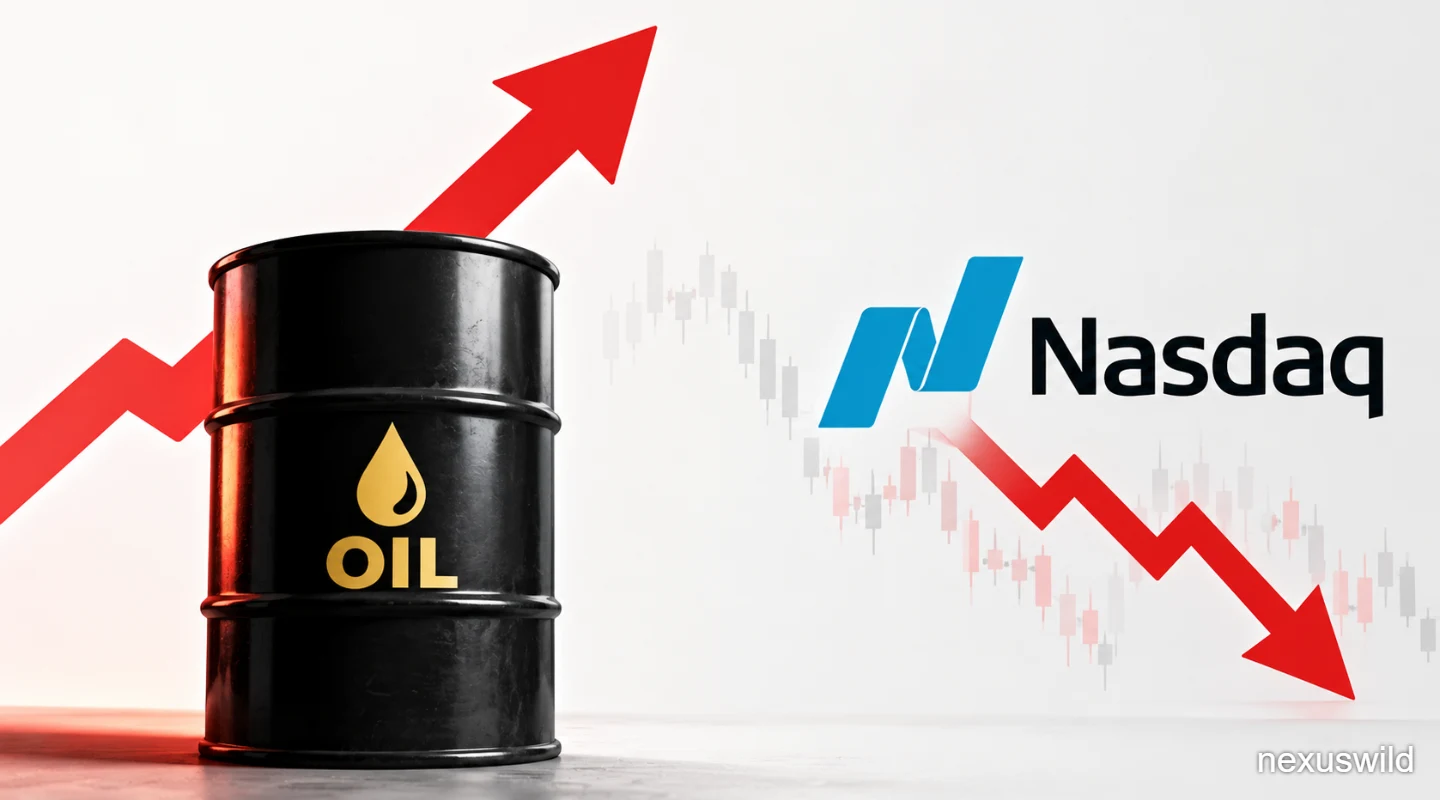

Oil prices climbed sharply on Thursday as renewed attacks on shipping in and around the Persian Gulf raised concerns about energy supplies, while U.S. stocks moved lower under pressure from higher Treasury yields and renewed inflation worries.
Brent crude rose above $100 a barrel during the session, with prices moving higher as investors assessed the potential impact of continued disruption to tanker traffic. Reports of attacks on vessels around the Strait of Hormuz have increased concerns about the security of one of the world's most important oil-shipping routes.
The market reaction extended beyond energy. The Nasdaq Composite fell more sharply than the broader S&P 500 as higher oil prices raised concerns that renewed inflation could complicate the Federal Reserve's interest-rate outlook.
Oil Prices Rise on Shipping and Supply Concerns
Brent crude climbed to around $104 a barrel on Thursday, while U.S. crude also advanced as traders assessed the risk that attacks on shipping could interfere with energy flows from the region.
The Strait of Hormuz is a critical route for global energy shipments. Any sustained disruption could increase transportation, insurance and security costs for vessels while raising the risk premium built into oil prices.
The precise circumstances surrounding individual attacks remain subject to official investigations and changing reports. Claims about responsibility and the wider security situation should therefore be attributed to the relevant authorities rather than presented as independently established facts.
Nasdaq and S&P 500 Move Lower
U.S. stocks declined as investors weighed higher energy prices against already elevated borrowing costs.
The Nasdaq Composite was down about 0.9% on Thursday, while the S&P 500 fell roughly 0.5%, according to market data reported during the session. The Dow Jones Industrial Average also moved lower.
Technology stocks can be particularly sensitive to higher interest rates because investors often place greater value on future earnings when assessing growth companies. Higher Treasury yields can therefore put pressure on equity valuations.
The latest decline followed another weaker session on Wednesday, when all three major U.S. indexes moved lower after recently reaching record levels.
Treasury Yields Add Pressure
Bond markets were another major source of concern.
The U.S. 10-year Treasury yield remained around 5.3% on Thursday, after reaching levels not seen since 2002. Higher yields increase borrowing costs across the economy and can make government bonds more competitive with stocks.
The rise in yields has also increased investor attention on the Federal Reserve's next policy decisions.
Minutes from the central bank's September meeting indicated that officials remained divided over the path of interest rates, with the possibility of another increase later in the year still part of the discussion.
Why Higher Oil Prices Matter for Inflation
The oil rally is important because energy costs feed into transportation, manufacturing and household expenses.
A sustained increase in crude prices could make it harder for inflation to continue moving toward central-bank targets. That could, in turn, reduce the room available for policymakers to lower interest rates.
Markets are therefore watching both the price of crude and how long the increase lasts. A temporary spike caused by geopolitical uncertainty would have a different economic effect from a prolonged disruption to global supplies.
Gulf Supply Flows Remain a Key Focus
Despite the increase in attacks on shipping, oil flows through the broader Gulf region have not completely stopped.
Maritime tracking data cited in current reporting indicated that Gulf oil exports excluding Iran recovered substantially during September, although shipping companies continued to face higher freight, insurance and security costs.
The International Energy Agency has also said member countries are prepared to release additional oil from emergency reserves if necessary. G7 countries had already agreed to release oil and diesel reserves in response to supply concerns linked to the conflict.
That reserve capacity could help limit the impact of a temporary supply disruption, although it would not necessarily eliminate the effect of a prolonged interruption to shipping.
What Investors Are Watching
Markets are now focused on three connected risks: the security of oil transportation, the persistence of higher crude prices and the direction of U.S. interest rates.
If shipping disruptions intensify or last longer than expected, oil prices could remain elevated. That would increase pressure on inflation-sensitive parts of the economy and potentially keep borrowing costs higher for longer.
Conversely, a sustained improvement in shipping conditions or additional supply from emergency reserves could ease some of the immediate pressure on crude prices.
For equities, the combination of high Treasury yields and expensive energy creates a difficult backdrop, particularly for companies whose valuations depend heavily on future earnings growth.
What Changes Next
The next major market signals will come from developments in Gulf shipping, oil supply data, Treasury yields and Federal Reserve policy expectations.
Investors will also be watching whether the latest oil-price increase remains temporary or develops into a broader supply shock.
For now, the market is balancing geopolitical supply risks against the possibility that higher energy prices could reinforce inflation pressures at a time when Treasury yields are already elevated.
Conclusion
Oil prices surged as renewed attacks on shipping around the Persian Gulf increased concerns about energy supplies, while the Nasdaq and S&P 500 declined amid higher Treasury yields and inflation worries.
The immediate market reaction reflects uncertainty rather than a confirmed long-term supply shortage. The direction of oil prices will depend heavily on the security of regional shipping routes, the availability of alternative supplies and whether disruptions persist.
For Wall Street, the combination of higher crude prices and elevated bond yields remains a key risk to monitor as investors reassess the outlook for inflation and interest rates.
Nexuswild welcomes factual corrections. Email contact@nexuswild.com with evidence and the article URL.