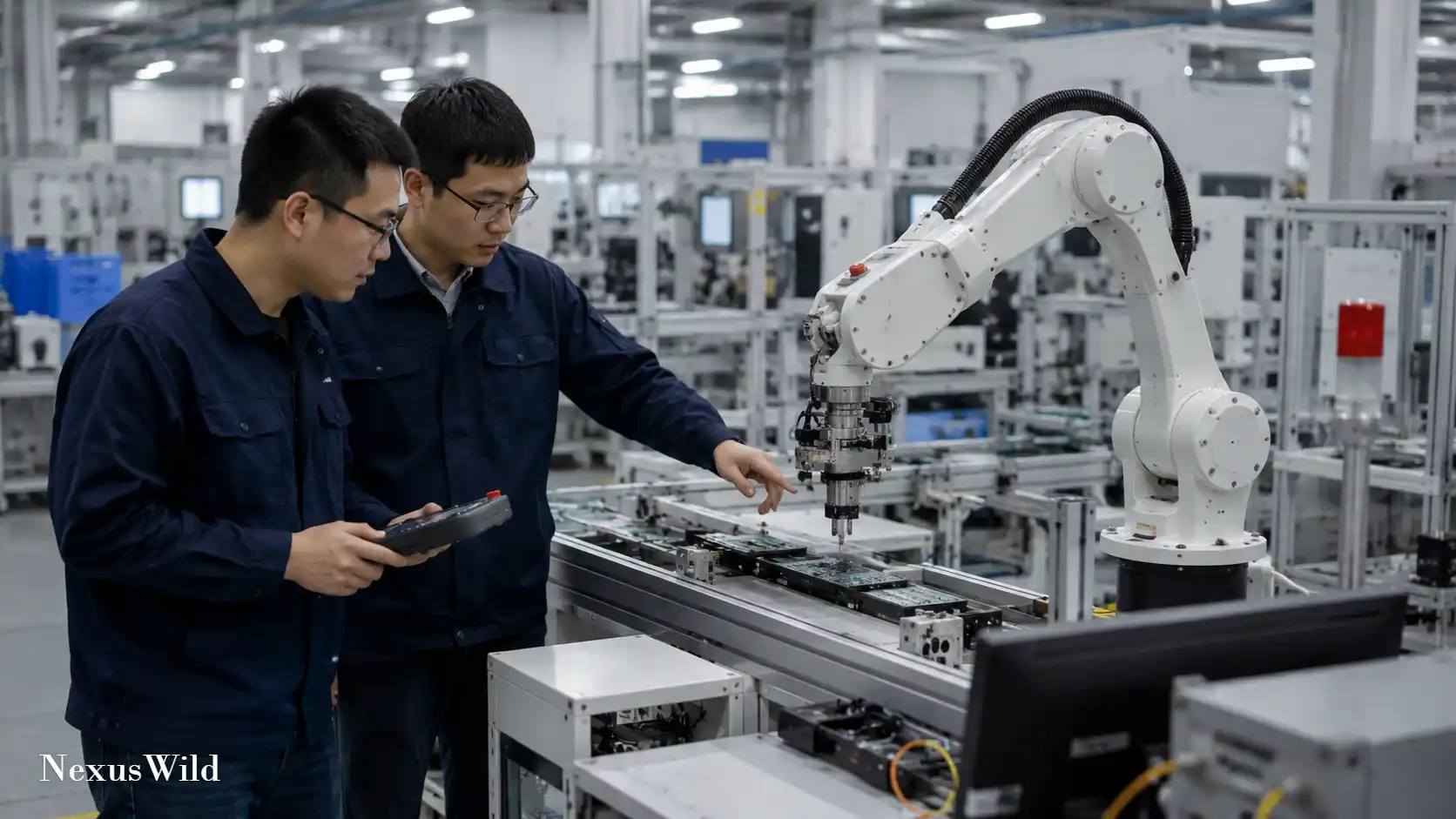

HONG KONG / SHANGHAI — Chinese stock markets are experiencing a significant IPO resurgence in 2026, driven largely by investor demand for artificial intelligence, semiconductors and robotics companies. IPOs and secondary listings on the Hong Kong and Shanghai exchanges have raised more than $54 billion so far this year, surpassing the over $46 billion raised in all of 2025, according to data from LSEG cited by the Associated Press.
Combined Hong Kong and Shanghai proceeds account for roughly 21% of global IPO fundraising this year, behind only Nasdaq's roughly 55% share, which was boosted by SpaceX's $75 billion listing in June.
Mega-Listings and Massive Valuations
Not every listing driving the boom is AI-related. Shein, the China-founded fast-fashion and e-commerce giant, is due to debut in Hong Kong this week in a $1.7 billion offering, one of the city's largest share sales this year. But technology names have generated the most attention. CXMT, China's largest memory-chip manufacturer, raised more than $8.6 billion in a July Shanghai listing, the second-largest IPO on the STAR Market, with shares jumping 466% on their trading debut.
Unitree Robotics, one of China's best-known humanoid robot makers, priced its STAR Market IPO at 150.80 yuan and closed its August 19 debut up 460%, briefly valuing the company at about $66 billion. Shares have since fallen roughly 45% from that peak, erasing about $30 billion in market value, though they remain around four times the IPO price.
The reversal followed a 53% drop in Unitree's adjusted first-quarter profit and comments from founder Wang Xingxing that humanoid robotics technology has not yet matured for widespread industrial use, fueling concerns among analysts about speculative valuations in the sector.
The Push for Technological Self-Reliance
Additional AI-chip listings are in the pipeline. Enflame Technology, a Tencent-backed AI chipmaker and one of China's so-called "four little GPU dragons," has received regulatory approval for a roughly 6 billion yuan ($892 million) IPO on the STAR Market, with share subscriptions set to open September 2. As with any planned offering, completion is not guaranteed until the listing is finalized.
The boom reflects Beijing's push for technological self-reliance amid rivalry with the United States, alongside listing reforms in Hong Kong that allow specialist technology companies to go public under Chapter 18C rules without a conventional profit track record. China's onshore technology IPOs are on track for their strongest year since 2023. Analysts also point to a scarcity of alternative investment options in China's domestic market as a factor drawing capital into new tech listings.
The Risks of Speculative Enthusiasm
The enthusiasm carries risks. Heavy retail-investor participation, limited share float and restricted short-selling have amplified price swings following oversubscribed offerings, and Unitree's volatility has become a cautionary example for other Chinese technology firms considering IPOs.
Some fund managers note that robotics companies are spending heavily on research while large-scale commercial orders have yet to materialize, raising questions about how far investor enthusiasm for AI and robotics can run ahead of underlying business fundamentals before that gap needs to close.
Further reading and useful links
Reader questions
Frequently asked questions
How much capital has been raised in Hong Kong and Shanghai IPOs so far in 2026?
IPOs and secondary listings on the Hong Kong and Shanghai exchanges have raised more than $54 billion this year, surpassing the total raised in all of 2025.
Which tech sectors are driving the Chinese IPO boom?
The resurgence in listings is primarily driven by immense investor demand for companies in the artificial intelligence, semiconductor, and robotics sectors.
What happened to Unitree Robotics' stock after its highly anticipated IPO?
Unitree's shares surged 460% on their debut, briefly valuing the robotics company at roughly $66 billion. However, shares have since fallen around 45% from that peak following concerns over speculative valuations and comments from the founder regarding the immaturity of the technology for widespread industrial use.
Nexuswild welcomes factual corrections. Email contact@nexuswild.com with evidence and the article URL.